




 Chat Now
The outdoor music or cultural festival is a symphony of sensory experiences: the palpable energy of the crowd, the powerful sound of the performers, and the shared atmosphere of celebration. In the 21st century, a new, indispensable element has been woven into this tapestry: the large-format outdoor LED event screen. These colossal, mobile digital canvases have evolved from a simple supplementary tool into the central visual hub of any major festival, fundamentally transforming the audience's connection to the event unfolding on stage.
An outdoor LED event screen is a modular, high-brightness display system specifically engineered for temporary or semi-permanent installation in open-air environments. Unlike their fixed stadium counterparts, these screens are designed for rapid deployment, durability, and resilience against the unpredictable elements of an outdoor setting. Their primary function is to provide a larger-than-life, intimate view of the stage performance for the vast majority of the audience who are positioned too far away to see the artists' expressions, nuances, and energy clearly.
The evolution of this technology has democratized the festival experience. In the past, only those fans who crowded the front rows enjoyed a direct visual connection with the performers. Those at the back experienced a distant, often obscured view. LED screens have obliterated this hierarchy. They ensure that a fan standing hundreds of meters from the stage can still see the sweat on a guitarist's brow, the smile exchanged between band members, and the intricate details of a drummer's technique. This creates a more inclusive and engaging experience for every ticket holder, fostering a sense of collective participation rather than passive observation.
Beyond mere magnification, these screens are powerful tools for artistic expression and production enhancement. Festival producers and artists use them to display pre-produced content, dynamic visual graphics, animated lyrics, and real-time social media feeds that complement the music. A DJ's set is elevated by a hypnotic, synchronized light and video show broadcast on the screens. A rock band's performance is intensified with quick-cut, high-energy replays and dramatic, wide-angle shots that capture the scale of the event.
Furthermore, they are critical for communication and safety. They can instantly broadcast important announcements, emergency instructions, or schedule changes to the entire crowd in a clear and unambiguous manner, a vital function for managing large, dynamic gatherings.
In essence, the outdoor festival LED screen is much more than a big television. It is the visual amplifier of the live event, the great equalizer of the audience experience, and a dynamic content channel that deepens the narrative of the performance. It has become so integral to the modern festival that its absence is immediately noticeable, leaving the back half of the crowd disconnected and disengaged. It is, without a doubt, the visual heartbeat of the contemporary outdoor event.
The design and construction of an outdoor festival LED screen is a masterclass in balancing high-performance visual output with brutal practicality. These units must be brilliant, durable, lightweight, and quick to assemble, all while being able to withstand sun, rain, wind, and the rigors of constant transportation.
1. The Core Building Block: The Weatherproof Module and Cabinet
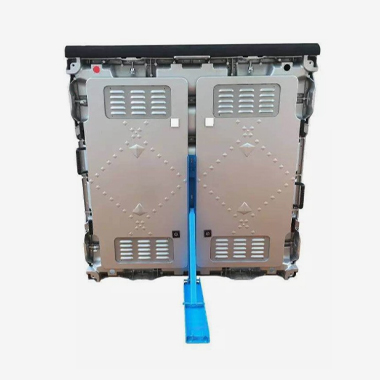
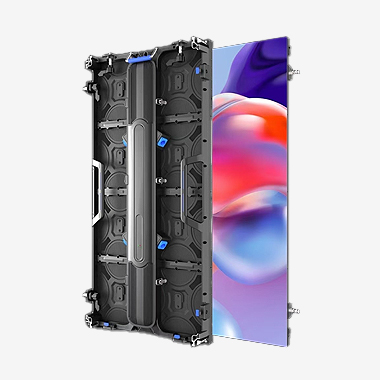
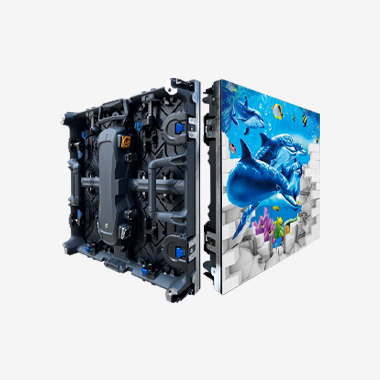
The fundamental unit is the LED module. For outdoor use, these are built with extremely robust Surface-Mount Device (SMD) LEDs. SMD technology allows for a good balance of resolution and brightness, which is crucial for outdoor viewing distances. These modules are housed in die-cast aluminum or high-strength plastic cabinets.
These cabinets are the true heroes of the design. They are not just frames; they are sealed, weatherproof units rated to at least IP65 (dust-tight and protected against low-pressure water jets from any direction). This rating is non-negotiable, as it ensures the sensitive electronics inside can survive sudden downpours, high humidity, and dusty festival environments. Each cabinet is a self-contained unit housing:
The LED modules locked securely in place.
Power supplies that convert generator power to usable DC current for the LEDs.
Receiving cards that process the data signal.
Active cooling systems, typically fans with filtered vents, to manage the significant heat generated by high-brightness LEDs operating in direct sunlight.
2. Structural System: The Mobile Truss and Frame
Unlike fixed installations, festival screens are built onto a mobile structural framework. The cabinets are designed to quickly lock into a heavy-duty truss system. This modular truss is engineered for:
Rapid Deployment: Cabinets and trussing use quick-release pins and connectors, allowing a large screen to be built by a skilled crew in a matter of hours, not days.
Structural Integrity: The truss must support the immense weight of the LED wall (often tens of thousands of pounds) and resist wind loads. Engineers use guy-wires, counterweights, and sturdy base supports to ensure absolute stability, even in gusty conditions.
Transportability: The entire system is designed to break down into manageable pieces that can be packed into flight cases and shipped on trucks from one festival site to the next. Durability for transit is a key design consideration.
3. Visual Performance Specifications
High Brightness: This is the most critical feature. Outdoor screens must combat direct sunlight. Typical festival screens have a brightness ranging from 6,000 to over 10,000 nits (candelas per square meter). This ensures the image remains vibrant and visible even at the brightest time of day.
Pixel Pitch: For festivals, the viewing distance is relatively long. Therefore, a balance between resolution and cost is struck. Pixel pitches typically range from P6 to P10. A P6 screen (6mm between pixels) offers a sharper image for mid-sized events, while a P10 screen is a cost-effective solution for very large festivals where the audience is far back.
Refresh Rate: A high refresh rate (≥1920Hz) is vital to prevent flickering when the screen is captured by professional broadcast cameras and amateur smartphones alike.
4. Redundancy and Serviceability
Given the "show must go on" nature of events, redundancy is built in. Power supplies and receiving cards are often configured in a redundant array. If one fails, its neighbor can take over the load without causing a blackout. Modules are front-serviceable, meaning a technician can climb behind the screen and replace a faulty module in minutes without dismantling the entire structure.
The operation of a festival LED wall is a dynamic process that begins days before the first note is played and requires flawless execution in real-time during the event. It's a complex interplay of logistics, signal management, and live video production.
1. The Signal Chain: A Mobile Broadcast Center
The video feed to the screen does not come from a single source but is a mixed production.
Source Feeds: Video sources include multiple manned cameras (on stage, in the crowd, on a jib, or a crane), robotic stage cameras, and pre-recorded video content (VTs) prepared by the artists.
The Video Switcher and Processor: All these feeds are sent to a mobile production truck or a tent-based control room. A vision mixer (video switcher) and a director choose the shots in real-time, creating the live broadcast feed. This feed is then sent to a powerful LED video processor.
The Processor's Role: This dedicated hardware is the brain. It performs several key tasks:
Scaling: It takes the incoming feed (e.g., 1080p) and scales it up to the native, massive resolution of the LED wall.
Color Correction: It adjusts the color and brightness output specifically for the characteristics of the LED panels, ensuring skin tones look natural and graphics pop.
Monitoring: It constantly monitors the health of the display, checking for errors.
Data Distribution: The processed signal is converted into data and sent via fiber optic cables (for its immunity to electrical interference over long distances) to the sending cards located near the screen. These then distribute the data to the receiving cards in each LED cabinet.
2. Pixel Control: Pulse-Width Modulation (PWM) Outdoors
At the pixel level, the technology is similar to indoor displays but optimized for brightness. Each red, green, and blue LED in a pixel is controlled by a driver IC using Pulse-Width Modulation (PWM). The LED switches on and off thousands of times per second. The ratio of on-time to off-time (duty cycle) determines the perceived brightness. This allows for precise control over color and grayscale, even at the extreme brightness levels required outdoors.
3. Power Management: Feeding the Beast
A massive LED wall is incredibly power-hungry. A large screen can easily require over 100 amps of 3-phase power. This is supplied by large, silent diesel generators located away from the audience to manage noise and fumes. Robust power distribution systems, with redundancy and automatic transfer switches, are critical to prevent a total blackout due to a generator fault.
4. Live Workflow and Replay Integration
A key feature at modern festivals is the integration of instant replay. A dedicated replay operator can capture a fantastic moment from the crowd or a close-up of the artist and, within seconds, play it back on the big screen, magnifying the excitement and shared experience of the crowd. This requires a separate replay system (like an EVS) integrated into the video switcher.
Advantages
Unmatched Audience Engagement: Provides an intimate, close-up view for every attendee, dramatically enhancing the experience and connection to the performance.
Amplification of Production Value: Turns a musical performance into a multi-sensory spectacle with synchronized visuals, graphics, and video content.
Critical Communication Tool: Essential for broadcasting safety announcements, schedules, and emergency information clearly to a massive crowd.
Revenue Generation: Serves as a prime digital advertising space for sponsors during breaks between acts.
Modularity and Mobility: Designed for rapid setup and teardown, making them ideal for multi-day festivals and touring events.
Challenges
Logistical Complexity and Cost: Transporting, insuring, and deploying these multi-ton systems requires a large, skilled crew and represents a significant portion of an event's budget.
Harsh Environmental Demands: Constant battle against sun, rain, wind, and dust requires robust IP-rated hardware and contingency plans. High winds can force a shutdown of the screen for safety reasons.
Immense Power Consumption: Requires massive generator support, which is costly, noisy, and has an environmental footprint.
Technical Failures: The complexity of the system means things can go wrong—a faulty power supply, a damaged data cable, a failed module. A highly skilled technical team must be on-site at all times for troubleshooting.
Viewing Distance Limitations: A screen with a P10 pitch will look pixelated if the front-of-house audience is too close. Careful planning of screen size, pixel pitch, and viewer placement is crucial.
Applications
Music Festivals: The primary application, from massive multi-stage events to smaller boutique festivals.
Cultural and Food Festivals: For showing cooking demonstrations, schedules, and amplifying main stage talks.
Sporting Events: For outdoor public viewing areas ("fan zones") broadcasting live games.
Corporate Events: For large outdoor company gatherings, product launches, and award ceremonies.
Religious and Civic Gatherings: For amplifying speakers to large congregations in open spaces.
Future Trends
Higher Resolution in Larger Formats: As technology advances, P4 and even P3 pitches will become more feasible for large outdoor screens, offering stunning clarity.
HDR for Outdoor Displays: Development of High Dynamic Range capabilities for LEDs will provide greater contrast and a more realistic image.
Lighter and Thinner Materials: Adoption of new materials and more efficient LEDs will lead to lighter cabinets, reducing shipping costs and simplifying rigging.
Improved Energy Efficiency: Development of lower-power LEDs and smarter power management systems will reduce the massive energy demands and environmental impact.
Integration with Augmented Reality (AR): Future screens could interact with AR elements, creating hybrid experiences where virtual objects are integrated into the live feed for those viewing through smartphone apps.
6. Conclusion
The outdoor LED event screen has irrevocably changed the landscape of live festivals and large-scale gatherings. It has grown from a novel luxury into an absolute necessity, a central pillar upon which the modern audience experience is built. By bridging the physical distance between the performer and the spectator, it fosters a deeper, more inclusive, and emotionally resonant connection for everyone in attendance.
While the challenges of cost, logistics, and environmental resilience are significant, the benefits it delivers in audience satisfaction, production value, and event management are undeniable. The sight of a vast crowd, united in singing along to a band whose faces are magnified fifty feet tall, is a testament to the power of this technology to create shared, unforgettable moments.
As the technology continues to advance, becoming brighter, sharper, and more efficient, its role will only expand. It will continue to be the canvas for artists, the megaphone for organizers, and the window to the stage for the crowd. The outdoor LED screen is not just a piece of equipment; it is the essential visual soul of the contemporary festival, ensuring that no one in the audience ever misses a moment of the magic.


Copyright © 2026 Shenzhen Cogo Technology Co.,Ltd.
All Rights Reserved

 Previous article