




 Chat Now
The LED poster display screen, often referred to as a digital LED billboard, signage, or display, represents a revolutionary leap in visual communication technology. It is a flat-panel display that uses an array of light-emitting diodes (LEDs) as pixels to create a vibrant, dynamic, and eye-catching video or image output. Unlike traditional static posters or print media, these digital canvases offer unparalleled flexibility, allowing content to be changed instantly, remotely, and as frequently as desired. This has transformed the advertising industry, urban landscapes, public information systems, and retail environments, making them an indispensable tool in the modern marketer's and communicator's arsenal.
The fundamental concept behind an LED poster is simple: to provide a bright, high-resolution, and energy-efficient screen capable of operating 24/7 in various indoor and outdoor environments. However, the technology and engineering that enable this are complex and sophisticated. The journey from the early monochromatic, low-resolution LED signs of the 1980s to today's ultra-high-definition, seamless, and interactive displays is a testament to rapid advancements in semiconductor technology, microelectronics, and software development.
An LED poster is not a single device but a system comprising several key components: the LED modules that form the display surface, a structural cabinet to house them, a power supply system, a control system (including sending cards and receiving cards), and sophisticated software for content management and scheduling. The core building block is the LED pixel itself. Modern displays primarily use Surface-Mounted Device (SMD) technology, where red, green, and blue (RGB) LED chips are mounted onto a single substrate to form a single pixel. This allows for a much higher pixel density, better color mixing, a wider viewing angle, and a more robust display compared to the older Dual In-line Package (DIP) technology.
The applications of LED posters are vast and growing. Outdoors, they dominate city centers and highways as large-format digital billboards, captivating audiences with full-motion video ads. In retail, they serve as vibrant window displays and in-store promotional tools, enhancing brand image and driving sales. At sports stadiums and concert venues, they provide live footage, replays, and interactive fan experiences. In corporate and public spaces, they function as sophisticated information dashboards, wayfinding tools, and art installations. Their ability to deliver real-time information, such as news, weather, or emergency alerts, adds a critical functional layer to their advertising capabilities.
The shift from static to digital is driven by compelling advantages. Advertisers can run multiple ads in a loop, maximizing revenue from a single physical location. Content can be tailored to specific times of day, weather conditions, or even real-world events, making messages more relevant and effective. The dynamic nature of moving images and bright colors guarantees significantly higher viewer attention and recall rates compared to static counterparts. Furthermore, by eliminating the need for physical printing and manual installation of new posters, LED displays offer long-term cost savings and a reduced environmental footprint.
However, the adoption of this technology is not without its challenges. The initial capital investment is substantial, encompassing not just the screen but also installation, structural support, and content creation. Outdoor units must be engineered to withstand harsh environmental factors like rain, dust, extreme temperatures, and vandalism, requiring high Ingress Protection (IP) ratings. There are also concerns regarding light pollution, driver distraction, and community regulations that can limit their deployment. Despite these hurdles, the market for LED poster displays continues to expand rapidly, fueled by falling costs, improving technology, and an ever-increasing demand for dynamic digital content.
In essence, the LED poster display screen is more than just a sign; it is a dynamic communication medium that bridges the physical and digital worlds. It represents the convergence of hardware engineering, software intelligence, and creative content design. As technology progresses towards higher resolutions, greater energy efficiency, and new forms of interactivity, the LED poster is poised to become an even more integrated and intelligent feature of our daily lives, reshaping how we consume information and experience advertising in public spaces.
The design and construction of an LED poster display screen are feats of modern engineering, involving a meticulous integration of electronics, mechanics, and software to create a reliable, high-performance visual system. Unlike consumer televisions, these displays are built for continuous operation, often in demanding environments, requiring a robust and modular architecture. Understanding their construction is key to appreciating their capabilities, limitations, and the factors that influence their cost and quality.
The most critical component is the LED Module. This is the fundamental building block of the entire display. A single module is a printed circuit board (PCB) populated with a precise grid of LEDs, drive ICs (Integrated Circuits), and necessary connectors. The density of LEDs on a module determines the screen's potential resolution. Modern displays almost exclusively use Surface-Mounted Device (SMD) technology, where tiny red, green, and blue LED chips are mounted together to form a single, full-color pixel. This allows for a much tighter pixel pitch (the distance between the centers of two adjacent pixels, measured in millimeters). A smaller pixel pitch results in a higher resolution, allowing for closer viewing distances. The modules are designed to be easily replaceable in the field, which is crucial for maintenance.
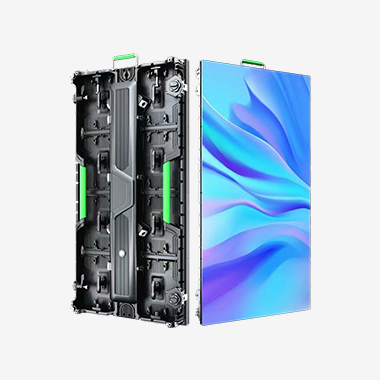
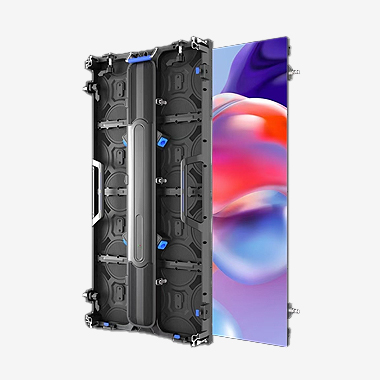
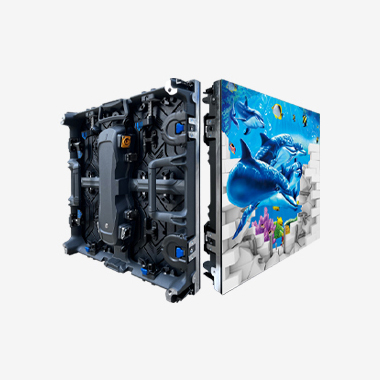
Multiple LED modules are mechanically fastened and electrically connected to form a larger unit called a Cabinet or Panel. Cabinets are the structural heart of large-format displays, especially for outdoor use. They are typically made from die-cast aluminum or other lightweight, corrosion-resistant materials. The cabinet provides rigidity, protects the delicate electronics from the elements, and incorporates critical subsystems:
Power Supplies: Switched-Mode Power Supplies (SMPS) convert incoming AC mains power (e.g., 110V/220V) to the low-voltage DC power required by the LEDs and ICs. Redundancy is often built-in, with multiple power supplies operating in a load-sharing configuration to ensure no single point of failure.
Control Electronics: Each cabinet contains one or more Receiving Cards. These cards are the "local brains" of the cabinet. They receive data and commands from the central control system via network cables, decode the signal, and distribute it to the specific driver ICs on the modules that control the individual LEDs.
Cooling System: LEDs and power supplies generate significant heat. Effective thermal management is essential for longevity and preventing color shift. Outdoor cabinets use passive heat sinks and fully sealed, waterproof designs. High-brightness indoor or hybrid cabinets may incorporate quiet fans or even air conditioning systems for active cooling.
The assembled display wall is formed by locking multiple cabinets together into a seamless canvas. The precision of the mechanical design is paramount here; any misalignment between cabinets would create visible grid lines and ruin the viewing experience. High-quality displays feature micron-level machining tolerances and automatic calibration systems to ensure a perfectly flat and seamless surface.
For the display to function, it requires a Control System. This is a hierarchical system typically consisting of:
A Video Processor/Sender Card: This is the "central brain." It connects to the video source (e.g., a media player, computer, or live feed). Its job is to take the input signal, scale it to the native resolution of the LED wall, perform color correction and calibration, and then break the image data down into chunks corresponding to each cabinet. It sends this data out via high-speed network protocols (like DVI, HD-SDI, or proprietary protocols) over CAT5e/6 or fiber optic cables to the receiving cards in each cabinet.
Synchronization and Calibration: To ensure a uniform image, every LED on the wall must light up at the exact same moment. The control system sends synchronization signals to achieve this. Furthermore, due to microscopic variations in LED manufacturing, each pixel can have slightly different color and brightness output. A process called "dot correction" is performed, where the control system individually calibrates each LED to ensure perfect color uniformity across the entire screen.
The final, often overlooked but crucial, element is the Software. The Content Management System (CMS) software allows users to design playlists, schedule content (e.g., show specific ads at specific times), manage multiple displays remotely, and monitor the health of the system (reporting on failures, temperature, etc.). Modern CMS platforms are cloud-based, enabling control of a global network of displays from a single dashboard.
The physical construction is also defined by its IP (Ingress Protection) Rating. This two-digit code (e.g., IP65) defines the level of protection against solids (first digit) and liquids (second digit). An indoor screen might be IP20, while an outdoor screen exposed to rain and dust must be at least IP65 (dust-tight and protected against water jets).
In summary, the design of an LED poster display is a complex puzzle where electronic density, mechanical precision, thermal efficiency, and software intelligence must all fit together perfectly. The choice of pixel pitch, cabinet design, control system, and protective rating directly dictates the display's application, its performance in the field, its maintenance needs, and ultimately, its total cost of ownership.
The operation of an LED poster display is a sophisticated dance of data transmission, power management, and precise light control, all happening at incredible speeds to create a stable, full-color moving image. The fundamental working principle revolves around digitally controlling the intensity of millions of individual red, green, and blue light sources to blend into the millions of colors perceived by the human eye.
At the most basic level, the principle is additive color mixing. Each pixel on the screen is comprised of a cluster of three (or sometimes four, with added white) sub-pixels: one red LED, one green LED, and one blue LED. By varying the brightness of these three primary colors in a single pixel, any color can be produced. For instance, activating red and green at full intensity while keeping blue off produces yellow. Turning all three on at full intensity creates white, while turning all three off produces black. The specific color depth (e.g., 16-bit or higher processing) determines how finely the intensity can be controlled, leading to smoother color gradients and more accurate color reproduction.
The process begins with a video source, such as a media player, computer, or live broadcast feed, which outputs a standard video signal (e.g., HDMI, SDI). This signal is fed into the display's video processor (or sender card). The processor performs several critical tasks:
Scaling: It scales the input video resolution to match the native resolution of the LED wall. An LED wall's resolution is determined by its physical pixel count (e.g., 1920 pixels wide by 1080 pixels tall for a 1080p equivalent resolution). The processor intelligently resizes the image to fit this canvas without distortion.
Color & Gamma Correction: It applies complex algorithms to ensure the colors displayed on the LED wall are accurate and consistent, compensating for the unique chromaticity of the LEDs themselves.
Data Partitioning: It divides the complete frame of video data into smaller segments, each corresponding to a specific cabinet or module within the display wall.
This partitioned data is then transmitted at high speed from the video processor to the individual receiving cards located inside each display cabinet. This data transmission typically uses standard network cables (CAT5e/6) or fiber optics, employing protocols like Ethernet or proprietary high-speed links. Fiber optics are preferred for long distances or large displays to avoid signal degradation.
The receiving card is a dedicated microcontroller that acts on the data for its assigned section of the screen. Its primary function is to take the digital data packet it receives and distribute commands to the numerous driver ICs (Integrated Circuits) that are directly connected to the LEDs on the modules. The most common driving technique is Pulse-Width Modulation (PWM).
PWM is the cornerstone of LED brightness control. Instead of varying the analog voltage to an LED (which is inefficient and causes color shift), PWM rapidly turns the LED on and off. The human eye perceives this rapid cycling not as flickering but as a sustained level of brightness. The ratio of the "on" time to the "off" time within a single cycle (the duty cycle) determines the perceived brightness. A 50% duty cycle (on half the time, off half the time) is perceived as 50% brightness. A 10% duty cycle appears as 10% brightness. This method is highly efficient because the LED is either fully on (at its optimal voltage/current) or completely off, minimizing power loss as heat. The refresh rate of the PWM (how many times per second this cycle occurs) must be very high (typically in the kHz range) to avoid visible flickering, especially when recorded by cameras.
The driver ICs are responsible for executing the PWM commands for each individual LED or group of LEDs. They provide the precise current required to illuminate the LEDs consistently. Modern driver ICs can control 16 or more channels (LEDs) each, incorporating features like built-in dot correction and grayscale control to ensure uniformity.
This entire process—from the video processor receiving a frame, to partitioning the data, sending it across the network, the receiving cards decoding it, and the driver ICs executing the PWM signals to light the LEDs—must happen for every single frame of video. For a standard 60Hz video, this entire chain must be completed 60 times every second. Any delay or de-synchronization would result in visible artifacts like tearing or lag.
Furthermore, for outdoor displays, an ambient light sensor is often integrated into this control loop. The sensor measures the brightness of the surrounding environment and sends this data back to the video processor. The processor can then automatically adjust the overall brightness of the LED display: increasing it to maximum during bright sunlight to maintain visibility, and dimming it significantly at night to save power and reduce light pollution. This dynamic power management is a key feature of modern, efficient LED displays.
In essence, the working principle transforms a standard video signal into a meticulously timed and spatially distributed series of electrical pulses that command a vast array of microscopic lights. It is a seamless integration of video processing, network communication, and power electronics, all working in concert to create the vibrant, dynamic digital canvases that define modern visual communication.
The adoption of LED poster display technology has skyrocketed across various industries, driven by a compelling set of advantages over traditional media. However, this adoption is not without significant challenges and considerations that must be carefully weighed before deployment. Understanding this balance is crucial for investors, advertisers, and urban planners.
Advantages:
Unparalleled Dynamic Impact and Attention-Grabbing Capability: The single greatest advantage is the ability to display full-motion video, animation, and vibrant graphics. The dynamic nature of moving content is proven to capture significantly more viewer attention and yield higher recall rates compared to static images or text. The high brightness and contrast ratios ensure visibility even in direct sunlight, making them impossible to ignore.
Unmatched Flexibility and Content Agility: Content can be changed instantly, remotely, and as often as needed. A single physical location can host multiple advertisements, rotating in a loop throughout the day. This allows for dayparting—showing coffee ads in the morning and dinner specials in the evening—dramatically increasing the value and yield of the advertising space. Campaigns can be launched, updated, or halted in real-time without any logistical delays or costs associated with printing and installing physical materials.
Superior Operational Efficiency and Cost-Effectiveness (Long-Term): While the initial investment is high, the long-term operational costs can be lower. There are no recurring costs for printing, shipping, or manual labor to change ads. This eliminates material waste and reduces the carbon footprint associated with traditional print campaigns. The ability to monetize one digital structure with multiple advertisers also creates a powerful revenue-generating asset.
Enhanced Targeting and Relevance: LED displays can be integrated with data feeds to show contextually relevant content. This can be as simple as displaying news headlines, weather updates, or stock tickers. More advanced integrations can trigger specific ads based on data from sensors, such as promoting cold drinks when a temperature sensor reads high, or even using facial detection (anonymized) to tailor content to the demographic of the current audience.
High Reliability and Durability: Modern LED displays, particularly those built for outdoor use, are engineered to be highly robust. With no moving parts and solid-state LED technology, they offer long lifespans (often 100,000 hours to 50% brightness degradation). High IP-rated cabinets protect against rain, dust, and vandalism, ensuring continuous operation in harsh conditions with minimal downtime.
Creative Freedom and Brand Enhancement: The digital canvas allows for breathtaking creative executions that can enhance a brand's image as modern and innovative. High-resolution screens can display stunning visuals, and the ability to create interactive experiences through touch or motion sensors further deepens engagement, transforming a simple advertisement into a memorable event.
Challenges and Considerations:
Substantial Initial Capital Investment: The upfront cost of purchasing a high-quality LED display, along with its structural support, professional installation, and content creation, is significant. This high barrier to entry can be prohibitive for smaller businesses and requires a clear business case and ROI calculation for larger ones.
Technical Complexity and Maintenance: While reliable, an LED wall is a complex electronic system that requires specialized knowledge to maintain. Individual LEDs or modules can fail, requiring a technician to diagnose and replace them. Maintaining a spare parts inventory and having service contracts in place is essential to minimize downtime. The software and control systems also require management.
Environmental and Community Concerns: The bright lights of outdoor LED billboards have raised concerns about light pollution, energy consumption, and driver distraction. There is ongoing debate about their impact on the aesthetic character of communities and natural landscapes. These concerns have led to strict regulations and zoning restrictions in many municipalities, which can limit or prohibit their installation.
Content Management Burden: The "easiness" of changing content is a double-edged sword. It requires a constant stream of fresh, high-quality, professionally designed digital content to remain effective. Poorly designed or stale content can be just as ineffective as a faded poster. This creates an ongoing need for creative resources and a content strategy.
Energy Consumption: While becoming more efficient, large-format LED displays are still substantial consumers of electricity. Although they are far more efficient than older technologies like incandescent bulbs, the total power draw of a large screen can be considerable, contributing to operational costs and environmental impact. However, automatic dimming features based on ambient light have greatly mitigated this issue.
Potential for Obsolescence: Technology in this field evolves rapidly. A display purchased today may have a inferior resolution and energy efficiency compared to models available in five years. While the hardware has a long physical life, it may become functionally obsolete from a competitive standpoint before it actually fails.
In conclusion, the advantages of LED poster displays—their dynamism, flexibility, and long-term efficiency—are transformative. However, these benefits must be balanced against the challenges of high initial cost, regulatory hurdles, and the ongoing demands of maintenance and content creation. A successful deployment hinges on careful planning, a clear understanding of the total cost of ownership, and a commitment to leveraging the technology's strengths with high-quality, strategic content.
The versatility of LED poster display technology has fueled its proliferation across a remarkably diverse range of sectors. Its application has moved far beyond simple advertising to become a critical tool for information dissemination, entertainment, and brand experience. Concurrently, the technology itself is rapidly evolving, paving the way for exciting future trends that will further integrate these displays into the fabric of our daily lives.
Applications:
Outdoor Advertising & Digital Billboards: This is the most visible application. Large-format LED billboards along highways, in Times Square, and atop city buildings have become iconic elements of the urban landscape. They offer advertisers the highest-impact format for reaching a massive audience with dynamic video content.
Retail and Point-of-Sale (POS): Retailers use LED posters both in store windows to attract passersby and inside stores to promote products, highlight offers, and guide customers. They create an immersive brand environment, replace traditional price tags with digital labels that can be updated instantly, and can even be used for interactive catalogs or virtual try-ons.
Sports and Entertainment Venues: Stadiums and arenas are surrounded by giant LED screens that provide live footage, instant replays, statistics, and fan engagement content (kiss cams, hashtags). They are essential for enhancing the live event experience for audiences who are accustomed to high-quality broadcasts at home.
Corporate and Public Information Hubs: In corporate lobbies, LED walls serve as impressive brand statements and communication tools for employees and visitors, displaying company news, performance metrics, or visitor welcome messages. In transportation hubs (airports, train stations), they are vital for real-time schedule information, wayfinding, and public safety announcements.
Broadcast and Studio Backgrounds: Television studios have widely adopted fine-pitch LED walls as virtual backgrounds. This technology, popularized by weather reports and shows like The Mandalorian, allows for creating photorealistic or entirely fantastical digital environments in real-time, replacing traditional green screens with more immersive and interactive sets for actors.
Control and Command Centers: In settings where real-time data is critical—such as security operation centers, stock trading floors, or utility network control rooms—LED video walls provide a seamless, large-scale canvas to monitor countless data feeds, maps, and videos simultaneously, enabling better situational awareness and decision-making.
Art and Creative Installations: Artists and architects are using LED technology to create dynamic public art, interactive installations, and architectural facades that change appearance. This transforms buildings from static structures into living, breathing canvases that can respond to the environment or human interaction.
Future Trends:
Finer Pixel Pitches and MicroLED Technology: The relentless drive for higher resolution will continue. The emergence of MicroLED technology, which uses microscopic, self-emissive LEDs, promises to be a game-changer. It offers superior brightness, contrast, color gamut, and energy efficiency compared to current SMD and LCD technologies. This will enable seamless, cinema-quality displays even at very close viewing distances, blurring the line between consumer TVs and professional displays.
Transparent and Flexible LED Displays: Transparent LED screens, which allow viewers to see through the display to the products or scenery behind it, are creating new opportunities for retail window displays and architectural integration. Flexible LED substrates will enable curved, cylindrical, and even free-form display surfaces, moving beyond the flat panel to create more organic and integrated designs.
Increased Interactivity and Integration with IoT: Future LED displays will move from being broadcast mediums to interactive portals. Integration with cameras (for anonymized audience analytics), touch overlays, motion sensors, and Internet of Things (IoT) data streams will become standard. A display could change its message based on the demographic of the crowd looking at it, respond to gestures, or show real-time data visualizations from connected sensors.
AI-Powered Content Optimization and Management: Artificial Intelligence will revolutionize content management. AI algorithms will automatically A/B test different ad creatives, optimize content scheduling for maximum engagement, and even generate dynamic content in real-time based on analyzed data feeds (e.g., creating an ad headline based on trending news topics).
Improved Sustainability: The focus on reducing energy consumption will intensify. This will be achieved through more efficient LED chips, driver ICs, power supplies, and smarter software that manages brightness more precisely. The use of recyclable materials in construction and designing products for easier disassembly and repair will also become a key differentiator, supporting circular economy principles.
The Metaverse and Phygital Integration: As concepts of the metaverse evolve, LED displays will act as a key bridge between the physical and digital worlds. They could be used to view and interact with digital assets (NFTs) or virtual spaces in a physical location, creating "phygital" (physical + digital) experiences for retail, entertainment, and social interaction.
In essence, the application of LED posters is limited only by imagination, and their future is one of convergence—with AI, IoT, and new material science. They are evolving from dumb screens into intelligent, connected, and immersive visual platforms that will continue to redefine communication and experience in public and private spaces.
Conclusion
The LED poster display screen has unequivocally established itself as a transformative force in the 21st-century media landscape. It is far more than a simple replacement for the printed poster; it is a dynamic, intelligent, and powerful medium that has redefined the paradigms of advertising, information dissemination, and public engagement. From its humble beginnings as a monochromatic message board to the current era of ultra-high-definition, seamless video walls, the technology's journey has been marked by relentless innovation and expanding applicability.
The core of its success lies in its unique synthesis of strengths: the unmatched visual impact of bright, moving imagery; the unprecedented flexibility of digital content that can be updated globally in an instant; and the long-term operational logic that, despite a high initial investment, offers greater value and efficiency over time. These advantages have propelled its adoption across a breathtaking spectrum of applications, from dominating city skylines as billboards to enhancing the fan experience in stadiums, from guiding travelers in airports to empowering decision-makers in control rooms.
However, as with any disruptive technology, its path forward is not without obstacles. The challenges of high upfront costs, regulatory scrutiny concerning light pollution and aesthetics, the technical demands of maintenance, and the ongoing need for high-quality content creation present significant considerations for any potential adopter. The future of the industry will depend on its ability to address these challenges proactively—through technological advances that lower costs and energy consumption, through responsible dialogue with communities, and through the development of user-friendly tools that simplify content management.
Looking ahead, the trajectory of LED display technology is luminous and clear. The convergence with emerging technologies like MicroLED, AI, and IoT will catalyze its next evolutionary leap. We are moving towards a future of displays that are not only higher in resolution but also smarter, interactive, and more integrated into our environment. They will become contextual, responsive surfaces that understand their audience and environment, tailoring messages in real-time for maximum relevance and effect. The lines between screen and reality will continue to blur with transparent and flexible form factors, turning entire building facades into dynamic architectural elements.
In conclusion, the LED poster display is a testament to human ingenuity in the field of visual communication. It has successfully digitized the physical advertising space, creating a vibrant and living media layer over our urban and commercial environments. It has evolved from a novelty into a necessity for modern brands and communicators. As the technology continues to advance, becoming more efficient, intelligent, and seamless, its role will only grow more central. The LED screen is no longer just a tool for showing messages; it is becoming an intelligent canvas for experience, a fundamental component of the built environment, and a enduring symbol of our increasingly digital and connected world. Its future is not just bright; it is brilliantly adaptive and infinitely promising.


Copyright © 2026 Shenzhen Cogo Technology Co.,Ltd.
All Rights Reserved

 Previous article