




 Chat Now
The urban landscape of the 21st century is fundamentally illuminated and defined by light. Among the most dominant sources of this light are LED display visual screens, which have evolved from simple, monochromatic indicators into vast, dynamic canvases capable of rendering breathtaking imagery and video. An LED visual display is a flat panel screen that uses an array of light-emitting diodes (LEDs) as pixels to create a video output. Their proliferation across city squares, sports arenas, transportation hubs, retail spaces, and even corporate boardrooms is a testament to their transformative power in communication, advertising, entertainment, and information dissemination.
The journey of the LED display began in 1962 with the invention of the first practical visible-spectrum light-emitting diode by Nick Holonyak Jr. at General Electric. Initially, these were low-intensity red lights used as indicator lamps in laboratory equipment and later in calculators, watches, and consumer electronics. The crucial breakthrough came with the development of high-brightness blue LEDs in the early 1990s by Isamu Akasaki, Hiroshi Amano, and Shuji Nakamura—a achievement for which they were awarded the Nobel Prize in Physics in 2014. The blue LED was the final piece of the puzzle; when combined with red and green and using phosphor coatings, it enabled the creation of the bright, energy-efficient white light source that is fundamental to modern full-color displays. The subsequent miniaturization of these LEDs into tiny, densely packed packages gave birth to the video walls we see today.
At its core, an LED display is a modular system. The fundamental building block is the LED module, a printed circuit board (PCB) populated with a cluster of red, green, and blue LEDs, along with necessary drivers and other components. Multiple modules are then assembled into a larger panel or cabinet. These cabinets are mechanically and electrically joined together to form a seamless screen of virtually any size or shape, limited only by structural engineering and budget. This modularity is a key advantage, allowing for custom configurations, ease of repair, and scalability.
The applications of LED displays are incredibly diverse, dictating their form and function. Massive outdoor billboards, designed for long-viewing distances and high ambient light, use larger, brighter LEDs robustly sealed against the elements. Indoor screens, such as those in broadcast studios or control rooms, use finer-pitch technology with much smaller LEDs packed closely together to provide crystal-clear images at close range. Transparent LED screens offer a glimpse through to the architecture behind them, while flexible and curved LED tiles enable creative, immersive installations that break free from the traditional flat rectangle.
The impact of this technology on society is profound. It has revolutionized the advertising industry, moving from static posters to dynamic, scheduled, and even interactive video content. In live events, from rock concerts to sporting spectacles, LED screens have become central to the experience, providing close-up views, replays, and spectacular augmented visual effects that amplify the energy of the crowd. In public spaces, they serve as vital information hubs for news, weather, and emergencies. In corporate and command-and-control environments, they are the nerve center, visualizing complex data streams to facilitate rapid decision-making.
In essence, the LED display is more than just a screen; it is a versatile and powerful medium that bridges the digital and physical worlds. It has redefined architectural aesthetics, transformed consumer engagement, and become an indispensable tool for storytelling and information management in our increasingly visual and connected global culture. As we delve deeper into its design, principles, and applications, it becomes clear that the LED display is not merely a product of technological advancement but a driving force shaping the visual language of our time.
The imposing majesty of a massive LED video wall belies its intricate, modular, and meticulously engineered internal architecture. The design and construction of an LED display are a complex interplay of electronics, optics, mechanical engineering, and software, all working in concert to produce a reliable and vibrant visual output. Understanding this anatomy is key to appreciating the technology's capabilities and limitations.
The Fundamental Building Blocks: From Diode to Display
The LED (Light Emitting Diode): This is the core pixel element. For full-color displays, each pixel is typically composed of three or four individual semiconductor chips: red, green, and blue (RGB). In some designs, a fourth, dedicated white LED is added for enhanced brightness and color gamut. These miniature chips are either packaged individually (e.g., DIP or SMD) or mounted as bare chips directly onto the substrate (COB). The quality, brightness, and wavelength consistency of these LEDs are paramount to the overall performance of the screen.
The LED Package: The individual LED chips are housed in protective packages that also act as lenses to focus and direct the light.
DIP (Dual In-line Package): An older technology where the LED chip is housed in a hard, epoxy capsule with two parallel connecting pins. DIP LEDs are very robust and bright, making them suitable for large-format outdoor displays where durability and visibility in direct sunlight are critical. However, they offer lower resolution.
SMD (Surface-Mount Device): The current industry standard for most applications. The red, green, and blue chips are mounted into a single micro-package, which is then soldered directly onto the surface of the printed circuit board. This allows for a much smaller pixel pitch (the distance between pixels), higher resolution, better color mixing, a wider viewing angle, and a smoother surface. SMD technology is used for both indoor and outdoor screens.
COB (Chip-on-Board): An advanced packaging technology where the bare LED chips are directly bonded to the PCB and then encapsulated with a protective phosphor resin coating. This eliminates the traditional plastic package, making the pixels more durable, less prone to physical damage and moisture ingress, and improving heat dissipation. COB displays offer superior reliability and are increasingly popular for fine-pitch indoor applications.
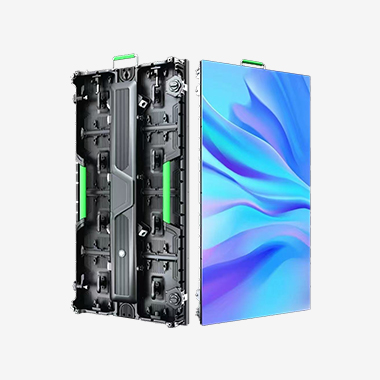
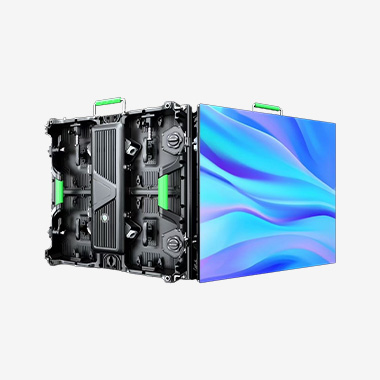
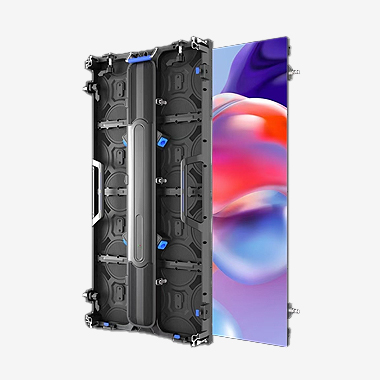
The Module and the Cabinet: SMD or COB LEDs are mounted in a precise array onto a Printed Circuit Board (PCB), creating an LED module. This module contains not only the LEDs but also the driver ICs that control them. Multiple modules are then assembled into a rigid frame, combined with power supplies, receiving cards, and sometimes processing hardware, to form an LED cabinet (or panel). Cabinets are designed for structural integrity, easy alignment, quick locking mechanisms for assembly, and efficient heat management through heat sinks and fans. The front is often masked with a black material to enhance contrast by reducing reflection from the non-light-emitting areas.
Critical Design Considerations:
Pixel Pitch (P): This is the center-to-center distance between two adjacent pixels, measured in millimeters (mm). It is the single most important factor determining the screen's resolution and optimal viewing distance. A smaller pixel pitch (e.g., P1.2) means pixels are packed closer together, resulting in a higher resolution suitable for close-viewing indoor environments. A larger pitch (e.g., P10) uses bigger LEDs spaced further apart, designed for outdoor billboards viewed from tens or hundreds of meters away. The choice of pitch is a fundamental trade-off between resolution, cost, and viewing distance.
Cabinet Design and Calibration: The mechanical design of the cabinet ensures modules align perfectly to create a seamless image without visible gaps or bezels. Each cabinet and its modules are factory-calibrated using advanced photometers to ensure consistent color and brightness (white balance) across the entire screen. This calibration data is stored and used by the display's controller to maintain uniformity, which is critical for a cohesive image, especially when blending dozens of cabinets together.
Housing and Environmental Protection: The construction varies drastically based on the environment.
Outdoor Cabinets: Are heavy-duty, fully waterproof (IP65 rating or higher), rust-proof, and designed to withstand extreme temperatures, high winds, UV radiation, and moisture. They feature high-brightness LEDs (5,000-10,000 nits) to combat direct sunlight.
Indoor Cabinets: Are lighter, slimmer, and focus more on ventilation and noise reduction (using quiet fans or passive cooling). Their brightness is lower (800-1,500 nits) for comfortable viewing.
Front Serviceable vs. Rear Serviceable: Designs allow for maintenance from the front of the screen (crucial for wall-mounted installations) or from the rear (typical for stage and rental screens).
Supporting Ecosystem:
The display itself is useless without its supporting components:
Controller/Processor: Takes the video signal source (e.g., HDMI from a computer) and converts it into data that the LED display can understand. It handles tasks like color correction, scaling, and image optimization.
Power Supplies: Convert AC mains power to the low-voltage DC power required by the LEDs and electronics. Reliability and efficiency of these units are critical for operational cost and longevity.
Mounting Structure: The rigging or framework that supports the often immense weight of the LED wall, ensuring it is safe, secure, and properly aligned.
In conclusion, the construction of an LED display is a feat of modern engineering, transforming millions of microscopic light-emitting diodes into a robust, scalable, and breathtakingly bright canvas for the digital age. Every component, from the tiny chip to the massive steel structure, plays a vital role in delivering a flawless visual experience.
The magic of an LED display lies in its ability to transform a standard video signal into a brilliantly coherent image composed of millions of individual light sources. This process is a sophisticated symphony of data management, rapid electronic switching, and optical science, all executed at breathtaking speeds.
The Core Principle: Additive Color Mixing
Unlike subtractive color mixing used in printing (CMYK), LED displays operate on the principle of additive color mixing. Each physical pixel on the screen is made up of three sub-pixels: Red, Green, and Blue (RGB). By varying the intensity of light emitted from each of these three colored sub-pixels, the human eye perceives a single, combined color. When all three are off, the pixel is black. When all three are at full intensity, the pixel is perceived as white. The entire spectrum of visible colors can be created by precisely controlling the ratio of intensity between these three primary colors. This is the fundamental optical principle upon which all LED (and LCD and plasma) screen technology is built.
How Intensity is Controlled: Pulse-Width Modulation (PWM)
An LED is a digital device; it's either on or off. To create the illusion of varying brightness levels (and hence, different colors), it cannot simply be dimmed by reducing voltage analogically. Instead, LED displays use a technique called Pulse-Width Modulation (PWM). The driver ICs for each LED switch the diode on and off at an extremely high frequency—thousands of times per second.
The "brightness" is controlled by the duty cycle—the ratio of the "on" time to the total time of a single cycle.
A 50% duty cycle (on half the time, off half the time) is perceived by the human eye as 50% brightness.
A 10% duty cycle appears as 10% brightness.
A 100% duty cycle is full brightness.
This rapid switching is imperceptible to the human eye, which integrates the light pulses over time into a stable level of perceived brightness. The number of distinct brightness levels a display can produce is determined by the precision of this timing, defined by its bit depth. An 8-bit system can produce 2⁸ (256) levels of intensity for each color (R, G, B), resulting in 256 x 256 x 256 = 16.7 million possible colors. High-end displays use higher bit depths (10-bit, 12-bit, 16-bit) for even smoother color gradients and reduced flicker.
The Data Pathway: From Source to Screen
The journey of a single frame of video from a source to illumination on the LED wall is a complex, hierarchical process:
Input and Processing: A video source (a media player, computer, or camera feed) sends a standard video signal (e.g., HDMI, SDI) to the LED display's controller (or processor). The controller performs several critical tasks:
Scaling: It maps the incoming video resolution to the native resolution of the LED wall. If the wall is 1920x1080 pixels, but the source is 4K, the controller must downscale the image.
Color Space Conversion: It translates the incoming color data into values optimized for the specific LEDs used in the display, based on their factory calibration data.
Image Enhancement: It may apply algorithms to improve sharpness, reduce noise, or adjust gamma.
Data Organization: It reorganizes the processed image data into a format that matches the physical layout and addressing of the LED modules and cabinets. This data is then sent out via specialized high-speed data ports (e.g., Gigabit Ethernet, proprietary fiber optic links).
Data Distribution: The HUB or Receiver Card: The data cables from the controller connect to HUB cards or receiver cards located inside each LED cabinet. This card acts as a local distributor, taking the data stream for its section of the screen and fanning it out to the multiple driver ICs on each individual LED module.
The Driver ICs: The Muscle: The driver ICs are the workhorses located on each module. They receive the data from the HUB card and are responsible for the precise, rapid switching (via PWM) of the thousands of individual LEDs they control. They hold the current state for each LED in their domain and update it according to the incoming data stream for every frame of the video.
Scanning Mode: A Multiplexing Technique: To reduce the number of driver ICs and physical connections, most LED displays use a multiplexing technique called a scanning drive. Instead of controlling every single LED row and column individually, the display is divided into groups. The driver ICs power up only a subset of rows (e.g., 1/4, 1/8, 1/16) at any given moment, scanning through them so quickly that the human eye sees a complete, stable image. A lower scan ratio (e.g., 1/4) means more rows are lit simultaneously, resulting in a brighter image but requiring more complex drivers and power. A higher scan ratio (e.g., 1/16) is more efficient but can sometimes lead to reduced brightness or more visible flicker if not engineered correctly.
Synchronization and Refresh Rate
The entire process must be perfectly synchronized. The refresh rate (how many times per second the entire screen is redrawn) is crucial. A low refresh rate (below 60Hz) can cause visible flickering, especially when recorded on camera, and lead to eye strain. High-quality LED displays boast refresh rates of 1920Hz, 3840Hz, or even higher, ensuring buttery-smooth motion and eliminating any flicker for both live audiences and broadcast cameras. The grayscale depth (bit depth) works in tandem with the refresh rate to define the smoothness of color transitions.
In summary, the working principle of an LED display is a masterclass in digital precision. It leverages the physics of additive color, the electronic technique of PWM, and a sophisticated, hierarchical data distribution network to orchestrate millions of individual LEDs into a seamless, vibrant, and dynamic visual experience.
The dominance of LED display technology across a vast range of applications is no accident; it is driven by a compelling set of advantages that often outweigh its limitations. However, like any technology, it presents unique challenges that designers, installers, and operators must navigate.
Overwhelming Advantages:
Superior Brightness and Visibility: LED displays are inherently bright light sources, not light valves like LCDs. This allows them to achieve incredibly high levels of luminance, measured in nits (candelas per square meter). Outdoor LED displays can reach 10,000 nits or more, making them clearly visible even in direct sunlight—a feat impossible for any other display technology. This ensures content is always impactful and legible.
Seamless Scalability and Modularity: The cabinet-based architecture of LED walls is their killer feature. They can be assembled to create screens of virtually any size or aspect ratio without a visible bezel or seam, unlike tiled LCD video walls which have prominent borders. This allows for creative, large-format installations that are truly immersive, from wrapping around buildings to forming curved tunnels of light.
Excellent Reliability and Long Lifespan: LEDs are solid-state devices with no moving parts and are highly resistant to shock and vibration. High-quality LEDs have a long operational lifespan, often rated at 100,000 hours to L70 (the point at which they output 70% of their original brightness). This results in lower long-term maintenance costs and higher uptime, which is critical for mission-critical applications like control rooms.
Wide Viewing Angles: Unlike LCDs, which suffer from color shift and contrast loss when viewed off-axis, LED displays maintain consistent color, brightness, and contrast across very wide viewing angles—often up to 160 degrees or more. This ensures a quality viewing experience for a large audience, whether in a stadium or a corporate lobby.
Robustness for Outdoor Use: Specifically designed outdoor cabinets are weatherproof, dustproof, and capable of operating in extreme temperatures. This durability makes them the only practical choice for permanent, high-impact digital signage in harsh outdoor environments.
Energy Efficiency: Modern LED displays are significantly more energy-efficient than older technologies like incandescent or fluorescent signs. While a large screen still consumes considerable power, the efficiency per unit of light output (lumens per watt) is high, leading to lower operational costs and a smaller environmental footprint compared to alternatives.
Significant Challenges and Considerations:
Cost: The initial capital investment for a high-quality LED display, especially fine-pitch models, is substantial. The cost includes not just the screen itself, but also the controller, mounting structure, installation labor, and content management systems. While prices have decreased over time, they remain a significant barrier to entry for some users.
Pixel Pitch and Resolution Limitation: The physical size of LEDs creates a fundamental limitation. For a given viewing distance, there is a minimum pixel pitch required for the image to appear smooth. Getting too close to a large-pitch screen reveals the individual pixels, breaking the illusion. While fine-pitch technology continues to advance, creating a 4K or 8K resolution screen at a very large size with a sub-millimeter pitch remains exorbitantly expensive.
Power Consumption and Heat Management: Despite being efficient, a massive LED wall can still draw tens of kilowatts of power, requiring dedicated electrical circuits and contributing to high energy bills. This power is converted into both light and heat. Effective heat management through heat sinks, fans, and sometimes air conditioning is crucial, as excessive heat is the primary enemy of LED lifespan and performance. The fans can also generate audible noise, which may be undesirable in quiet indoor settings.
Potential for Visual Artifacts: Poor quality components or improper calibration can lead to visual issues:
Screen Door Effect: Visible dark lines between pixels or modules, often a result of poor design or masking.
Color Inconsistency: Variations in color or brightness between modules or cabinets, making the screen look patchy. This is mitigated by high-precision factory calibration.
Flicker: Low refresh rates can cause perceptible flicker, which is especially problematic when the screen is filmed by cameras (a phenomenon known as the "rolling shutter" effect).
Dead Pixels: Individual LEDs can fail, creating black spots on the screen. While modules are designed for easy replacement, a cluster of dead pixels can be distracting.
Maintenance and Service: While modularity aids repair, maintaining a large LED installation requires technical expertise. Replacing a module high up on an outdoor billboard or in a complex curved configuration is not a trivial task. Operators need a stock of spare modules and a skilled technician on call, adding to the total cost of ownership.
Moisture and Dust Sensitivity: While outdoor cabinets are sealed, indoor fine-pitch displays are highly sensitive. Dust settling on the modules can cause color shifts, dark spots, and even short circuits. In humid environments, moisture can corrode the delicate circuitry. This makes the operating environment a critical consideration.
In conclusion, the decision to employ an LED display involves a careful weighing of these pros and cons. Its unparalleled brightness, scalability, and durability make it the undisputed champion for large-format and outdoor applications. However, the challenges of cost, resolution limits, and maintenance demand a thorough needs analysis and a commitment to proper installation and ongoing care to ensure the investment delivers its full potential.
LED display technology has transcended its origins as a novel gadget to become a foundational element in modern communication, entertainment, and architecture. Its applications are vast and growing, while ongoing research and development point toward an even more integrated and immersive future.
Pervasive Applications:
Digital Out-of-Home (DOOH) Advertising: This is one of the largest and most visible applications. LED billboards dominate city centers and highways, offering advertisers dynamic, scheduled, and remotely updated content that is far more engaging than static posters. They are increasingly connected to data feeds, allowing for real-time advertising (e.g., promoting a coffee shop on a cold morning) or interactive campaigns using cameras and sensors.
Live Events and Broadcasting:
Sports Arenas: Massive center-hung scoreboards and perimeter ring displays have become standard. They provide instant replays, statistics, fan engagement content, and advertisements, fundamentally enhancing the stadium experience.
Concerts and Festivals: LED screens are the backbone of modern stage design. They serve as dynamic backdrops, creating immersive visual environments that amplify the performance. Rental companies offer flexible, lightweight panels that can be configured into countless shapes for touring shows.
Television Studios: LED walls have revolutionized broadcast sets. They replace green screens with real-time, photorealistic backgrounds (a technology popularized by The Mandalorian's "StageCraft") and create engaging virtual environments for news, weather, and talk shows, allowing for limitless creative possibilities without physical set changes.
Corporate and Command-and-Control: In corporate lobbies, boardrooms, and stock exchanges, LED video walls project brand image and facilitate data visualization. In security centers, traffic management hubs, and military command posts, they are critical infrastructure, providing a seamless, reliable canvas to monitor multiple video feeds, maps, and data streams simultaneously, enabling rapid and informed decision-making.
Retail and Hospitality: Stores use indoor LED displays for promotional videos, brand storytelling, and digital menu boards in restaurants. Hotels and casinos deploy them for ambiance, wayfinding, and event announcements. Their ability to create a "wow" factor and modern atmosphere is a key driver.
Public Information and Transportation: Airports, train stations, and bus terminals rely on LED displays for real-time schedule updates, gate information, and safety announcements. Their high brightness and reliability are essential in these high-traffic, mission-critical environments.
Architectural Integration and Art: "Media facades" turn entire buildings into dynamic canvases for public art, light shows, and cultural expressions. Flexible and transparent LED technologies allow architects to embed displays into glass curtain walls and unconventional shapes, blurring the line between structure and screen. Artists use LED technology as a medium for large-scale interactive installations.
Emerging and Future Trends:
The Pursuit of Miniaturization: MicroLED and Mini-LED: This is the most significant trend. MicroLED technology involves manufacturing microscopic, self-emissive LEDs and transferring them in mass onto a substrate. It promises the perfect display: the brightness and viewing angles of LED with the resolution and pixel density of OLED, but without the risk of burn-in. While still facing major manufacturing and cost challenges, it is the holy grail for the next generation of displays, from giant walls to wearable devices. Mini-LED is a stepping-stone technology, using LEDs that are smaller than conventional ones but larger than MicroLEDs, primarily as a superior backlight for LCDs, improving contrast and control.
Transparent and Flexible Displays: Transparent LED screens (often using fine wire connections) allow for see-through applications in retail store windows, museum exhibits, and augmented reality-like overlays. Flexible LED panels enable curved, cylindrical, and even free-form video walls that can be shaped to fit unique architectural elements, creating more organic and immersive experiences.
Higher Density and Improved Performance: The race for smaller pixel pitches continues, pushing the boundaries of resolution for ever-closer viewing distances. Concurrently, advancements in chip design, drive electronics, and calibration software are yielding higher refresh rates, greater bit depth (16-bit+ processing), and wider color gamuts (rec. 2020), resulting in images of unparalleled smoothness and color accuracy.
Integration with XR and Interactive Technologies: LED walls are becoming the preferred tool for Extended Reality (XR) production in film and broadcast. Their high brightness allows them to act as both a backdrop and a light source for actors, creating realistic in-camera visual effects without post-production. Furthermore, integration with sensors, cameras, and AI allows for interactive displays that respond to gesture, movement, or audience smartphones, creating personalized and engaging experiences.
Sustainability Focus: The industry is increasingly focused on reducing power consumption through more efficient LED chips, driver ICs, and smart power management (e.g., dimming the screen automatically when ambient light decreases). Manufacturers are also considering recyclability of materials and the overall environmental footprint of their products.
The future of LED displays is one of deeper integration into our environment. They will become sharper, more flexible, more efficient, and more intelligent, moving from being simple output devices to becoming interactive portals that blend the digital and physical worlds seamlessly.
6. Conclusion: The Luminous Pillar of the Visual Age
The journey of the LED display from a humble indicator light to the defining visual medium of the 21st century is a remarkable story of technological convergence and innovation. It stands as a luminous pillar of our visual age, a testament to human ingenuity in harnessing light for communication, expression, and utility. This series has detailed its inner workings, from the microscopic semiconductor junctions that emit light to the monumental structures that house them, and the sophisticated data systems that bring them to life.
The overarching narrative is one of transformative impact. LED technology has democratized large-format dynamic visuals. It has broken the constraints of static print and the limited scale of projection, granting creators, brands, and organizations the ability to command attention on an unprecedented scale. It has redefined live experiences, turning passive observation into immersive spectacle in sports and music. It has become the central nervous system for critical infrastructure, visualizing complex data flows that keep our cities and services running. Fundamentally, it has altered the aesthetics of our built environment, turning architecture into a dynamic, communicative canvas that changes with the time of day or the pulse of an event.
The core strengths of the technology—its unparalleled brightness, rugged durability, seamless scalability, and energy efficiency—ensure its continued dominance in applications where impact and reliability are paramount. Yet, as we have seen, this power comes with challenges. The considerations of cost, resolution versus viewing distance, power demands, and maintenance require careful planning and investment. The technology is not a one-size-fits-all solution but a versatile toolkit that must be applied judiciously.
Looking forward, the trajectory is clear. The relentless march of Moore's Law-like progression in miniaturization, exemplified by the development of MicroLED, promises a future where the line between screen and reality becomes increasingly blurred. We are moving towards displays with such high density and fidelity that they will be indistinguishable from the physical world, enabling new forms of augmented reality and human-computer interaction. The trends towards flexibility, transparency, and deeper integration with AI and interactive systems point to a future where displays are not just objects we look at, but responsive environments we live within.
In conclusion, the LED display is far more than a mere tool for showing videos. It is a foundational technology that has reshaped how we share information, tell stories, and experience the world around us. It embodies the shift from an analog to a digital, connected, and visual society. As the technology continues to evolve, becoming more integrated, intelligent, and imperceptible, its role will only grow more profound. The LED display has not just illuminated our cities; it has illuminated a path toward a more dynamic and visually connected future.


Copyright © 2026 Shenzhen Cogo Technology Co.,Ltd.
All Rights Reserved

 Previous article