




 Chat Now
The LED video wall has transcended its role as a mere display technology to become a fundamental element of our visual and informational landscape. From the colossal, breathtaking screens in Times Square to the seamless, high-resolution canvases in corporate boardrooms and command centers, these assemblies of light-emitting diodes (LEDs) are redefining how we consume information, experience entertainment, and interact with our environment. An LED video wall is not a single, monolithic screen like a traditional television but a modular system composed of multiple individual LED display panels or "cabinets" that are tiled together to form one large, continuous image surface. This modularity is its superpower, allowing for creations of virtually any size, shape, and aspect ratio, limited only by imagination and budget.
The journey of LED technology from simple indicator lights to the pinnacle of large-format display solutions is a story of relentless innovation. Early LED displays were primitive, low-resolution arrays used primarily for basic text and numeric information. The advent of surface-mount device (SMD) technology was a pivotal moment, enabling the creation of smaller, more efficient, and more reliable red, green, and blue LEDs that could be mounted directly onto circuit boards. This miniaturization allowed for a dramatic increase in pixel density, making high-resolution displays feasible. Concurrent advancements in drive electronics, image processing, and software control have propelled LED video walls to their current status as the premium choice for applications where impact, scalability, and reliability are paramount.
The core appeal of an LED video wall lies in its unparalleled ability to command attention and create immersive experiences. Unlike projection systems, which can be washed out by ambient light and require careful calibration, LED walls are inherently bright, vibrant, and viewable in almost any lighting condition. Their bezel-free design, achieved through ultra-narrow gaps between modules, creates a seemingly uninterrupted canvas that draws viewers into the content. This "wow factor" is invaluable in advertising, where cutting through the noise is essential, and in entertainment, where creating a sense of spectacle is the goal.
Furthermore, the ecosystem surrounding LED video walls is vast and sophisticated. It encompasses not just the physical panels but also the critical infrastructure that brings them to life: high-performance video processors that manage input sources, scale content, and compensate for the wall's unique geometry; robust mounting structures and rigging systems designed for both permanent installations and live events; and advanced content management systems (CMS) that allow for scheduling, playlist management, and real-time data integration. Understanding an LED video wall requires appreciating it as a complete, integrated system rather than just a collection of lights.
In essence, the LED video wall represents the convergence of art and engineering. It is a tool for storytellers, marketers, engineers, and artists to communicate on a grand scale. As we delve deeper into its design, functionality, and applications, it becomes clear that this technology is not just about showing a picture; it's about creating an environment, conveying a message with unmatched clarity, and pushing the boundaries of what is visually possible in the digital age. Its evolution continues at a rapid pace, promising ever-higher fidelity, greater flexibility, and deeper integration into the fabric of our smart cities and connected lives.
The formidable presence and performance of an LED video wall are a direct result of its meticulous design and robust construction. Deconstructing this technological marvel reveals a multi-layered architecture where each component, from the microscopic to the monumental, plays a critical role. Understanding this anatomy is key to appreciating the engineering prowess behind these dazzling displays.
At the most fundamental level is the LED Module. This is the essential building block, typically a rectangular circuit board populated with hundreds or even thousands of individual pixels. Each pixel is itself a cluster of three or four tiny LEDs: red, green, blue, and sometimes a dedicated red LED (in RGB configurations) or a white LED (in RGBW setups) for enhanced color range and brightness efficiency. The method of mounting these LEDs is crucial. Modern video walls almost exclusively use Surface-Mount Device (SMD) technology, where the LED chips are soldered directly onto the module's surface. This allows for a much tighter pixel pitch—the distance between the centers of two adjacent pixels, measured in millimeters—resulting in higher resolution and a smoother image. The module also contains the initial driver ICs (Integrated Circuits) that control the power and data signals sent to each individual LED, dictating its brightness and color.
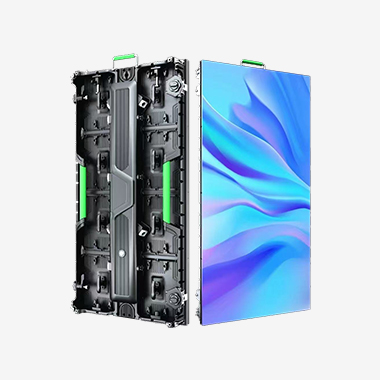
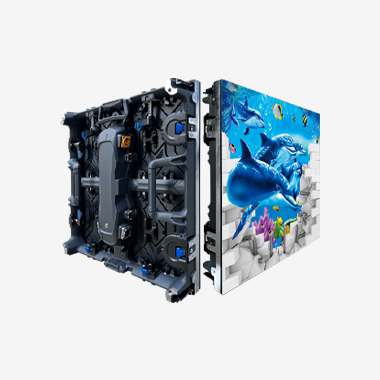
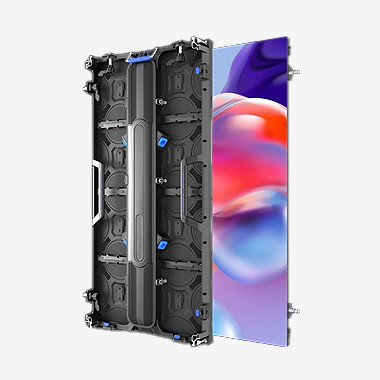
Multiple LED modules are then securely mounted into a rigid frame to form an LED Cabinet (or panel). Cabinets are designed for structural integrity, heat dissipation, and ease of installation. Their frames are typically made from die-cast aluminum or other lightweight, high-strength alloys, providing a stable platform for the modules while effectively drawing heat away from the LEDs and drivers through built-in heat sinks. Efficient thermal management is non-negotiable; excessive heat is the primary enemy of LED lifespan and color consistency. Cabinets also house the main receiving cards and power supplies. The receiving card is the brain of the cabinet, taking the data signal from the video processor and distributing it to the various driver ICs on the modules. Power supplies convert incoming AC power to the low-voltage DC power required by the LEDs.
The physical and electrical connection between cabinets is achieved through Fine-Pitch Connectors. These are high-density, locking connectors that ensure a secure, reliable transfer of data, power, and sometimes video signals from one cabinet to the next. Their precision is vital for maintaining signal integrity across the entire wall. To create a seamless image, the gaps between cabinets must be minimized. This Cabinet-to-Cabinet Gap (also known as the "bezel") is a critical specification, with high-end displays boasting gaps of less than 1mm. Advanced designs use seamless splicing technology to make these joins virtually invisible to the naked eye.
Supporting the entire array of cabinets is the Mounting Structure. This is the skeleton of the video wall, engineered to bear significant weight, ensure perfect alignment and flatness, and provide safety and security. Structures vary widely:
Fixed Installations: Use heavy-duty aluminum or steel trusses bolted to a wall or a dedicated support framework. They allow for precise, permanent alignment.
Mobile/Rental Walls: Are built into flight cases with quick-release mechanisms and built-in rigging points for rapid deployment, stacking, and dismantling for live events.
Creative Shapes: Require custom-engineered structures to accommodate curved, cylindrical, or other non-planar configurations.
The magic of transforming a source video into a coherent image across thousands of modules is performed by the Video Processor. This is the central nervous system of the video wall. Its tasks are complex: it accepts multiple input sources (HDMI, SDI, DisplayPort, IP streams), decodes and scales them to the native resolution of the LED wall, and then uses specialized algorithms to map the image correctly across the non-standard canvas. It performs color calibration and gamma correction to ensure uniformity across all modules and can handle advanced features like image overlay, picture-in-picture, and real-time data feed integration. The processor outputs the signal, which is then daisy-chained from cabinet to cabinet via network cables (often CAT5e/6 or fiber optic for long distances).
Finally, the entire system is managed through Software and Control Systems. This includes firmware on the receiving cards and, more importantly, user-friendly Content Management System (CMS) software. The CMS runs on a connected PC or server and provides the interface for users to configure the wall layout, adjust brightness and color settings, create and schedule playlists, and monitor the health of the system (e.g., temperature, power consumption). Modern systems often allow for control via web interfaces or mobile apps, offering unparalleled flexibility. This intricate symphony of hardware and software, from the nanoscale LED chip to the tons of metal trussing, is what makes the modern LED video wall a masterpiece of engineering.
The mesmerizing imagery on an LED video wall is the final result of a complex, high-speed orchestration of physics, electronics, and data processing. The working principle is a fascinating journey from a digital video file to the precise modulation of millions of individual light-emitting diodes. This process can be broken down into a coherent pipeline of data flow, conversion, and execution.
It all begins with the Content Source and Input. The raw video signal can originate from a multitude of sources: a media player with stored files, a live camera feed via SDI, a computer desktop over HDMI, or a network stream over IP. This source provides a standard video signal, but it is almost never in the perfect format for the LED wall. Its resolution (e.g., 1920x1080) is almost certainly different from the wall's unique native resolution, which is determined by the pixel pitch and the total number of cabinets.
This is where the Video Processor takes center stage as the conductor of the entire operation. Its first job is Ingestion and Decoding. It accepts the various input signals, often through multiple ports, and decodes them into a raw, uncompressed video frame buffer in its memory. The next, and most critical, task is Scaling and Resolution Mapping. The processor must intelligently scale the source image to fit the exact pixel dimensions of the entire LED wall. This is not a simple stretch; advanced algorithms (like bicubic or Lanczos scaling) are used to recalculate the image data and preserve clarity and detail. Crucially, the processor must then Map the Image onto the specific physical layout of the wall. The user configures the processor with the wall's precise geometry: how many cabinets are used, their arrangement (e.g., 4x4), and their individual pixel dimensions. The processor uses this map to chop the single, scaled image into chunks, each corresponding to an individual LED cabinet.
The processed data is then Transmitted to the wall itself. The video processor outputs this data stream via specialized LED sending cards, which convert the video data into a protocol understood by the LED cabinets. This is typically transmitted over high-speed network cables like CAT5e/6 or, for longer distances and higher data rates, fiber optics. This signal contains the color and brightness information for every single pixel on the entire wall.
At the cabinet level, the Receiving Card acts as the local brain. It takes the data packet meant for its specific cabinet from the network stream. Inside each cabinet, the data is further broken down and distributed to a series of Driver ICs (Integrated Circuits). These chips are the workhorses of the display, responsible for the final step of command execution. They are connected directly to the rows and columns of LEDs on the modules.
This is where the core principle of Pulse-Width Modulation (PWM) comes into play. An LED is a digital device; it can only be on or off. To create the perception of varying brightness levels (and hence, shades of color), the driver ICs use PWM. They switch each LED on and off at an incredibly high frequency—thousands of times per second. The ratio of "on" time to "off" time within each cycle is called the duty cycle. A 50% duty cycle means the LED is on half the time and off half the time, which the human eye perceives as 50% brightness. A 10% duty cycle appears as 10% brightness, and so on. By independently controlling the PWM for each red, green, and blue sub-pixel, the driver IC can create millions of different color combinations. A modern 16-bit system can control 65,536 levels of brightness per color, resulting in phenomenal color depth and smooth grayscale transitions, eliminating the "color banding" seen in inferior displays.
The entire process is governed by a Refresh Rate and a Gray Scale capability. The refresh rate is how many times per second the entire screen is redrawn. A high refresh rate (e.g., 3840Hz or higher) is essential to eliminate flickering, especially when viewed by cameras, and to ensure smooth motion portrayal. Gray scale defines the number of brightness steps available between fully off and fully on, directly contributing to image smoothness and color accuracy.
Finally, the Power Supply System provides the stable, low-voltage, high-current DC power required to illuminate the LEDs. Its stability is paramount, as any fluctuation can cause visible brightness variations across the wall. In summary, the working principle of an LED video wall is a relentless, real-time cycle: data is acquired, processed, disassembled, transmitted, reassembled, and converted into precisely timed electrical pulses that orchestrate a symphony of light, pixel by pixel, frame by frame, to create the stunning visuals we see.
The decision to deploy an LED video wall is a significant investment, and it is driven by a compelling set of advantages that often outweigh those of alternative display technologies like LCD video walls or projection. However, it is not without its own unique set of challenges and considerations. A clear-eyed evaluation of both sides is essential for making an informed choice.
Advantages:
Seamlessness and Scalability: This is the most defining advantage. LED walls have no physical bezels between modules when installed correctly, creating a continuous, uninterrupted canvas that is perfect for displaying large-scale imagery, data visualizations, and video content without distracting grid lines. Their modular nature means they can be built to any size or aspect ratio, from a small video wall in a conference room to a building-sized spectacular. They can also be configured into curved, circular, or other creative shapes, offering architectural flexibility that is impossible with flat panels.
Superior Brightness and Contrast: LED walls are emissive displays; each pixel produces its own light. This allows them to achieve extremely high levels of brightness (often measured in nits or cd/m²), making them clearly viewable even in direct sunlight—a domain where projections and many LCDs fail completely. Furthermore, because each pixel can be turned off completely, they achieve a true black level. This results in an exceptionally high contrast ratio, giving images incredible depth, pop, and vibrancy. There is no backlight bleed to wash out dark scenes.
Reliability and Long Lifespan: A well-designed and properly cooled LED wall is incredibly robust. LEDs are solid-state devices with no moving parts and a typical rated lifespan of 100,000 hours. Unlike projectors, there are no lamps to replace, and unlike LCDs, there is no single point of failure. The modular design also enhances reliability; if a single module fails, it can be replaced quickly without taking the entire wall offline, minimizing downtime.
Viewing Angle and Consistency: LED technology offers a near-180-degree viewing angle without any color shift or loss of contrast. This is far superior to LCD technology, where image quality degrades significantly when viewed off-axis. Advanced calibration techniques also ensure excellent color and brightness uniformity across the entire display, preventing the "panel matching" issues often seen in tiled LCD setups.
Low Maintenance for Large Formats: For very large installations, an LED wall can be more cost-effective to maintain over its lifetime than a projection system, which requires regular lamp replacements, filter cleaning, and precise calibration to maintain alignment and blending.
Challenges and Considerations:
Cost: The upfront capital expenditure (CAPEX) for an LED video wall is typically higher than for an equivalent-sized LCD wall or projection system. This includes not just the cost of the panels, but also the video processor, mounting structure, installation, and content creation. While prices have fallen significantly, especially for finer pitches, it remains a premium solution.
Pixel Pitch and Viewing Distance: This is the most critical technical consideration. The choice of pixel pitch directly dictates the minimum optimal viewing distance. A wall with a large pitch (e.g., P4) will appear pixelated and low-resolution if viewed up close, but is perfect for large stadiums. A fine-pitch wall (e.g., P1.2) is necessary for close-viewing applications like control rooms but comes at a much higher cost. Selecting the wrong pitch for the application is a common and costly mistake.
Power Consumption and Heat Generation: LED walls are power-hungry devices, especially when run at full brightness. A large wall can consume tens of kilowatts of electricity, requiring dedicated high-capacity circuits and robust cooling systems (often built into the cabinets) to manage the significant heat output. This has ongoing operational cost (OPEX) implications for energy bills and HVAC load.
Complexity of Installation and Calibration: Installing an LED wall is not a simple task. It requires structural engineering for safe mounting, precise physical alignment of all cabinets, and meticulous electronic calibration. This calibration, performed via the video processor, is necessary to ensure color and brightness uniformity across every module. It requires specialized knowledge and tools.
Content Demands: An LED wall has a non-standard, often very high, native resolution. Simply stretching standard HD (1080p) content to fit it will result in a soft, blurry image. To truly leverage the investment, content must be created or mastered at the wall's specific resolution, which requires more powerful hardware, higher bandwidth storage, and graphics expertise.
In conclusion, the advantages of seamless scalability, brilliant visuals, and robustness make LED video walls the undisputed champion for high-impact, large-format applications. However, the challenges of cost, technical specification (especially pixel pitch), and operational demands necessitate careful planning and a clear understanding of the application's requirements to ensure a successful and effective deployment.
The versatility of LED video wall technology has propelled its adoption across a breathtakingly diverse range of industries and environments. Its ability to scale, its unmatched visual impact, and its growing affordability have seen it move from niche applications to mainstream solutions. Concurrently, the technology is evolving at a rapid pace, with clear trends pointing toward an even more integrated and immersive future.
Applications:
Broadcast and Studios: This is a flagship application. LED walls have revolutionized television and film production by replacing traditional green screens with dynamic, photorealistic digital backgrounds. This "virtual production" technique, popularized by shows like "The Mandalorian," allows actors to perform within the actual environment, with the perspective and lighting on the LED wall shifting in real-time with the camera's movement, creating unparalleled realism and streamlining the post-production process.
Corporate and Education: In corporate lobbies, boardrooms, and command centers, LED walls project an image of innovation and technological prowess. They are used for brand storytelling, data visualization for executive dashboards, video conferencing with crystal clarity, and collaborative workspaces. In universities and lecture halls, they create immersive learning environments for displaying complex scientific models, historical timelines, or real-time data feeds.
Control and Security Centers: For mission-critical environments in transportation (air traffic control, metro systems), utilities (power grid management), and public safety (police and emergency dispatch), reliability and clarity are non-negotiable. LED walls provide a seamless, uninterrupted view of vast networks of data, maps, video feeds, and alerts, allowing operators to quickly assess situations and make informed decisions without the visual distraction of bezels.
Retail and Experiential Marketing: Brands use LED walls to create "retail theater" and immersive brand experiences within stores, at auto shows, or at product launches. The vibrant, dynamic content is incredibly effective at capturing attention, conveying brand messaging, and influencing consumer behavior in a way that static signage cannot match.
Live Events and Entertainment: From concert tours and music festivals to theater productions and award shows, rental-grade LED walls are the backbone of modern stage design. They create scalable, dynamic backdrops that transform throughout a performance, enhancing the artistic vision and amplifying the energy for the audience.
Public Spaces and Digital Out-of-Home (DOOH) Advertising: Airport concourses, shopping malls, flagship brand stores, and iconic outdoor locations like Times Square are dominated by LED advertising billboards. Their ability to schedule and rotate countless ads, display real-time information, and deliver breathtakingly bright and colorful content makes them the ultimate medium for mass audience engagement.
Future Trends:
Finer Pixel Pitches and MicroLED: The relentless drive toward smaller LEDs continues. The emergence of MicroLED technology, which uses microscopic, self-emissive LEDs that can be transferred onto virtually any substrate, promises a future of truly bezel-free, scalable displays with even higher brightness, better efficiency, and superior longevity. This will push optimal viewing distances even closer, opening up new applications in consumer electronics and ultra-high-end professional settings.
Virtual Production Mainstreaming: The techniques pioneered in high-end filmmaking will trickle down to smaller production houses, advertising agencies, and even live streaming. LED volumes will become more affordable and accessible, fundamentally changing how visual content is created.
Enhanced Interactivity and Integration: LED walls will evolve from passive display surfaces to interactive canvases. Integration with touch overlay technology, gesture control, and IoT sensors will allow users to interact directly with the content. Walls will dynamically respond to audience presence, weather data, or social media feeds, creating living, breathing installations.
Improved HDR and Color Fidelity: Advancements in driver technology and LED materials will enable wider color gamuts (rec2020) and higher dynamic range on large-format LED displays, matching the visual quality currently seen only on high-end consumer televisions.
Sustainability Focus: As energy costs rise, there will be a greater emphasis on developing more energy-efficient LEDs, driver ICs, and power supplies. Manufacturers will also focus on using recyclable materials and designing products for easier disassembly and repair at end-of-life, moving toward a circular economy model.
The trajectory is clear: LED video walls are becoming sharper, smarter, more efficient, and more deeply integrated into the workflows and environments of countless industries. They are shifting from being tools of mere presentation to becoming platforms for creation, collaboration, and connection.
Conclusion
The LED video wall has firmly established itself as a transformative technology, a cornerstone of modern visual communication whose impact is felt across the globe. From its humble beginnings as a simple array of indicator lights to its current status as a sophisticated, modular system capable of rendering breathtaking imagery on a monumental scale, its journey is a testament to human ingenuity and the relentless pursuit of visual excellence. It is more than just a screen; it is a dynamic digital canvas that has redefined the possibilities of advertising, entertainment, information management, and artistic expression.
This series has deconstructed the LED video wall, revealing it to be a marvel of integrated engineering. Its strengths are undeniable: the seamless, scalable canvas free from the constraints of bezels; the unmatched brightness and contrast that conquers any ambient light; the inherent reliability and longevity of solid-state technology; and the immersive viewing experience it creates from almost any angle. These advantages have made it the default choice for applications where failure is not an option, such as command centers, and where impact is everything, such as Times Square billboards and world-touring concert stages.
However, its adoption is not without careful consideration. The challenges of initial investment, the critical importance of selecting the correct pixel pitch for the viewing distance, and the demands it places on content creation and power infrastructure require a strategic and informed approach. A successful deployment is not just a purchase but a project, requiring expertise in structural engineering, electrical systems, and content management.
Looking forward, the future of LED video wall technology is blindingly bright. The advent of MicroLED promises to shatter current limitations, pushing resolutions higher and form factors thinner and more flexible. Its role in virtual production is already revolutionizing filmmaking and is set to expand into new creative fields. The trends point toward walls that are not just displays but interactive, intelligent surfaces that respond to their environment and their audience, blurring the line between the digital and physical worlds.
In conclusion, the LED video wall is the defining display medium of our digital age. It embodies a perfect synergy of art and science, of hardware and software. It empowers storytellers to captivate, analysts to comprehend, and brands to connect. As the technology continues to evolve, becoming more accessible, efficient, and capable, its canvas will only grow larger, its images sharper, and its integration into our daily lives more profound. The era of dynamic light is here, and the LED video wall is its most powerful and versatile instrument.


Copyright © 2026 Shenzhen Cogo Technology Co.,Ltd.
All Rights Reserved

 Previous article