




 Chat Now
The urban landscape and the world of entertainment have been irrevocably transformed by a vibrant, dynamic, and captivating technology: the LED display multimedia screen. More than just a simple screen, these sophisticated assemblies of light-emitting diodes (LEDs) have evolved into powerful communication and artistic platforms, capable of rendering breathtaking visuals that command attention and create immersive experiences. An LED multimedia screen is essentially a large, flat panel display that uses an array of LEDs as pixels to produce a video, image, or animation output. Unlike traditional projection or LCD video walls, these screens are self-illuminating, offering unparalleled brightness, color saturation, and scalability, making them the premier choice for applications ranging from colossal outdoor advertising billboards to intricate indoor studio backdrops.
The fundamental building block of any LED display is the LED itself—a semiconductor device that emits light when an electric current passes through it. The journey of LED technology from a simple indicator light to the core of massive multimedia canvases is a story of relentless innovation. Early LED displays were monochromatic, typically red, used for basic text and numeric information. The development of green and blue LEDs was the pivotal breakthrough, enabling the creation of full-color displays through the additive color mixing of Red, Green, and Blue (RGB) sub-pixels. By varying the intensity of these three primary colors, a single pixel can produce millions of hues, forming the basis of the vivid imagery we see today.
A modern LED multimedia screen is not a single, monolithic unit but a modular system. It is constructed from individual panels or cabinets, each containing a dense matrix of LED modules, which themselves are made up of countless pixels. This modular nature is its greatest strength, allowing for screens to be custom-built to virtually any size or aspect ratio—from a small video wall in a corporate lobby to a wraparound sphere or a curved screen enveloping an entire building facade. The content displayed on these screens is managed by a sophisticated ecosystem of hardware and software, including video processors that intake source signals, optimize them for the specific screen's resolution and layout, and distribute the data to the individual modules with precise synchronization.
The term "multimedia" is key to understanding their function. These screens are designed to be a hub for a variety of content formats. They can seamlessly switch between high-definition video feeds, animated graphics, real-time data visualizations, live social media feeds, and interactive content triggered by audience participation. This versatility makes them infinitely more engaging than static signage. They are dynamic storytellers, brand amplifiers, and public informants, all rolled into one visually stunning package.
The applications of LED multimedia screens are vast and growing. In the commercial realm, they are the kings of out-of-home (OOH) advertising, offering advertisers the flexibility to change campaigns instantly and schedule content for specific times of the day. In the world of sports and entertainment, they have become central to the spectator experience. Giant center-hung scoreboards in arenas provide instant replays, statistics, and crowd-hyping animations, while concert tours rely on massive, creatively shaped LED screens to create immersive visual environments that extend the artist's performance. Corporate events, broadcast studios, control rooms, and even high-end retail spaces leverage their impact to communicate messages with clarity and wow-factor.
In essence, the LED multimedia screen is a convergence of semiconductor physics, software engineering, and creative design. It has moved beyond being a mere tool for display and has established itself as an essential medium for modern communication, art, and spectacle. Its ability to stop people in their tracks, to convey information with emotional resonance, and to adapt to any environment ensures its position at the forefront of visual technology. As we delve deeper into its design, principles, and applications, the complexity and brilliance of this technology become even more apparent.
The awe-inspiring visual output of an LED multimedia screen belies a incredibly complex and meticulously engineered physical structure. Its design and construction are a masterclass in integration, balancing optical performance, electrical engineering, mechanical robustness, and thermal management. Understanding how these screens are built from the ground up is essential to appreciating their capabilities and limitations.
The hierarchy of construction begins at the smallest visible unit: the pixel. A full-color pixel is not a single LED but a cluster of three (or sometimes more) miniature LEDs: one red, one green, and one blue (RGB). These are mounted onto a substrate to form a single, color-capable point of light. The density of these pixels determines the screen's resolution. Pixel Pitch is the most critical specification in LED display design, referring to the distance (in millimeters) from the center of one pixel to the center of the adjacent pixel. A smaller pixel pitch means a higher density of pixels, resulting in a higher resolution and a sharper image that can be viewed from a shorter distance. Displays with a pitch of 1.2mm to 2.5mm are considered fine-pitch and are used for indoor applications like control rooms or corporate lobbies, while outdoor billboards may have a pitch of 10mm or more, as viewers are much farther away.
Multiple pixels are assembled onto a Printed Circuit Board (PCB) to form an LED Module. This module is the fundamental building block. It contains not only the LEDs but also the driver ICs (Integrated Circuits) that control the power and data signal sent to each individual LED. The design of the module—the arrangement of pixels, the type of LEDs used, and the quality of the components—directly impacts the overall performance of the screen. Modules are designed to be easily replaceable in the field, a crucial feature for maintenance.
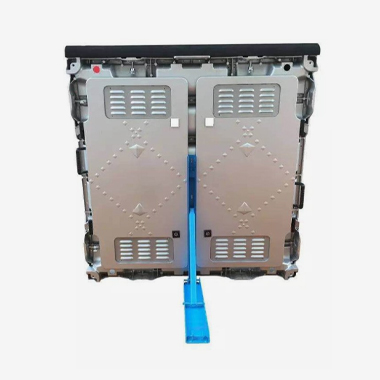
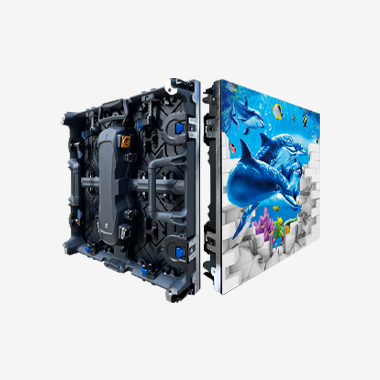
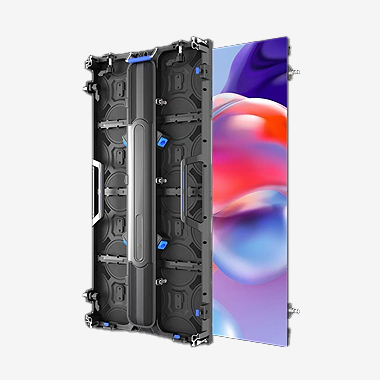
Several modules are then mounted into a rigid frame to create an LED Cabinet or Panel. This is the largest physical unit that is handled during installation. Cabinets are designed for structural integrity and include all the necessary electronics for their operation:
Driver Boards: These receive data from the video processor and translate it into commands for the driver ICs on the modules, controlling the brightness of each LED.
Power Supplies: Convert incoming AC mains power to the low-voltage DC power required by the LEDs and electronics.
Receiving Cards: Act as the communication hub within the cabinet, taking the data signal (often via a network protocol like Ethernet) and distributing it to the various driver boards.
Mechanical Structure: The metal frame provides rigidity, ensures modules are perfectly aligned (critical for a seamless image), and incorporates features for precise inter-cabinet alignment and mounting.
The choice of LED Type is another fundamental design decision. The two primary technologies are:
DIP (Dual In-line Package): An older technology where each red, green, and blue LED is a separate, bulb-shaped component. DIP LEDs are very bright and robust, making them well-suited for large outdoor displays where high brightness and weather resistance are paramount.
SMD (Surface-Mount Device): The current industry standard for most applications. All three RGB LEDs are packaged together as a single, miniature chip that is mounted directly onto the surface of the PCB. SMD technology allows for a much smaller pixel pitch, better color mixing, a wider viewing angle, and a more uniform surface. A variation of SMD, GOB (Glue on Board), involves adding a protective epoxy layer over the modules, making them more durable and resistant to moisture and impact.
For the highest-end applications, COB (Chip on Board) technology is emerging. Here, the individual LED chips are bonded directly to the PCB without first being packaged, and then a protective phosphor coating is applied. COB offers even greater durability, better heat dissipation, and superior reliability due to fewer failure points.
The physical construction is only half the story. The Housing design varies drastically by application. Outdoor cabinets are fully waterproof (IP65 rating or higher), corrosion-resistant, and often include integrated cooling fans or air conditioning systems to manage heat generated by the high-power LEDs and electronics. Indoor cabinets are lighter and slimmer, prioritizing aesthetics and quiet operation, often using passive convection for cooling.
Finally, all these cabinets are assembled on-site onto a truss or rigging system to form the complete LED Display. The entire system is then connected to a Video Processor—the brain of the operation. This specialized computer takes a standard video input (e.g., HDMI from a media player), maps it to the unique and often non-standard resolution of the LED wall, performs color calibration and image enhancement, and then outputs the signal to the sending device, which distributes it to all the cabinets with perfect synchronization. The meticulous design of every component, from the micron-scale LED chip to the multi-ton rigging structure, is what enables the creation of these magnificent windows into the digital world.
The magic of an LED multimedia screen—transforming a digital file into a brilliant, cohesive image—is governed by a precise sequence of electronic and computational processes. The working principle is a symphony of data transmission, power modulation, and optical emission, all synchronized to perfection.
The process begins with a Content Source. This could be a live video feed from a camera, a pre-rendered video file playing from a media server, a graphics package from a broadcast studio, or real-time data from software. This source generates a standard video signal (e.g., HDMI, SDI, DisplayPort) with a conventional resolution like 1920x1080 (1080p).
This signal is fed into the core intelligence of the system: the Video Processor or Controller. The processor's role is multifaceted and critical:
Input and Decoding: It accepts the incoming video signal and decodes it.
Resolution Scaling and Mapping: An LED wall rarely has a standard 16:9 resolution. Its total pixel count is determined by the number of cabinets and their native resolution. The processor must scale the source image to fit the native resolution of the LED wall. It creates a virtual canvas that matches the physical pixel layout of the screen.
Image Enhancement: The processor performs advanced algorithms to improve the image quality. This includes color calibration (to ensure consistency across all modules), brightness adjustment, contrast enhancement, and noise reduction. It can also handle tasks like splicing multiple sources together (Picture-in-Picture) or overlaying graphics.
Data Output and Distribution: The processed image data is broken down and packaged for distribution. The processor outputs this data, along with synchronization signals, to one or multiple Sending Cards (usually housed in an external box or within the processor itself).
The sending card converts the video data into a serial data stream that is transmitted to the display cabinets. Modern LED displays almost universally use high-speed network protocols like Ethernet-based systems (e.g., ART-NET, sACN, or proprietary protocols like NovaLCT, Colorlight). Using network switches, the data is distributed via CAT5e or fiber optic cables to the Receiving Cards located inside each individual LED cabinet. This network-based approach allows for daisy-chaining cabinets together, simplifying wiring over long distances and enabling precise control over vast arrays.
Inside each cabinet, the receiving card is responsible for a portion of the overall image. It takes the global data stream, extracts the portion relevant to its specific cabinet, and then further distributes that data to the various Driver Boards (or scan boards) attached to the LED modules. This is where the digital data starts its transformation into light.
The driver boards contain specialized Driver ICs (Integrated Circuits). Each driver IC is responsible for controlling a group of LEDs (often a row or a column on a module). They use a technique called Pulse-Width Modulation (PWM) to control the brightness of each individual Red, Green, and Blue LED. Instead of varying the analog voltage (which would change the color of the LED), PWM rapidly turns the LED on and off. The human eye perceives this rapid cycling as a sustained level of brightness. The ratio of "on" time to "off" time within a single cycle (the duty cycle) determines the perceived intensity. A 50% duty cycle appears as half brightness; a 10% duty cycle appears very dim. By independently controlling the PWM for each red, green, and blue sub-pixel, the driver IC can create the exact mix of colors required for that pixel.
This entire process—from the processor sending the data to every LED receiving its command—happens for every single frame of video. For a 60Hz refresh rate, this entire cycle repeats 60 times per second. The synchronization must be flawless; any delay or de-synchronization between cabinets would result in a torn or garbled image. The system relies on genlock (generator lock) and precise clock signals embedded in the data protocol to ensure every pixel across thousands of cabinets updates at the exact same moment.
Simultaneously, a robust Power System is at work. High-power LED displays, especially outdoor ones, consume significant electricity. Power supplies in each cabinet convert AC power to low-voltage DC (typically 5V). The distribution of power is carefully engineered to prevent voltage drop over long cable runs, which would cause uneven brightness across the screen. Proper grounding and surge protection are also critical to protect the sensitive electronics from damage.
In summary, the working principle is a cascade of data deconstruction and reconstruction. A full-image video signal is ingested, broken into digital data packets, sent across a network, reassembled by local controllers, and converted into precisely timed electrical pulses that command millions of individual light sources to emit the correct color and brightness at the exact same time, creating the illusion of a seamless, moving image.
LED multimedia screens have surged in popularity because they offer a compelling set of advantages over alternative display technologies like projection or LCD video walls. However, their deployment is not without significant challenges and considerations. A balanced view is essential for understanding their appropriate application.
Advantages:
Superior Brightness and Visibility: LEDs are self-emissive, meaning each pixel generates its own light. This allows them to achieve extremely high levels of brightness (measured in nits or cd/m²). This is their killer feature for outdoor applications, as they remain perfectly visible even in direct sunlight, a condition where projected images wash out completely. Indoor screens can be dimmed to comfortable levels while still outperforming most other technologies.
Exceptional Color Gamut and Consistency: LED displays can produce a very wide range of colors (wide color gamut), resulting in vibrant, saturated, and lifelike images. Advanced calibration software allows for color uniformity across the entire screen, ensuring a perfectly consistent image without the patchiness or color shifting that can plague projector blends or LCD walls.
Seamlessness and Modularity: Unlike LCD video walls that have visible bezels (the frame around each screen) that can disrupt the image, a well-installed LED wall is completely seamless. The modular nature means they can be built to any size or aspect ratio without any physical breaks in the image surface. They can also be curved, folded, or built into unconventional shapes (cylinders, curves, spheres) far more easily than other technologies.
High Reliability and Long Lifespan: LEDs are solid-state devices with no moving parts and are highly durable. High-quality LED displays are rated for 100,000 hours of operation before their brightness diminishes to 50% of original (a measure known as L70). This longevity, combined with modular design, means individual failed components can be replaced without taking the entire screen offline, ensuring a long service life.
Energy Efficiency: Compared to high-power projectors, modern LED displays are generally more energy-efficient for the amount of light output they generate. This is due to the directional nature of LED light, which is sent towards the viewer rather than in all directions, reducing wasted light.
Low Maintenance (Relative to Projection): For large-format displays, LED walls eliminate the need for regular maintenance associated with projectors, such as replacing expensive lamps, cleaning filters, and realigning lenses to maintain blend accuracy.
Challenges and Considerations:
Cost: The upfront acquisition and installation cost of an LED display, especially a fine-pitch model, is significantly higher than that of projection systems or LCD video walls. While the total cost of ownership over time may be favorable, the initial capital expenditure is a major barrier for many projects.
Pixel Pitch and Viewing Distance: This is a fundamental constraint. A screen with a large pixel pitch (e.g., P10) will appear pixelated and low-resolution if viewed from too close. The Minimum Viewing Distance is calculated based on the pitch. This means that for environments where viewers will be close (e.g., a control room or retail display), a very fine—and very expensive—pitch is required, driving up cost.
Power Consumption and Heat Management: While efficient per lumen, a massive LED wall still consumes a tremendous amount of power, requiring robust electrical infrastructure. This power is converted into both light and heat. Effective thermal management through heatsinks, fans, or even air conditioning is critical, as excessive heat drastically shortens the lifespan of the LEDs and electronics.
Complexity of Installation and Calibration: Installing a large LED wall is a complex engineering task requiring structural analysis, precise rigging, and expert technicians. Post-installation, the screen must be meticulously calibrated for color and brightness uniformity across all modules—a process that requires specialized equipment and expertise.
Potential for Pixel Failures: While individual LEDs are reliable, a screen comprised of millions of them means that some will inevitably fail over time, creating dark or stuck pixels. While modules are replaceable, managing this requires a maintenance program and can be visually distracting if failures cluster in one area.
Content Production Demands: To look its best, content for an LED wall often needs to be produced or at least adapted for its specific non-standard resolution and aspect ratio. Using content designed for a 16:9 screen on a very wide or tall LED wall can result in stretching, cropping, or letterboxing, undermining the immersive effect.
In conclusion, the advantages of LEDs—their brightness, seamlessness, and flexibility—make them unbeatable for large-scale, high-impact applications. However, the challenges of cost, technical constraints like pixel pitch, and operational demands mean they are not a one-size-fits-all solution. The decision to use an LED display must be a calculated one, weighing its spectacular visual benefits against its significant practical and financial requirements.
The applications of LED multimedia screens have exploded, moving from niche uses to mainstream pillars of modern communication, entertainment, and architecture. Concurrently, the technology itself is undergoing rapid evolution, with several key trends shaping its future.
Diverse Applications:
Outdoor Advertising (Digital Out-of-Home - DOOH): This remains one of the largest applications. LED billboards in high-traffic urban areas offer advertisers dynamic, programmable, and attention-grabbing canvases. They can run multiple ads in a loop, schedule content for specific times of day, and even react to real-time data like weather or traffic.
Sports and Entertainment Venues: Modern stadiums and arenas are defined by their massive LED installations. This includes center-hung scoreboards, ribbon boards encircling the seating bowl, and perimeter advertising. They enhance the fan experience with instant replays, player stats, and interactive content. Concert tours rely on elaborate, often creatively shaped LED screens as the central visual element of stage design, creating immersive environments.
Broadcast and Studio Production: LED walls have revolutionized television and film production. They are used as virtual production backgrounds, displaying hyper-realistic, dynamic CGI environments in real-time. This replaces green screens, allowing actors to see the final environment and enabling in-camera visual effects, as seen in productions like "The Mandalorian."
Corporate and Live Events: Conferences, product launches, and trade shows use LED walls as backdrops for presentations. They provide a bright, high-impact visual that remains clear under stage lighting and can be built to massive sizes to impress audiences.
Retail and Hospitality: High-end retail stores, hotels, and casinos use fine-pitch LED displays to create atmospheric branding, display products, and provide dynamic wayfinding or information. They project an image of modernity and luxury.
Control and Command Centers: In settings where decision-making is critical (e.g., traffic management, security monitoring, power grid control), fine-pitch LED video walls provide a seamless, reliable, and customizable platform for visualizing complex data sets from multiple sources.
Architectural Integration (Media Facades): Entire buildings are being transformed into dynamic pieces of public art using LED technology integrated into their exteriors. These media facades can display artistic content, public service announcements, or become landmarks that change their appearance for holidays and special events.
Future Trends:
Finer Pixel Pitches: The relentless drive towards smaller, more densely packed pixels continues. MicroLED and MiniLED technologies are pushing pitches below 1.0mm (P0.9, P0.7), enabling ultra-high-resolution screens for applications where viewers are extremely close, such as consumer televisions and professional design monitors.
MicroLED Technology: This is the holy grail. MicroLED involves mounting microscopic, self-emissive LEDs directly onto a substrate. It promises the perfect combination of OLED-like perfect blacks and incredible resolution with the brightness, longevity, and durability of traditional inorganic LEDs. While currently cost-prohibitive for large-scale use, it represents the future of display technology.
Transparent LED Displays: By using special LED modules and fine wires, manufacturers are creating displays with high levels of transparency. These can be installed on glass windows and facades, allowing viewers to see through the screen when content is not displayed. This is ideal for retail storefronts, museum exhibits, and architectural applications where preserving visibility and natural light is important.
Flexible and Conformable LEDs: LEDs are being mounted on flexible substrates, allowing for screens that can be bent, curved, or even rolled up. This opens up new possibilities for creative stage designs, unconventional architectural installations, and even future consumer products.
Enhanced Interactivity and Integration: LED screens are becoming smarter and more connected. Integration with sensors, cameras, and IoT (Internet of Things) devices will enable interactive experiences where the screen content reacts to audience movement, weather data, or social media feeds in real-time. This transforms them from passive broadcast mediums into responsive communication hubs.
Improved Sustainability: The industry is focusing on reducing power consumption through more efficient LED chips, driver electronics, and power supplies. The use of recyclable materials in cabinets and a focus on longevity and repairability are also becoming key selling points as environmental concerns grow.
The trajectory is clear: LED multimedia screens will become sharper, more flexible, more integrated into our environments, and ultimately, more intelligent. They are evolving from being simple display devices into becoming the dynamic digital skin of our built environment and the foundational canvas for the next generation of visual experiences.
Conclusion
The LED display multimedia screen stands as a testament to human ingenuity, a technology that has fundamentally reshaped how we communicate, entertain, and interact with our environment. From its humble beginnings as a monochromatic information panel, it has matured into a sophisticated and dominant visual medium, unparalleled in its impact and versatility. This journey through its overview, construction, principles, pros and cons, and applications reveals a technology that is both complex in its engineering and profound in its simplicity of purpose: to create light and color with breathtaking precision and scale.
Its core strengths are undeniable. The self-emissive nature of LEDs grants them a commanding brightness that defeats ambient light, while their modular architecture allows for the creation of seamless canvases of any size or shape, free from the physical boundaries that constrain other technologies. This flexibility has made them the undisputed choice for applications where impact is paramount—from the towering digital billboards of Times Square to the immersive virtual sets of Hollywood and the awe-inspiring spectacle of a world-tour concert.
However, this power does not come without compromise. The technology imposes its own set of rules, primarily governed by the critical relationship between pixel pitch and viewing distance. This, coupled with significant upfront costs and operational complexities, demands careful planning and a clear understanding of the intended use case. An LED screen is not a casual investment but a strategic one, chosen for situations where its superior performance justifies its requirements.
Looking forward, the future of LED multimedia technology is radiant with potential. The relentless innovation toward finer pitches, exemplified by the emerging promise of MicroLED, points to a future where the line between screen and reality becomes increasingly blurred. Trends like transparency, flexibility, and intelligent interactivity are expanding the very definition of a screen, transforming static surfaces into dynamic, responsive interfaces integrated into the fabric of our architecture and daily lives.
In conclusion, the LED multimedia screen is more than just a tool; it is a transformative medium. It has redefined advertising, revolutionized live events and broadcast production, and empowered new forms of artistic and architectural expression. It is a bridge between the digital and physical worlds, a canvas for stories and data alike. As the technology continues to evolve, becoming more accessible, efficient, and capable, its role as a central pillar of our visual culture is only set to deepen, ensuring that the future, quite literally, looks brighter.


Copyright © 2026 Shenzhen Cogo Technology Co.,Ltd.
All Rights Reserved

 Previous article