




 Chat Now
The modern museum is no longer a silent repository of artifacts; it is a dynamic, interactive, and immersive environment dedicated to storytelling and audience engagement. At the heart of this transformation is the LED (Light Emitting Diode) multimedia screen. More than just a display, it has become a fundamental architectural and narrative tool, a digital canvas that bridges the gap between the static past and the dynamic present. This overview explores the role, evolution, and foundational impact of LED technology within the contemporary museum landscape.
The traditional museum experience, centered on static displays and text-heavy placards, often struggled to captivate a generation raised on digital media. The challenge became not just to inform, but to connect, evoke emotion, and create memorable moments. The introduction of screen-based technology began with projectors and LCD panels, but these solutions came with significant limitations—low brightness in ambient light, visible bezels disrupting seamless imagery, and inadequate contrast for deep, engaging visuals.
The advent of high-fidelity, fine-pitch LED technology marked a paradigm shift. Unlike its predecessors, LED displays are self-emissive, meaning each pixel generates its own light. This fundamental characteristic unlocks a new realm of possibilities. Museums, with their specific needs for visual excellence, narrative flexibility, and architectural integration, found an ideal partner in LED screens.
The core function of an LED multimedia screen in a museum is multifaceted. Primarily, it is a storytelling engine. It can transport visitors to ancient civilizations through reconstructed digital landscapes, bring archival photographs and films to life with stunning clarity, and visualize complex scientific or artistic processes in real-time. For example, a history museum can use a vast LED wall to create a panoramic, moving timeline of a major event, while a natural history museum can plunge visitors into a hyper-realistic, digital deep-sea ecosystem.
Secondly, it is an instrument of immersion. LED technology allows for the creation of seamless, large-scale, and even curved or wrapped displays that fill the visitor's field of vision. This capability is crucial for immersive art exhibitions, where the boundary between the viewer and the artwork dissolves. Renowned examples include teamLab's borderless digital art museums, where endless, flowing animations across massive LED surfaces create a sense of infinite space and wonder. This immersion fosters a deeper emotional and sensory connection to the subject matter, making the educational content more impactful and retention higher.
Furthermore, LED screens serve as dynamic spatial organizers. They can be used to divide large halls without building physical walls, create changing thematic zones within a flexible gallery space, or serve as a central orienting landmark within a museum's floor plan. The content on these screens can be updated instantly, allowing a single physical space to morph from a prehistoric jungle to a futuristic cityscape, thereby maximizing the utility and versatility of the museum's real estate.
The evolution of LED technology, particularly the move towards finer pixel pitches (the distance between the centers of two adjacent LEDs), has been critical for museum adoption. Museums often require close viewing distances, as visitors may stand just a few feet from a display to appreciate intricate details. Early LED screens, with pitches measured in tens of millimeters, were only suitable for large stadiums. Today, fine-pitch (P2.5 to P1.0) and even microLED (sub-P1.0) displays offer pixel densities that rival the sharpness of high-end televisions, making them suitable for intimate gallery settings where image quality is paramount.
In conclusion, the LED multimedia screen represents a cornerstone of the 21st-century museum's toolkit. It has evolved from a novel gimmick to an essential medium for interpretation, education, and artistic expression. By offering unparalleled brightness, contrast, flexibility, and scalability, LED technology empowers curators, artists, and educators to craft experiences that are not only informative but truly transformative, ensuring that museums remain relevant and captivating cultural destinations in the digital age.
The integration of an LED multimedia screen into a museum is a complex interplay of art, engineering, and architecture. Its design and construction are not merely about choosing a screen off the shelf; it is a bespoke process of creating a "digital artifact" that must meet stringent aesthetic, technical, and environmental standards. This section delves into the critical considerations, from pixel-level engineering to grand architectural integration, that define the creation of these sophisticated display systems.
The journey begins with the fundamental building block: the LED module. A single module is a printed circuit board (PCB) populated with clusters of red, green, and blue (RGB) LED chips, a driver IC (Integrated Circuit) to control them, and other necessary components. The density of these LEDs on the module determines the screen's pixel pitch. For museums, where viewers can be as close as one meter away, a fine pixel pitch (typically between P0.9 and P2.5) is mandatory to ensure a smooth, bezel-free image without a visible "screen door effect" where the gaps between pixels become distracting.
The choice of LED chip technology is paramount. Black Surface LED technology is often preferred in museum settings. In these LEDs, the surface surrounding the individual diode is coated black instead of the traditional white or silver. This dramatically reduces light reflection within the module, significantly enhancing the contrast ratio. In the low-ambient-light environments common in galleries, this results in deeper, more true-to-life blacks and more vibrant colors, which is crucial for displaying artistic and historical content with fidelity.
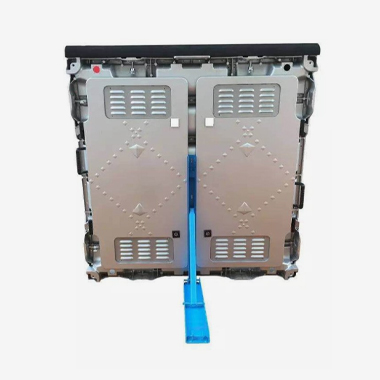
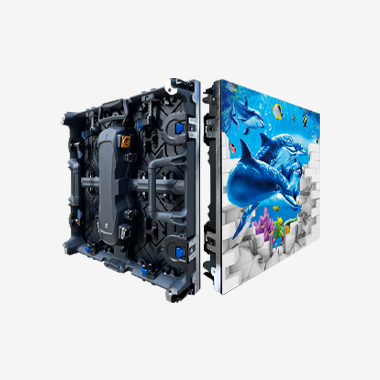
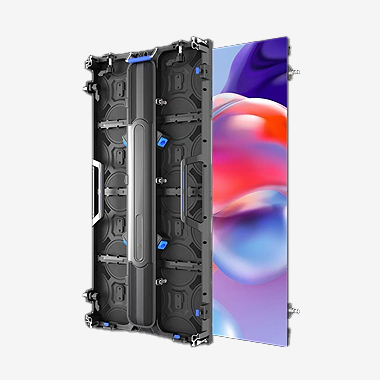
These modules are then assembled into larger cabinets, which form the structural units of the display. Museum-grade LED cabinets are engineered for precision and reliability. They feature:
Ultra-Narrow Bezels: The metal frame around each cabinet is designed to be as thin as physically possible. When cabinets are assembled together, these bezels become virtually invisible, creating a seamless canvas crucial for immersion.
High Refresh Rates: To prevent flickering and ensure smooth playback of fast-motion video content (e.g., historical footage, dynamic animations), the screens must operate at high refresh rates (≥3840Hz), which is especially important when being recorded by visitor cameras.
Color Calibration: To ensure visual consistency across the entire display, each module undergoes rigorous color calibration. Advanced systems can achieve over 90% coverage of the DCI-P3 or even BT.2020 color gamuts, delivering a breathtaking range of colors that can accurately reproduce priceless artworks or historical scenes.
Cabinet Design: Depending on the installation, different cabinet designs are used. Front-Serviceable Cabinets allow for maintenance (like replacing a module) from the front of the screen, which is vital for wall-mounted installations where rear access is impossible. For curved or unusual shapes, flexible cabinets are employed.
The physical installation is a feat of structural engineering. The sheer weight and size of a large LED wall require custom support structures, often engineered to integrate with the museum's existing architecture without compromising its integrity. This structure must provide perfect flatness and alignment; even a millimeter of misalignment between cabinets can break the illusion of a seamless image.
Cooling systems are another critical design factor. LEDs generate heat, and excessive heat can reduce lifespan and cause color shift. Museums, which prioritize silent operation, cannot use loud fan-based cooling. Therefore, most museum-grade LED displays utilize passive cooling or silent convective cooling systems that rely on advanced heat sink designs within the cabinets to dissipate heat quietly and efficiently.
Finally, the design process is never just about the screen itself. It involves seamless integration with media servers and content management systems (CMS). The media server is the brain, responsible for processing and outputting ultra-high-resolution signals to the screen. The CMS allows curatorial staff to easily schedule and play content—switching from a daytime educational loop to a special evening immersive show without needing specialized technical knowledge.
In essence, the design and construction of a museum LED screen is a holistic process. It demands a collaboration between LED manufacturers, structural engineers, architects, audiovisual integrators, and museum curators. The goal is to create a reliable, high-performance visual instrument that feels like a natural and timeless part of the museum's fabric, enabling stories to be told in ways never before possible.
An LED multimedia screen appears as a monolithic, magical canvas. Yet, its operation is a sophisticated symphony of electronics, software, and optics, all working in perfect harmony to translate digital data into breathtaking visual experiences. Understanding these working principles is key to appreciating the engineering marvel that enables such profound applications in museums.
The process begins with the content source. This could be a pre-rendered video file, a live feed, or real-time generative art created by software like TouchDesigner or Notch. This source material is fed into a powerful media server (e.g., Disguise, Hippotizer, 7thSense). The media server is the conductor of the symphony. Its primary role is to process the incoming video signal and map it correctly across the unique pixel dimensions and geometry of the LED wall. For non-standard shapes (curves, columns, tunnels), the server warps and blends the image to ensure it looks perfectly proportioned from the intended viewer perspective.
The media server outputs the processed signal to the LED receiver cards (or controller cards), which are typically housed within the LED cabinets. This connection is usually made via high-bandwidth protocols like HDMI 2.1, SDI, or specialized network protocols like HDBaseT to ensure the transmission of uncompressed, high-frame-rate 4K/8K video without latency.
The receiver card's job is to distribute the data to the specific rows and columns of LEDs on each module. This is managed by a crucial component: the LED driver IC. These tiny chips are the workhorses of the display. They use a technique called Pulse-Width Modulation (PWM) to control the brightness and color of each individual LED.
PWM works not by varying the voltage to the LED (which would change its color), but by switching it on and off at an incredibly high speed—thousands of times per second. The ratio of "on" time to "off" time within each cycle (the duty cycle) determines the perceived brightness. A 50% duty cycle results in 50% brightness. By independently controlling the PWM for the red, green, and blue sub-pixels, the driver IC can create millions of color combinations. The refresh rate (how many times per second the entire screen redraws itself) and the grayscale depth (how many levels of brightness can be displayed, e.g., 16-bit) are determined by the precision of these driver ICs. High refresh rates eliminate flicker, and high grayscale depth enables smooth color gradients and incredible detail in shadows and highlights.
At the most fundamental level is the LED chip itself. It is a semiconductor diode. When an electric current passes through it, electrons recombine with electron holes within the device, releasing energy in the form of photons—light. The specific materials used in the semiconductor determine the color of the light emitted: Gallium Arsenide Phosphide (GaAsP) for red, Gallium Phosphide (GaP) for green, and Indium Gallium Nitride (InGaN) for blue. By placing a red, a green, and a blue LED very close together, they form a single pixel. By varying the intensity of each of these three colors, the human eye perceives a single, full-color pixel.
For the museum staff, the interaction with this complex system is simplified through a Content Management System (CMS). This software interface allows them to upload videos, create playlists, schedule shows for specific times of day, and even trigger content changes based on external inputs (e.g., a sensor detecting a visitor's presence). The CMS talks to the media server, which then executes the commands, ensuring the right content is played on the multi-million-pixel canvas at the right time.
In summary, the working principle of an LED wall is a cascade of precision: from the media server processing and mapping vast amounts of data, to the receiver cards distributing it, to the driver ICs using PWM to control current, down to the fundamental physics of semiconductors in each LED chip emitting photons. This entire chain operates with high speed and fidelity to create the vibrant, dynamic, and seamless visuals that are revolutionizing museum storytelling.
The adoption of LED multimedia screens in museums offers a transformative set of advantages that align perfectly with the goals of modern cultural institutions. However, this powerful technology is not without its significant challenges and costs. A clear-eyed evaluation of both sides is essential for any museum considering such an investment.
Advantages:
Unmatched Visual Performance: LEDs set the industry standard for image quality. Their self-emissive nature provides perfect black levels by simply turning off individual pixels, resulting in an infinite contrast ratio that LCDs with their always-on backlights cannot match. This is critical for displaying art with deep shadows and rich tonal ranges. They also offer superior peak brightness (nits), allowing displays to remain vibrant and clear even in sunlit atriums, while also being dimmable for low-light galleries.
Seamlessness and Scalability: The ability to create vast, bezelless video walls of nearly any size or shape is a game-changer for immersion. Unlike tiled LCD walls, where visible bezels create a grid that disrupts the visual field, LED walls act as a single, continuous canvas. They can be curved, wrapped around columns, or even formed into 3D shapes, offering architects and designers unprecedented creative freedom.
Longevity and Reliability: High-quality LED panels have a long operational lifespan, often rated at 100,000 hours to half-brightness. They are less susceptible to image retention or "burn-in" compared to OLED technology. With a modular design, if a section fails, only the specific module or cabinet needs replacement, minimizing downtime and long-term cost.
Operational Flexibility and Sustainability: A single LED wall can host an endless rotation of exhibitions, eliminating the physical waste and cost associated with building, shipping, and dismantling traditional set pieces. Digital content can be updated instantly, allowing the museum to respond to current events, showcase new research, or repurpose the space for different audiences (e.g., a daytime educational program and an evening cocktail event).
Challenges and Considerations:
High Initial Investment: The upfront cost is the most significant barrier. Fine-pitch LED technology, along with the required media servers, structural engineering, installation, and content creation, represents a major capital expenditure. The return on investment must be measured in terms of enhanced visitor attraction, longer dwell times, and sponsorship opportunities rather than direct revenue.
Content Creation Demands: A screen is only as compelling as its content. Creating high-resolution, museum-quality video and interactive experiences is a specialized and expensive endeavor. Museums must either develop in-house expertise or partner with digital media studios, adding a continuous operational cost beyond the initial hardware purchase.
Technical Complexity and Maintenance: Operating a professional LED system is not like running a consumer television. It requires dedicated technical staff or service contracts for troubleshooting, calibration, and repairs. While modules are replaceable, maintaining a stock of spares and managing the logistics of repairs requires foresight and planning.
Energy Consumption and Heat Management: Large-format LED displays consume substantial electricity, contributing to operational costs and the museum's carbon footprint. The heat generated must be managed by efficient, silent cooling systems to protect the electronics and avoid adding load to the building's HVAC.
Cultural and Aesthetic Fit: There is an ongoing debate about the role of technology in cultural spaces. Critics argue that large, bright screens can be overpowering, creating sensory competition with physical artifacts and undermining the contemplative atmosphere traditionally associated with museums. The technology must be used judiciously—as a window to enhance understanding rather than a spectacle that distracts from it.
In conclusion, while LED screens offer unparalleled tools for engagement, immersion, and dynamic storytelling, they demand significant financial, technical, and creative resources. The key to success lies in a strategic approach where the technology is thoughtfully integrated to serve the museum's mission, complement rather than overshadow the collection, and is supported by a sustainable plan for content and maintenance.
The application of LED multimedia screens in museums has moved far beyond simple video playback. They have become versatile platforms enabling a new language of exhibition design. Concurrently, emerging trends point toward an even more integrated and intelligent future, blurring the lines between the physical and digital realms.
Current Applications:
Immersive Environments and Digital Art: This is the most prominent application. Vast, floor-to-ceiling LED walls create all-enveloping environments. Examples include recreating a Van Gogh painting where brushstrokes animate and flow around the viewer (e.g., Atelier des Lumières) or simulating a walk through a prehistoric rainforest. These exhibits are powerful drawcards, attracting new and broader audiences.
Contextual Enhancement of Artifacts: LEDs are used to provide dynamic context for physical objects. A display behind an ancient Greek vase can show a video of how it was made and used. A screen next to a fossil can show a CGI reconstruction of the living creature in its habitat. This "digital label" provides layers of information that a static text panel cannot.
Interactive Experiences: By integrating touch overlays, motion sensors, or camera tracking, LED walls become reactive canvases. Visitors can digitally reassemble pottery fragments, navigate through a historical map by touching it, or see their silhouette interact with particles of light. This transforms passive viewing into active learning, which is particularly effective for family and school audiences.
Architectural Mapping and Set Design: LEDs are used to transform the architecture of the museum itself. They can turn a plain wall into a dynamic portal or use 3D mapping techniques to make a physical set piece (like a replica of a space capsule) appear operational, with animated controls and changing views out of a "window."
Wayfinding and Dynamic Lobby Spaces: In museum lobbies, large LED screens can serve dual purposes: displaying breathtaking artistic content to set the tone for the visit, while also providing real-time information about exhibitions, events, and wayfinding, all in a visually compelling format.
Future Trends:
The Rise of MicroLED and Transparent LED: MicroLED technology, with microscopic LEDs transferred directly to a substrate, promises even finer pitches, higher brightness, and better energy efficiency. This will enable screens to be viewed from inches away, making them suitable for displaying digital facsimiles of even the most delicate manuscripts. Transparent LED screens allow viewers to see both the digital content and the physical artifact behind the glass, enabling magical layered experiences without completely obscuring the real object.
Integration with XR (Extended Reality): The high resolution and low latency of future LED walls will allow them to function as the perfect background for Augmented Reality (AR) and Mixed Reality (MR) experiences. Visitors wearing AR glasses could see digital reconstructions overlaid on physical ruins, while the LED wall provides the correct environmental lighting and context for a seamless blend of real and virtual.
AI-Powered Personalization and Interactivity: Artificial Intelligence will drive the next generation of interactivity. Cameras and sensors (anonymously) tracking visitor movement could allow the screen content to react and evolve based on crowd behavior. AI could also tailor the narrative or the language of the on-screen information in real-time based on who is looking at it.
Sustainable Technology: Future developments will focus on reducing the carbon footprint of LED displays. This includes more energy-efficient LED chips and driver ICs, the use of recycled materials in cabinets, and designs that facilitate easier recycling at the end of the product's life.
The Phygital Fusion: The future lies not in digital replacing physical, but in their deep integration—the "phygital." We will see more exhibits where a physical sculpture is lit by an LED wall that extends its form into infinity, or where a visitor's interaction with a real object triggers a unique narrative on the surrounding digital canvas. The LED screen will cease to be a separate entity and will become an intrinsic, responsive part of a unified exhibition ecosystem.
The trajectory is clear: LED technology will become more pervasive, more invisible, and more intelligent. It will evolve from a tool for display into a medium for creating deeply personal, responsive, and unforgettable dialogues between the visitor and the collection.
Conclusion
The integration of LED multimedia screens into the museum represents far more than a simple technological upgrade. It signifies a profound evolution in the very mission and methodology of cultural institutions. It is a strategic response to a changing world, a commitment to new forms of storytelling, and an investment in enduring public relevance. As we have explored, this technology is not a mere spectacle; it is a sophisticated, versatile, and powerful medium that, when deployed with intention and expertise, can deepen understanding, amplify emotion, and expand the boundaries of what a museum can be.
The journey from overview to future trends reveals a consistent theme: the primacy of purpose. The value of an LED screen is not inherent in its pixel density or its brightness, but in its ability to serve a curatorial vision. Its success is measured by its capacity to make the abstract concrete, the distant immediate, and the complex comprehensible. It has proven its worth as an immersive gateway to other worlds, a dynamic lens for examining artifacts, and an interactive playground for inquiry-based learning.
However, this digital renaissance must be approached with wisdom and balance. The challenges of cost, content creation, and technical maintenance are non-trivial. The seductive power of the screen must never be allowed to eclipse the authentic power of the original artifact. The goal is synergy, not replacement. The most successful applications of this technology are those that create a dialogue between the physical and the digital, where each enhances the value and impact of the other. The silent, timeless presence of a millennia-old sculpture can be made even more potent when a dynamic digital display explains the world from which it came.
Looking forward, the trajectory of LED technology points toward even greater integration and intelligence. With advancements in microLED, transparent displays, and AI-driven interactivity, the digital canvas will become more seamless, more responsive, and more personal. It will move from being a surface we look at to an environment we are in and an agent we interact with.
In conclusion, the LED multimedia screen has firmly established itself as a cornerstone of the modern museum's toolkit. It is a catalyst for engagement, a engine for education, and a canvas for artistic innovation. By embracing this technology thoughtfully and creatively, museums can transcend their traditional roles. They can become living, breathing organisms that adapt, respond, and continue to fulfill their most vital function: to safeguard our shared heritage and tell the human story in ways that resonate, inspire, and wonder, for generations to come. The light of the LED is, ultimately, a light shone on the past to illuminate the future.


Copyright © 2026 Shenzhen Cogo Technology Co.,Ltd.
All Rights Reserved

 Previous article