




 Chat Now
In the highly competitive landscape of the retail industry, large LED TV display screens have emerged as a powerful and versatile tool, revolutionizing the way retailers engage with customers, promote products, and enhance the overall shopping experience. These displays, characterized by their large - scale format, high - definition visuals, and dynamic content capabilities, have become an integral part of modern retail store setups, from small - scale boutiques to sprawling department stores and shopping malls.
The growing adoption of large LED TV display screens in retail stores can be attributed to several key factors. Firstly, they offer an effective means of capturing customers' attention in a bustling retail environment. In a store filled with various products and competing visual stimuli, a large, vibrant LED TV screen displaying eye - catching images, videos, or promotional messages can effortlessly draw the gaze of shoppers. The high - resolution displays ensure that every detail of the content, whether it's a close - up of a product's features or a vivid demonstration of its usage, is clearly visible, even from a distance. This clarity and visual appeal are crucial for effectively communicating product information and enticing customers to explore further.
Secondly, large LED TV display screens provide retailers with unparalleled flexibility in content management. Unlike traditional static signage, these digital displays allow for easy and instant updates of content. Retailers can quickly change the displayed advertisements, product promotions, or informational messages to reflect the latest offers, seasonal trends, or customer preferences. For example, during a holiday sale, a retailer can instantly switch the LED TV screen to feature festive - themed promotions, special discounts, and recommended gift items. This agility in content presentation enables retailers to stay relevant and responsive to market changes, maximizing the impact of their marketing efforts.
Moreover, these displays contribute significantly to enhancing the in - store shopping experience. They can be used to provide valuable information to customers, such as product details, usage instructions, customer reviews, and comparison guides. In a technology store, for instance, a large LED TV screen can showcase the features and benefits of the latest smartphones, display hands - on video tutorials, and present ratings and feedback from other users. This not only helps customers make more informed purchasing decisions but also builds trust and confidence in the products and the brand. Additionally, large LED TV display screens can create a more immersive and engaging atmosphere in the store, making the shopping experience more enjoyable and memorable for customers.
Another advantage is the potential for targeted marketing. By integrating with customer data analytics systems, large LED TV display screens can display personalized content based on factors such as customer demographics, shopping history, and in - store behavior. For example, if a customer frequently purchases athletic wear, the LED TV screen in the sports section of a store can display targeted advertisements for new running shoes, workout apparel, or fitness accessories. This personalized approach to marketing can increase the effectiveness of promotions and drive higher sales conversion rates.
However, the implementation of large LED TV display screens in retail stores also presents certain challenges. These include the high initial investment cost, technical complexity in installation and maintenance, the need for high - quality content creation, and ensuring seamless integration with the existing store infrastructure. Despite these challenges, the benefits and potential of large LED TV display screens in the retail industry continue to drive their widespread adoption and continuous evolution.
The design and construction of large LED TV display screens for retail stores are complex processes that require a careful balance of aesthetic appeal, technical functionality, and seamless integration with the store's overall layout and branding. Each step of the design and construction journey is meticulously planned and executed to ensure that the final product meets the specific requirements of the retail environment and delivers an exceptional visual experience for customers.
Design Considerations
Store Layout and Brand Alignment: The first and foremost design consideration for a large LED TV display screen in a retail store is the store layout. The screen needs to be strategically placed to maximize visibility and footfall. In a large department store, it might be positioned near the entrance to welcome customers and showcase the latest promotions, or in high - traffic areas such as product aisles or checkout counters. In a boutique, a more compact and stylishly designed LED TV screen could be integrated into the store's decor to enhance the brand image. The design of the screen, including its size, shape, color, and frame style, should align with the store's brand identity. A luxury brand may opt for a sleek, minimalist LED TV screen with a high - end finish, while a family - friendly store might choose a more colorful and playful design to appeal to a wider audience.
Size and Resolution Determination: Selecting the appropriate size and resolution of the large LED TV display screen is crucial. The size should be based on factors such as the available space, viewing distance, and the amount of content to be displayed. In a small - scale store, a relatively smaller screen may be sufficient to convey the message without overwhelming the space, while in a large shopping mall or hypermarket, a much larger screen may be required to attract attention from a distance. Resolution is equally important, as higher resolutions offer sharper and more detailed images. For displaying high - quality product images, videos, and graphics, a minimum resolution of 1920×1080 (Full HD) is often recommended. However, with the increasing demand for ultra - clear visuals, 4K (3840×2160) and even 8K (7680×4320) resolution LED TV screens are becoming more popular, especially for luxury brands and high - end product displays.
Content - Driven Design: The design of the large LED TV display screen should be tailored to the type of content that will be showcased. Different content, such as product advertisements, brand stories, or customer testimonials, may require specific design features. For video - heavy content, a high refresh rate is essential to ensure smooth playback without any motion blur. For text - based promotions, clear and legible fonts need to be selected, and the layout should be designed to be easily readable at a glance. Additionally, the display should support various content formats and aspect ratios, from standard 16:9 for videos to custom ratios for unique graphic designs or social media - inspired content.
User - Experience - Focused Design: User experience is a key consideration in the design of large LED TV display screens for retail stores. The screen should be positioned at an optimal height and angle to ensure comfortable viewing for customers of different heights. It should also be designed to be glare - free, especially in stores with bright lighting or large windows. Interactive features, such as touch - screen capabilities or QR code integration, can be added to enhance customer engagement. For example, customers could use a touch - screen LED TV display to browse product catalogs, view additional product information, or even place orders directly from the screen.
Construction Process
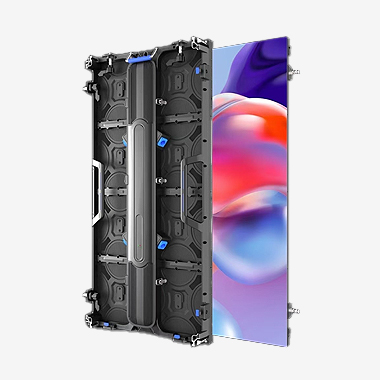
LED Panel Selection and Assembly: The construction of a large LED TV display screen begins with the selection of high - quality LED panels. These panels are the building blocks of the display and are available in various sizes, pixel pitches, and brightness levels. Retailers should choose panels that are suitable for their specific requirements, considering factors such as the screen's intended location within the store, the ambient lighting conditions, and the viewing distance. Once selected, the LED panels are carefully assembled into modules. Each module typically consists of multiple LED chips mounted on a printed circuit board (PCB), along with a protective cover. The assembly process requires precision to ensure that the LED chips are properly aligned and electrically connected, and that the modules are of consistent quality.
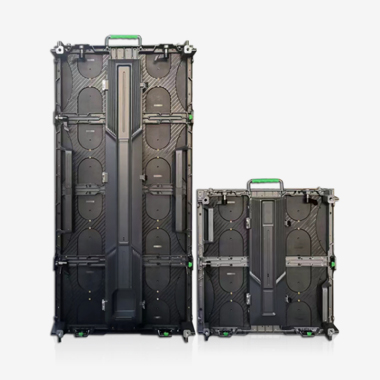
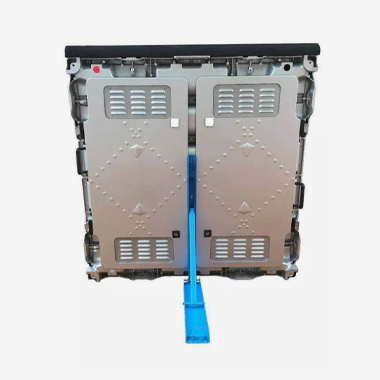
Structural Framework Fabrication: A sturdy structural framework is essential to support the large LED TV display screen. The framework is usually constructed from materials such as aluminum alloy or steel, which offer a balance of strength, durability, and lightweight properties. It is designed based on the size and shape of the screen, taking into account factors such as the weight of the LED panels, the installation method (wall - mounted, ceiling - suspended, or freestanding), and the need for easy access for maintenance. The framework is fabricated with precision - cut joints and strong fastening mechanisms to ensure a stable and secure structure that can support the weight of the screen and withstand any potential vibrations or movements in the store environment.
Electrical and Control System Integration: After the structural framework and LED panel assembly are complete, the electrical and control systems are integrated into the display screen. The electrical system includes power supply units, wiring, and circuit breakers, which are responsible for providing the necessary electrical current to the LED panels. A reliable power distribution system is crucial to ensure that all panels receive a consistent and stable power supply, preventing any flickering or brightness variations. The control system, consisting of a media player, control cards, and software, is used to manage the display of content on the screen. The media player can play various content formats, while the control cards and software enable the operator to adjust settings such as brightness, color, image layout, and to schedule and control the playback of content. All electrical components are carefully installed and wired within the structural framework, with proper insulation and protection to prevent electrical hazards.
Testing and Quality Assurance: Before the large LED TV display screen is installed in the retail store, it undergoes rigorous testing and quality assurance procedures. This includes testing the functionality of each LED panel, checking the electrical connections for any faults, and calibrating the color and brightness of the entire display. The screen is also tested with different types of content, such as high - definition videos, images, and text, to ensure that it can handle various scenarios without any issues. Additionally, the display is tested for its compatibility with the store's existing infrastructure, such as the electrical system, network connectivity, and content management software. Any defects or malfunctions identified during the testing process are promptly addressed to ensure that the final product meets the highest quality standards and provides a seamless visual experience for customers.
The operation of large LED TV display screens for retail stores is based on the principles of LED technology, digital signal processing, and display control systems, which work in harmony to create vibrant, high - quality visual displays that effectively communicate product information and promotional messages to customers.
LED Technology
At the heart of a large LED TV display screen are the light - emitting diodes (LEDs). LEDs are semiconductor devices that emit light when an electric current passes through them. In a color LED display, a combination of red, green, and blue (RGB) LEDs is used to generate a wide spectrum of colors. Each pixel on the display screen is typically composed of multiple RGB LED chips, which work together to produce different hues and shades.
When an electric current is applied to an LED, electrons in the semiconductor material are excited from the valence band to the conduction band. As these excited electrons return to their original energy levels, they release energy in the form of photons, resulting in the emission of light. The color of the light emitted by an LED depends on the energy bandgap of the semiconductor material. By precisely controlling the intensity of the current flowing through each RGB LED chip within a pixel, the display screen can achieve accurate color reproduction. For example, to display a particular shade of orange, the red and green LEDs within the pixel are illuminated with specific intensities, while the blue LED remains at a low intensity or is turned off. Through this combination of red, green, and blue light at different intensities, the large LED TV display screen can create a vast array of colors, enabling the vivid and realistic display of images, videos, and text.
Digital Signal Processing
To display the desired content on the large LED TV display screen, digital signal processing techniques are employed. The content, such as product images, promotional videos, or brand advertisements, is first created and processed using specialized software on a computer or a media server. This initial processing involves tasks such as encoding the content into a suitable format, adjusting the resolution and frame rate to match the capabilities of the display screen, and adding any necessary effects or transitions.
The processed digital signal is then transmitted to the control system of the display screen. The control system divides the image or video into individual pixels and sends specific signals to each LED panel, specifying the intensity of the red, green, and blue LEDs for each pixel. These signals are transmitted through a network of cables or wireless communication protocols, depending on the design of the display system. The LED panels receive the signals and adjust the brightness of their respective RGB LEDs accordingly, creating the desired image or video on the display screen. For example, when displaying a high - definition product video, the control system continuously receives the video signals, processes them, and sends the appropriate control signals to the LED panels to display each frame of the video in sequence, resulting in smooth and seamless playback.
Display Control Systems
Display control systems play a crucial role in the operation of large LED TV display screens for retail stores. The control system typically consists of a control console, software, and control cards. The control console is the interface used by the store staff or the display operator to manage and control the display screen. Operators can use the console to upload new content, switch between different content sources, and adjust the settings of the display screen, such as brightness, contrast, and color.
The software provides the functionality for content management, including the ability to create playlists, edit graphics, and add special effects. It allows retailers to organize their marketing content effectively, ensuring that the most relevant and engaging promotions are displayed at the right times. For example, the software can be used to schedule the display of product - specific advertisements during peak shopping hours or to show seasonal promotions in a timely manner. The control cards are responsible for receiving the control signals from the software and converting them into electrical signals that can be used to control the LED panels. They ensure that the LED panels receive the correct signals at the right time, allowing for the seamless display of content on the screen and enabling real - time updates and changes to the displayed information as needed.
Advantages
Enhanced Customer Engagement: Large LED TV display screens in retail stores significantly enhance customer engagement. The bright, vivid, and dynamic visuals capture customers' attention, drawing them towards the display and the products being promoted. Interactive features, such as touch - screen capabilities or QR code integration, can further engage customers by allowing them to actively interact with the content. For example, a customer could use a touch - screen LED TV display to virtually try on clothes, explore product features in detail, or access exclusive discounts. This increased engagement can lead to longer dwell times in the store, higher customer satisfaction, and ultimately, increased sales.
Flexible Marketing and Promotion: These display screens offer unparalleled flexibility in marketing and promotion. Retailers can quickly update the content to reflect the latest products, promotions, and seasonal offerings. They can display a wide variety of content formats, including videos, images, animations, and text - based advertisements, allowing for creative and diverse marketing campaigns. The ability to target specific customer segments with personalized content based on data analytics further enhances the effectiveness of marketing efforts. For instance, a retailer can use customer purchase history data to display targeted promotions for complementary products, increasing the likelihood of additional sales.
Improved Product Presentation: Large LED TV display screens provide an excellent platform for showcasing products in a more detailed and attractive way. High - resolution images and videos can highlight the features, benefits, and unique selling points of products, helping customers make more informed purchasing decisions. In a furniture store, for example, an LED TV screen can show 360 - degree views of sofas and tables, allowing customers to see the design and craftsmanship from all angles. Additionally, the display can include customer reviews, ratings, and testimonials, building trust and credibility for the products and the brand.
Data - Driven Insights: Many modern large LED TV display screens are equipped with analytics capabilities that can collect data on customer interactions, such as which products are viewed the most, how long customers spend looking at the display, and which promotions generate the most interest. This data can be analyzed to gain valuable insights into customer preferences, behavior, and shopping patterns. Retailers can use these insights to optimize their product offerings, marketing strategies, and store layout, ultimately improving the overall shopping experience and driving business growth.
Challenges
High Initial Investment: One of the major challenges associated with implementing large LED TV display screens in retail stores is the high initial investment cost. The cost includes the purchase of the LED TV display screen, the installation labor, the electrical and control systems, and any additional accessories. For small and medium - sized retailers, this significant upfront expense can be a barrier to entry, making it difficult to afford this advanced marketing technology. Additionally, the cost of content creation and software licenses for managing the display can add to the overall investment, further straining the retailer's budget.
Technical Complexity: Installing and operating large LED TV display screens require a certain level of technical expertise. The setup involves complex electrical wiring, precise calibration, and the configuration of the control system. Any technical issues, such as faulty connections, software glitches, or hardware malfunctions, can disrupt the display and require specialized technical support to resolve. Retailers may need to hire or train in - house staff with technical skills or rely on external service providers, which can add to the operational costs and management burden.
Content Creation and Management: Creating high - quality, engaging content for the large LED TV display screen can be a challenging task for retailers. It requires a combination of creative skills, marketing knowledge, and technical proficiency. The content needs to be designed to be visually appealing, relevant to the target audience, and effectively communicate the brand message and product offerings. Additionally, managing the content schedule, ensuring that the right content is displayed at the right times, and keeping the content fresh and updated can be time - consuming and resource - intensive. Without proper content creation and management, the display screen may fail to attract and engage customers, reducing its effectiveness as a marketing tool.
Energy Consumption and Maintenance: Large LED TV display screens consume a significant amount of electricity, especially those with large sizes and high - brightness levels. High energy consumption not only increases the operational costs for retailers but also raises environmental concerns. Regular maintenance, including cleaning the screen, checking for any signs of wear and tear, and updating the software, is also necessary to ensure the optimal performance and longevity of the display. Retailers need to factor in these ongoing costs when considering the implementation of large LED TV display screens in their stores.
Applications
In - Store Navigation and Wayfinding: In large retail stores or shopping malls, large LED TV display screens can serve as efficient in - store navigation and wayfinding tools. They can display interactive maps of the store layout, indicating the location of different departments, product sections, restrooms, and customer service areas. Using touch - screen functionality or QR code integration, customers can access detailed directions to their desired destinations within the store. For example, a shopper looking for the electronics section in a large department store can simply interact with the LED TV display near the entrance. The screen will then show a clear route, highlighting the shortest path through the aisles, and may even provide additional information such as ongoing promotions in that section. This not only reduces customer frustration but also encourages them to explore more areas of the store, potentially increasing impulse purchases.
Brand Building and Storytelling: These display screens are powerful assets for brand building and storytelling in retail stores. Retailers can use them to showcase their brand's history, values, and unique selling propositions through engaging videos, image slideshows, and brand anthems. For instance, a coffee shop chain can play a video on the LED TV display that details the journey of its coffee beans, from the farms where they are sourced to the meticulous roasting and brewing processes. This immersive brand narrative helps create an emotional connection with customers, fostering brand loyalty. Luxury brands can utilize high - quality visuals on the screens to reinforce their exclusivity, while sustainable brands can highlight their eco - friendly initiatives, all contributing to a stronger brand identity that resonates with the target audience.
Customer Education and Engagement: Large LED TV display screens are excellent platforms for customer education. Retailers can display product tutorials, how - to guides, and educational content related to the products they sell. In a home improvement store, for example, the screen can show step - by - step videos on how to install various fixtures or use different tools. This not only equips customers with the knowledge they need to make informed purchases but also positions the store as an authority in the field. Additionally, these screens can be used to host live events, such as cooking demonstrations in a grocery store or fashion shows in a clothing store. By inviting customers to engage with these live events displayed on the LED TV, retailers can enhance the in - store experience and build a sense of community among shoppers.
Queue Management and Entertainment: In stores where long queues are common, such as supermarkets during peak hours or electronics stores on product launch days, large LED TV display screens can be used for queue management and entertainment. They can display estimated wait times, keeping customers informed and reducing anxiety. Moreover, the screens can play entertaining content, such as short comedy skits, product previews, or trivia games, to distract customers and make the waiting time more enjoyable. Some stores even use these screens to run exclusive promotions for customers in the queue, encouraging them to make additional purchases while they wait.
Future Trends
Ultra - High - Resolution and Micro - LED Technology: The future of large LED TV display screens for retail stores will be characterized by a shift towards ultra - high - resolution displays. Micro - LED technology is set to revolutionize the industry, offering extremely high pixel densities. This means that retailers will be able to showcase products with unprecedented clarity and detail. For example, luxury jewelry stores can display the intricate details of diamonds and gemstones with lifelike precision, while fashion retailers can present fabric textures and designs in a way that mimics real - life touch. 8K and even higher resolutions will become more common, providing an immersive visual experience that can captivate customers and set stores apart from the competition. Micro - LED technology also offers advantages such as lower power consumption, longer lifespan, and better contrast ratios, making the displays more energy - efficient and cost - effective in the long run.
Enhanced Interactive and Immersive Experiences: Future large LED TV display screens will focus on creating more interactive and immersive experiences. Integration with augmented reality (AR) and virtual reality (VR) technologies will become more prevalent. For instance, customers in a furniture store could use AR - enabled devices in conjunction with the LED TV display to visualize how a piece of furniture would look in their own homes. VR could be used to create virtual store tours, allowing customers to explore products in a 3D environment before visiting the physical store. Additionally, touch - free gesture control, eye - tracking, and voice - activated interfaces will be incorporated, enabling more natural and intuitive interactions. This level of interactivity will not only engage customers but also provide valuable data on customer preferences and behaviors, which retailers can use to optimize their product offerings and marketing strategies.
Smart and AI - Driven Content Management: Artificial intelligence (AI) will play a pivotal role in the future of large LED TV display screens. AI algorithms will be able to analyze real - time customer data, including demographics, shopping history, and in - store behavior. Based on this analysis, the screens will automatically customize the displayed content to match the interests and needs of individual customers. For example, if an AI system detects that a customer has been browsing a particular category of products, the LED TV display will show relevant promotions and recommendations. AI can also optimize the display schedule, ensuring that the most effective content is shown at the right times. Additionally, smart content management systems will be able to predict customer demand, adjust inventory levels accordingly, and even generate personalized marketing campaigns, making the retail experience more efficient and customer - centric.
Sustainable and Energy - Efficient Designs: With the increasing focus on environmental sustainability, future large LED TV display screens will incorporate more energy - efficient and eco - friendly features. Advanced power - management systems will be developed, allowing the screens to adjust their power consumption based on the content being displayed and the ambient light levels. For example, when displaying static images, the screen can reduce its brightness and power usage. Solar - powered or hybrid - powered LED TV displays may also become more common, especially for stores with large windows or outdoor - facing facades. Moreover, the use of recyclable materials in the construction of the screens, from the frames to the internal components, will reduce their environmental impact. This not only aligns with the growing consumer demand for sustainable products but also helps retailers reduce their operational costs in the long term.
Seamless Integration with the Internet of Things (IoT): Large LED TV display screens will increasingly integrate with the Internet of Things (IoT) ecosystem. They will be able to connect with other smart devices in the store, such as smart shelves, inventory management systems, and customer - facing mobile apps. For example, if an item on a smart shelf is running low in stock, the LED TV display can automatically update to show a “limited availability” message or promote related products. IoT integration will also enable real - time data sharing between different devices, allowing for more coordinated and efficient store operations. Retailers will be able to monitor and manage the display screens remotely, ensuring that they are always up - to - date and functioning optimally.
Conclusion
Large LED TV display screens have become an essential component of modern retail stores, offering a multitude of benefits that enhance the shopping experience for customers and drive business growth for retailers. Their ability to capture attention, provide flexible marketing opportunities, improve product presentation, and offer data - driven insights has made them invaluable in the competitive retail landscape.
Despite the challenges of high initial investment, technical complexity, content creation, and energy consumption, the continuous evolution of technology is addressing these issues and opening up new possibilities. The future trends, including ultra - high - resolution displays, enhanced interactivity, AI - driven content management, sustainable designs, and IoT integration, promise to further elevate the capabilities of large LED TV display screens.
As the retail industry continues to evolve, these display screens will undoubtedly play an even more significant role. They will not only continue to be effective marketing and communication tools but also become key elements in creating immersive, personalized, and sustainable shopping experiences. Retailers who embrace these technologies and trends will be better positioned to meet the changing needs of customers, stay ahead of the competition, and thrive in the digital age of retail.


Copyright © 2026 Shenzhen Cogo Technology Co.,Ltd.
All Rights Reserved

 Previous article