




 Chat Now
The concert stage has always been a realm of spectacle, a space where music is made visual. From simple painted backdrops to sophisticated laser light shows, the evolution of stagecraft has run parallel to the evolution of music itself. In the 21st century, the most transformative innovation in live performance has been the adoption of the LED display. No longer a mere background element, the LED screen has become the central, dynamic canvas upon which the visual identity of a concert is painted. It is an integral performer in the show, capable of shaping narrative, amplifying emotion, and creating immersive worlds that extend far beyond the physical confines of the stage. This overview explores the essence of concert LED signage, its historical context, its multifaceted role, and its profound impact on the live entertainment experience.
The journey of LED technology from utilitarian indicator lights to the heart of a multi-million dollar production is a story of rapid artistic and technical convergence. Early concerts relied on projection, which, while effective, was limited by its need for a flat, white surface and its vulnerability to being washed out by stage lighting. The first uses of video screens in concerts, such as those on seminal tours by bands like U2 and Pink Floyd in the 1980s and 90s, were groundbreaking but relied on cumbersome cathode-ray tube (CRT) technology or low-resolution LED arrays. They were used more for magnification—allowing audiences in large venues to see the artists' faces—than for pure visual artistry.
The true revolution began with the advancement of LED technology, particularly the shift from through-hole (DIP) LEDs to Surface-Mount Device (SMD) technology. SMD allowed for LEDs to be placed closer together, creating finer pixel pitches and enabling the development of "fine-pitch" displays. This was the critical breakthrough. Suddenly, screens could display high-definition video content with rich color depth and contrast, making them suitable not just for magnification but for cinematic-quality visuals that could be viewed from both front-row and nosebleed seats. The rock concert backdrop was dead; the age of the immersive digital environment had begun.
The role of the LED screen in a modern concert is multifaceted and profound. Its primary function is Visual Storytelling and Atmosphere Creation. For artists, the screen is a powerful narrative tool. It can establish a mood—from the cyberpunk dystopia of a Billie Eilish show to the psychedelic wonderland of a Flume performance. It can provide context, show cinematic sequences that advance a storyline, or display abstract, generative art that translates the sound and emotion of the music into a visual language. It acts as a direct extension of the artist's brand and the album's aesthetic, creating a cohesive sensory experience that transcends audio alone.
Secondly, it serves as Audience Connection and Magnification. Despite their size, massive stadiums can feel intimate when every audience member can see the subtle expression on a singer's face or the intricate detail of a guitarist's solo, thanks to strategically placed IMAG (Image Magnification) screens. This function bridges the gap between the performer and the furthest seat in the house, ensuring a shared experience for all.
Thirdly, it is a tool for Dynamic Architecture and Spatial Design. Modern LED products are flexible, curved, and modular. This allows stage designers to break free from the flat, rectangular screen. LED panels can be arranged into towering walls, sweeping curves, overhead canopies, transparent layers, and even shapes that wrap around the band and the stage itself. They don't just display content; they define the physical space and geometry of the performance, becoming an architectural element that can transform in real-time, making the stage itself a living, breathing entity.
Finally, it enables Real-Time Interaction and spontaneity. With powerful media servers, content can be triggered live, manipulated in real-time by a VJ (Video Jockey) or even the musicians themselves, and synchronized perfectly with lighting and pyrotechnics. Screens can react to the audio input, creating visualizers that pulse with the beat, or incorporate live camera feeds for interactive moments between the artist and the crowd.
In essence, the concert LED display is the ultimate fusion of art and technology. It is a medium that demands collaboration between visual artists, content creators, stage designers, lighting directors, and software engineers. It has raised the bar for live performance, creating expectations of a total sensory immersion. As we delve into its design, principles, and applications, it becomes clear that these luminous panels are not just equipment; they are the primary pigment for the visual art of the modern concert, forever changing how we see and experience live music.
The breathtaking visual spectacles witnessed by concert audiences are made possible by a behind-the-scenes feat of engineering that prioritizes three conflicting demands: visual perfection, brutal durability, and lightning-fast deployment. The design and construction of LED displays for touring concerts are a world apart from those for permanent installations. Every component must be lightweight yet strong, technologically advanced yet simple to repair, and capable of delivering cinema-quality imagery while being thrown into a truck, driven hundreds of miles, and assembled in a matter of hours, night after night. This section deconstructs the touring LED screen, examining the specialized components and design philosophies that make the magic—and the grueling tour schedule—possible.
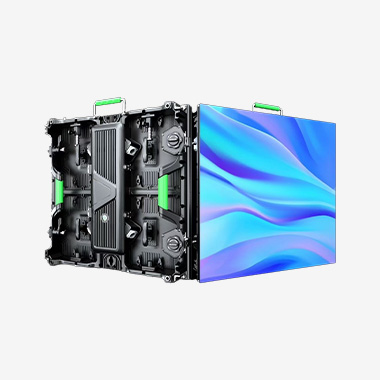
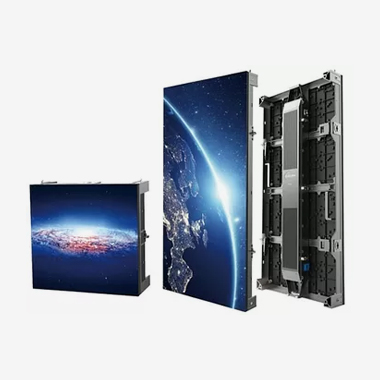
The fundamental unit of a concert LED wall is the Tour-Grade LED Panel or Cabinet. Unlike fixed-installation cabinets that prioritize ultimate weatherproofing and often have heavy metal housings, tour cabinets are designed for weight savings and rapid handling. They are typically constructed from lightweight, high-strength aluminum alloys or even advanced composites. The design focuses on a low profile (thin depth) to allow for creative, flush-mounted configurations and complex curves.
A critical feature is the Quick-Release Locking Mechanism. Time is the enemy on tour. Crews must build massive, often complex structures in a few hours. Therefore, panels do not bolt together; they use robust, over-engineered locking systems that allow a technician to securely connect two panels with a simple quarter-turn of a lever or the push of a latch. This system ensures perfect alignment (maintaining a flat, seamless surface) and a secure mechanical connection, while also automatically engaging the data and power connectors between panels. This "plug-and-play" approach is non-negotiable for efficient load-in and load-out.
Weight and Rigging Integration are paramount design considerations. Every kilogram matters when hanging tons of equipment over performers' heads. The LED panels themselves are engineered to be as light as possible. Furthermore, they are designed with integrated rigging points to connect directly to standard industry trussing systems. The cabinets must be strong enough to be part of a larger array that is hoisted into the air by motors, often forming towering walls or sweeping overhead curves. The design must account for the significant structural loads and forces experienced during these dynamic lifts and throughout the show.
The heart of the panel is the LED Module. For concert applications, the pursuit of the finest possible Pixel Pitch is relentless. Because audiences can be both very close (front row) and very far away, the resolution must be high enough to look sharp on camera and for those nearby, without sacrificing the overall impact for those in the back. Common pitches for main stage walls now range from P3.9 to P6, with even finer pitches (P2.6 or lower) used for IMAG screens or on-stage products where cameras will get extreme close-ups. The modules use high-quality SMD LEDs chosen for their color accuracy, consistency, and brightness.
Brightness is a double-edged sword. The screen must be bright enough to compete with powerful concert stage lighting that can wash it out. However, it must not be so bright as to blind the artists on stage or create an uncomfortable viewing experience. Touring panels offer high brightness levels (typically 1,500 to 5,000 nits) that are adjustable via the control system. Contrast Ratio is equally, if not more, important. Deep blacks are essential for creating depth and ensuring that content doesn't look flat or washed out. This is achieved through advanced driver IC technology that allows for precise control over the LEDs, enabling them to dim to near-off states.
Calibration is the secret weapon of a flawless-looking wall. It is physically impossible to manufacture millions of LEDs that are perfectly identical. Tiny variations in color and brightness between modules would make a large wall look like a patchwork quilt. To solve this, each panel is meticulously calibrated after production. Using specialized colorimeters and software, technicians measure the output of every single pixel on a panel and generate a unique calibration file. This file, stored on a chip within the panel, is read by the video processor. The processor then applies real-time corrections to the video signal, compensating for any variances and ensuring that the color and luminance are perfectly uniform across the entire display, from one edge to the other. This process is what creates the illusion of a single, monolithic screen.
Connectivity and Power are designed for reliability and simplicity. Touring systems use robust, locking connectors (like Harting or Neutrik) for data and power to prevent accidental disconnection from vibrations or human error. Power is often distributed via PowerCON connectors, and data is typically run over ethernet cables or fiber optics, daisy-chaining from one cabinet to the next.
Finally, the entire system is designed for Serviceability in the Field. If a module fails during a show, a crew member must be able to replace it in minutes. Modules are typically attached with magnets or quick-turn screws, allowing for a swap without tools. Major components like power supplies and receiver cards are also modular and hot-swappable, meaning a technician can replace a faulty unit without powering down the entire section of the wall.
In summary, the design of a concert LED display is a masterclass in solving extreme constraints. It is a product that must be both a delicate precision instrument and a rugged piece of road-worthy machinery. Every gram, every connector, and every line of code is optimized for one purpose: to create a perfect, reliable, and breathtaking visual canvas that can keep pace with the relentless demands of a world tour.
The flawless, dynamic imagery on a concert LED wall is the final result of a complex, high-speed, and perfectly synchronized data pipeline. The working principles behind these displays are a ballet of digital information and electrical precision, orchestrated to ensure that every one of the millions of LEDs lights up at the exact right time, color, and intensity, in perfect harmony with the music, lights, and live action on stage. This process involves a sophisticated chain of command, from content creation to photon emission, designed for both artistic flexibility and rock-solid reliability.
The process begins long before the show with Content Creation and Preparation. Visual artists and designers create the video content using standard software like Adobe After Effects, Cinema 4D, or Notch. This content is crafted specifically for the unique canvas—the exact resolution and shape of the LED wall. However, the real magic lies in preparing this content for live manipulation. Instead of rendering out a fixed video file, content is often built as a "project" or "composition" within a powerful Media Server.
The media server is the brain and the conductor of the entire visual performance. It is a high-powered computer running specialized software (such as disguise, Green Hippo, or AV Stumpfl). Its functions are multifaceted:
Content Storage and Management: It houses the library of all visual assets—pre-rendered videos, real-time graphics, generative art, and still images.
Real-Time Rendering: Instead of playing back a video, the server often renders graphics in real-time. This allows for on-the-fly manipulation. A VJ can change colors, trigger animations, rotate elements, or blend between scenes instantly, reacting to the energy of the performance.
Synchronization and Triggering: The server receives timecode from the show's master clock. This same timecode is sent to the lighting console, pyro controller, and automation systems. This ensures that every visual cue, light change, and explosion happens at the precise millisecond intended, show after show. Cues can also be triggered manually by a VJ or stage manager.
The media server outputs one or more video signals (e.g., DVI, SDI, or now increasingly, IP video over ethernet). This signal is fed into the Video Processor or Distributor. This dedicated hardware device (from manufacturers like Novastar, Brompton, or Colorlight) has several critical jobs:
Mapping and Scaling: It takes the standard video signal and maps it correctly onto the unique and often non-rectangular or curved layout of the LED wall. It handles the scaling to the wall's native resolution.
Calibration Application: It applies the individual calibration data for every single panel in the wall. This is the step that ensures color and brightness uniformity, making hundreds of separate panels look like one seamless screen.
Data Distribution: It splits the massive video signal into smaller chunks and distributes them at high speed to the correct rows and columns of LED cabinets. This is often done via network protocols sent over fiber optic cables, which are immune to the electrical interference common in venues packed with high-power sound and lighting equipment.
This data travels to the LED Cabinets via a daisy-chained network. Each cabinet contains a Receiver Card, which takes the data packet intended for its column of cabinets and passes the rest along. Inside the cabinet, the data is sent to the individual LED Modules.
On the module, the data reaches the Driver Integrated Circuits (ICs). These chips are the workhorses that perform the final translation from digital data to physical light. They control the LEDs using Pulse Width Modulation (PWM). Instead of varying the analog voltage to an LED (which would be inefficient and would change the color), PWM rapidly switches each LED on and off. The human eye perceives this rapid cycling as a sustained level of brightness. The ratio of "on" time to "off" time within each cycle (the duty cycle) determines the perceived intensity. A 50% duty cycle looks like 50% brightness; a 10% duty cycle looks like 10% brightness. The driver IC independently controls the PWM for the red, green, and blue sub-pixels within a single pixel. By mixing these three colors at thousands of different intensity levels, millions of colors can be produced.
Two performance metrics are crucial for concert use:
Refresh Rate: The number of times per second the screen redraws the image. A very high refresh rate (e.g., 3840Hz or higher) is essential to eliminate any perceptible flicker. This is especially critical when the screen is being filmed by broadcast or professional cameras, as a low refresh rate would cause distracting rolling shutter effects, black bars, or moiré patterns.
Gray Scale Depth: This refers to the number of distinct brightness levels available. Standard is 16-bit processing, which allows for 65,536 steps of brightness per color. This incredible precision is what enables smooth color gradients and deep, detailed blacks, preventing "banding" in shadows and skies, which would ruin the cinematic quality of the content.
The entire system is also designed for redundancy. Critical components like media servers and processors are often used in redundant, synchronized pairs. If the primary unit fails, a backup unit can seamlessly take over without dropping a frame, ensuring the show always goes on.
In essence, the working principle of a concert LED wall is a relentless, high-speed conversation between a creative command center (the media server) and an army of obedient pixels. It is a process that merges pre-production artistry with live performance spontaneity, all underpinned by robust engineering that ensures every flash of light, every hue, and every shadow is delivered with pinpoint accuracy and perfect timing, synced to the beat of the music and the pulse of the live event.
The adoption of LED technology as the centerpiece of concert stage design has brought a revolution in live entertainment, offering unparalleled creative possibilities. However, harnessing this power involves navigating a complex landscape of significant advantages and formidable challenges. For artists, designers, and production companies, the decision to build a show around LED is a strategic calculation that weighs breathtaking visual impact against substantial cost, logistical complexity, and technical risk.
Advantages:
Unmatched Creative Freedom and Immersion: This is the paramount advantage. LED screens transform the stage from a static set into a dynamic, living environment. They can create any world, any mood, and any atmosphere, from hyper-realistic landscapes to utterly abstract digital art. This allows artists to fully realize their visual aesthetic and create a deeply immersive, multi-sensory experience that strengthens the emotional connection between the performer and the audience.
Dynamic Architecture and Spatial Transformation: Unlike any other medium, LED panels are modular and can be configured into virtually any shape. They can form towering walls, sweeping curves, overhead canopies, transparent layers, and even moving pieces. This allows the stage itself to transform in real-time, becoming an active participant in the performance. A single tour can feature multiple, unique stage designs simply by reconfiguring the same inventory of panels.
Seamless Integration and Synchronization: LED technology integrates perfectly with the rest of the production ecosystem. Through timecode, the visuals on screen can be perfectly synchronized with every light cue, pyro explosion, laser sweep, and automation move. This creates a cohesive, polished show where all elements work in concert, elevating the production value from a simple concert to a meticulously choreographed theatrical event.
Superior Brightness and Viewing Quality: Modern LED walls are incredibly bright and offer high contrast ratios. This allows them to hold their own against the intense output of concert lighting fixtures without looking washed out. Their ability to produce deep blacks is crucial for creating depth and making content pop. Furthermore, being self-emissive, they offer wide viewing angles, ensuring a good view from the sides of the venue, which is not always the case with projection.
Operational Flexibility for Touring: While heavy, a well-designed touring LED system is built for rapid deployment. The quick-lock mechanisms and daisy-chained connectivity allow a large crew to build a massive screen structure in a matter of hours. The content itself is digital, meaning changes can be made up to the last minute, and different looks can be created for different legs of a tour or even different songs without any physical alteration to the set.
Challenges and Considerations:
Extreme Cost and Budgetary Pressure: This is the most significant barrier. The costs are multifaceted: the capital investment in the LED panels themselves (finest-pitch screens can cost thousands of dollars per square meter); the powerful media servers and processors; the custom content creation, which requires teams of visual artists and programmers; and the substantial increase in shipping weight and truck space. This makes large-scale LED productions the domain of top-tier artists and major tours.
Logistical Complexity and Weight: An LED wall adds immense weight to a touring production. This weight has a cascading effect: it requires more trucks, more fuel, more stage hands for load-in/out, and often a more robust (and heavier) stage and trussing structure to support it. The logistics of transporting millions of dollars of fragile, high-tech equipment across continents, through customs, and in and out of venues every day is a monumental task.
Technical Fragility and Points of Failure: A concert LED system is a complex chain with many potential points of failure: media servers can crash, processors can overheat, data cables can be damaged, and individual LED modules or power supplies can fail. While designed for serviceability, a failure during a show can be catastrophic. It requires highly trained video engineers on staff to constantly monitor system health and troubleshoot issues under extreme pressure. A single dead pixel might be unnoticeable, but a failed panel or data line can create a large black hole in the screen.
The "Screen Dominance" Trap: There is a creative risk that the screen can become the show, overshadowing the live performer. The spectacle of the visuals must enhance the music and the artist's connection with the audience, not replace it. Striking the right balance between technological wizardry and authentic human performance is a delicate art. Over-reliance on the screen can sometimes lead to a feeling of detachment or a show that feels more like a movie than a live event.
Power and Thermal Management: A large LED wall consumes a tremendous amount of power, often requiring dedicated venue power distro systems. All that energy is converted into light and, significantly, heat. Managing this thermal load is critical. While panels have heat sinks, the accumulated heat from a large wall can rise into the lighting rig and onto the stage, creating an uncomfortable environment for artists and crew and potentially causing other equipment to overheat.
In conclusion, the LED screen is a double-edged sword for concert production. Its advantages offer a transformative power to create unforgettable experiences, but they come at a high price—financially, logistically, and technically. The most successful productions are those that leverage the technology not as a gimmick, but as an integral storytelling tool, while meticulously managing the considerable challenges it presents. It is a powerful instrument that, when mastered, defines the pinnacle of modern live performance.
The use of LED technology in live concerts has expanded far beyond the traditional backdrop wall. Its versatility has allowed it to infiltrate every aspect of stage design, creating new formats for performance and audience interaction. Simultaneously, technological innovation continues to push the boundaries of what is possible, driving trends that promise even greater immersion, flexibility, and creativity in the future of live events.
Current and Expanding Applications:
IMAG (Image Magnification) and Confidence Monitoring: This remains a core application. High-resolution, fine-pitch LED screens flanking the stage are used to show close-ups of the performers, ensuring every audience member has an intimate view. Similarly, "confidence monitors" on the stage floor, often made of transparent LED, show artists lyrics, cues, or feed from the front-of-house cameras so they can see what the audience is seeing.
Transparent LED Screens: These mesh-like panels have revolutionized stage design by allowing video to be overlaid onto physical set pieces without completely obscuring them. Performers can be seen behind a veil of graphics, creating stunning layers of depth. They are also used in front of stages as a high-tech "scrim," enabling dramatic reveals when they turn on and off.
Flexible and Curved Configurations: The rigidity of the flat screen is gone. LED tiles mounted on flexible substrates can be wrapped around columns, built into curved tunnels, or used to create organic, flowing shapes that break up the hard lines of the stage. This allows designers to create more organic and architecturally interesting environments.
Floor and Runway LED: Covering the stage floor with LED panels turns the entire performance surface into a dynamic visual element. Dancers' movements can interact with graphics beneath their feet, and it can be used to create dramatic entrances or extend the visual world of the show right to the performers' feet. This is extensively used in pop and award show performances.
Wearable LED: Technology has miniaturized to the point where LEDs can be integrated into costumes. From Lady Gaga's light-up dresses to entire suits worn by backup dancers, wearable LED adds a new layer of kinetic, human-scale visual interest that moves with the performers, blurring the line between the screen and the artist.
Future Trends:
The Volume Stage and Virtual Production: The technology pioneered by Disney's "The Mandalorian" is coming to live events. This involves placing performers inside a massive, curved LED wall (a "volume") that displays photorealistic, real-time rendered environments. For concerts, this could allow a band to perform "inside" any virtual world imaginable, with perfect in-camera lighting and reflections, creating breathtaking content for both the live audience and live broadcasts without ever leaving a studio.
Higher Resolution and MicroLED: The push for finer pixel pitches will continue. MicroLED technology, which uses microscopic, self-emissive LEDs, promises the holy grail: ultra-fine pitch displays with incredible brightness, perfect blacks, and wide viewing angles, all with lower power consumption and heat output. This will make massive, "8K" resolution walls on tour a reality.
Real-Time Interaction and Generative Content: The future is live, not pre-rendered. We will see more content that is generated or manipulated in real-time based on input from the performance. This could include audio reactivity (where the visuals directly and uniquely respond to the music's frequency and amplitude), motion tracking (where a performer's movement paints light on the screen behind them), or even audience interaction via smartphones influencing the visuals.
Increased Integration with XR (Extended Reality): For broadcast and live streams, LED walls will be combined with augmented reality (AR) graphics. This will allow broadcast directors to add digital elements that appear to exist seamlessly within the physical LED-based environment, creating hybrid experiences that are impossible for the live audience but spectacular for the home viewer.
Sustainability and Efficiency: The tour industry is under pressure to reduce its carbon footprint. Future LED developments will focus on reducing weight (less fuel for transport), increasing power efficiency (lower generator loads), and using more recyclable materials. Innovations in lightweight, efficient panels will be a major driving force.
Holographic and Light Field Displays: While still emergent, technologies that create true volumetric imagery—where 3D figures can be seen without glasses from any angle—could eventually replace traditional screen-based IMAG, creating the illusion of a ghosted or holographic performer on stage.
In essence, the application of LED in concerts is moving from creating a show around the screen to creating an environment within the screen. The future trend is towards total immersion, where the technology becomes so seamless and integrated that it disappears, leaving the audience with a pure, transformative experience that is both live and magically unreal. The stage is becoming a portal, and LED technology is the key.
Conclusion
The integration of LED display technology into concert production is arguably the most significant evolution in stagecraft since the invention of electric stage lighting. It has fundamentally redefined the possibilities of live performance, shifting the paradigm from auditory events to holistic, multi-sensory experiences. The journey from simple amplification screens to the immersive digital environments of today's premier tours represents a perfect and powerful convergence of artistic ambition and technological innovation.
The conclusions about this technology are resounding. From a creative perspective, LED screens have bestowed upon artists and designers an unprecedented palette for visual storytelling. They have dismantled the physical limitations of the stage, allowing for the creation of boundless digital worlds that can shift and evolve in perfect sync with the music. This has elevated concert-going from a listening activity to a form of visual theatre, where the audience is not just told a story but is enveloped by it.
Technically, the touring LED screen is a masterpiece of practical engineering. It is a product born from the extreme demands of the road, embodying a philosophy of rugged reliability, modular serviceability, and rapid deployment. The intricate processes of calibration, data distribution, and synchronization represent a high-water mark of technical showmanship, ensuring that the artist's vision is realized with pixel-perfect precision night after night.
However, this power is not without its economic and logistical realities. The advantages of immersion and flexibility come with a formidable price tag and operational complexity. They demand significant financial investment, increase the logistical footprint of a tour exponentially, and introduce a multitude of potential technical failure points that require expert mitigation. The LED screen is not a casual addition; it is a commitment that defines the scale and scope of an entire production.
Looking forward, the role of LED technology is far from static. It is evolving from a display to an environment. The trends point towards deeper immersion through technologies like virtual production volumes, more intimate interaction through real-time generative content, and more seamless integration with extended reality. The goal is no longer to simply show a video but to use light as a architectural material to construct the very space of the performance.
In final analysis, the LED display has cemented its role as an indispensable instrument in the modern performer's arsenal. It is as crucial to today's stage as the electric guitar was to the rock revolution of the 1960s. It has changed audience expectations, expanded the language of live music, and created a new realm where concerts are not just heard but are felt and lived. While challenges of cost and complexity remain, the transformative power of this technology is undeniable. It has not replaced the fundamental need for authentic musical connection; instead, it has become the most powerful canvas yet created to frame and amplify that connection for a new era. The concert stage of the future will be built not with wood and paint, but with light and data.


Copyright © 2026 Shenzhen Cogo Technology Co.,Ltd.
All Rights Reserved

 Previous article