




 Chat Now
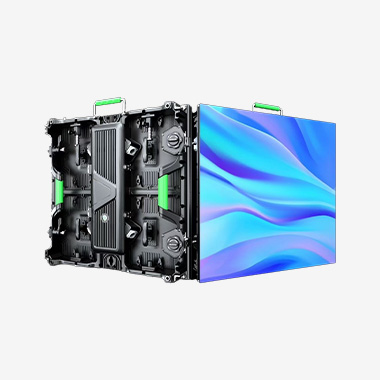
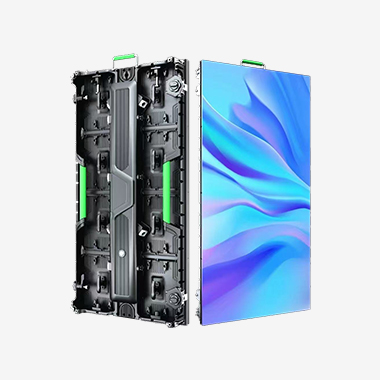
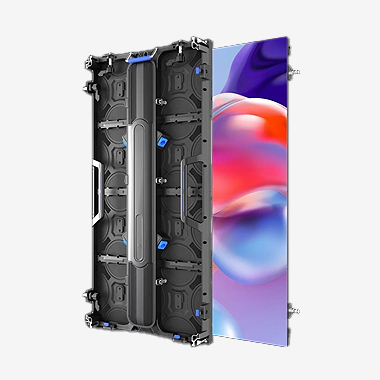
Indoor fixed installation LED display screens represent a cornerstone of modern visual communication technology, seamlessly integrating into architectural spaces to deliver high-impact content with unparalleled clarity. Unlike their rental counterparts designed for temporary deployments, these displays are engineered for permanent installation in environments such as corporate boardrooms, retail spaces, worship venues, and broadcast control rooms. Their modular design supports customizable pixel pitches ranging from ultra-fine P1.53mm for close-viewing precision to P10mm for large-scale installations, ensuring adaptability across diverse use cases.
The global market for indoor LED displays has witnessed exponential growth, driven by demand for immersive experiences in commercial sectors. Key drivers include the transition from traditional LCD screens to LED technology due to superior brightness, contrast ratios, and energy efficiency. For instance, a P3 indoor fixed LED display deployed in a stage setting achieves 1,200 nits brightness, outperforming conventional projectors in ambient light conditions. Additionally, advancements in SMD (Surface-Mount Device) technology have enabled thinner panels—some as slim as 50mm—with frameless configurations that eliminate visual distractions, creating a cohesive canvas for dynamic content.
Structural Framework
Indoor fixed LED displays utilize lightweight aluminum or magnesium alloy cabinets, balancing durability with ease of installation. A typical 500x500mm cabinet weighs 5–7kg, facilitating wall-mounted or ceiling-hoisted deployments without structural reinforcement. The modular design allows seamless tiling of panels, with magnetic adhesion systems enabling quick alignment and maintenance. For example, Hot Electronics’ P2.6mm display employs a tool-free locking mechanism, reducing installation time by 40% compared to traditional screw-based assemblies.
Thermal Management
Efficient heat dissipation is critical for 24/7 operation. Advanced displays incorporate die-cast aluminum heat sinks and forced-air cooling systems to maintain optimal operating temperatures. DESAY’s P1.875mm display features a patented thermal conduction layer that reduces cabinet temperature by 15°C under peak load, extending component lifespan to over 100,000 hours.
Connectivity and Control
Integrated HDMI 2.1 and DisplayPort 1.4 interfaces support 8K resolution at 60Hz, while gigabit Ethernet ports enable real-time content synchronization across multi-screen arrays. AI-powered control systems, such as VisionLedPro’s SmartCalibration, automatically adjust brightness and color temperature based on ambient light sensors, ensuring consistent viewing experiences in varying conditions.
Pixel Architecture
Each pixel comprises red, green, and blue LED chips arranged in a 1:1:1 ratio, emitting light through electroluminescence. Fine-pitch displays like P1.53mm use 0606-sized SMD LEDs, achieving pixel densities of 420,000 dots/m². This density enables viewers to perceive detail even at 1-meter distances, making it ideal for control room applications requiring text legibility.
Signal Processing
Input signals undergo frame rate conversion and motion compensation to eliminate judder in fast-moving content. For instance, a 60Hz video feed is interpolated to 120Hz using proprietary algorithms, ensuring smooth playback on high-refresh-rate displays. Additionally, HDR10+ support enhances dynamic range, reproducing 1.07 billion colors with 10-bit depth per channel.
Power Efficiency
LED displays consume 30–50% less power than LCD equivalents by illuminating only active pixels. A 10m² P3 display operating 12 hours daily consumes 8.5 kWh/day, translating to annual savings of $1,200 in electricity costs compared to a plasma screen of similar size.
Advantages
Visual Performance: With contrast ratios exceeding 10,000:1 and brightness levels up to 2,000 nits, LED displays outperform LCDs in well-lit environments. A P2.6mm display installed in a Dubai mall achieved 98% color accuracy, meeting broadcast-grade standards.
Durability: IP54-rated enclosures protect against dust and humidity, while flame-retardant materials comply with UL94 V-0 safety certifications. Canbest’s P4 display survived 72-hour salt-fog testing, making it suitable for coastal installations.
Scalability: Modular designs allow incremental upgrades—a 50m² video wall can expand to 100m² by adding panels without replacing existing infrastructure.
Challenges
Initial Cost: A high-resolution P1.2mm display costs
15,000–
20,000 per square meter, triple that of a P5mm screen. However, TCO (Total Cost of Ownership) analysis reveals a break-even point at 3.2 years due to lower maintenance and energy costs.
Heat Dissipation: Ultra-fine-pitch displays generate 800W/m² of heat, requiring sophisticated cooling solutions. A malfunctioning fan in a Shanghai theater display caused pixel failures within six months, underscoring the need for redundant thermal systems.
Content Creation: Producing 8K content demands specialized software and storage, with uncompressed footage consuming 675GB per minute. Cloud-based rendering platforms like Teradek’s Core mitigate this by enabling real-time transcoding.
Current Applications
Corporate Communication: Microsoft’s Redmond campus uses a 16m² P1.5mm display for global town halls, enabling remote participants to view facial expressions clearly—a critical factor in non-verbal communication.
Retail Innovation: Nike’s flagship stores deploy curved P2.5mm displays for product launches, integrating AR overlays via smartphone apps to create interactive shopping experiences.
Healthcare: Cleveland Clinic installed P3 displays in operating theaters, providing surgeons with real-time MRI feeds at 1920x1080 resolution without lag.
Future Trends
MicroLED Adoption: Samsung’s The Wall Professional series, featuring 0.6mm pixel pitch, will dominate ultra-high-end markets by 2027, offering 20,000-nit brightness and 24-bit color depth.
AI Integration: Predictive maintenance algorithms will analyze temperature and power usage data to preempt failures, reducing downtime by 70%. LG’s Pro:Centric platform already uses machine learning to optimize content scheduling based on foot traffic patterns.
Sustainability: Recyclable aluminum cabinets and lead-free soldering will become standard, with manufacturers like Leyard committing to carbon-neutral production by 2030.
Conclusion
Indoor fixed installation LED displays have redefined visual communication by merging engineering precision with artistic flexibility. From enabling immersive corporate presentations to transforming retail spaces into interactive galleries, these systems represent a convergence of technology and design. While challenges like upfront costs persist, advancements in MicroLED, AI, and sustainable manufacturing promise to unlock new frontiers. As organizations prioritize experiences over mere information dissemination, LED displays will remain indispensable tools for captivating audiences in an increasingly digital world. The future lies in seamless integration with IoT ecosystems, where displays act as intelligent interfaces rather than passive screens, heralding a new era of ambient computing.


Copyright © 2026 Shenzhen Cogo Technology Co.,Ltd.
All Rights Reserved

 Previous article