




 Chat Now
Indoor RGB LED display signage has emerged as a powerful and versatile tool in the realm of indoor visual communication, revolutionizing the way information is presented and experiences are crafted within various indoor environments. Leveraging the capabilities of Red, Green, and Blue (RGB) light - emitting diodes, these displays can generate a vast spectrum of colors, enabling the creation of vivid, high - definition visuals.
In commercial settings, indoor RGB LED display signage has become increasingly popular. Retail stores utilize these displays to showcase products, promotions, and brand stories in an engaging manner. The ability to display dynamic, colorful content helps attract customers' attention and enhances the overall shopping experience. Shopping malls often employ large - scale indoor RGB LED displays in common areas, such as atriums and entrances, to display advertisements, event announcements, and wayfinding information, guiding visitors and creating a vibrant atmosphere.
In the corporate world, indoor RGB LED displays are used for internal communication and brand promotion. They can be installed in lobbies, conference rooms, and office corridors to display company news, achievements, and welcome messages. For businesses that host clients or conduct presentations, these displays offer a professional and high - tech way to showcase products, services, and company visions.
The hospitality industry also benefits significantly from indoor RGB LED display signage. Hotels use them in lobbies, restaurants, and event spaces to display check - in information, dining menus, and event schedules. These displays add a touch of modernity and elegance to the interior design while effectively communicating important information to guests. Additionally, in entertainment venues like theaters, clubs, and concert halls, indoor RGB LED displays are used for stage backdrops, creating immersive visual experiences that complement the performances.
The market for indoor RGB LED display signage has been growing steadily, driven by technological advancements, increasing demand for more engaging visual solutions, and the expanding application scope in various indoor sectors.
The design and construction of indoor RGB LED display signage involve a series of meticulous processes that require a balance between functionality, aesthetics, and technical feasibility. The first step in the design phase is to understand the specific requirements of the indoor space, including its size, layout, lighting conditions, and the intended viewing distance of the audience.
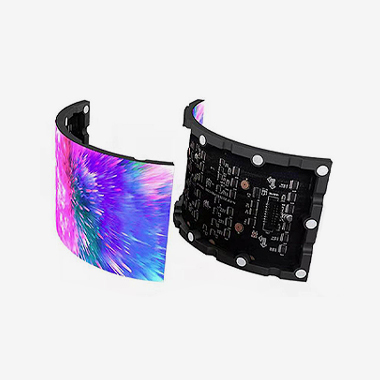
Size is a crucial consideration. For small - scale applications, such as in a store window or a corporate office reception area, compact displays may be sufficient. These can range from a few square feet to tens of square feet in size. In contrast, large - scale indoor venues like convention centers or sports arenas may require massive displays that cover hundreds of square feet. The shape of the display also needs to be carefully planned. While rectangular shapes are the most common, custom - shaped designs, such as circular, curved, or irregular shapes, can be created to fit the unique architectural features of the indoor space.
The choice of RGB LED modules is fundamental to the quality of the display. Different LED modules have varying pixel pitches, which determine the resolution and clarity of the image. For indoor applications where the viewing distance is relatively short, smaller pixel pitches are preferred to ensure sharp and detailed visuals. For example, in a retail store where customers may be standing close to the display, a pixel pitch of 1 - 3 mm can provide excellent image quality. On the other hand, for larger indoor spaces with a greater viewing distance, such as in a convention hall, pixel pitches of 3 - 6 mm may be more appropriate.
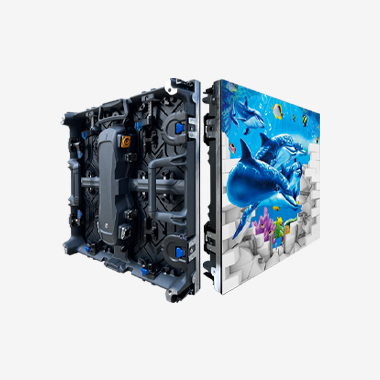
The structural framework of indoor RGB LED display signage is typically made of lightweight yet durable materials. Aluminum frames are commonly used due to their strength - to - weight ratio, ease of installation, and corrosion - resistance. The display also requires a reliable power supply system to ensure stable operation. Since indoor environments usually have a more controlled power supply compared to outdoor settings, the power management system focuses on efficient energy utilization and safety.
The control system of the indoor RGB LED display signage is highly sophisticated. It consists of a media player, video processors, and a network interface. The media player stores and plays the content, which can be in various formats such as videos, images, and animations. The video processors are responsible for enhancing the quality of the incoming video signals, adjusting parameters like contrast, color saturation, and brightness. The network interface enables remote control and content updates, allowing operators to manage the display from a central location, making it convenient to change the content according to different needs.
Indoor RGB LED display signage operates based on the principles of additive color mixing and digital control. At the core of each RGB LED is a semiconductor structure that emits light of a specific color when an electric current passes through it. Red, green, and blue are considered the primary colors in the additive color model because by combining different intensities of these three colors, any other color in the visible spectrum can be created.
When an electric current is applied to an RGB LED, electrons and holes within the semiconductor recombine, releasing energy in the form of photons. The energy of these photons determines the color of the emitted light. For example, a red LED is designed to emit light with a specific wavelength corresponding to the red color in the visible spectrum. By precisely controlling the current flowing through each of the red, green, and blue sub - pixels within an RGB LED, the intensity of each color can be adjusted.
In an indoor RGB LED display, numerous RGB LEDs are arranged in a matrix pattern. Each individual LED or group of LEDs (pixels) is controlled independently by a driver circuit. The driver circuit receives digital signals from a control system. These signals contain information about the color and brightness that each pixel should display. The control system processes the incoming video or graphic data and converts it into a series of electrical signals that are sent to the driver circuits.
To display high - quality images and videos, the indoor RGB LED display signage uses digital signal processing techniques. The incoming analog or digital video signals are first digitized and then processed. This includes tasks such as de - interlacing (for analog video sources), scaling the video to fit the resolution of the display, and applying color correction algorithms. High - speed data transmission is essential to ensure that the content can be updated in real - time, enabling smooth playback of videos and animations.
Indoor RGB LED display signage offers several significant advantages that have contributed to its widespread adoption. One of the most notable advantages is its outstanding visual performance. With the ability to generate a wide range of vivid colors, high - contrast ratios, and high resolutions, these displays can deliver stunning visuals that capture the audience's attention. Whether it's displaying a product in a retail store or showcasing a video presentation in a corporate setting, the high - quality visuals enhance the overall impact of the content.
Another advantage is the flexibility in content display. Indoor RGB LED displays can show a variety of content, including videos, images, text, and animations. The digital nature of the content allows for easy and quick updates. Operators can change the displayed content in real - time, making it suitable for dynamic applications such as advertising promotions, event announcements, and real - time information dissemination.
Energy efficiency is also a key benefit of indoor RGB LED display signage. Compared to traditional display technologies like CRT or some types of LCD displays, LEDs consume less power while still providing excellent brightness and visual quality. This not only reduces the operating costs but also makes these displays more environmentally friendly. Additionally, LED displays have a long lifespan, reducing the need for frequent replacements and maintenance.
However, indoor RGB LED display signage also faces some challenges. The initial cost is relatively high. The purchase, installation, and setup of these displays, especially high - resolution and large - scale ones, require a significant investment. This includes the cost of the LED panels, the control system, the structural framework, and the installation labor.
Technical complexity is another hurdle. Operating and maintaining indoor RGB LED displays require specialized knowledge. The complex electronic components, software systems, and network infrastructure need regular monitoring and calibration to ensure optimal performance. Any malfunction in the display, such as a faulty LED module or a software glitch, can result in display errors or outages, and troubleshooting these issues often requires the expertise of trained technicians.
In some indoor environments, integration with the existing interior design can be a challenge. The display needs to blend seamlessly with the surrounding decor and architecture. This may require custom - designing the display's appearance, such as its frame color and shape, to ensure that it does not disrupt the overall aesthetic of the indoor space.
Indoor RGB LED display signage has a diverse range of applications across multiple industries. In the retail industry, it is used for in - store marketing. Retailers can create eye - catching product displays, showcase new arrivals, and highlight special offers. These displays can also be used to create interactive shopping experiences, such as touch - screen displays that allow customers to explore product details and make purchases.
In the corporate sector, indoor RGB LED displays are employed for internal communication and brand building. They can be used to display company values, achievements, and employee recognition in office spaces. In conference rooms, these displays are used for presentations, providing a large - scale, high - definition viewing experience for attendees.
The hospitality industry utilizes indoor RGB LED display signage for various purposes. In hotels, they are used for guest information displays, such as showing room service menus, local attractions, and event schedules. In restaurants and bars, these displays can be used to showcase the menu, daily specials, and wine lists in an attractive and dynamic way.
Looking to the future, several trends are likely to shape the development of indoor RGB LED display signage. The continuous miniaturization of LED chips, leading to technologies like Mini - LED and Micro - LED, will result in even higher resolutions, better contrast ratios, and more energy - efficient displays. These technologies will enable the creation of more detailed and immersive visual experiences.
The integration of augmented reality (AR) and virtual reality (VR) with indoor RGB LED displays is also an emerging trend. AR - enabled LED displays could overlay digital information onto the real - world indoor environment, creating interactive and engaging experiences for users. For example, in a retail store, AR could be used to allow customers to visualize how a piece of furniture would look in their homes.
Artificial intelligence (AI) and machine learning (ML) will play an increasingly important role. AI can be used to analyze audience data and optimize the content displayed on the LED signage in real - time, ensuring maximum engagement. ML algorithms can predict maintenance needs, helping to prevent display failures and reduce downtime.
Conclusion
Indoor RGB LED display signage has become an essential element in modern indoor visual communication, offering remarkable visual performance, flexibility, and energy efficiency across a wide range of applications. Despite the challenges of high initial costs, technical complexity, and integration issues, its numerous advantages have made it a preferred choice for businesses and organizations in various industries.
As technology continues to evolve, indoor RGB LED display signage is set to play an even more significant role in the future. The development of Mini - LED, Micro - LED, AR, VR, AI, and ML technologies will open up new possibilities for creating more immersive, interactive, and personalized indoor visual experiences. Businesses and organizations should embrace these trends to stay competitive and leverage the full potential of indoor RGB LED display signage in enhancing communication, engagement, and the overall aesthetic appeal of their indoor spaces.


Copyright © 2026 Shenzhen Cogo Technology Co.,Ltd.
All Rights Reserved

 Previous article