




 Chat Now
The modern visual landscape, from the gleaming skyscrapers of Times Square to the mission-critical control rooms of global enterprises, is increasingly dominated by a transformative technology: the high-resolution LED video wall. This is no longer the clunky, pixelated technology of yesteryear. Today's LED video walls represent the pinnacle of digital display, offering unparalleled brightness, seamless scalability, and breathtaking image quality that can transform any space into an immersive visual experience. They are dynamic canvases that communicate, inform, entertain, and command attention on a grand scale.
At its core, an LED video wall is a large display surface composed of multiple individual display panels or "cabinets" tiled together. Each cabinet contains a dense array of Light Emitting Diodes (LEDs) that serve as the fundamental pixels of the display. Unlike a single, monolithic screen, this modular approach is the key to the video wall's versatility. It allows for the creation of displays of virtually any size or aspect ratio, from a modest 2x2 video wall in a corporate lobby to a colossal, curved facade wrapping around an entire building. The term "high-resolution" in this context is relative to the viewing distance. While a 4K television achieves its resolution on a ~55-inch screen, a high-resolution LED wall might achieve an equivalent pixel density across a surface that is 20 feet wide, ensuring a crisp, clear image even for viewers standing close to the screen.
The evolution of this technology has been dramatic. Early LED displays were used primarily for simple text and low-resolution graphics in outdoor settings, characterized by high brightness but very large pixel pitches (the distance between the centers of two adjacent pixels, measured in millimeters). The drive for finer pixel pitches has been the central theme of innovation. As manufacturing processes improved, particularly with the advent of Surface-Mount Device (SMD) technology, LEDs became smaller and could be placed closer together. This allowed for the development of indoor-capable screens with finer resolutions, eventually leading to the current era of "fine-pitch" and "microLED" displays, where pixel pitches are now well below 1.0mm (P0.9, P0.7, etc.), rivaling and even surpassing the pixel density of traditional LCDs.
The fundamental components of an LED video wall system are consistent, though their sophistication has grown. The system is built upon the LED modules or cabinets, which are the physical building blocks. These are driven by receiver cards that manage a section of the module. The entire wall is synchronized and fed content by a video controller or processor, a specialized computer that takes one or more input signals and maps them correctly across the non-standard resolution of the tiled wall. Finally, the content itself—whether live video, data visualizations, or pre-rendered animations—is managed by playback software and hardware.
The applications for this technology are vast and growing. They have become the standard for broadcast studios, providing dynamic, ever-changing virtual backdrops. In corporate environments and command and control centers, they are indispensable for visualizing complex data sets and monitoring real-time operations. The retail and hospitality sectors use them to create brand experiences and awe-inspiring atmospheres, while public spaces and live events rely on them to deliver information and entertainment to massive audiences. The drive towards higher resolution is fundamentally about enhancing immersion and legibility, pulling audiences into the content and ensuring that the message, no matter how complex, is delivered with crystal clarity.
In summary, the high-resolution LED video wall is more than just a big screen; it is a modular, scalable, and powerful visual communication platform. It has evolved from a niche outdoor technology to the premier choice for high-impact visual displays across all industries, fueled by relentless innovation in miniaturization, processing power, and image quality. Its overview sets the stage for understanding the intricate design, profound advantages, and exciting future that defines this dynamic technology.
The creation of a high-resolution LED video wall is a sophisticated exercise in engineering, optics, and system integration. Its design and construction are far more complex than simply assembling a collection of screens. Every element, from the microscopic LED chip to the massive structural frame, must be meticulously designed and precision-manufactured to ensure reliability, performance, and a seamless visual experience. The process can be broken down into several key layers: the LED modules themselves, the cabinet structure, the electronic components, and the supporting infrastructure.
The LED Package: The Heart of the Display
The journey begins with the LED package. For high-resolution applications, Surface-Mount Device (SMD) technology is universally employed. In SMD design, the red, green, and blue (RGB) LED chips are packaged together into a single, tiny unit that is then soldered directly onto the surface of the printed circuit board (PCB). This is a crucial advancement over older, larger lamp-style LEDs, as it allows for a dramatically reduced pixel pitch. The most recent innovation is the use of Chip-On-Board (COB) and MicroLED technology. In COB design, multiple bare LED chips are directly bonded to the PCB and then encapsulated with a protective phosphor coating, resulting in even greater density, better reliability, and improved protection against damage and moisture. MicroLED takes this further, using microscopic LEDs that are transferred to the substrate, promising pixel pitches below 0.5mm.
The Module and Cabinet: The Building Blocks
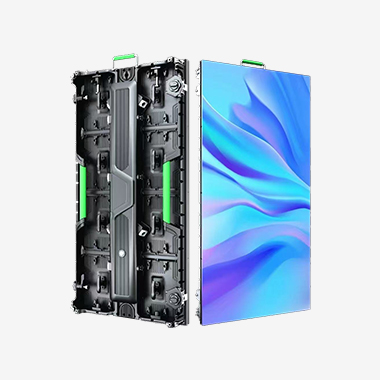
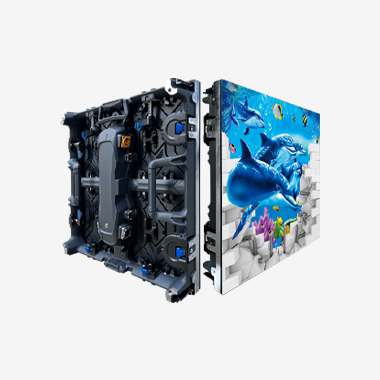
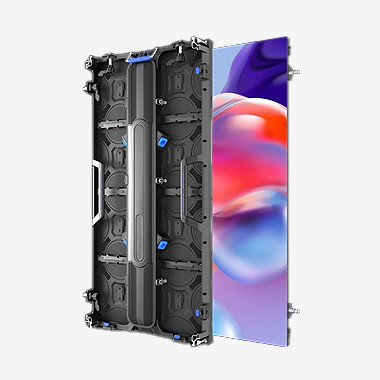
Individual LEDs are arranged in a matrix on a PCB to form an LED module. Several of these modules are then mounted into a rigid, often aluminum, cabinet to create a larger, manageable unit. The design of the cabinet is critical. It must be:
Structurally Sound: It must maintain perfect flatness across the entire wall to avoid any visible seams or "tiling" effects. High-quality cabinets use precision-machined dies and materials to ensure consistency.
Thermally Efficient: LEDs generate heat, and excessive heat reduces lifespan and causes color shift. Cabinets are designed with integrated heat sinks and often active cooling systems (fans) to dissipate heat effectively.
Easy to Install and Maintain: Modern cabinets feature front-access serviceability, allowing technicians to replace modules or power supplies from the front without needing access behind the wall—a critical feature for permanent installations. They also incorporate sophisticated locking and alignment mechanisms to ensure modules sit perfectly flush with their neighbors.
Pixel Pitch and Resolution Calculation
The single most important design specification is the pixel pitch—the distance, in millimeters, from the center of one pixel to the center of the adjacent pixel. This directly determines the native resolution of a single cabinet and the entire wall. For example, a cabinet with a 1.5mm (P1.5) pitch that is 500mm wide will have a horizontal resolution of 500mm / 1.5mm = ~333 pixels. The resolution of the entire wall is the sum of the pixels from all cabinets in the horizontal and vertical dimensions. Choosing the correct pixel pitch is a trade-off between resolution, viewing distance, and cost. A lower number (e.g., P0.9) offers a finer resolution for closer viewing but is significantly more expensive than a higher number (e.g., P2.5) suitable for longer viewing distances.
The Electronics: Driving the Display
Behind the luminous surface lies a network of sophisticated electronics:
Driver ICs (Integrated Circuits): These chips provide the precise electrical current required to illuminate each individual LED sub-pixel with the correct intensity. The quality of the driver IC directly affects grayscale performance, color accuracy, and refresh rate.
The PCB: This is the nervous system of the cabinet, containing the circuitry that connects the driver ICs to the LEDs and to the central control system.
The Receiving Card: Each cabinet contains one or more receiver cards. This card acts as a local controller, receiving data from the video processor and translating it into commands for the driver ICs on its section of the wall.
The Video Processor: This is the brain of the entire operation. It is a high-performance external computer that takes standard video input signals (e.g., 4K HDMI, SDI) and processes them for the unique canvas of the LED wall. Its key functions include:
Resolution Mapping: Scaling the input source to fit the wall's non-standard native resolution.
Color Calibration: Applying uniformity correction to ensure every cabinet and every pixel matches in color and brightness.
Synchronization: Genlocking the entire wall to eliminate tearing and ensure buttery-smooth playback of fast-motion content.
Input Handling: Managing multiple input sources, allowing for picture-in-picture, windowing, and layering of content across the display.
Calibration and Quality Control
Perhaps the most crucial step in construction is post-assembly calibration. Even with high-precision manufacturing, minor variations in LED brightness and wavelength exist. Each module undergoes a rigorous calibration process where specialized cameras measure the output of every single LED. Correction coefficients are calculated and stored on the module's memory chip. This data is then used by the receiving card to adjust the output of each LED on the fly, resulting in the perfect color and brightness uniformity that defines a premium video wall.
In conclusion, the design and construction of a high-resolution LED video wall is a symphony of interdisciplinary engineering. It demands excellence in material science for the cabinets, optical engineering for the LEDs, electronic design for the PCBs and ICs, and software development for the processing and calibration. It is this meticulous attention to detail at every level of the design and manufacturing process that transforms a collection of individual light-emitting diodes into a seamless, breathtaking, and reliable canvas of light.
The magic of a high-resolution LED video wall—its ability to display a seamless, brilliant, and dynamic image across a vast area—is not magic at all. It is the result of a precisely orchestrated series of electronic and computational processes. Understanding these working principles reveals the remarkable engineering that translates digital data into visual spectacle. The operation can be broken down into a chain of events: data transmission, processing, addressing, and illumination.
1. Data Input and the Video Processor: The Brain
The process begins when a content source—a laptop, a media server, a live camera feed—sends a video signal to the system's video processor. This processor is the intellectual core of the video wall, a specialized computer equipped with powerful GPUs and dedicated software. Its first job is to ingest the incoming signal, which typically has a standard resolution like 1920x1080 (1080p) or 3840x2160 (4K UHD). However, the video wall itself has a "native resolution" that is the sum of all its cabinets. For example, a 3x3 wall of 1920x1080 cabinets would have a native resolution of 5760x3240—a non-standard format.
This is where the processor's most critical function comes into play: scaling and mapping. The processor takes the input image and intelligently scales it up or down to fit the exact native resolution of the entire canvas. It doesn't simply stretch the image; advanced algorithms (like bicubic or Lanczos scaling) are used to interpolate pixels and preserve image clarity. The processor also handles tasks like color space conversion (e.g., from RGB to the display's specific color gamut) and frame rate synchronization.
2. Data Distribution: The Nervous System
Once the video signal is processed into a massive, wall-sized data stream, it must be distributed to every single cabinet in the array. This is achieved via a high-bandwidth, daisy-chained network. The most common protocol is HDBaseT or specialized digital video cabling (like HDMI over fiber optic cables for long distances), which can carry video, power, and control signals over a single cable. The processor sends this data stream to the first cabinet in the chain. That cabinet takes the data it needs for its own section of the image and then passes the entire remaining data stream to the next cabinet. This process continues until all cabinets in the wall have received their respective data packets.
3. Data Addressing and the Receiving Card: The Local Controller
Inside each LED cabinet, a receiving card acts as the local manager. It takes the portion of the overall data stream that is relevant to its cabinet and processes it further. The receiving card's memory contains the vital calibration data for every single LED on its modules, ensuring color and brightness uniformity. It converts the video data into a format that the LED driver chips can understand.
4. Pulse-Width Modulation (PWM): The Language of Light and Color
This is the fundamental principle that controls the brightness and color of each LED. An LED is a digital device; it's either on or off. To create the perception of varying brightness levels (grayscale), it is rapidly switched on and off thousands of times per second. The ratio of "on" time to "off" time within each cycle (the pulse width) determines the perceived intensity. A longer "on" pulse appears brighter, while a shorter "on" pulse appears dimmer. This is Pulse-Width Modulation.
For color mixing, this principle is applied independently to the red, green, and blue sub-pixels within each pixel. By precisely controlling the PWM for each color, the receiving card can command the pixel to emit any combination of red, green, and blue light. The human eye then integrates these rapidly flashing primary colors into a single, perceived hue. For instance, to create a perception of yellow, the red and green LEDs would be pulsed at a high duty cycle, while the blue LED would be kept off. The refresh rate (how many times per second the entire screen is redrawn) and the grayscale depth (how many levels of brightness between off and full-on are possible, e.g., 16-bit) are determined by the sophistication of the PWM control system. A high refresh rate (e.g., 3840Hz or higher) eliminates flicker and ensures smooth motion, especially for camera capture.
5. The Driver IC and LED Illumination: The Final Execution
The receiving card sends the PWM instructions to the driver Integrated Circuits (ICs). These are chips physically located on the modules, each responsible for a specific group of LEDs. The driver ICs are the muscle; they provide the precise electrical current required to switch the LEDs on and off at the exact microsecond intervals dictated by the PWM signal. They ensure that the electrical demands of the LEDs are met consistently and safely. Finally, the LEDs themselves execute the command, emitting photons of light in their specific wavelengths to form the image that the viewer sees.
Synchronization: Locking the Wall in Time
For the entire wall to act as one cohesive display, every cabinet, every module, and every driver IC must be perfectly synchronized. This is achieved through a genlock (generator lock) signal, which is distributed along with the video data. The genlock signal ensures that all receiving cards update their displayed image at the exact same moment, preventing any tearing or misalignment between cabinets, which would be especially visible during fast-moving content.
In essence, the working principle of an LED video wall is a hierarchical and massively parallel processing system. The video processor handles the macro-level task of creating the overall image. The receiving cards handle the mid-level task of managing their section of the wall and applying calibration. The driver ICs handle the micro-level task of controlling individual LEDs. And through the precise timing of Pulse-Width Modulation, this entire system translates binary data into the vibrant, continuous, and awe-inspiring imagery that defines the modern high-resolution LED video wall.
The adoption of high-resolution LED video wall technology is a significant investment, and the decision to use it over alternative technologies like LCD video walls or projection is driven by a clear set of powerful advantages. However, like any advanced technology, it is not without its own set of challenges and considerations. A thorough understanding of both sides is essential for making an informed decision.
Advantages
1. Seamlessness and Superior Image Quality:
This is the most prominent advantage. Unlike LCD video walls, which are plagued by thick, visible bezels that create a "windowpane" effect and disrupt the visual experience, LED walls are truly seamless. The individual modules are designed to fit together with a tolerance of less than a millimeter, creating a virtually continuous canvas. This bezel-free design is paramount for immersive applications like simulation, broadcast, and digital art. Furthermore, LED technology offers superior contrast ratios because each pixel is self-emissive and can be completely turned off to produce true, deep blacks. This leads to a more dynamic and lifelike image compared to LCDs, which rely on a constant backlight.
2. High Brightness and Anti-Glare Performance:
LED video walls are incredibly bright, often exceeding 1,500 nits for indoor models and reaching 5,000+ nits for outdoor installations. This allows them to overcome ambient light in environments like airports, stock exchange floors, and sunny atriums where LCDs and projectors would appear washed out. Additionally, because the LED surface is typically matte and non-reflective, they handle glare from direct light sources far better than glossy LCD screens.
3. Scalability and Flexibility:
The modular nature of LED walls is a game-changer. They can be built to any size or aspect ratio, limited only by budget and physical space. They can be configured in creative, non-rectangular shapes (e.g., curves, columns, arches, and even 3D structures) that are impossible with standard displays. If future needs demand a larger screen, it is often possible to simply add more cabinets to the existing system.
4. Reliability and Long Lifespan:
Well-constructed LED walls are designed for 24/7 operation. They have no moving parts (aside from optional cooling fans) and are built with industrial-grade components. The lifespan is typically defined as the point at which the LEDs' brightness degrades to 50% of their original output (known as L50), which is often 100,000 hours or more. Their modularity also contributes to reliability; if a single module or component fails, it can be replaced quickly without taking the entire wall offline.
5. Consistent Performance Over Time:
LCD panels can suffer from "image persistence" or burn-in if a static image is left on screen for too long. LED technology is largely immune to this permanent burn-in. Furthermore, the built-in calibration system ensures that the color and brightness uniformity set at the factory is maintained throughout the life of the wall, even as individual LEDs age at slightly different rates.
Challenges and Considerations
1. Cost:
The initial purchase and installation cost of a fine-pitch LED video wall is significantly higher than that of an equivalent-sized LCD video wall or projection system. The cost is not just in the panels but also in the high-performance video processor, specialized installation, and structural support. While prices have been falling steadily as technology matures, it remains a premium solution.
2. Pixel Pitch and Viewing Distance:
This is the most critical technical consideration. There is a direct and expensive trade-off between resolution and viewing distance. A very fine pixel pitch (e.g., P0.9) is required for viewers who will be very close to the screen, but it is exponentially more expensive than a coarser pitch (e.g., P2.5). Choosing a pitch that is too coarse for the viewing distance will result in a visible "screen door effect," where the individual pixels are discernible, degrading the image quality. The Minimum Viewing Distance is typically calculated as Pixel Pitch (in mm) 1000. A P1.5 wall, for example, has a minimum viewing distance of about 1.5 meters (5 feet).
3. Power Consumption and Heat Management:
A large, bright LED wall is a significant power consumer. A vast canvas can easily draw tens of kilowatts of electricity, necessitating dedicated power circuits and contributing to substantial operational energy costs. This power consumption also generates considerable heat. While cabinets are designed with cooling systems, the heat output must be managed by the building's HVAC system, adding to the total cost of ownership.
4. Complexity of Installation and Maintenance:
Installing an LED wall is not a simple task. It requires a team of certified technicians. The wall must be perfectly leveled and aligned, and the structural support must be engineered to handle the significant weight. While maintenance is modular, it requires trained personnel who understand the system's networking, calibration, and hardware components. Keeping spare modules on hand is also a recommended practice to minimize downtime.
5. Content Requirements:
To truly leverage the investment, the content displayed must be of sufficiently high resolution. Stretching a low-resolution 1080p image across a massive 8K-resolution wall will result in a blurry, pixelated image. Content creation and media server hardware must be capable of outputting at the wall's native, often very large, resolution, which can require significant computing power and storage.
In conclusion, the advantages of LED video walls—seamlessness, brightness, flexibility, and reliability—make them the ultimate solution for high-impact, mission-critical visual displays. However, these benefits come with the challenges of high initial cost, careful pitch selection, and complex integration. A successful deployment hinges on carefully weighing these factors against the specific application, viewing conditions, and budget.
The versatility and impact of high-resolution LED technology have propelled it into a vast array of applications, fundamentally changing how information and experiences are delivered across numerous sectors. Simultaneously, the technology is not static; it is evolving at a rapid pace, driven by material science, manufacturing innovations, and software intelligence. Understanding its current applications and future trajectory provides a complete picture of its transformative role.
Current Applications
1. Broadcast and Media:
The virtual studio has become a cornerstone of modern broadcasting. LED walls provide photorealistic, dynamic backdrops that can be changed in an instant, transporting viewers to any location or virtual environment without the limitations of physical sets. Their ability to be camera-ready—thanks to high refresh rates and specialized modes that eliminate scan lines and flicker under camera shutter—makes them indispensable for news, weather, sports analysis, and entire production sets for shows and movies (a technique known as "virtual production" or "The Volume" popularized by Disney's The Mandalorian).
2. Corporate and Command & Control:
In corporate boardrooms, lobbies, and conference centers, LED walls project an image of innovation and success. They are used for impressive presentations, video conferencing, and brand storytelling. In command and control centers for utilities, transportation networks, emergency services, and financial trading, they are mission-critical tools. Their reliability and seamless canvas allow operators to visualize vast amounts of real-time data, network maps, surveillance feeds, and analytics on a single, uninterrupted screen, enabling faster and more informed decision-making.
3. Retail, Hospitality, and Experiential Marketing:
The retail apocalypse has forced physical stores to become experiences. LED walls are at the forefront of this transformation, creating immersive brand environments, dynamic window displays, and "endless aisle" digital catalogs. In hotels, casinos, and restaurants, they create mesmerizing atmospheres, from giant lobby displays to integrated architectural elements. Experiential marketing campaigns use mobile LED walls to create pop-up events that captivate audiences and generate social media buzz.
4. Public Infrastructures and Live Events:
Airports, train stations, and corporate campuses use LED walls for wayfinding, flight information, advertising, and public announcements. Their brightness and reliability ensure information is always visible. In concert tours, sporting events, and theater productions, massive LED walls form the stage backdrop, providing close-up shots, pre-produced video content, and interactive visual effects that amplify the live experience for every attendee, no matter their seat.
5. Simulation and Visualization:
For industries like aerospace, automotive, and defense, high-fidelity simulation is crucial. LED walls provide the ultra-realistic, immersive visual environments needed for flight simulators, driving simulators, and virtual prototyping. In architecture, engineering, and construction (AEC), they are used in large-scale visualization rooms (CAVEs) to render and interact with full-scale 3D models of buildings and products before they are built.
Future Trends
1. The MicroLED Revolution:
The most significant trend is the continued march towards smaller LEDs. MicroLED technology, which uses microscopic, self-emissive inorganic LEDs, promises to be the next generational leap. It offers all the benefits of current LED technology (brightness, contrast, longevity) but with pixel pitches that can rival OLED displays on a consumer television scale (below 0.1mm). This will enable truly massive, seamless displays with resolutions exceeding 16K for both professional and, eventually, consumer markets.
2. Transparency and Flexibility:
Transparent LED screens, where the LED modules are mounted on glass substrates with a high degree of light transmittance, are growing in popularity. They allow for stunning retail window displays, museum exhibits, and corporate installations where maintaining a view or natural light is important. Similarly, flexible LED substrates are enabling curved, cylindrical, and even free-form shapes that blend display technology with architecture in entirely new ways.
3. Integrated Interactivity:
The future video wall will be a giant interactive touch surface. By integrating infrared touch frames, capacitive touch sensors, or camera-based gesture control, LED walls will transform from passive display surfaces into collaborative tools. This will be transformative for control rooms, design studios, and educational settings, allowing users to directly manipulate data and images on the giant canvas.
4. AI-Powered Optimization and Content Management:
Artificial Intelligence will be deeply integrated into the operation of video walls. AI algorithms will be used for:
Predictive Maintenance: Analyzing performance data to predict and alert technicians to impending component failures before they happen.
Automated Calibration: Continuously and automatically adjusting color and brightness uniformity in real-time, compensating for aging and temperature changes without human intervention.
Smart Content: Dynamically adapting content based on external data feeds, audience demographics (measured by cameras), or time of day, making the display more responsive and engaging.
5. Sustainability Improvements:
As energy costs and environmental concerns rise, the industry is focusing on "green" LEDs. This involves developing more efficient LED chips that produce more light per watt of energy consumed, thus reducing power consumption and heat output. Manufacturers are also focusing on using recyclable materials and designing products for easier disassembly and recycling at the end of their long life.
In summary, the application spectrum for LED video walls is already vast and is expanding as the technology becomes more accessible and capable. The future points towards even higher fidelity, more integrated and interactive forms, and smarter, more sustainable systems. The LED video wall is evolving from a display into an intelligent visual interface that will continue to reshape our built environment and how we interact with digital information.
Conclusion
The high-resolution LED video wall has cemented its position as the undisputed champion of large-format visual technology. What began as a utilitarian tool for outdoor advertising and basic information display has undergone a metamorphosis, emerging as a sophisticated, reliable, and breathtakingly beautiful medium that is redefining visual communication across the globe. Its journey from niche to norm is a testament to relentless innovation in miniaturization, processing power, and system integration.
The core conclusion to be drawn is that the LED video wall's supremacy is not based on a single feature, but on a powerful combination of attributes that together create an unassailable value proposition. Its seamless, bezel-free canvas eliminates the visual disruption that plagues tiled LCD solutions, offering a level of immersion that is critical for modern applications like virtual production and data visualization. Its self-emissive technology delivers unparalleled contrast ratios and true blacks, producing images with a depth and vibrancy that backlit technologies cannot match. Its innate brightness and ruggedness allow it to perform flawlessly in environments—from sun-drenched atriums to 24/7 control rooms—where other technologies would fail. And perhaps most importantly, its modular and infinitely scalable nature provides a flexibility that is simply impossible with monolithic displays, freeing designers and engineers from the constraints of standard sizes and aspect ratios.
However, this technology is not without its demands. As detailed, its adoption requires careful consideration of viewing distance versus pixel pitch, a significant initial investment, and a commitment to professional integration and maintenance. It is a premium solution, and its value is only fully realized when matched with an application that demands its unique strengths and when supported by high-resolution content and robust infrastructure.
Looking forward, the trajectory is clear and exhilarating. The ongoing microLED revolution promises to erase the last remaining barriers of resolution, bringing pixel pitches down to levels that will enable seamless displays of any size. The trends towards transparency, flexibility, and interactivity are transforming the video wall from a simple screen into an integrated architectural and interactive element. The infusion of AI and machine learning will elevate it from a dumb display to an intelligent system capable of self-optimization, predictive maintenance, and context-aware content delivery.
In the final analysis, the high-resolution LED video wall is more than just a product; it is a platform. It is the canvas upon which businesses tell their stories, broadcasters create new realities, operators manage complex systems, and artists create awe-inspiring experiences. It has broken down the physical limitations of the screen, turning entire walls into dynamic portals of information and imagination. As the technology continues to advance, becoming more efficient, more intelligent, and more integrated into the fabric of our spaces, its role as the central nervous system for visual communication in the 21st century will only become more profound and more indispensable. The future of large-format display is not just bright; it is brilliantly self-illuminated.


Copyright © 2026 Shenzhen Cogo Technology Co.,Ltd.
All Rights Reserved

 Previous article