




 Chat Now
In the rapidly evolving realm of display technology, high refresh RGB LED display screens have emerged as a revolutionary advancement, catering to the growing demand for smooth, fluid, and immersive visual experiences. The refresh rate, measured in Hertz (Hz), indicates the number of times a display updates its image per second. While traditional displays typically operate at 60 Hz, high refresh RGB LED screens offer rates starting from 120 Hz and can go up to 360 Hz or even higher, transforming the way we perceive and interact with digital content.
The impetus behind the development of high refresh RGB LED displays is multi - faceted. In the gaming industry, where split - second reactions and seamless motion are crucial, gamers have long sought displays that can keep up with the fast - paced action of modern games. A high refresh rate reduces motion blur, eliminates screen tearing, and provides a more responsive gaming experience, giving players a competitive edge. Additionally, in the fields of professional video editing, animation, and virtual reality (VR)/augmented reality (AR), high refresh displays are essential for accurately previewing and creating content with smooth motion and realistic visual effects.
The market for high refresh RGB LED display screens has been expanding steadily. With the increasing popularity of esports, which has attracted a massive global audience, the demand for high - performance gaming displays has soared. Moreover, as content creators strive to produce higher - quality videos and animations, the need for displays that can accurately represent motion has led to a growing interest in high refresh rate technology. According to market research reports, the high refresh display segment is expected to continue its growth trajectory, driven by technological advancements, increased consumer awareness, and the expansion of applications in various industries.
The design and construction of high refresh RGB LED display screens involve a meticulous combination of advanced engineering and cutting - edge technology. At the core of the design process is the need to ensure that the display can handle the high - speed data processing and transmission required for a high refresh rate without sacrificing image quality.
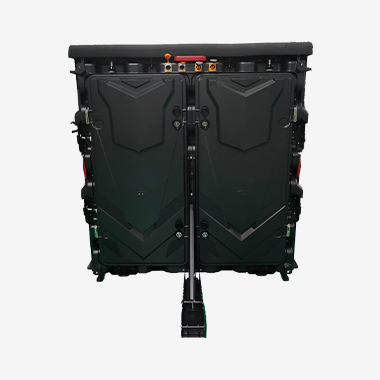
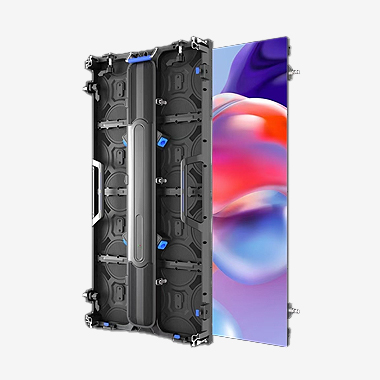
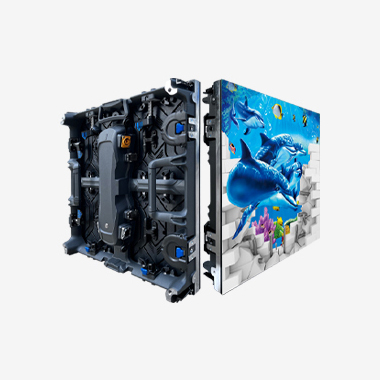
The structure of a high refresh RGB LED display screen is similar to that of a standard LED display, consisting of a frame, support system, and LED modules. However, several key modifications are made to accommodate the high refresh rate. The frame, often constructed from lightweight yet durable materials such as aluminum or carbon fiber composites, provides the necessary structural integrity while minimizing the overall weight of the display. This is especially important for applications where portability is a factor, such as in gaming laptops or portable VR devices.
The LED modules in high refresh displays are carefully selected and optimized. These modules contain a matrix of RGB LEDs, and in high refresh screens, they are designed to have faster response times. This means that the LEDs can switch on and off more quickly, enabling the display to update the image at a higher frequency. The pixel pitch, which is the distance between adjacent pixels, is also a critical consideration. A smaller pixel pitch allows for higher resolutions, which is essential for maintaining image clarity even at high refresh rates.
The electrical system of high refresh RGB LED displays is more sophisticated. High - speed data transmission interfaces, such as DisplayPort 2.0 or HDMI 2.1, are used to ensure that the video signal can be transmitted to the display without any loss or delay. Specialized power management systems are implemented to provide a stable and efficient power supply to the LED modules, as the increased refresh rate requires more power. Additionally, advanced control circuits are integrated to precisely manage the operation of the LEDs, adjusting their brightness, color, and refresh rate in real - time.
In terms of the optical design, anti - glare and anti - reflection coatings are often applied to the display surface to reduce unwanted reflections and improve visibility, especially in high - motion scenarios. Diffuser lenses may also be used to ensure uniform light distribution across the screen, enhancing the overall visual experience.
The working principles of high refresh RGB LED display screens are based on the fundamental operation of LEDs and the principles of digital signal processing. When an electric current is applied to an RGB LED, the red, green, and blue semiconductor regions emit light at specific wavelengths corresponding to the primary colors of light. By varying the intensity of these primary colors, a wide range of colors can be created through additive color mixing.
To achieve a high refresh rate, the display's control system plays a crucial role. The control system receives the digital video signal from an external source, such as a computer or gaming console. It then breaks down the video signal into individual frames and further into pixels. For each pixel, the control system calculates the appropriate intensity for the red, green, and blue LEDs based on the color information in the frame.
The high - speed data processing capabilities of the control system allow it to rapidly process and transmit the electrical signals to the LED modules. These signals instruct the LEDs to change their state (on or off) and adjust their brightness at a very high frequency, corresponding to the desired refresh rate. For example, in a 144 Hz display, the control system updates the image on the screen 144 times per second, ensuring that fast - moving objects appear smooth and without any visible artifacts.
In addition to the basic operation, high refresh RGB LED displays often incorporate technologies such as variable refresh rate (VRR). VRR allows the display's refresh rate to dynamically adjust according to the frame rate of the video source. This helps to eliminate screen tearing, which occurs when the display's refresh rate and the video source's frame rate are out of sync. By synchronizing the refresh rate with the frame rate, VRR provides a more seamless and immersive visual experience.
High refresh RGB LED display screens offer a plethora of advantages that have made them highly sought - after in various industries. One of the most significant advantages is the enhanced visual experience they provide. The reduced motion blur and elimination of screen tearing result in smoother, more fluid motion, which is particularly noticeable in fast - paced games, action movies, and sports broadcasts. This improved visual quality not only enhances the enjoyment of the content but also provides a more realistic and immersive viewing experience.
For gamers, high refresh displays offer a competitive advantage. The increased responsiveness of the display allows for more accurate aiming and quicker reaction times, as the player can see the game environment more clearly and in real - time. This can make a significant difference in esports, where every millisecond counts. Additionally, in professional applications such as video editing and animation, high refresh displays enable creators to accurately preview and fine - tune their work, ensuring that the final product has smooth motion and realistic visual effects.
Energy efficiency is also a notable advantage of modern high refresh RGB LED displays. Despite the higher refresh rate, advancements in LED technology and power management systems have allowed these displays to consume less power compared to older display technologies. This not only reduces electricity costs but also makes them more environmentally friendly.
However, high refresh RGB LED display screens also face several challenges. One of the main challenges is the high cost. The advanced technology and components required to achieve a high refresh rate, such as high - speed data transmission interfaces and specialized control circuits, contribute to the higher manufacturing cost of these displays. As a result, high refresh displays are often more expensive than their standard counterparts, which can be a barrier for some consumers.
Another challenge is compatibility. Not all devices, such as older computers or gaming consoles, support high refresh rates. Even when a device is capable of outputting a high - frame - rate video signal, ensuring compatibility with the display can be a complex process. Additionally, some software applications may not be optimized for high refresh displays, which can lead to performance issues or visual artifacts.
The high refresh rate also places additional demands on the graphics processing unit (GPU) of a computer or gaming console. To take full advantage of a high refresh display, a powerful GPU is required to generate a sufficient number of frames per second. This means that users may need to invest in a high - end GPU, which further increases the overall cost of the setup.
The applications of high refresh RGB LED display screens are diverse and continue to expand. In the gaming industry, high refresh displays have become the standard for serious gamers and esports professionals. They are used in gaming desktops, laptops, and gaming monitors, providing a competitive edge and an immersive gaming experience. In addition, high refresh displays are increasingly being integrated into VR and AR headsets, enhancing the realism and interactivity of virtual environments.
In the entertainment industry, high refresh displays are used in movie theaters, home theaters, and streaming services to provide a more cinematic and immersive viewing experience. The smooth motion and reduced blur make action scenes more engaging and realistic. In the field of professional video production, high refresh displays are essential for accurately previewing and editing high - frame - rate videos, ensuring that the final product meets the highest quality standards.
Looking to the future, the high refresh RGB LED display screen industry is expected to witness several exciting trends. One of the major trends is the continued increase in refresh rates. As technology advances, we can expect to see displays with even higher refresh rates, such as 500 Hz or more, further enhancing the smoothness of motion.
The integration of artificial intelligence (AI) and machine learning (ML) technologies is also set to transform the high refresh display industry. AI - powered algorithms can be used to optimize the display settings in real - time, adjusting the refresh rate, color, and brightness based on the content being displayed and the ambient light conditions. This will not only improve the visual quality but also enhance the energy efficiency of the displays.
Another trend is the development of more affordable high refresh displays. As the technology matures and production volumes increase, the cost of high refresh RGB LED displays is expected to decrease, making them more accessible to a wider range of consumers. Additionally, the continued improvement in compatibility and software optimization will make it easier for users to take advantage of the benefits of high refresh displays.
Conclusion
In conclusion, high refresh RGB LED display screens have revolutionized the way we experience digital content, offering a smoother, more immersive visual experience. Their applications in gaming, entertainment, and professional fields have made them an essential component of modern technology.
Despite the challenges such as high cost, compatibility issues, and GPU requirements, the future of high refresh RGB LED displays looks promising. With ongoing technological advancements, the continued expansion of applications, and the development of more affordable and user - friendly models, high refresh displays are set to become even more widespread. They will continue to enhance our digital experiences, whether we are gaming, watching movies, or creating professional content, and will play a crucial role in shaping the future of the display technology industry.


Copyright © 2026 Shenzhen Cogo Technology Co.,Ltd.
All Rights Reserved

 Previous article