




 Chat Now
In the dynamic landscape of modern marketing and urban architecture, the full-color advertising LED display screen has emerged as a dominant and transformative medium. These vibrant, dynamic canvases have revolutionized the way businesses, brands, and municipalities communicate with the public, moving far beyond the static limitations of billboards and printed posters. They are not merely displays; they are powerful tools for engagement, branding, and information dissemination in the digital age.
A full-color advertising LED display is a modular, flat-panel screen that uses a matrix of light-emitting diodes (LEDs) as pixels to produce high-brightness, high-resolution video and imagery for viewing at various distances. Their primary purpose is to capture attention, convey messages, and influence behavior in both outdoor and indoor public spaces. Unlike traditional advertising, which is fixed and passive, LED displays offer motion, sound (where applicable), and the ability to change content instantly and remotely, making them incredibly versatile and effective.
The fundamental shift brought about by this technology is the transition from static to dynamic communication. A single digital billboard can cycle through multiple advertisements from different clients throughout the day, maximizing revenue potential for its owner. It can display time-sensitive information, such as news headlines, weather updates, or stock tickers. It can react to real-world events, such as changing its message during a traffic jam or celebrating a local sports team's victory moments after it happens. This dynamism creates a level of relevance and immediacy that static media cannot hope to match.
The applications are vast and varied. In the outdoor realm, they are the colossal spectacles towering over Times Square, the large-format screens on building facades, and the digital billboards lining highways. These outdoor units are engineering marvels, built to withstand harsh environmental conditions like direct sunlight, rain, wind, and extreme temperatures, all while maintaining brilliant visibility. Indoors, they serve as sophisticated branding tools in corporate lobbies, as immersive retail experiences in stores, as primary information hubs in airports and train stations, and as central command displays in control rooms.
The evolution of this technology has been rapid. Early LED signs were monochromatic (typically red), low-resolution, and used primarily for simple text. The development of full-color RGB (Red, Green, Blue) technology, followed by advancements in LED packaging—from through-hole LEDs to Surface-Mounted Device (SMD) technology—enabled the creation of screens with finer pixel pitches, better color consistency, higher reliability, and wider viewing angles. This progression is what allowed LED screens to transition from simple informational signs to true high-definition video displays capable of rendering complex and captivating content.
The impact on the advertising industry is profound. Advertisers are no longer limited to a single image for months; they can run coordinated, scheduled campaigns with video storytelling. The measurable nature of digital advertising can also be integrated, with some systems using cameras and sensors to anonymously analyze audience demographics (e.g., estimating the number and gender of viewers) to provide valuable analytics on ad performance. Furthermore, the ability to update content instantly allows for programmatic advertising, where ad space can be sold and filled in real-time, much like online banner ads.
In summary, the full-color advertising LED display is a cornerstone of 21st-century visual communication. It represents the convergence of display technology, software control, and networked connectivity. It has created new revenue streams, transformed urban skylines, and raised the bar for audience engagement. As we delve into its construction and principles, it becomes clear that this technology's dominance is due to a powerful combination of visual brilliance, operational flexibility, and proven effectiveness in capturing the ever-dwindling resource of public attention.
The imposing and seamless visual presence of a full-color LED billboard masks an incredibly complex and meticulously engineered modular system. Its design is a rigorous exercise in balancing optical performance, structural integrity, environmental resilience, and thermal management. Every component, from the microscopic LED chip to the massive steel support structure, is purpose-built to deliver reliable, 24/7 operation in often demanding conditions.
The Fundamental Unit: The LED Module
The core building block of any LED display is the module, a printed circuit board (PCB) typically ranging from 16x16 cm to 50x50 cm. This module is where the magic begins:
LED Packages: Modern advertising displays almost exclusively use SMD (Surface-Mounted Device) technology. In an SMD configuration, the red, green, and blue LED chips are pre-packaged together into a single small unit and then soldered directly onto the surface of the PCB. This allows for a much higher pixel density (a finer pixel pitch), better color mixing, a wider viewing angle, and a more robust physical profile compared to older through-hole technology.
Pixel Pitch: This is the most critical design specification, defined as the distance (in millimeters) from the center of one pixel to the center of the adjacent pixel (e.g., P10, P6, P4, P2.5). The choice of pixel pitch is a direct trade-off between resolution and viewing distance. A large pitch (e.g., P10 or P16) is cost-effective and perfectly suitable for very large billboards viewed from hundreds of feet away on a highway. A fine pitch (e.g., P4 or lower) is required for closer viewing distances, such as on a building facade in a pedestrian district, where the image needs to remain crisp.
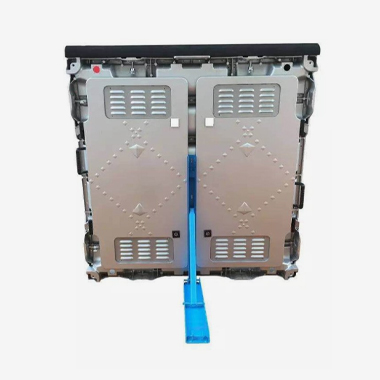
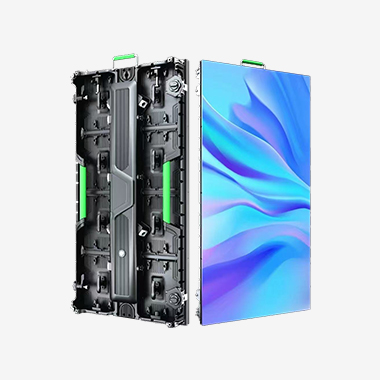
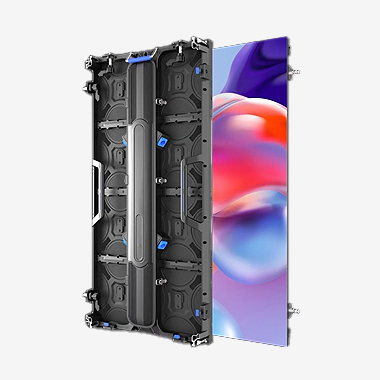
Cabinet Design: Multiple modules are mounted into a larger metal frame called a cabinet. These cabinets, usually made from die-cast aluminum for its excellent strength-to-weight ratio and superior heat dissipation properties, are the structural units that are then assembled into the full display. Cabinets are designed with quick-connect locks for fast assembly and alignment, and they house critical ancillary components.
Critical Internal Components:
Driver ICs (Integrated Circuits): These are the workhorses that control the LEDs. They receive data from the receiving card and precisely control the amount of current delivered to each individual LED sub-pixel, thereby dictating its brightness. The quality and performance of the driver ICs directly affect the color depth (grayscale), refresh rate, and overall stability of the image.
Power Supplies: Each cabinet contains switching-mode power supplies (SMPS) that convert the incoming AC mains power (e.g., 110V/220V AC) to the low-voltage DC power (typically 5V DC) required by the LEDs and electronics. Reliability of these power supplies is paramount, and redundancy is often built-in.
The Receiving Card: This is the "brain" of the cabinet. It acts as a local controller, receiving the video data signal via network cables, processing the portion of the image assigned to its cabinet, and distributing the commands to the driver ICs across all the modules in its domain.
Structural and Environmental Engineering:
Frame and Mounting: Cabinets are bolted onto a heavy-duty steel support structure that is engineered to specific wind load, seismic, and weight requirements. This structure must be absolutely rigid to prevent any movement that would cause misalignment between cabinets, ruining the seamless image.
Ingress Protection (IP Rating): Outdoor cabinets must be hermetically sealed to protect the sensitive electronics from the elements. A standard IP65 rating is required, meaning they are "dust-tight" and protected against low-pressure water jets from any direction. This ensures operation in rain, snow, and against dust and humidity. Indoor cabinets may have a lower rating (e.g., IP20) as environmental threats are minimal.
Thermal Management: This is a critical challenge. LEDs and power supplies generate significant heat. If not managed, excessive heat drastically shortens LED lifespan and causes color shift. Outdoor cabinets manage this through passive design: the aluminum cabinet itself acts as a massive heat sink to dissipate heat into the surrounding air. For high-brightness or high-density displays, active cooling with fans or even air conditioning systems may be integrated into the larger structure.
The Complete System: Beyond the Screen
The physical screen is only part of the system. It is fed by:
A Video Processor: A specialized computer that takes one or more standard video signals (e.g., HDMI from a media player), scales the content to the native, often irregular, resolution of the LED wall, performs color calibration and correction, and then outputs the processed signal via multiple network ports.
A Control System: This includes the media player (a dedicated PC or a simple USB/SD card player) that stores and schedules the advertising content and the network switches that distribute the data from the processor to the individual cabinets.
In essence, the construction of an advertising LED display is a masterclass in systems integration. It harmonizes optics, electronics, mechanical engineering, and software to create a robust, reliable, and visually stunning medium capable of operating continuously in the demanding environment of modern advertising.
The captivating motion and vibrant color of an LED display are the result of a sophisticated orchestration of electronics, optics, and data management. The principle may seem simple—millions of tiny lights turning on and off—but the execution is a complex process of precision timing and control to create a coherent, stable, and brilliant image.
The Foundation: Additive Color Mixing
Unlike printed material which uses subtractive color (CMYK), LED displays use the additive color model. Each pixel is composed of a cluster of three miniature LEDs: one Red, one Green, and one Blue (RGB). By varying the intensity of light emitted from each of these three primary colors, the human eye perceives a blend that forms a full spectrum of colors.
Red + Green light creates Yellow.
Red + Blue light creates Magenta.
Green + Blue light creates Cyan.
Red + Green + Blue at full intensity creates White.
All three off creates Black.
The intensity of each diode is controlled through a process called Pulse-Width Modulation (PWM).
The Control Mechanism: Pulse-Width Modulation (PWM)
LEDs are digital devices; they are either on or off. To create the illusion of varying brightness (which is essential for color mixing and grayscale), they are switched on and off at an extremely high frequency that is imperceptible to the human eye. PWM works by cycling the power to the LED on and off in a fixed period.
If the LED is on for 50% of the cycle and off for 50%, it will appear at 50% brightness.
If it is on for 10% of the cycle, it appears at 10% brightness.
This rapid switching allows for precise control over the brightness of each red, green, and blue sub-pixel, enabling the creation of millions of color combinations.
The Data Pathway: From Source to Pixel
The journey of a video frame to the screen is a multi-stage process:
Content Source & Media Player: The process begins with digital content (video, images, text) stored on a media player. This device decodes the video file and outputs a standard video signal (like HDMI or DVI) at a common resolution (e.g., 1920x1080).
The Video Processor (The Brain): This standard signal is inadequate for an LED wall, which has a unique, non-standard native resolution (e.g., 5760x3240). The video processor is a specialized computer that performs several critical functions:
Scaling: It takes the input signal and scales it up (or down) to perfectly match the native resolution of the LED wall.
Color Management & Calibration: It applies calibration data to ensure color uniformity across every single module. Since LEDs have slight natural variations, the processor adjusts the output values for each pixel to compensate, guaranteeing that a command for "pure white" looks identical on every part of the screen.
Data Distribution: It splits the gigantic processed image into smaller sections, each corresponding to a specific cabinet or group of cabinets in the display.
Protocol Conversion: It converts the video data into a data protocol that can be transmitted over long cables, typically using network-based protocols like Art-Net, sACN, or proprietary manufacturer protocols.
Data Transmission: The processed data is sent from the processor's output ports via CAT5e, CAT6, or fiber optic cables to the display itself. Fiber optics are essential for long runs (over 100 meters) to avoid signal degradation.
The Receiving Card: Each cabinet has at least one receiving card. This card is a dedicated controller that receives the data packet for its section of the screen. It interprets the commands and distributes them to the numerous driver ICs on the modules.
The Driver ICs (The Muscle): Located on the modules, these integrated circuits are the final link in the chain. They receive the serial data from the receiving card, which tells them exactly what PWM value to assign to each individual LED they are responsible for. They then execute these commands, switching the current to each LED at the precise microsecond required.
Key Performance Metrics:
Refresh Rate: The number of times per second the entire screen data is updated. A low refresh rate (<1000Hz) can cause flickering, especially on camera. High-end advertising displays have very high refresh rates (>3000Hz) to ensure a flicker-free, stable image that can be recorded perfectly on smartphones and broadcast cameras.
Grayscale Depth: This refers to the number of distinct brightness levels each color can produce. A higher grayscale depth (e.g., 16-bit) allows for smoother color gradients and more subtle shades, preventing "banding" in areas like skies shadows. This is achieved through the precision of the PWM control.
In summary, the working principle is a flawless, real-time data pipeline. It transforms a standard video signal into a meticulously calibrated and distributed set of commands that orchestrate millions of individual LEDs to switch at incredible speeds, creating the illusion of a continuous, vibrant, and moving image that captivates audiences.
The widespread adoption of LED technology in advertising is a direct result of its compelling advantages over traditional media. However, deploying and maintaining these complex electronic systems, especially outdoors, presents a unique set of challenges that require careful consideration and management.
Advantages
Unparalleled Impact and Attention Capture: The single greatest advantage is the ability to command attention. The combination of high brightness, vivid color, and dynamic motion is far more effective at breaking through the "visual clutter" of an urban environment than static signs. Human eyes are naturally drawn to movement, making LED displays incredibly effective at capturing glances and engaging viewers, which is the primary goal of any advertisement.
Dynamic Content and Flexibility: This is a revolutionary shift. A single digital billboard can run multiple ads for different advertisers in a rotating loop, maximizing revenue potential. Content can be changed instantly and remotely via a network connection, allowing for:
Dayparting: Showing coffee ads in the morning and restaurant ads in the evening.
Real-Time Updates: Displaying live news, weather, traffic, sports scores, or social media feeds.
Immediate Campaign Changes: Launching a new product campaign or running a flash sale at a moment's notice.
This flexibility eliminates the cost and waste associated with printing and installing new physical posters for every campaign.
Superior Brightness and Visibility: Designed to operate in direct sunlight, high-brightness outdoor LEDs (often 5,000 to 10,000 nits) ensure that the content remains vibrant and readable 24/7. They are clearly visible day and night, unlike static billboards which require external illumination after dark and are often washed out during the day.
Potential for Interactivity and Analytics: Modern LED systems can be integrated with sensors and cameras (using anonymized data) to create more engaging and measurable advertising. This can include:
Audience Measurement: Estimating viewer count, dwell time, and general demographics.
Interactive Campaigns: Using motion sensors or QR codes displayed on screen to engage viewers directly with their smartphones.
Context-Awareness: Changing content based on external data like weather (showing sunscreen ads on hot days) or traffic conditions.
Long-Term Cost-Effectiveness: While the initial capital investment is significantly higher than a static billboard, the operational model is more profitable. The ability to host multiple advertisers and change content without physical labor leads to higher revenue and lower ongoing costs. LEDs also have a long lifespan (typically 100,000 hours to half-brightness), resulting in years of service with minimal maintenance.
Challenges
High Initial Investment and Operational Costs: The upfront cost of a high-quality LED display, including the screen itself, the structural support, the control system, and professional installation, is substantial. Furthermore, operational costs include significant electricity consumption and ongoing content creation costs, which are more complex than designing a static image.
Technical Complexity and Maintenance: These are complex electronic systems with thousands of components that can fail. While individual LED failures may be negligible, failures of power supplies, receiving cards, or fans can black out entire sections. Maintaining a display requires specialized technical knowledge for troubleshooting and repairs, often requiring technicians to work at height. Preventive maintenance is crucial to avoid downtime.
Environmental and Regulatory Hurdles:
Light Pollution and Distraction: The intense brightness of LED billboards, particularly at night, has led to concerns about light pollution, driver distraction (for roadside units), and negative impacts on community character. This has resulted in strict regulations and zoning laws in many municipalities governing size, location, brightness levels (often requiring automatic dimming at night), and content (e.g., limiting animation intervals).
Structural and Safety Concerns: Large outdoor displays are significant structures that must be engineered to withstand extreme weather events, including high winds, hurricanes, and heavy snow loads. Poor installation or maintenance can pose a safety risk.
Content Management Demands: The "content is king" adage is especially true here. A powerful LED display is ineffective with poorly designed content. Advertisers must create dynamic video content tailored to the screen's unusual resolution and aspect ratio, which requires more skill and resources than creating a static JPEG. A poorly scheduled or repetitive content loop can also lead to viewer fatigue and negative brand perception.
Energy Consumption and Sustainability: Large displays consume a considerable amount of electricity, contributing to operational costs and carbon footprint. While LED technology itself is efficient, the sheer scale of these displays means their power demand is measured in kilowatts. The industry is under pressure to develop more energy-efficient drivers, power supplies, and cooling systems, and to source power from renewable energy.
In conclusion, the advantages of dynamic communication, high impact, and revenue flexibility make LED displays a powerhouse in modern advertising. However, these benefits are counterbalanced by significant financial, technical, and regulatory challenges. Successfully deploying an LED advertising network requires not just capital, but also expertise in technology management, content strategy, and navigating the complex regulatory landscape.
The application of full-color LED technology has exploded beyond the traditional billboard, infiltrating virtually every domain of public and commercial life. Its ability to create impactful, changeable visuals makes it a versatile solution for communication, decoration, and information. Concurrently, the technology is evolving rapidly, driven by demands for better performance, deeper integration, and greater sustainability.
Diverse Applications
Outdoor Digital Billboards and Spectaculars: This remains the most visible application. Ranging from large-format highway billboards to the massive, architecturally integrated "spectaculars" in iconic locations like Times Square or Piccadilly Circus. Their primary role is brand advertising and mass awareness.
Retail and Point-of-Sale (POS): Retail environments use LED screens for in-store promotions, window displays, and brand zones. They create dynamic atmospheres that can be updated seasonally or even hourly to promote specific deals, enhancing the customer experience and driving sales.
Corporate and Hospitality: In corporate lobbies, LED walls convey company values and brand messaging. In hotels and conference centers, they are used for wayfinding, event schedules, and to welcome guests, projecting an image of modernity and sophistication.
Public Information and Transportation Hubs: Airports, train stations, and bus terminals rely heavily on LED displays for real-time arrival/departure information, gate changes, safety announcements, and advertising. Their reliability and clarity are essential for managing the flow of people and information.
Sports Venues and Arenas: While often considered a separate category of "stadium screens," these are fundamentally large advertising and informational displays. They show live action replays, scores, statistics, and, crucially, advertising content to a captive audience.
Building Facades and Architectural Media: Entire building exteriors are being transformed into massive canvases for digital art and advertising using LED technology. This application turns architecture into a dynamic part of the cityscape, used for both commercial purposes and public art installations.
Future Trends
Finer Pixel Pitches and Higher Resolution: The relentless drive towards smaller pixel pitches will continue, making "4K" and even "8K" resolution on giant LED walls a standard expectation. This will enable viewers to stand much closer to the screen without seeing individual pixels, opening up new applications in high-end retail and luxury branding where image quality is paramount.
Transparent LED Technology: Transparent LED screens, which offer a see-through effect when not active, are a game-changer for retail window displays and building lobbies. They allow natural light to pass through while overlaying dynamic digital content onto the view, creating mesmerizing augmented reality-like effects without the need for glasses.
Chip-on-Board (COB) Packaging: COB is the next evolutionary step in LED packaging. Instead of placing pre-packaged SMD LEDs on the PCB, the bare LED chips are directly mounted onto the substrate and then encapsulated with a protective phosphor layer. This makes the modules far more robust, resistant to physical damage and moisture, and improves thermal performance, leading to longer lifespan and higher reliability. COB technology is poised to dominate the high-end market.
Integration with AI and IoT (Internet of Things): Displays will become smarter and more connected.
AI-Powered Content Optimization: Artificial Intelligence will be used to analyze real-time audience data (anonymously) and automatically select or modify the content being displayed to maximize engagement and effectiveness.
Predictive Maintenance: IoT sensors embedded in cabinets will continuously monitor temperature, humidity, and component performance. This data will be fed into cloud-based platforms that use AI to predict failures before they happen, scheduling maintenance and preventing costly downtime.
Enhanced Sustainability: The industry will focus heavily on reducing its environmental footprint through:
Improved Energy Efficiency: Development of next-generation LED chips and driver ICs that provide more light per watt of electricity consumed.
Lightweight and Recyclable Materials: Designing cabinets that use less material and are easier to disassemble and recycle at end-of-life.
Circular Economy Models: Manufacturers and rental companies will increasingly adopt models focused on refurbishing, reusing, and recycling components to minimize electronic waste.
The future of advertising LED displays is not just about being bigger and brighter; it is about being smarter, more seamless, and more sustainable. They will evolve from being standalone broadcast units into intelligent nodes within a larger data network, capable of delivering context-aware, interactive, and breathtakingly beautiful content that is deeply integrated into the built environment.
Conclusion
The full-color advertising LED display screen has irrevocably transformed the visual vocabulary of our cities and commercial spaces. It has successfully challenged and largely superseded the century-old paradigm of static printed advertising, establishing itself as the defining medium of the Digital Out-of-Home (DOOH) advertising era. Its dominance is not a product of mere novelty but is rooted in a powerful combination of technological superiority, operational flexibility, and proven effectiveness in the relentless competition for public attention.
This technology's greatest achievement is its mastery over context and time. By enabling real-time content updates, it has injected unprecedented relevance into outdoor advertising. A message is no longer frozen for months; it can be a living, breathing entity that reacts to the time of day, the weather, traffic conditions, or breaking news. This dynamism creates a deeper and more meaningful connection with the audience, transforming advertising from a passive monologue into a contextual dialogue with its environment.
Furthermore, the LED display has redefined the economics of outdoor media. For media owners, the ability to multiplex ad space on a single physical structure has unlocked new revenue streams and dramatically increased the value of their asset. For advertisers, it offers the creative freedom of video storytelling combined with the mass reach of billboard advertising, all with the agility to launch and adjust campaigns with the speed of digital media. The potential for integration with data and analytics further bridges the gap between the physical and digital advertising worlds, offering measurable insights that were previously impossible.
However, as with any transformative technology, its rise has not been without friction. The challenges of high costs, technical maintenance, energy consumption, and light pollution regulation are significant and require ongoing innovation and responsible management from the industry. The future will demand a focus on not just brighter and higher-resolution screens, but on smarter, more efficient, and more socially responsible solutions.
The trajectory of this technology points towards deeper integration into the fabric of daily life. We are moving towards a world where display surfaces are not just installed on buildings but are woven into them. The trends of transparent LEDs, finer pitches, and AI-driven content will blur the lines between media, architecture, and information. These screens will become ambient, responsive elements of our environment.
In final analysis, the full-color LED advertising display is more than a sign; it is a system. It is a convergence of hardware engineering, software control, network connectivity, and creative content. It stands as a testament to the power of digital technology to reshape physical spaces and human experiences. As it continues to evolve, it will undoubtedly remain at the forefront of public communication, continuing to captivate, inform, and influence the world for years to come.


Copyright © 2026 Shenzhen Cogo Technology Co.,Ltd.
All Rights Reserved

 Previous article