




 Chat Now
The modern cityscape is a dynamic tapestry of architecture and light. Among its most prominent features are exterior LED display walls—massive, vibrant canvases that adorn the sides of buildings, serve as spectacular billboards, and provide public information. However, as these displays have grown in size and prevalence, so too have concerns about their energy consumption, environmental impact, and contribution to light pollution. This has catalyzed a significant evolution in the industry: the rise of the energy-saving exterior LED display wall. This overview explores the driving forces behind this shift, the core technologies enabling it, and its role in promoting sustainable urban development.
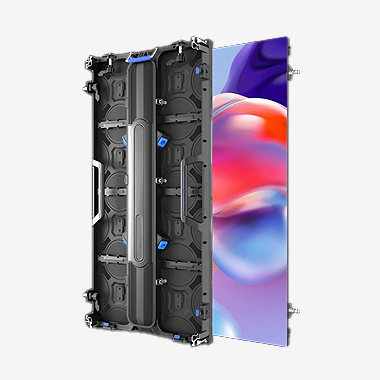
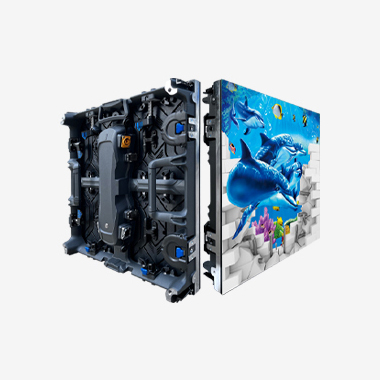
An exterior LED display wall is a monumental visual communication system designed for outdoor use. Composed of thousands of individual LED (Light Emitting Diode) modules sealed within weatherproof and often rugged cabinets, these displays are engineered to withstand harsh environmental conditions like rain, wind, dust, and extreme temperatures. Their primary function is to deliver high-impact content—advertisements, brand messaging, artistic works, news, and event broadcasts—to a large, mobile audience. Traditionally, the sheer scale and brightness required for such a task meant these displays were notorious energy guzzlers, often consuming power equivalent to dozens of households.
The push toward energy efficiency is not merely a trend but a necessity driven by multiple converging factors. Firstly, economic pressure is a powerful motivator. For display owners and operators, electricity constitutes one of the largest ongoing operational expenses. A display that runs 24/7 can incur massive costs, directly impacting the return on investment. Reducing energy consumption by even 20-30% translates to substantial financial savings over the display's lifespan, which can be a decade or more.
Secondly, regulatory and environmental pressures are mounting. Municipalities and governments worldwide are implementing stricter regulations on energy usage, carbon emissions, and light pollution for commercial structures. Projects often require environmental impact assessments before permits are granted. An energy-efficient display is not only easier to permit but also aligns with corporate social responsibility (CSR) goals and Environmental, Social, and Governance (ESG) criteria. Companies are increasingly eager to leverage their sustainability efforts as a positive part of their brand image, and a "green" digital billboard is a highly visible testament to that commitment.
Thirdly, public perception plays a crucial role. In an era of heightened environmental awareness, a conspicuously power-intensive display can generate negative publicity and public backlash. Communities are more likely to accept and even welcome a digital installation that is demonstrably efficient, minimizes its carbon footprint, and employs smart lighting to reduce nuisance light spillage into the night sky and surrounding areas.
The concept of an "energy-saving" LED display is holistic. It does not refer to a single feature but to a system-wide philosophy encompassing every component and function:
Hardware Innovation: The development of more efficient LED chips that produce more lumens of light per watt of power consumed.
Intelligent Control: Sophisticated software and sensors that dynamically adjust brightness based on ambient light conditions, ensuring the display is only as bright as necessary.
Power Supply and Drive Efficiency: Advanced power supplies that minimize energy loss as heat and driving methods that reduce power consumption without sacrificing image quality.
Content Management: The use of darker color schemes and content designed with energy consumption in mind.
In essence, the energy-saving exterior LED display wall represents the maturation of digital signage technology. It moves beyond the brute-force approach of simply being the brightest screen on the block and toward a model of intelligent, responsible, and sustainable visual communication. It proves that spectacular visual impact and environmental stewardship are not mutually exclusive but can be synergistically achieved through innovation. As we delve into its design, principles, and applications, it becomes clear that this is not just a better display; it is a smarter one, designed for a future where efficiency is paramount.
The formidable challenge of designing an energy-saving exterior LED display wall lies in balancing three often competing demands: exceptional visual performance, remarkable energy efficiency, and unwavering resilience against the elements. This balance is achieved not by accident but through meticulous engineering and intentional design choices at every level of construction, from the individual diode to the overarching structural support system.
1. The Core Component: High-Efficiency LED Lamps
The journey to efficiency begins with the light source itself. Traditional LEDs have been steadily improving in efficacy (measured in lumens per watt, or lm/W). Energy-saving displays prioritize the use of premium, high-efficacy LED chips. These chips are engineered with advanced semiconductor materials and structures to convert a greater percentage of electrical energy into visible light rather than wasted heat. A standard outdoor LED might have an efficacy of 120 lm/W, while a high-efficiency model can reach 180 lm/W or higher. This means for the same level of brightness, the high-efficiency chip consumes significantly less power. Furthermore, the use of a higher quality phosphor for white light generation ensures better color consistency and longevity, reducing the need for over-driving the LEDs to maintain brightness, which is a major source of energy waste and degradation.
2. The Driving Force: Intelligent ICs and Scan Technology
The method of controlling the LEDs is just as important as the LEDs themselves. Displays use driver Integrated Circuits (ICs) to switch the LEDs on and off. Energy-saving displays utilize driver ICs with a lower operating voltage (e.g., 3.3V or 3.8V instead of 5V), which directly reduces power consumption across the entire board.
A critical design choice is the scan mode. A "static drive" display powers each LED pixel continuously. This offers superb quality but is incredibly power-intensive. Most large-format displays use a "multiplexed" or "scan" drive, where rows of LEDs are powered in rapid sequence. The human eye's persistence of vision blends this into a steady image. A higher scan rate (e.g., 1/16 scan) means each individual LED is on for a shorter fraction of the time, drastically reducing average power consumption compared to a lower scan rate (e.g., 1/4 scan). Advanced driver ICs enable these higher scan rates without flicker or ghosting, making this a fundamental energy-saving technique.
3. Power Conversion and Management: Minimizing Loss
A significant amount of energy in any electronic system is lost as heat during power conversion. Energy-saving displays employ high-efficiency switching power supplies (e.g., with 90%+ efficiency ratings). These units convert incoming AC mains power (e.g., 110V/220V) to the low-voltage DC power required by the LEDs with minimal loss. Using multiple, distributed power supplies also reduces the length of DC power runs, minimizing resistive power loss in the cables. Some advanced systems even incorporate power factor correction (PFC) circuits. A poor power factor means the display is drawing more current from the grid than it actually uses, wasting utility capacity. PEC brings the power factor close to 1.0, ensuring the display draws only the current it needs, which reduces strain on the electrical infrastructure and can sometimes lower utility costs.
4. The Structural and Environmental Design: Passive Cooling
A major energy sink for older outdoor displays was active cooling—using air conditioning units or large fans to blow cool air through the cabinets. This cooling system itself consumed a vast amount of power. Modern energy-saving displays are designed for passive cooling.
This involves:
Lightweight, Thermally Conductive Materials: Using magnesium alloy or advanced composites for cabinets that act as heat sinks, drawing heat away from the LED drivers and dissipating it directly into the environment through the large surface area of the cabinet itself.
IP65 (or higher) Sealed Protection: While sealing the cabinet protects it from rain and dust, it also traditionally trapped heat. Passive cooling designs use clever engineering to create internal heat conduction paths that move heat to the external surfaces of the cabinet without requiring vents that would compromise weatherproofing. By eliminating the need for AC units and fans, passive cooling removes a massive source of ancillary power consumption.
5. The Brain: Light Sensors and Control Systems
Hardware is only half the story. The display must be intelligent. An integral component is a high-accuracy ambient light sensor. This sensor is mounted on the exterior of the display and continuously measures the surrounding brightness. It feeds this data to the display's control software, which automatically adjusts the display's brightness output in real-time. On a bright sunny afternoon, the display will operate at full intensity (e.g., 8,000 nits) to remain visible. At dusk, it will dim significantly. On a dark night, it may operate at only 20-25% of its maximum brightness, which is more than enough for visibility but results in enormous energy savings. This dynamic brightness adjustment is the single most effective software-based energy-saving feature.
In conclusion, the design and construction of an energy-saving LED wall is a masterclass in integrated efficiency. Every component, from the microscopic structure of an LED chip to the macroscopic design of a cabinet, is optimized for one goal: achieving maximum visual performance with minimal electrical input. It is a holistic system where advanced materials science, electrical engineering, and software intelligence converge to create a product that is powerful, durable, and responsible.
The remarkable energy savings of a modern exterior LED wall are not achieved by simply using better parts; they are the result of a sophisticated, interconnected system operating on intelligent principles. This system works continuously to optimize power usage in real-time, responding to external conditions and content demands without sacrificing the viewer's experience. Understanding these working principles reveals the clever engineering that makes sustainable digital advertising possible.
1. The Foundation: Pulse Width Modulation (PWM) and Dynamic Current
At the most fundamental level, an LED's brightness is controlled not by varying the voltage supplied to it (which would change its color), but by Pulse Width Modulation (PWM). The driver IC switches the LED on and off at a very high frequency (thousands of times per second). The human eye perceives this rapid cycling as a steady level of brightness. The ratio of "on" time to "off" time within each cycle (the duty cycle) determines the perceived intensity. A 50% duty cycle results in 50% brightness.
Energy-saving displays enhance this principle. Instead of running the LED at full current during its "on" pulse, advanced driver ICs can use a dynamic current method. They can supply a slightly lower current during the "on" pulse and compensate by slightly lengthening the pulse duration. Because LED efficacy is often better at slightly lower currents, this can achieve the same perceived brightness while using less total energy and generating less heat.
2. The Feedback Loop: Ambient Light Sensing and Auto-Dimming
This is the most significant operational energy-saving principle. The system operates on a continuous feedback loop:
Sensing: An external, high-quality photoresistor or photodiode sensor constantly measures the ambient light levels in lux.
Processing: This data is sent to the display's main controller or video processor.
Calculating: The processor references a pre-programmed dimming curve. This curve is not simply linear; it is intelligently designed to ensure viewability and compliance with local light pollution ordinances. For example, the drop in brightness from day to night may be logarithmic, ensuring a smooth transition that is unnoticeable to viewers.
Actuating: The processor sends a command to the driver ICs across the entire display, instructing them to adjust their PWM duty cycle to achieve the new target brightness level.
This loop runs every few minutes, or even continuously, ensuring the display is never brighter than it needs to be. On a cloudy day, it will dim compared to a sunny one. At midnight, it will operate at its minimum required brightness, saving a tremendous amount of power.
3. Content-Adaptive Power Management (A Emerging Principle)
The next frontier of efficiency is moving beyond overall brightness to consider the content being displayed. A full-white screen consumes maximum power, while a full-black screen consumes very little (as the LEDs are off). Most content is somewhere in between.
Sophisticated systems can now analyze the video signal in real-time. If the content has large areas of darkness or uses a lot of black, the system can slightly lower the power supply voltage to the entire module. Since the black pixels are off and the bright pixels are driven by PWM, a lower voltage results in less power consumption with negligible impact on the visual quality of the bright areas. This is a complex principle requiring advanced power supply design and content analysis, but it offers further incremental savings.
4. Operational Scheduling and Zoning
The intelligence extends beyond automation to programmed control. The display's software allows operators to set detailed schedules:
On/Off Times: Ensuring the display is powered down during hours when no audience is present (e.g., 2 AM to 6 AM).
Brightness Presets: Mandating maximum or reduced brightness levels during specific dayparts to comply with local regulations or to be a better neighbor.
Content Zoning: A large display can be divided into zones. The principle here is that one section of the display can be showing a bright, dynamic advertisement while another section shows a dark, static public service announcement. The system can manage power distribution at a zonal level, though this is more complex than whole-display management.
5. System Health Monitoring and Efficiency Reporting
Modern energy-saving displays are equipped with self-diagnostic systems. They monitor their own power consumption, heat levels, and component performance. This data is not just for fault detection; it provides valuable analytics on energy usage. Operators can access dashboards showing power consumption over time, correlating it with content schedules and ambient conditions. This allows them to make data-driven decisions to further optimize schedules and content for efficiency, creating a continuous improvement cycle. They can also proudly report on energy savings and carbon emission reductions achieved, supporting their sustainability claims with hard data.
In principle, the energy-saving LED wall operates like a conscious organism. It senses its environment, processes that information, and takes precise action to conserve energy. It leverages the fundamental physics of light emission with microsecond precision and marries it with macro-level scheduling and management. This multi-layered, intelligent approach to power management is what transforms a power-intensive device into a model of efficiency.
The adoption of energy-saving exterior LED display walls offers a compelling value proposition, but it is not without its specific set of challenges. A clear assessment of both sides is essential for municipalities, advertisers, and property owners to make informed decisions.
Advantages:
Substantial Reduction in Operational Expenditure (OPEX): This is the most direct and quantifiable advantage. Energy is the largest recurring cost of operating a digital billboard. A 30-50% reduction in energy consumption translates into a dramatic decrease in monthly electricity bills. This improved efficiency directly boosts the net operating income of the advertising asset, improving its profitability and return on investment (ROI), often paying back the premium of the efficient technology within a few years.
Enhanced Environmental Credentials and Compliance: This advantage is both regulatory and reputational. Energy-efficient displays produce a smaller carbon footprint, aligning with corporate sustainability goals and ESG mandates. They make the permitting process significantly smoother, as they demonstrate a commitment to reducing environmental impact. This is crucial for securing approvals in environmentally conscious cities or for projects requiring LEED certification for buildings.
Reduced Light Pollution and Community Acceptance: A primary public concern about digital billboards is light pollution and "light trespass"—unwanted light spilling into residential windows or the night sky. Auto-dimming technology ensures the display is not excessively bright at night, making it a better neighbor. This fosters greater community acceptance and reduces complaints, which in turn minimizes the risk of restrictive new ordinances being passed against digital signage.
Extended Product Lifespan and Reliability: Efficiency and longevity are intrinsically linked. The largest factor in LED degradation is heat and current stress. By operating LEDs at lower average currents and using passive cooling that minimizes heat buildup, energy-saving designs significantly reduce thermal stress on the components. This slows the natural process of "lumen depreciation" (where LEDs gradually get dimmer over time) and extends the functional lifespan of the entire display. Reduced heat also means less stress on other components like power supplies and driver ICs, leading to higher overall system reliability and lower maintenance costs.
Future-Proofing and Market Leadership: As energy costs rise and regulations tighten, the value of an efficient display will only increase. Investing in this technology future-proofs the asset against stricter future energy codes. Furthermore, it positions the owner as a market leader in sustainability, which can be a powerful differentiator when attracting advertisers who themselves wish to align with environmentally responsible media.
Challenges and Considerations:
Higher Initial Capital Investment (CAPEX): The core challenge is the upfront cost. High-efficacy LED chips, advanced driver ICs, sophisticated controllers, and custom passive-cooled cabinets are more expensive to manufacture than their standard counterparts. This results in a higher purchase price. Convincing stakeholders to accept this higher initial cost based on long-term OPEX savings can be a hurdle, requiring detailed financial modeling and a focus on Total Cost of Ownership (TCO).
Technical Complexity and Integration: Designing a system that seamlessly integrates high-end hardware with intelligent software is complex. Ensuring that the ambient light sensor is accurately calibrated, that the dimming curves are smooth and compliant, and that all components work in harmony requires expertise. This complexity necessitates working with experienced and reputable manufacturers and integrators.
The "Efficiency vs. Brightness" Perception: There can be a misconception that "energy-saving" means "dim and ineffective." The challenge is to educate the market that modern high-efficacy LEDs can achieve the high brightness levels required for outdoor visibility (e.g., 8000+ nits) while still consuming far less power than previous generations of technology. The efficiency comes from doing more with less, not from doing less.
Dependence on Intelligent Operation: The savings are only realized if the intelligent features are enabled and properly configured. An operator could inadvertently disable the auto-dimming feature or set overly high brightness schedules, negating all the efficiency benefits. Proper training and management are essential to reap the rewards.
Measurement and Verification: While manufacturers provide efficacy ratings, real-world savings can vary based on content, location, and operating habits. Implementing a system to accurately measure and verify energy savings (e.g., with sub-meters) adds another layer of complexity but is necessary to confirm the ROI and report on sustainability metrics.
In conclusion, the advantages of energy-saving LED walls are profound and multifaceted, impacting finances, operations, public relations, and the environment. The challenges are primarily centered on initial cost and technical management. However, the long-term benefits overwhelmingly outweigh these hurdles. The trend is unmistakable: energy efficiency is rapidly shifting from a premium option to a standard requirement in the exterior LED display market.
The application of energy-saving exterior LED walls extends far beyond the traditional digital billboard, driven by their improved sustainability and acceptability. Simultaneously, ongoing technological innovations promise to unlock new applications and push efficiency to even greater heights.
Current Applications:
Sustainable Urban Advertising: The most widespread application is the modern digital billboard. Energy-saving technology is now the standard for new installations in forward-thinking cities, allowing advertisers to reach massive audiences with dynamic, dayparted content while minimizing their environmental footprint and operating costs.
Architectural Integration and Media Façades: Architects are increasingly incorporating LED technology directly into the design of buildings. Energy-saving modules are ideal for this, as they can be seamlessly integrated into curtain walls, canopies, and roofs without placing an excessive load on the building's electrical system. These media façades can transform a building into a dynamic piece of public art, display information, or celebrate events, all done responsibly.
Public Space and Civic Information Hubs: Cities are using these displays in public squares, transportation hubs, and stadium districts to provide citizen information, emergency alerts, event schedules, and cultural content. Their energy-efficient nature makes them suitable for permanent installation in civic spaces, where they are expected to model sustainability.
Retail and Entertainment Destinations: Shopping malls, amusement parks, and entertainment districts use large-format displays for branding, wayfinding, and promoting events. The high operational hours of these venues make energy savings a critical financial consideration.
Corporate Campuses and Branding: Large corporations install these displays at their headquarters for brand messaging, shareholder communications, and to showcase their commitment to technology and sustainability—a powerful statement of corporate values.
Future Trends:
The Advent of MicroLED and COB Technology: The future of efficiency lies in MicroLED and Chip-on-Board (COB) packaging. MicroLEDs are microscopic LEDs that offer even higher brightness and efficiency levels at a reduced drive current. COB technology packages multiple LED chips directly onto a substrate, creating a single module with superior heat dissipation, which directly translates to higher efficiency and longer life. As the cost of these technologies decreases, they will become the standard for high-end exterior displays.
AI-Optimized Efficiency: Artificial Intelligence will move beyond simple dimming. AI algorithms will analyze real-time data streams—ambient light, weather conditions (e.g., rain or fog can affect visibility), pedestrian and traffic flow patterns, and even the content itself—to predictively optimize display settings for absolute maximum efficiency. Imagine a display that knows a storm is coming and pre-emptively adjusts contrast for better visibility while managing power, or one that dims slightly when traffic flow is zero.
Integration with Renewable Energy: The ultimate step in sustainability is for displays to power themselves. We will see more displays directly integrated with building-integrated photovoltaics (BIPV). Solar panels could be incorporated into the framework or surrounding structure of the display, offsetting a significant portion of its energy consumption. For off-grid locations, this could make digital signage viable for the first time.
Transparent and Dual-Use Displays: Development continues on transparent LED displays that allow light and views to pass through them. Their energy consumption is inherently lower as they have a lower pixel density and often operate at lower brightness levels. These can be installed in front of building windows, creating spectacular effects without sacrificing the view from inside or requiring blackout blinds, representing a efficient use of space and energy.
Hyper-Localized Content and Dynamic Dimming: Future systems might use camera-based analytics (while maintaining privacy standards) to detect audience presence. If no one is viewing the display, it could dim to a minimum standby mode. When an audience is detected, it could brighten to full engagement mode. This "on-demand" operation would represent the pinnacle of energy conservation.
Standardization of Sustainability Metrics: The industry will likely move toward standardized metrics and certifications for "green" digital displays, similar to Energy Star ratings for appliances. This will allow buyers to easily compare the efficiency of different products and make informed choices based on verified performance data.
The future of the exterior LED display is not just a brighter screen, but a smarter, more integrated, and ultimately invisible one—invisible in its energy draw and its environmental impact. It will evolve from a standalone billboard into a connected, responsive, and efficient component of the smart city ecosystem, providing value and information while respecting the planet's resources.
Conclusion
The development and proliferation of energy-saving exterior LED display walls mark a critical and necessary evolution in the digital signage industry. It is a definitive shift from a mindset of pure, unbridled visual power to one of powerful yet responsible visual communication. This transition is not optional; it is an imperative driven by the converging forces of economics, environmental responsibility, and social license to operate.
The journey through the technology's overview, design, principles, and applications reveals a clear narrative: efficiency is the new benchmark for excellence. The advantages are too significant to ignore. The substantial reduction in operational costs directly bolsters the business case for digital out-of-home advertising. The extended lifespan and improved reliability of efficient displays enhance their value as a long-term asset. Most importantly, the drastic reduction in energy consumption and light pollution transforms these displays from community nuisances into accepted, and even welcomed, elements of the urban fabric. They allow cities and brands to harness the incredible engagement power of digital media without compromising their sustainability commitments.
The challenges, primarily the higher initial investment and technical complexity, are real but surmountable. They require a shift in perspective from focusing solely on upfront capital expenditure to analyzing the total cost of ownership. When viewed through this lens, the energy-saving display is clearly the superior economic choice over its lifetime. The technical challenges are best addressed by partnering with innovative and reputable manufacturers who provide not just hardware, but the software, support, and expertise needed to operate the system optimally.
Looking forward, the trend is unequivocal. Technological innovation in MicroLED, AI, and renewable integration will continue to push the boundaries of what is possible, making displays even more efficient, brighter, and more versatile. Regulatory pressures will tighten, and consumer expectations for corporate sustainability will rise. The energy-saving exterior LED display is, therefore, more than just a product; it is a future-proof strategy.
In conclusion, the energy-saving exterior LED display wall represents the maturation of an industry. It proves that technological progress and environmental stewardship can go hand-in-hand. It demonstrates that the most powerful message a brand can send is not just what it shows on its screen, but how responsibly it chooses to show it. By embracing efficiency, the digital signage industry ensures its own sustainable future, continuing to illuminate our world not with wasteful glare, but with intelligent, captivating, and responsible light.


Copyright © 2026 Shenzhen Cogo Technology Co.,Ltd.
All Rights Reserved

 Previous article