




 Chat Now
The urban landscape of the 21st century is increasingly digital, dynamic, and data-driven. At the heart of this visual transformation are exterior LED (Light Emitting Diode) display screens. From the dazzling advertisements in Times Square to the informative public service announcements in city squares and the vibrant scoreboards in sports stadiums, these large-format screens have become ubiquitous. However, as their prevalence grows, so does scrutiny of their environmental impact and operational costs. This has catalyzed the rapid development and adoption of energy-efficient exterior LED display technology.
An energy-efficient exterior LED display screen is a sophisticated electronic visual display system designed for outdoor use that prioritizes minimal power consumption without compromising on brightness, clarity, color fidelity, or reliability. It represents a significant evolution from earlier generations of LED technology, which were often criticized for being power-hungry, generating excessive heat, and having a substantial carbon footprint. The drive towards efficiency is not merely a technical improvement; it is a critical response to global sustainability goals, rising energy costs, and stricter environmental regulations.
The core of this technology lies in the LED itself. An LED is a semiconductor device that emits light when an electric current passes through it. This method of producing light, known as electroluminescence, is inherently more efficient than traditional incandescent or fluorescent lighting. Incandescent bulbs waste over 90% of their energy as heat, while LEDs convert a much higher percentage of energy directly into visible light. This fundamental advantage is the foundation upon which energy-efficient displays are built.
However, an energy-efficient display is much more than just a collection of efficient LEDs. It is a holistic system where every component—from the microchips that drive each individual pixel to the sophisticated software that manages content—is optimized for performance per watt. Key elements include:
High-Efficiency LEDs: Modern LEDs produce more lumens (a measure of visible light) per watt of electricity consumed. Manufacturers achieve this through advancements in semiconductor materials, epitaxial growth techniques, and phosphor formulations for full-color displays.
Intelligent Drivers and ICs: The integrated circuits (ICs) that control the current to each LED are designed for precision, delivering exactly the power needed for the desired brightness and color, eliminating waste.
Dynamic Power Management: This is a cornerstone of energy efficiency. Systems can automatically dim the screen based on ambient light conditions. During the bright midday sun, the display operates at full brightness for visibility, but at night or on overcast days, it significantly reduces power consumption.
Advanced Cooling Systems: Traditional displays relied on energy-intensive air conditioning to manage the heat generated by inefficient LEDs. Modern, cooler-running efficient LEDs allow for passive cooling (heat sinks) or low-power convective cooling, drastically reducing this ancillary energy drain.
Optimized Content: The imagery displayed directly impacts power use. Content dominated by white or very bright colors consumes the most power, while black pixels are effectively off. Designing content with darker backgrounds and strategic use of bright elements can substantially lower energy consumption.
The market for these displays is vast and expanding. They are no longer limited to major metropolitan advertising hubs. Businesses of all sizes use them for branding, public institutions use them for communication, and event venues use them for entertainment. The economic imperative is clear: a display that consumes half the power can save tens of thousands of dollars annually in electricity bills for a large installation, dramatically improving its return on investment (ROI).
Furthermore, the push for sustainability is a powerful motivator. Corporations are eager to showcase their environmental credentials, and using a low-carbon, energy-efficient digital sign is a highly visible way to demonstrate this commitment. It aligns with corporate social responsibility (CSR) goals and helps secure permits from municipalities that are increasingly wary of adding to their city's energy load.
In summary, the energy-efficient exterior LED display is a paradigm shift. It moves the technology from a purely functional and impressive visual medium to an intelligent, responsible, and sustainable one. It represents the maturation of digital signage, balancing the undeniable power of dynamic digital communication with the pressing need for energy conservation and environmental stewardship. As this overview suggests, the journey towards maximum efficiency involves a deep interplay between hardware innovation, software intelligence, and thoughtful application.
The exceptional performance and efficiency of a modern exterior LED display are not accidental; they are the result of meticulous design and precision engineering. Every component, from the microscopic to the macroscopic, is selected and integrated to maximize light output, ensure durability against the elements, and minimize power consumption. The construction is a multi-layered endeavor, creating a robust system capable of operating 24/7 in harsh outdoor environments.
1. The Pixel: The Fundamental Building Block
At the core of the display is the pixel—the smallest unit that can emit light. For full-color displays, a pixel is typically composed of three or four sub-pixels: Red, Green, Blue (RGB), and sometimes an additional dedicated White or Amber LED.
LED Chips: The choice of LED chip is paramount for efficiency. Leading manufacturers use advanced epitaxial wafers and chip structures that enhance internal quantum efficiency (how effectively electrons are converted into photons). Smaller, more precise chip designs also allow for better current spreading and reduced forward voltage, meaning less energy is lost as heat within the chip itself.
Package Design: The LED chips are housed in a package that protects them and includes phosphors (for white or specific color tones). Modern Surface-Mounted Device (SMD) packaging is the industry standard for exterior displays. SMD technology involves mounting the tiny LED packages directly onto the surface of the printed circuit board (PCB). This allows for higher pixel densities (better resolution), wider viewing angles, improved color mixing, and, crucially, better heat dissipation away from the LED chip, which directly improves efficiency and longevity.
2. The Module and Cabinet: Structural Integrity and Thermal Management
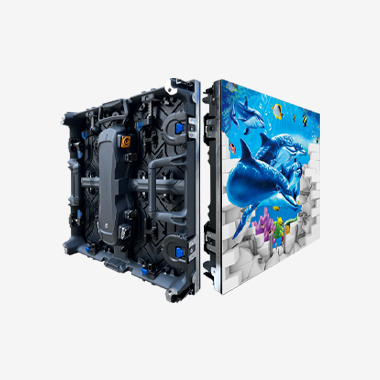
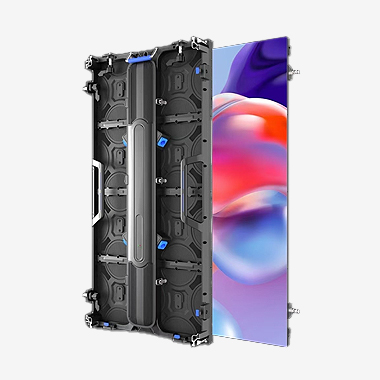
Multiple pixels are arranged on a PCB to form an LED module. Several modules are then mounted into a rugged, weatherproof cabinet to form a larger section of the screen.
PCB Design: The PCB is not just a simple connector; its trace design is critical for delivering stable and consistent power to each LED. High-quality, multi-layer PCBs with thick copper traces reduce electrical resistance, minimizing power loss (I²R loss) as current travels across the board.
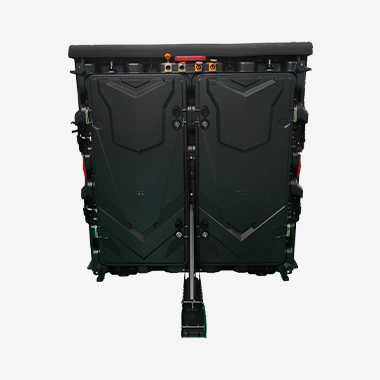
Cabinet Construction: Cabinets are typically made from die-cast aluminum or other lightweight, high-strength, corrosion-resistant alloys. Aluminum is prized for its excellent thermal conductivity.
Thermal Management: This is a critical design aspect for both efficiency and lifespan. Excessive heat drastically reduces LED efficiency (luminous efficacy) and shortens its life. Energy-efficient displays are designed to manage heat with minimal energy input:
Passive Cooling: The aluminum cabinet itself acts as a giant heat sink, drawing heat away from the LEDs and drivers and dissipating it into the surrounding air through natural convection. This requires no extra energy.
Active Cooling: For larger, higher-brightness installations, fans may be used to force air over the heat sinks. However, these are now low-power, brushless DC fans that are far more efficient than the air conditioning units used in old displays. The goal is always to avoid active cooling where possible.
3. Driving Electronics: The Brain and Nervous System
The electronics that control the display are where much of the "intelligence" and efficiency gains are realized.
Constant Current Reduction (CCR) Drivers: Unlike older drivers that wasted excess power as heat, modern CCR drivers provide a precise, steady current to the LEDs regardless of fluctuations in voltage or the forward voltage of the LED. This precision ensures consistent brightness and color while eliminating energy waste.
High-Performance ICs: The integrated circuits that receive data and control each pixel are constantly evolving. Newer ICs operate at lower voltages, have higher processing speeds (allowing for higher refresh rates), and integrate more functions, reducing the number of components and associated power losses on the PCB.
4. Power Supplies: Efficient Energy Conversion
The display requires low-voltage DC power, but it is supplied with high-voltage AC from the grid. The power supply (or PSU) converts AC to DC. The efficiency of this conversion is vital. High-efficiency PSUs (often rated at 90% efficiency or higher) waste very little energy as heat during this process, compared to standard PSUs which may be only 70-80% efficient.
5. Materials and Sealing: Protection from the Elements
An exterior display must withstand rain, snow, dust, humidity, salt spray, and extreme temperatures. The design incorporates:
IP Rating: Modules and cabinets are rated on the Ingress Protection (IP) scale, typically IP65 or higher for exterior use. This means they are completely dust-tight (6) and protected against low-pressure water jets from any direction (5).
Conformal Coating: The PCBs are often coated with a thin layer of protective polymer to shield the delicate electronics from moisture and corrosion.
Materials: All screws, fasteners, and structural elements are made from stainless steel or other non-corroding materials to prevent rust and seizure.
In conclusion, the design and construction of an energy-efficient LED display is a masterclass in systems engineering. It requires a harmonious balance between optical performance, electrical efficiency, mechanical robustness, and thermal dynamics. Every material choice and component design is scrutinized for its contribution to the overall goal: delivering a brilliant, reliable visual experience with the smallest possible environmental footprint.
Understanding how an energy-efficient LED display works requires examining the principles at multiple levels: the fundamental physics of light emission, the electronic control of individual pixels, and the system-wide intelligence that manages power consumption dynamically.
1. The Physics of Electroluminescence
The core principle is electroluminescence within a semiconductor diode. When a forward voltage is applied to the LED's p-n junction, electrons from the n-type semiconductor gain enough energy to cross the junction and recombine with "holes" (positive charge carriers) in the p-type material. This recombination process releases energy in the form of photons (light particles). The specific wavelength (color) of the light emitted is determined by the bandgap energy of the semiconductor material used. Gallium Arsenide Phosphide (GaAsP) is common for red and amber, Indium Gallium Nitride (InGaN) for blue and green. White light is typically created by using a blue LED chip coated with a yellow phosphor, which mixes to appear white.
The inherent efficiency of this process, known as wall-plug efficiency, is what makes LEDs superior. A much greater proportion of electrical energy is converted directly into light rather than heat, compared to incandescent filaments or gas discharges.
2. Pixel Driving and Grayscale Control
A single LED is just on or off. To create the millions of colors and shades required for a video display, precise control is needed.
Pulse-Width Modulation (PWM): This is the primary method for controlling brightness (grayscale). Instead of varying the analog current (which can shift LED color), PWM rapidly turns the LED on and off at a frequency far too high for the human eye to detect (typically over 1000 Hz). The ratio of the "on" time to the "off" time within each cycle (the duty cycle) determines the perceived brightness. A 50% duty cycle appears half as bright as a 100% duty cycle. This digital control method is highly efficient and accurate.
Constant Current Control: The driver ICs provide a constant, precise current to the LED during each "on" pulse. This ensures color consistency and protects the LED from current spikes that could reduce its lifespan.
3. Color Creation and Calibration
Each full-color pixel uses a combination of red, green, and blue (RGB) sub-pixels. By varying the intensity of each sub-pixel using PWM, any color can be created through additive color mixing. For example, full intensity red and green (with blue off) creates yellow. The display system is meticulously calibrated so that the PWM values sent to the drivers correspond to precise color coordinates (e.g., in the CIE 1931 color space), ensuring color accuracy across the entire screen.
4. Data Transmission and Refresh Rates
Video content is broken down into a stream of data. This data is sent from a video controller to the display cabinets via high-speed fiber optic or network cables. Within each cabinet, the data is distributed to the driver ICs on each module. The refresh rate (how many times per second the image is redrawn) is crucial. A high refresh rate (e.g., 3840Hz) eliminates flicker and ensures smooth motion, especially when the screen is recorded on camera. Modern driver ICs achieve these high rates with low power consumption.
5. The Intelligence of Energy Efficiency
This is where the "energy-efficient" principle truly comes to life. The hardware provides the potential for efficiency, but the software and sensors realize it.
Ambient Light Sensors: These are critical components mounted on the display. They continuously measure the intensity of the sunlight or ambient light falling on the screen.
Dynamic Brightness Adjustment: The display's control software receives data from the sensors. It automatically adjusts the overall brightness output of the entire screen in real-time. On a bright sunny day, it will operate at 100% of its designed brightness (e.g., 8,000 nits) to remain visible. At dusk, it might reduce to 50%, and on a clear night, it may drop to 20-30% of its maximum. Since power consumption is directly proportional to brightness, this linear reduction leads to massive energy savings. A display does not need to be blindingly bright at 2 AM.
Scheduling and Content-Based Power Saving: Beyond sensors, operators can set brightness schedules based on time of day or content. Furthermore, some advanced systems can even analyze the content frame-by-frame. If a frame has large areas of black or dark colors, the power draw for that frame is inherently lower, as those pixels are off or dim. The system can report on real-time power savings.
In essence, the working principle is a continuous feedback loop of data: video data is precisely chopped into PWM signals to create an image, while environmental data from sensors is fed into the control system to modulate the power of that image creation process, ensuring every watt of power is used judiciously and effectively.
The adoption of energy-efficient technology brings a host of significant benefits, but it is not without its own set of challenges and considerations that designers, installers, and operators must address.
Advantages:
Substantial Reduction in Operational Costs: This is the most immediate and tangible benefit. Electricity is the primary ongoing cost of an LED display. A 30-50% reduction in power consumption translates directly into a 30-50% reduction in the electricity bill. For a large billboard consuming 40kW normally, cutting consumption by 20kW represents savings of tens of thousands of dollars per year, drastically improving the Total Cost of Ownership (TCO) and Return on Investment (ROI).
Enhanced Environmental Sustainability: Lower energy consumption means a reduced carbon footprint. This aligns with global climate goals, corporate social responsibility (CSR) mandates, and local government regulations. It allows businesses to leverage their digital signage as a proof point of their commitment to sustainability, enhancing their brand image among an increasingly eco-conscious public.
Extended Product Lifespan: The primary enemy of an LED is heat. High operating temperatures accelerate the degradation of the semiconductor material and the phosphors, leading to a permanent drop in light output (lumen depreciation). By running more efficiently and generating less heat, and through superior thermal management, energy-efficient displays significantly slow this degradation process. This results in a longer useful life before brightness falls to an unacceptable level, delaying the need for costly replacement or refurbishment.
Improved Reliability and Stability: Components that run cooler and under less electrical stress experience lower failure rates. This is true for the LEDs themselves, the driver ICs, and the power supplies. Reduced heat also minimizes thermal expansion and contraction stresses on solder joints and other connections, a common cause of failure in electronics. This leads to higher system uptime and lower maintenance costs.
Compliance with Regulations: Many cities and municipalities are implementing strict regulations on light pollution, energy use, and the brightness of outdoor signs. Energy-efficient displays, with their intelligent brightness control, are inherently designed to comply with these regulations. They can be easily programmed to automatically dim during night hours, preventing light trespass and glare, which is often a community concern.
Maintained (or Enhanced) Visual Performance: Efficiency does not mean sacrificing quality. In fact, the latest high-efficiency LEDs often offer better color gamut and saturation. The intelligent systems ensure optimal visibility 24/7, providing a better viewer experience—bright and vibrant during the day, comfortably viewable at night.
Challenges:
Higher Initial Investment: The advanced components required—high-efficiency LEDs, sophisticated driver ICs, robust thermal management systems, and high-quality power supplies—carry a higher manufacturing cost. Consequently, the upfront purchase price of an energy-efficient display is typically 10-20% higher than a standard equivalent. Convincing buyers to focus on TCO rather than initial sticker price can be a hurdle.
Technical Complexity: Designing and manufacturing a truly efficient system is complex. It requires deep expertise in semiconductor physics, thermal engineering, power electronics, and software integration. This complexity can make repairs and troubleshooting more demanding, requiring highly trained technicians.
Performance Verification and "Greenwashing": There is no single universal standard for what qualifies as "energy-efficient." This can lead to manufacturers making exaggerated or misleading claims about their products' performance—a practice known as greenwashing. Buyers must be diligent and rely on verified data, such as power consumption measurements under standard test conditions (e.g., watts per square meter at a specific brightness level with a test pattern).
Balancing Efficiency with Brightness: There can be a trade-off between peak brightness and efficiency. Pushing LEDs to achieve extremely high brightness levels (e.g., over 10,000 nits for direct sunlight visibility) can reduce their lumens-per-watt efficiency. Engineers must carefully balance these competing demands based on the specific application of the display.
Dependence on Intelligent Systems: The major energy savings rely on the flawless operation of ambient light sensors and control software. A faulty sensor or a software glitch could cause the display to operate at full brightness unnecessarily, wiping out the energy savings, or to dim too much, making it invisible.
In conclusion, while the advantages of energy-efficient LED displays are profound and multifaceted—spanning economic, environmental, and operational domains—the challenges are primarily centered on cost, complexity, and verification. The market trend, however, is decisively in favor of efficiency, pushing manufacturers to innovate and overcome these challenges, making efficient technology the new standard.
The combination of dazzling visuals and responsible energy use has opened doors to a vast array of applications and is driving innovation toward an even more integrated and intelligent future.
Applications:
Digital Out-of-Home (DOOH) Advertising: This remains the largest application. Energy-efficient displays are now the preferred choice for billboards, urban spectaculars, transit advertising (on buses, at airports, train stations), and retail point-of-sale signage. Advertisers and media owners benefit from the dynamic, engaging medium while mitigating operational costs and bolstering their green credentials.
Sports and Entertainment Venues: Giant scoreboards, video screens, and ribbon boards are essential to the modern fan experience. Stadiums and arenas, which are themselves under pressure to become more sustainable, are adopting energy-efficient displays to reduce the massive energy load associated with events. Their ability to operate brightly under full sun is critical.
Corporate and Institutional Communication: Corporate headquarters use large-format displays for branding, sharing company news, and welcoming visitors. Universities and public schools use them for event announcements and wayfinding. Government buildings and public squares use them for community announcements, emergency alerts, and cultural events. The lower operational cost makes such projects more justifiable for institutional budgets.
Architectural Enhancement and Media Facades: LED technology is increasingly woven into the fabric of buildings themselves. Energy-efficient modules can be integrated into curtains walls, canopies, and roofs to turn entire structures into dynamic canvases for public art or branding. Their lower heat output and power needs make them safer and more practical for such permanent integration.
Religious and Cultural Institutions: Churches, mosques, temples, and museums are adopting large displays for broadcasting services to overflow crowds, displaying hymns or scriptures, and enhancing presentations. The respectful and responsible use of technology aligns well with the values of these institutions.
Future Trends:
Micro-LED and Mini-LED Technology: The ongoing miniaturization of LED chips is a major trend. Micro-LEDs (chip sizes below 100 micrometers) promise even higher efficiency, higher resolution in a smaller form factor, incredible brightness, and superior stability. While currently expensive, they represent the future of display technology. Mini-LEDs (slightly larger) are already improving the performance and efficiency of current-generation displays.
Integration with Renewable Energy: The logical next step is to power displays with on-site renewable energy. We will see more displays, particularly in sunny regions, integrated with solar panel canopies or wind turbines. Smart systems will manage power draw, potentially storing excess solar energy in batteries to power the display at night, moving towards net-zero energy digital signage.
Advanced Connectivity and Smart City Integration: LED displays will evolve from isolated signs into networked nodes within a smart city's Internet of Things (IoT) ecosystem. They will pull data from city traffic sensors, weather stations, and public transit systems to display real-time, contextual information. Their power management systems will be able to respond to smart grid signals, automatically reducing power consumption during periods of peak electricity demand.
Artificial Intelligence (AI) and Predictive Analytics: AI will take energy optimization beyond simple ambient light sensing. Machine learning algorithms could analyze historical data on foot traffic, weather patterns, and content engagement to predict the optimal brightness level needed at any given moment, further fine-tuning energy use. AI could also be used for predictive maintenance, identifying components likely to fail before they do, based on power consumption patterns and thermal data.
Transparent and Flexible Displays: Research into new substrate materials like flexible plastics and transparent glass is ongoing. Energy-efficient transparent LED displays, which allow viewers to see through the screen when content is not displayed, are gaining traction for store windows and architectural applications. Improving the efficiency of these displays is key to their commercial viability.
Human-Centric Lighting and Biometrics: Future displays might incorporate sensors that can anonymously gauge audience demographics (size, approximate age) and engagement. The content and brightness could adapt not just to the ambient light, but to the audience itself, creating a more personalized and less intrusive experience.
The trajectory is clear: the exterior LED display of the future will be less of a "dumb" billboard and more of an intelligent, responsive, and sustainable digital portal, seamlessly connected to its environment and powered as much by intelligence as by electricity.
Conclusion
The evolution of the exterior LED display from a power-intensive novelty to an energy-efficient mainstream communication tool is a remarkable story of technological innovation driven by economic and environmental imperatives. This journey underscores a broader shift across industries: the unwavering pursuit of performance must now be balanced with a commitment to sustainability.
Energy efficiency is no longer a niche feature or a luxury; it has rapidly become the central criterion for the design, manufacture, and procurement of exterior LED displays. The rationale is compelling and multi-faceted. The dramatic reduction in operational costs provides a powerful and immediate economic incentive, transforming the display from a cost center into a more profitable asset. From an environmental perspective, it mitigates the technology's carbon footprint, allowing businesses and cities to enhance their visual landscape without contradicting their sustainability goals. Technologically, the pursuit of efficiency has yielded ancillary benefits in the form of more reliable, longer-lasting, and higher-performing products.
The foundation of this progress is systems thinking. It is not achieved through a single miracle component but through the synergistic optimization of every element in the chain: from the quantum efficiency of the semiconductor chip and the precision of constant-current drivers to the intelligence of light-sensing software and the physics of passive thermal management. This holistic approach is what defines modern LED display engineering.
Looking ahead, the momentum is unstoppable. Trends like Micro-LED technology, integration with renewable energy sources, and AI-driven management promise to push the boundaries of efficiency even further. The display will evolve from a standalone sign into an interactive node within the smart city network, responsive not only to ambient light but to real-time data, audience presence, and the energy grid's needs.
In conclusion, the energy-efficient exterior LED display is a testament to human ingenuity's ability to solve complex problems. It proves that ecological responsibility and cutting-edge technology are not mutually exclusive but are, in fact, mutually reinforcing. As this technology continues to advance and become more accessible, it will play an increasingly vital role in shaping our urban environments, enabling a dynamic, informative, and captivating digital culture that is also respectful of our planet's resources. The future of outdoor visual communication is not just brighter; it is smarter and more sustainable.


Copyright © 2026 Shenzhen Cogo Technology Co.,Ltd.
All Rights Reserved

 Previous article