




 Chat Now
Creative LED visual signage for stage background refers to a specialized category of dynamic LED displays designed to elevate live performances—concerts, theater productions, festivals, and corporate events—by serving as a visually immersive, customizable backdrop. Unlike standard stage props or static backdrops, this signage blends high-quality LED technology with creative design, enabling real-time synchronization with music, dialogue, or choreography to enhance storytelling and audience engagement. Its core purpose is to transform the stage into a dynamic canvas, turning performances into multi-sensory experiences that resonate with viewers long after the event ends.
Key features defining this signage include flexible form factors (flat, curved, cylindrical, or even 360-degree wraparound designs), high refresh rates (600–1200Hz to avoid camera flicker during live broadcasts), and wide color gamuts (covering 90%+ of the DCI-P3 color space for vibrant, lifelike visuals). It also supports diverse content types: pre-rendered animations, live camera feeds, interactive graphics, and even AR (augmented reality) overlays. The global demand for this technology has surged in recent years, driven by the growing expectation of immersive live experiences—event organizers and artists increasingly view creative LED backdrops as a critical tool to differentiate their performances from streaming or recorded content.
From small club gigs using compact 4x3m LED walls to large-scale music festivals featuring 20x10m curved backdrops, creative LED stage signage adapts to venues of all sizes. It has become a staple in the entertainment industry, used by artists ranging from independent musicians to global superstars, as well as in theater productions (to create dynamic sets) and corporate events (to reinforce brand messaging during product launches or award shows). By merging technology and creativity, this signage has redefined what’s possible on stage, turning traditional backdrops into active participants in the performance.
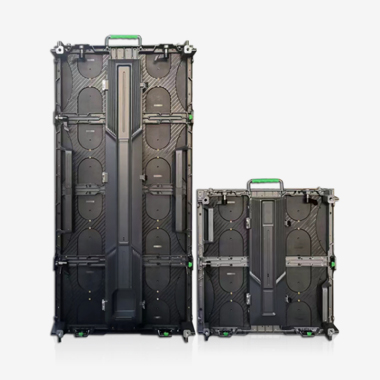
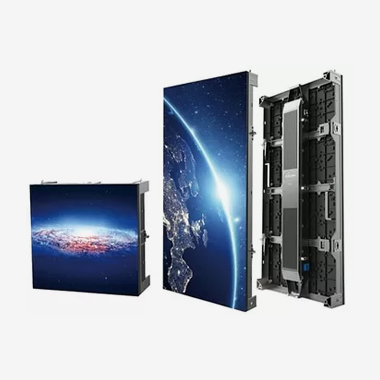
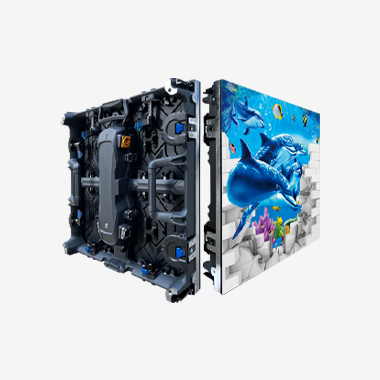
The design and construction of creative LED visual signage for stage background prioritize three core goals: flexibility (to match diverse stage designs), durability (to withstand frequent setup/teardown), and visual performance (to deliver immersive, high-quality visuals). At the heart of the system are modular LED panels—the building blocks—typically measuring 500x500mm or 600x600mm. These panels are engineered to be lightweight (3–4kg each) for easy handling by stage crews, with slim profiles (50–80mm thick) to maintain a sleek stage appearance. Unlike permanent LED installations, stage panels feature quick-lock connectors for power and data, enabling crews to assemble large backdrops in under an hour—critical for events with tight load-in/load-out windows.
A defining design element is flexibility in form: panels are available in flat, curved, or foldable variants. Curved panels use flexible circuit boards and reinforced frames to bend to radii as tight as 1m, allowing for cylindrical or wave-shaped backdrops that wrap around the stage. Foldable panels (often referred to as "LED curtains") can be rolled up for storage and transport, making them ideal for touring acts that need to move equipment between venues. Some advanced designs even support modular pixel control, enabling sections of the backdrop to be raised, lowered, or rotated independently—adding a physical dimension to the visual performance.
Durability is another key construction focus: stage panels are built to withstand the rigors of live events, with scratch-resistant front lenses (made of polycarbonate or tempered glass) and shock-absorbent frames to protect against accidental impacts. They also feature IP54 or IP65 ratings (for outdoor festivals) to resist dust and light rain, with anti-UV coatings to prevent color fading during daytime performances. The control system is designed for portability: compact sending boxes (instead of bulky servers) connect to a stage laptop or media server, and wireless receivers reduce cable clutter on stage.
To ensure visual consistency, panels are calibrated during manufacturing to match brightness (1000–3000 nits for indoor stages, 5000+ nits for outdoor) and color temperature, with on-board sensors allowing real-time adjustments if a panel’s performance deviates. For large backdrops, redundant power and data paths are integrated to prevent complete failure if one connection is disrupted—critical for live performances where downtime is unacceptable. Overall, the design and construction of this signage balance creativity, practicality, and reliability, ensuring it can adapt to the unique demands of any stage production.
Creative LED visual signage for stage background operates through a synchronized workflow of content creation, signal processing, and dynamic illumination—all tailored to align with live performances and deliver seamless, immersive visuals. At its core, the system relies on the same fundamental LED technology as standard displays (RGB diodes for color mixing) but adds specialized features to support real-time performance synchronization.
The process begins with content preparation and synchronization. Content creators (graphic designers, VJs, or production teams) develop visuals—animations, videos, or interactive graphics—that align with the performance’s timing, mood, and narrative. For example, a concert’s content might include beat-matched light patterns for upbeat songs or slow, flowing visuals for ballads. This content is loaded into a media server (a specialized computer for stage visuals) that syncs with the performance via timecode (MIDI, SMPTE, or DMX protocols). Timecode ensures the visuals align perfectly with music, dialogue, or choreography—even if there are last-minute changes to the performance.
Next, signal processing and distribution take place. The media server sends the synchronized content to a sending card, which splits the high-resolution content stream into segments—one for each LED panel in the backdrop. For large backdrops (e.g., 100+ panels), the sending card uses a daisy-chain or star topology to distribute signals efficiently, reducing cable count and simplifying setup. Each panel’s receiving card converts the digital signal into analog current, which is sent to driver ICs (integrated circuits) on the panel.
Driver ICs regulate the current flowing to individual RGB LED diodes, adjusting the intensity of red, green, and blue light to create the desired color and brightness for each pixel. This precise control enables dynamic effects: color fades, pixel-by-pixel animations, or even "pixel mapping" (where specific sections of the backdrop light up to highlight performers). For interactive visuals (e.g., a backdrop that responds to a singer’s movements), sensors (cameras, motion detectors, or MIDI controllers) feed real-time data to the media server, which adjusts the content accordingly—creating a feedback loop between the performance and the backdrop.
Refresh rate and broadcast compatibility are critical working principles for stage signage. Most systems operate at 600–1200Hz, ensuring flicker-free visuals for both live audiences and camera broadcasts (e.g., TV or live streams). Some advanced systems also support HDR (High Dynamic Range) to deliver deeper blacks and brighter highlights, enhancing the visual impact in well-lit venues. Finally, redundancy systems (backup sending cards, duplicate power supplies) ensure the backdrop remains operational if a component fails—essential for live performances where even a few seconds of downtime can disrupt the show. Together, these principles enable creative LED stage backdrops to deliver dynamic, synchronized visuals that elevate the live performance experience.
Creative LED visual signage for stage background has found diverse applications across the entertainment and events industries, while emerging technologies promise to expand its capabilities and redefine live performance experiences.
Key Applications:
Music Concerts and Festivals: The largest application area, music events use LED backdrops to enhance the artist’s brand and performance. Pop stars may use massive curved or 360-degree backdrops with choreographed light shows (e.g., Taylor Swift’s "Eras Tour" or BTS’s stadium shows), while electronic music DJs pair backdrops with beat-matched visuals to create rave-like atmospheres. Music festivals (e.g., Coachella, Glastonbury) use multiple LED backdrops across stages, with some featuring interactive elements (e.g., visuals that respond to crowd noise).
Theater and Performing Arts: Theater productions use LED backdrops to replace traditional painted sets, enabling quick scene changes and dynamic environments. For example, a Shakespeare play might use a backdrop to shift from a castle courtyard (via stone wall visuals) to a forest (via moving foliage animations) in seconds. Ballet and contemporary dance companies also use backdrops—syncing visuals with movement to emphasize emotion, such as using flowing water animations for a dance about the ocean.
Corporate and Special Events: Corporate events (product launches, award shows, conferences) use LED backdrops to reinforce brand messaging and create professional atmospheres. A tech company’s product launch might feature a backdrop with 3D animations of the product, while an award show could use dynamic graphics to display nominee names and winners. Weddings and private events also use smaller backdrops—customized with the couple’s names, photos, or thematic visuals (e.g., fairy lights, floral patterns) to enhance the celebration.
Broadway and Live Theater Tours: Broadway shows and national theater tours rely on LED backdrops for consistency across venues. Unlike traditional sets, which may vary slightly between theaters, LED backdrops deliver identical visuals every night, ensuring the production’s quality remains intact. For example, the musical "Hamilton" uses LED backdrops to create immersive historical settings (e.g., 18th-century New York streets), while touring productions of "The Lion King" use them to replicate the show’s iconic savanna scenes in diverse venues.
Future Trends:
Integration with AR/VR and Immersive Technologies: Future LED stage backdrops will combine with AR (augmented reality) and VR (virtual reality) to create fully immersive environments. For example, artists might use AR to overlay 3D characters onto the LED backdrop, making it appear as if the characters are interacting with the stage and audience. VR headsets for select audience members could sync with the backdrop, turning the performance into a personalized virtual experience—ideal for fans unable to attend in person.
AI-Driven Content and Real-Time Adaptation: AI will play a larger role in content creation and performance sync. AI tools could generate real-time visuals based on the artist’s music (e.g., analyzing beat, tempo, and lyrics to create matching animations), reducing the need for pre-produced content. AI could also adapt visuals to the audience’s energy—using cameras to detect crowd movement or noise levels and adjusting the backdrop’s intensity (e.g., brighter colors for a lively crowd, softer visuals for a quiet ballad).
Transparent and Flexible LED Panels: Advancements in transparent LED technology will enable backdrops that appear see-through when not in use, allowing stage designers to blend the backdrop with physical props. Flexible, rollable LED panels will become more compact and durable, making them easier to transport for touring acts—some may even be integrated into stage curtains, eliminating the need for separate backdrop setups.
Sustainable and Energy-Efficient Designs: As environmental concerns grow, future LED backdrops will prioritize sustainability. Manufacturers will use recyclable materials in panels, develop energy-efficient LED chips (reducing power consumption by 30–50%), and integrate solar panels (for outdoor festivals) to reduce reliance on generators. Some systems may also feature "energy-saving modes" that dim unused sections of the backdrop, further cutting power use without compromising visual impact.
Creative LED visual signage for stage background has revolutionized the live performance industry, transforming static stages into dynamic, immersive spaces that bridge technology and art. Its ability to sync with music, storytelling, and audience energy has redefined what’s possible in live entertainment—turning concerts, theater productions, and events into multi-sensory experiences that resonate deeply with audiences. From small club gigs to global stadium tours, this signage has become more than just a backdrop; it’s an active participant in the performance, enhancing emotion, reinforcing narrative, and creating moments that are shared and remembered.
While challenges like high costs, technical complexity, and content demands persist, they are being addressed by innovation—more accessible equipment, AI-driven content tools, and sustainable designs are making this technology available to a broader range of artists and event organizers. The future of creative LED stage signage is rooted in even deeper integration with emerging technologies, promising to blur the lines between physical and digital performance spaces.
In essence, this signage is a catalyst for creativity in live entertainment. It empowers artists to express their vision more fully, enables event organizers to deliver unforgettable experiences, and connects audiences to performances in ways that static backdrops never could. As it continues to evolve, creative LED visual signage for stage background will remain at the forefront of live entertainment innovation, ensuring that the magic of in-person performances continues to thrive in an increasingly digital world.


Copyright © 2026 Shenzhen Cogo Technology Co.,Ltd.
All Rights Reserved

 Previous article