




 Chat Now
The commercial LED display wall has emerged as the preeminent medium for dynamic visual communication within the business and public environment. Unlike its outdoor advertising or event-specific cousins, the commercial display wall is designed for sustained operation in indoor or semi-protected spaces, serving as the central nervous system for information dissemination, brand building, and customer engagement in a diverse range of enterprises. From the soaring stock ticker in a corporate atrium to the mesmerizing menu board in a fast-casual restaurant, these digital canvases have replaced static signage, offering unparalleled flexibility, impact, and intelligence in how organizations communicate with their stakeholders.
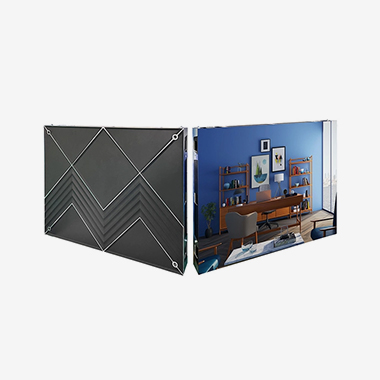
At its essence, a commercial LED wall is a modular assembly of light-emitting diode (LED) panels that form a seamless, large-format video display. The term "commercial" distinguishes it by its application: it is a tool for achieving business objectives—enhancing brand perception, streamlining operations, driving sales, and improving the customer experience. These displays are engineered for longevity, user-friendliness, and continuous operation, often running 12 to 18 hours a day, seven days a week. They prioritize image quality, reliability, and seamless integration into architectural spaces over the extreme weatherproofing of outdoor signs or the portability of rental gear.
The driving force behind their adoption is the undeniable shift from passive to active communication. A static poster can inform, but a digital display can engage, persuade, and adapt. A commercial LED wall can change its message instantly: a corporate lobby can welcome a specific guest, a bank can promote a timely financial product, and a retail store can launch a flash sale the moment inventory gets too high. This agility transforms physical spaces from being static to being responsive and context-aware.
The market is incredibly diverse, catering to a vast spectrum of environments and purposes. It encompasses:
Corporate Settings: Boardrooms, lobbies, command and control centers, and conference rooms.
Retail Environments: Shopping malls, department stores, showrooms, and point-of-sale areas.
Hospitality Venues: Hotels, casinos, restaurants, and bars.
Public Spaces: Airports, train stations, museums, and universities.
Broadcast & Studios: Television newsrooms, weather centers, and production studios.
This overview establishes the commercial LED display wall as a fundamental business tool. It is a fusion of information technology, audiovisual engineering, and strategic communication. The following sections will delve into the design principles that ensure these walls blend into their surroundings, the technical workings that deliver pristine images, the tangible advantages they offer businesses alongside the challenges of implementation, their specific applications across industries, and the future trends that will make them even more integrated and intelligent.
The design and construction of a commercial LED display wall are guided by a core principle: technological performance must be harmonized with aesthetic and architectural integration. Unlike the rugged, heavy-duty construction of outdoor billboards, commercial displays prioritize a sleek, unobtrusive form factor, quiet operation, and visual perfection for often close-viewing audiences. The goal is for the technology to feel like a natural part of the space, not a bolted-on afterthought.
Core Design Principles and Components:
The Panel: Precision Engineering for Close Viewing: The LED panel is the heart of the system, and its design is optimized for interior use.
Fine Pixel Pitch: This is the most critical specification. Pixel pitch (the distance between pixels, e.g., P1.2, P1.5, P2.5) determines the resolution and optimal viewing distance. Commercial applications demand fine pitches to ensure a smooth, non-pixelated image even when viewers are only a few feet away. This requires advanced manufacturing to pack thousands of tiny LEDs into a small area.
Surface Treatment: To enhance contrast and reduce glare from ambient interior lighting, panels often feature a matte black surface and advanced masking techniques. Some use "SMD" (Surface-Mount Device) LEDs recessed into the cabinet, while higher-end "GOB" (Glue on Board) or "COB" (Chip on Board) technologies encapsulate the LEDs in a protective epoxy layer that creates a perfectly smooth, flat surface that is also more durable.
Color Accuracy: Commercial displays are calibrated for high color accuracy and uniformity. This is paramount for brand consistency (e.g., ensuring Coca-Cola red is displayed correctly) and for applications like product showrooms where true-to-life color representation is essential.
Cabinet Design: Slim, Silent, and Cool: The metal frame that houses the modules is engineered for a discreet presence.
Ultra-Thin Profiles: Commercial cabinets are designed to be as thin as possible, sometimes only a few inches deep, to minimize their footprint and allow for Flush-mount installations in walls.
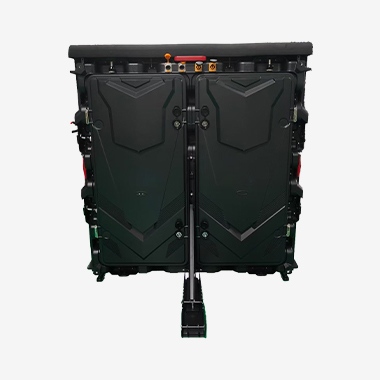
Thermal Management: Heat dissipation is achieved through passive cooling (large, silent heat sinks) and quiet, variable-speed fans. The acoustic noise level is a key specification, ensuring the display does not produce a distracting hum in quiet office or retail environments.
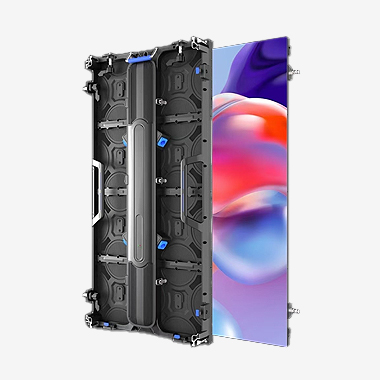
Front Serviceability: Nearly all commercial designs are fully front-serviceable. Technicians can replace modules, power supplies, and接收 cards from the front, which is essential for displays installed tight against a wall or in hard-to-reach areas.
Seamless Integration and Tiling: The mechanical design focuses on creating a perfectly flat, seamless image across hundreds of panels.
Minimal Bezels: The gap between individual panels (the bezel) is engineered to be as small as possible—often less than 1mm—to minimize the visual grid effect and ensure the content is the focus, not the technology.
Precision Alignment: Mounting systems use precision pins and magnetic alignment to ensure all panels are perfectly flush with each other, avoiding any "step" or "ledge" between them that would create shadows and break the illusion of a single canvas.
Mounting Solutions: Commercial installations require flexible mounting options to suit diverse architectural needs.
Wall Mount: Standard for lobbies and control rooms.
Ceiling Suspension: Common in atriums and retail spaces.
Free-Standing Structures: Used for temporary showcases or dividing spaces.
Custom Solutions: For curved walls, columns, or other unique architectural features.
Aesthetic Finishes: To help the display blend in, manufacturers offer options like custom-color bezels, decorative frames, and even covered "logo" buttons that can disguise the service latches, making the wall appear as a monolithic black surface when powered off.
The construction of a commercial LED wall is therefore a exercise in precision manufacturing and thoughtful industrial design. It is about making powerful technology elegant, quiet, and reliable enough to become an integral, yet unobtrusive, part of the daily business environment.
The working principles of a commercial LED display wall are engineered for one overarching goal: to deliver a reliable, visually perfect, and easily manageable image that serves business needs. The focus is on stability, color fidelity, and seamless integration with corporate IT and AV infrastructures, rather than the ultra-high refresh rates needed for broadcast camera shooting.
The Ecosystem of Reliable Performance:
Content Management and Scheduling: The process begins with software. Commercial systems are managed by a Content Management System (CMS), which is often web-based. This allows authorized marketing managers, facility managers, or IT staff to upload content (images, videos, PowerPoint slides, web pages, data feeds) and schedule it to play at specific times. This can be done from anywhere, providing central control over distributed displays across multiple locations.
Signal Input and Processing: The display must accept a wide variety of signals common in business environments:
HDMI/DVI: For connections to laptops, media players, or video conferencing systems.
SDI: For broadcast-grade video feeds in newsrooms or control centers.
Network (LAN): For streaming content directly from the network or for receiving data from the CMS.
The Video Processor: The incoming signal is fed to an internal or external video processor. This processor is the brain. Its key functions include:
Scaling: Converting the input resolution to the native resolution of the LED wall.
Calibration: Applying a pre-loaded calibration file that ensures every pixel across every panel has identical color and brightness output. This is what creates a uniform image from thousands of individual modules.
Multi-Zone Display: A powerful feature for commercial use. The processor can divide the large canvas into multiple independent zones. For example, one zone can show a live news feed, another can show a social media wall, and a third can show a scheduled PowerPoint presentation, all simultaneously on the same screen.
Data Distribution and Control: The processed signal is distributed to the individual panels via a daisy-chained network cable (e.g., CAT5e/6). Each panel contains a receiving card that takes the data packet meant for its section of the wall and drives the LEDs accordingly. The entire system is typically controlled via a simple web interface or dedicated software, allowing for remote monitoring of parameters like temperature, brightness, and system health.
Pixel Driving: Prioritizing Visual Fidelity: The driver ICs on the panels use Pulse-Width Modulation (PWM) to control the brightness of each LED. For commercial applications, the focus is on:
High Color Depth: 14-bit to 16-bit processing is standard, providing tens of thousands of shades per color. This eliminates "color banding" and allows for the display of smooth gradients and photographic content with incredible accuracy.
Appropriate Refresh Rate: While not needing the extreme rates of rental walls, commercial displays still feature high refresh rates (typically >1920Hz) to ensure a flicker-free viewing experience that is comfortable for the eyes during prolonged viewing, which is common in control rooms and corporate lobbies.
Monitoring and Remote Management: A critical feature for commercial deployments is pro-active monitoring. The system can send email or SMS alerts to IT staff if a component fails, a panel overheats, or the display loses its input signal. This allows for rapid response and minimizes downtime, which is crucial for mission-critical applications like financial trading floors or security operation centers.
The working principle, therefore, is about creating a stable, intelligent, and user-friendly system. It takes diverse content inputs, processes them into a pristine and uniform image, and provides the tools for businesses to easily manage and monitor their investment, ensuring it delivers value 24/7.
The adoption of commercial LED walls is a significant strategic decision. While the advantages are transformative, they must be weighed against the challenges of cost, integration, and content strategy to ensure a successful implementation and a strong return on investment (ROI).
Advantages:
Unmatched Impact and Audience Engagement: A large-format, bright, dynamic display commands attention in a way static signage cannot. It can stop people in their tracks, communicate complex messages quickly through video, and create a modern, high-tech atmosphere that enhances brand perception.
Exceptional Flexibility and Agility: This is the core advantage. Content can be updated instantly across an entire network of displays from a central location. This allows businesses to:
Run Timely Campaigns: Promote lunch specials, flash sales, or daily deals.
Welcome Specific Clients: Personalize messages in a corporate lobby for important visitors.
Display Real-Time Information: Show live data, social media feeds, news, weather, or stock prices.
Dayparting: Change messages based on the time of day or day of the week.
Enhanced Brand Perception and Authority: A well-executed LED wall installation projects an image of innovation, success, and technological sophistication. It makes a powerful statement to customers, partners, and employees about the company's commitment to modernity and quality.
Operational Efficiency and Cost Savings: While the initial investment is high, it can lead to long-term savings. It eliminates the recurring costs of printing, shipping, and installing physical signage. It also reduces waste and is a more environmentally sustainable solution over time.
Improved Communication and Wayfinding: In large spaces like airports, malls, or corporate campuses, LED walls serve as brilliant and dynamic wayfinding tools, providing clear, changeable directions and information that can be updated instantly during emergencies or schedule changes.
Challenges:
High Initial Capital Investment: The upfront cost of high-resolution LED panels, professional installation, and content creation is significant. This can be a major barrier for small to medium-sized businesses and requires a clear business case to justify.
Content Creation and Management Demands: The display is only as effective as its content. Businesses must budget for and manage the ongoing creation of high-quality, professional video content and graphics. This often requires hiring dedicated staff or engaging with a marketing agency, adding to the operational cost.
Technical Integration and IT Considerations: Integrating a large display into a corporate IT network requires planning. It involves considerations for network security, bandwidth for content distribution, and compatibility with existing AV systems. Internal IT teams may need to acquire new skills to support the technology.
Maintenance and Downtime Risk: While reliable, LEDs and other components will eventually fail. Having a maintenance plan and a ready supply of spare parts is crucial to minimize downtime. For mission-critical displays, a service-level agreement (SLA) with the vendor is essential.
Viewing Environment and Calibration: The display must be carefully calibrated for its environment. Ambient light from sunlit windows or bright indoor lighting can wash out the image if the display is not bright enough. Conversely, a display that is too bright in a dark environment can be uncomfortable to view.
For businesses that can navigate these challenges, the advantages of a commercial LED wall are profound. It is an investment that drives engagement, enhances brand equity, and provides a flexible communication platform that can adapt to the ever-changing needs of the market.
The application of commercial LED walls is vast and growing, penetrating nearly every sector of the economy. As the technology evolves, it becomes more accessible and intelligent, opening up new possibilities for how businesses interact with their audiences and manage their spaces.
Diverse Applications:
Corporate Communications: Lobby displays for branding and welcome messages, video walls in boardrooms for data visualization and video conferencing, and massive displays in command and control centers for monitoring real-time operations (e.g., network operations, security, transportation logistics).
Retail & Point-of-Sale: Digital menu boards in restaurants that allow for easy price changes and dynamic combo promotions. In-store signage in retail for advertising, branding, and creating immersive experiences in showrooms for automotive or electronics.
Hospitality & Entertainment: Hotels use them for branding, event promotion, and wayfinding. Casuses them for event schedules, odds, and creating dazzling atmospheres. Museums and galleries use them for interactive exhibits and information displays.
Broadcast & Studios: Television networks use them as backdrops in news studios, weather centers, and production sets, providing dynamic and engaging backgrounds for viewers.
Public Venues & Transportation: Airports and train stations use them for flight information, directions, advertising, and emergency announcements. Universities use them for event promotion and campus news.
Future Trends:
Finer Pixel Pitches and MicroLED Adoption: The push for higher resolution will continue. MicroLED technology will become more prevalent, offering finer pitches, higher brightness, better reliability, and a truly seamless image, making tiled walls virtually indistinguishable from a single panel display.
Integration with IoT and Data Visualization: LED walls will become intelligent endpoints in the Internet of Things (IoT). They will automatically display data pulled from various business systems—ERP, CRM, logistics software—providing live dashboards that help managers make faster, data-driven decisions.
Interactive and Touch-Enabled Capabilities: The integration of infrared touch frames or camera-based touch sensing will turn passive displays into interactive experiences. Customers could browse product catalogs, employees could interact with data visualizations, and students could engage with educational content directly on the wall.
Transparent and Flexible Displays: Transparent LED technology will allow for installations in store windows, creating "see-through" displays that show digital content without completely obscuring the view of products inside. Flexible panels will enable curved and organic shapes that integrate more fluidly with modern architecture.
AI-Powered Content Management: Artificial Intelligence will automate content management. AI could analyze foot traffic or time of day to select the most effective content to display, personalize messages based on demographic data from cameras (with privacy safeguards), or even generate simple promotional content automatically.
Unified Communication Platforms: The LED wall will not be a standalone island. It will act as the largest and most prominent display in a unified communication platform that includes desktop monitors, mobile devices, and digital signage, all sharing synchronized content and messages across an organization.
The future of the commercial LED wall is as a connected, intelligent, and interactive canvas. It will evolve from a tool for broadcasting messages to a platform for conversation, data analysis, and immersive experience, deeply embedded in the fabric of how businesses operate and communicate.
Conclusion
In conclusion, the commercial LED display wall has evolved from a novel luxury to a strategic cornerstone of modern business communication and operational efficiency. It is a powerful synthesis of advanced visual technology, software intelligence, and strategic branding that offers an unparalleled tool for engagement, information delivery, and atmosphere creation. Its ability to transform static spaces into dynamic, responsive environments has made it an indispensable asset across the corporate, retail, hospitality, and public sectors.
We have explored the precise design and construction that prioritizes seamless integration and visual perfection for indoor environments. The working principles reveal a focus on reliability, ease of use, and seamless integration with business IT ecosystems. The advantages are compelling: transformative impact, unmatched flexibility, and a strong long-term ROI. However, these are balanced by the challenges of significant upfront investment, ongoing content demands, and technical integration.
The applications are already vast, from the commanding control room to the enticing point-of-sale menu board. And as we look to the future, the trends point toward even greater integration, intelligence, and interactivity. The commercial LED wall is becoming an intelligent node in a networked business, capable of displaying real-time data, interacting with customers, and adapting to its environment.
Ultimately, the decision to invest in a commercial LED wall is a decision to invest in a more dynamic, agile, and modern business identity. It is a platform that empowers organizations to communicate with clarity and impact, to respond to opportunities with speed, and to present a face to the world that is innovative and authoritative. In the competitive landscape of modern business, the commercial LED wall is no longer just an option; for many, it is an essential tool for success.


Copyright © 2026 Shenzhen Cogo Technology Co.,Ltd.
All Rights Reserved

 Previous article