




 Chat Now
The urban landscape of the 21st century is defined by light and information. At the heart of this digital metamorphosis is the Commercial LED Display Screen—a dynamic, vibrant canvas that has revolutionized advertising, public communication, and entertainment. More than just a larger version of a television, these sophisticated systems are engineered for impact, durability, and continuous operation, transforming static physical spaces into engaging digital experiences.
A Commercial LED Display is a flat panel screen that utilizes an array of light-emitting diodes (LEDs) as pixels to produce video, images, or text output. Unlike consumer displays found in homes, their commercial counterparts are built for high brightness to compete with direct sunlight, exceptional reliability to operate 24/7, and modularity to be assembled into vast, seamless canvases of virtually any size or shape. The term "commercial" distinguishes them from consumer-grade products, implying their use in business environments such as retail stores, public squares, stadiums, and control rooms, where performance and uptime are critical business metrics.
The evolution of this technology is a story of relentless miniaturization and innovation. The journey began with monochromatic, low-resolution boards used primarily for stock tickers and basic text information. These early displays were constructed from discrete LEDs, limiting their resolution and clarity. The pivotal breakthrough came with the development of Surface-Mount Device (SMD) technology. SMD allowed for the creation of tiny red, green, and blue (RGB) LED chips to be mounted together as a single pixel unit directly onto a printed circuit board (PCB). This dramatically reduced the pixel pitch (the distance between pixels), enabling higher resolutions, better color mixing, wider viewing angles, and more robust panels. This advancement is what made the modern, high-definition video walls we see today possible.
The core value proposition of a commercial LED screen lies in its unparalleled ability to command attention. In a world saturated with media, a large-format, bright, and moving visual display cuts through the noise. For advertisers, this translates into higher brand recall and engagement rates compared to static billboards. For venues like sports arenas and concert halls, it enhances the spectator experience by providing immersive replays, statistics, and crowd animations. For corporate environments, it serves as a powerful tool for branding and real-time data visualization.
The market for these displays is vast and segmented. It ranges from giant, outdoor billboards towering over highways—often called JumboTrons in a stadium context—to fine-pitch indoor screens in luxury retail stores and corporate lobbies. There are also specialized variants like transparent LED screens that allow for see-through digital signage, flexible LED curtains for creative architectural integration, and rental-grade displays designed for rapid deployment and dismantling for live events and touring productions.
Furthermore, the ecosystem surrounding commercial LED is intricate. It is not merely a product but a integrated system comprising the physical display modules, the structural framing and mounting systems, powerful video processing hardware, and sophisticated content management software (CMS). This software allows operators to schedule content, manage playlists across multiple screens, and even display real-time data feeds from social media or news sources. The modern LED display is, therefore, a nexus of hardware engineering, software development, and creative content design.
In summary, the commercial LED display screen is a foundational technology of the digital age. It has evolved from a simple informational tool to a complex, integrated visual communication system. Its ability to adapt to various environments, from the harsh outdoors to the controlled indoors, and to scale to immense sizes, has made it the medium of choice for those seeking to make a powerful visual statement. As we delve deeper into its design, workings, and applications, it becomes clear that these displays are not just showing content; they are reshaping how we interact with and perceive the spaces around us.
The imposing and seamless visual spectacle of a massive LED video wall belies its intricate and modular internal architecture. The design and construction of a commercial LED display are feats of engineering that balance optical performance, structural integrity, thermal management, and serviceability. Understanding this construction is key to appreciating its capabilities and limitations.
At the most fundamental level, an LED display is a massive array of pixels. The journey of building this array begins with the smallest component: the LED package. For modern displays, this is almost exclusively the Surface-Mount Device (SMD) type. In an SMD package, the miniature chips that emit red, green, and blue light are encapsulated together in a single housing and soldered directly onto a printed circuit board (PCB). This creates a single, compact pixel unit. The specific configuration and quality of these LED chips directly determine the screen's color gamut, brightness, and longevity. High-end displays often use brand-name LEDs known for their consistency and performance.
These LEDs are mounted onto a PCB, which is the backbone of a display module. The PCB is not just a mounting platform; it contains the intricate circuitry that delivers power and data to each individual LED pixel. The module itself is a self-contained unit, typically ranging from 8x8 pixels to 32x32 pixels or more. It is the fundamental building block of the entire display. Modules are designed with robust connectors on their edges for power, data input, and data output, allowing them to be daisy-chained together.
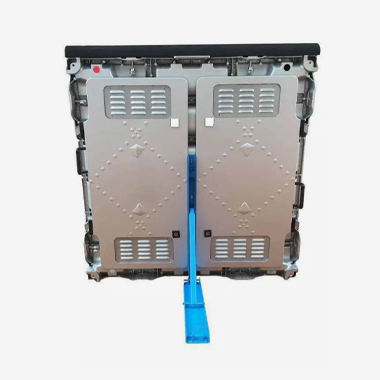
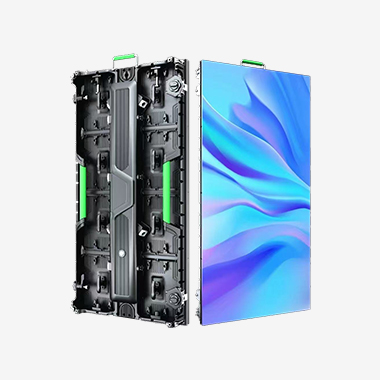
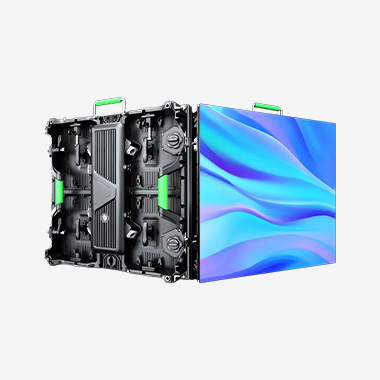
The modules are then mechanically fastened into a cabinet or panel. This is a rigid metal frame, usually made of aluminum for its strength and light weight, that holds a configurable matrix of modules (e.g., 4 modules wide by 4 modules high). The cabinet incorporates critical components:
Power Supplies: These convert incoming AC mains power to the low-voltage DC power required by the LEDs and ICs. Cabinets often have redundant power supplies for higher reliability.
Receiving Cards: These are the brains of the cabinet. They receive the video data signal from the video processor via high-speed cabling, decode it, and distribute the relevant portion of the image data to the driver ICs on each module.
Cooling System: LEDs and power supplies generate significant heat. Cabinets are designed with passive cooling (heat sinks) and often active cooling (quiet fans) to dissipate this heat. Effective thermal management is crucial, as excessive heat drastically shortens the lifespan of LEDs and electronic components.
Structural Frame: The cabinet provides the rigidity and precision alignment needed to ensure modules sit flush with each other, minimizing the visible bezel or gap between them.
Multiple cabinets are then locked together on-site to form the complete video wall. The entire structure must be supported by a heavy-duty mounting system, engineered to handle the significant weight of the display and withstand environmental forces like wind (for outdoor installations) or seismic activity. This framework is adjustable to ensure the entire wall is perfectly flat and aligned.
For the image to appear on the wall, two external systems are essential:
Video Processor: This is a specialized computer that acts as the command center. It takes one or more video input signals (e.g., from a media player, PC, or camera), scales them to the native resolution of the LED wall (which is often non-standard), performs color calibration and correction to ensure uniformity across millions of LEDs, and then splits and distributes the processed video data to all the individual cabinets via fiber optic or high-bandwidth network cables.
Control System: This consists of the Content Management Software (CMS) running on a PC or in the cloud. The CMS allows users to create playlists, schedule content, layout zones for different media sources, and remotely monitor the health of the display (tracking temperature, brightness, and component failures).
A critical design metric throughout this process is Pixel Pitch—the distance, in millimeters, from the center of one pixel to the center of the adjacent pixel. This single number defines the resolution and optimal viewing distance of the screen. A smaller pixel pitch (e.g., P1.2) means pixels are closer together, allowing for higher resolution and a closer viewing distance, but at a significantly higher cost. A larger pixel pitch (e.g., P10) is more suitable for large outdoor billboards viewed from hundreds of feet away. The choice of pixel pitch is the primary trade-off between image clarity, viewing distance, and budget.
Finally, for outdoor installations, the design must include a high Ingress Protection (IP) rating (e.g., IP65). This means the cabinets are completely sealed against dust and low-pressure jets of water from any direction, protecting the sensitive electronics from rain, humidity, and particulate matter.
In conclusion, the construction of an LED display is a masterclass in modular systems engineering. From the nanometer-scale LED chips to the multi-ton finalized installation, every layer is meticulously designed for performance, scalability, and reliability. This modularity not only allows for massive sizes but also simplifies maintenance, as a single faulty module can be identified and replaced without taking the entire display offline.
The magic of a commercial LED display—transforming electrical signals into a brilliant, cohesive moving image—is governed by a sophisticated interplay of hardware and software. The working principle can be broken down into a chain of processes: data generation, processing, transmission, and, finally, illumination.
1. Content Generation and Input:
The process begins with content. A video file, a live feed from a camera, a graphics-driven animation, or a simple PowerPoint slide is generated on a source device (a media player, PC, or video switcher). This source outputs a standard video signal, typically in a format like HDMI, SDI, or DisplayPort.
2. Video Processing: The Brain of the Operation
This raw video signal is sent to the specialized video processor. This device is the intellectual core of the LED wall and is responsible for several critical tasks:
Resolution Scaling: An LED wall does not have a "standard" resolution like a 1080p TV. Its resolution is a function of its physical dimensions and pixel pitch (e.g., 10,000 pixels wide by 5,000 pixels high). The processor must scale the input signal to match this exact native resolution without distorting the image.
Color Management and Calibration: Perhaps its most vital role. Every LED module has slight variations in color and brightness due to manufacturing tolerances. The processor holds a calibration file for every single module in the wall. It applies complex algorithms to adjust the output signal for each module, and even each pixel, to ensure perfect color and luminance uniformity across the entire display. This eliminates the "checkerboarding" effect and creates a seamless image.
Image Enhancement: Processors often perform tasks like noise reduction, contrast enhancement, and frame rate conversion to optimize the final image quality for the LED technology.
Data Distribution: After processing, the complete image is a massive dataset. The processor splits this image into smaller segments, each corresponding to a specific cabinet or group of cabinets in the wall.
3. Data Transmission:
The processed data segments are then sent from the processor to the individual display cabinets. Given the enormous bandwidth required (a 4K-resolution screen running at 60Hz requires ~12 Gbps), this is done using high-speed data protocols like DVI over fiber optic cable or specialized network protocols like HDBaseT. Fiber optic is preferred for long distances and immunity to electromagnetic interference.
4. Cabinet and Module Control:
Inside each cabinet, a receiving card gets its dedicated stream of data. This card is a dedicated controller that interprets the data and is responsible for driving the modules within its cabinet. It sends control signals to the driver ICs (Integrated Circuits) located on each module's PCB. These driver ICs are analogous to the RAMDAC in a computer monitor; they receive digital data and convert it into precise pulsed electrical currents that power the LEDs.
5. Pixel Illumination: The Heart of the Matter
This is where the digital becomes physical. Each pixel comprises three sub-pixels: a Red, a Green, and a Blue (RGB) LED. The driver IC controls the intensity of each of these colored LEDs independently. By varying the brightness of these three primary colors, any color in the visible spectrum can be mixed. This is the principle of additive color mixing.
The driver ICs do not control brightness by varying the voltage (which would lead to color shifting); they use a technique called Pulse-Width Modulation (PWM). In PWM, the LEDs are turned on and off at an extremely high frequency—thousands of times per second. The human eye perceives this rapid cycling not as flickering but as a steady level of brightness. The ratio of "on" time to "off" time within each cycle (the duty cycle) determines the perceived intensity. A 50% duty cycle appears as half brightness; a 10% duty cycle appears very dim. By independently controlling the PWM for each red, green, and blue sub-pixel, the driver IC can create millions of distinct colors.
6. Refresh Rate and Grayscale:
The refresh rate is how many times per second the entire screen's data is updated. A high refresh rate (e.g., 3840Hz or higher for LEDs) is crucial to eliminate flickering, especially when the screen is recorded by cameras, and to ensure smooth motion portrayal. Grayscale refers to the number of intensity levels between off and full-on for each color. A higher grayscale depth (e.g., 16-bit) allows for smoother color gradients and more detail in dark areas of the image, preventing "banding" effects.
7. Control and Monitoring:
Running in the background, the Content Management Software (CMS) allows the operator to control what is shown. It can also communicate with the processor and receiving cards to perform system diagnostics, monitoring parameters like internal temperature, fan speed, and LED status, often providing alerts before a failure causes downtime.
In essence, the working principle is a continuous, real-time waterfall of data: from a source, through a "brain" that optimizes and distributes it, down to individual controllers that use high-speed pulsation to trick the human eye into seeing a perfect, stable, and brilliantly colored moving image. It is a stunning demonstration of the marriage of digital information theory and analog optical physics.
Commercial LED displays have become dominant in many fields, but their adoption is a calculated decision based on a clear set of powerful advantages weighed against significant technical and economic challenges.
Advantages
Superior Brightness and Visibility: This is arguably their greatest strength. LED displays can achieve extremely high levels of brightness (measured in nits or candelas per square meter). High-end outdoor models can reach 10,000 nits or more, making them clearly visible even in direct sunlight—a feat impossible for LCD video walls, which are prone to washout and glare. This ensures the content always has impact.
Seamless Scalability and Large Format: Due to their modular cabinet-based construction, LED displays can be built to virtually any size or aspect ratio without a visible bezel or border between units. This creates a truly seamless and immersive canvas, unlike tiled LCD walls which always have noticeable bezels that can disrupt the viewing experience.
High Reliability and Long Lifespan: LEDs are solid-state devices with no fragile glass components, filaments, or filters. When properly engineered with robust thermal management, they are highly resistant to shock, vibration, and wear. Modern commercial LEDs have an operational lifespan (to L70 brightness, meaning 70% of original output) of 100,000 hours or more, translating to over a decade of continuous use.
Energy Efficiency: Compared to older technologies like neon or projection, LEDs are extremely energy-efficient. They convert a higher percentage of electrical energy directly into light rather than heat. This lower power consumption reduces operational costs and environmental impact, a key consideration for large, always-on installations.
Wide Viewing Angles: High-quality LED displays, especially those using SMD technology, offer viewing angles of 160 degrees or more without color shift or loss of contrast. This ensures a consistent viewing experience for a large audience, whether they are directly in front of the screen or off to the side.
Robustness for 24/7 Operation: Designed for mission-critical applications, these displays are built to operate continuously without degradation. This "always-on" capability is essential for control rooms, financial tickers, transportation hubs, and digital billboards.
Creative Flexibility: The technology has evolved beyond flat walls. Flexible LED modules allow for curved, cylindrical, and even wave-like installations. Transparent LEDs can be embedded in glass windows, and rental products enable dynamic staging for events. This flexibility unlocks new creative possibilities for architects and designers.
Challenges and Considerations
Cost: The initial capital investment for a high-quality LED display, especially one with a fine pixel pitch, is significant. It is not just the cost of the panels but also the video processors, structural support, installation, and ongoing maintenance. The ROI must be carefully calculated based on the application.
Pixel Pitch and Resolution Limitation: The physical size of the LEDs dictates the native resolution. For a given screen size, a finer pixel pitch yields higher resolution but at a exponentially higher cost. This means that extremely large screens designed to be viewed from a distance often have a low pixel density and would appear pixelated if viewed up close. Choosing the correct pixel pitch for the intended viewing distance is a critical and sometimes challenging decision.
Power Consumption and Heat Management: While efficient per LED, a massive video wall contains millions of them and consumes a substantial amount of power, requiring dedicated electrical circuits. This power draw also generates significant heat that must be actively managed with cooling systems. Failed fans can lead to overheating and accelerated failure.
Complex Maintenance and Repair: While modules are replaceable, the process requires technical skill. The display is a complex system of interdependent components—power supplies, receiving cards, modules, and processors. Diagnosing a problem (e.g., a single dark pixel, a flickering module, or a dead cabinet) can be complex. Maintaining a stock of spare parts is essential for minimizing downtime.
Image Quality Calibration: Achieving perfect color and brightness uniformity across a wall made of thousands of individual modules is a complex task. It requires an initial professional calibration with a colorimeter and a processor capable of storing the correction data. Over time, LEDs degrade at different rates, potentially necessitating re-calibration to maintain uniformity.
Perceived Image Quality in Certain Contexts: For ultra-high-resolution applications where viewers are very close (e.g., a corporate boardroom), a very fine-pitch LED might still be compared to a 4K/8LCD or OLED screen. While LED wins on size and seamlessness, LCD/OLED can still sometimes hold an advantage in absolute pixel density for a given cost.
In conclusion, the decision to deploy a commercial LED display involves a strategic balance. Its advantages—unmatched brightness, scalability, and durability—make it the undisputed champion for large-format, high-impact applications where visibility and reliability are paramount. However, the challenges of cost, technical complexity, and resolution constraints demand careful planning, a skilled technical partner, and a clear understanding of the project's goals and viewing conditions.
The versatility of commercial LED technology has fueled its adoption across a breathtakingly diverse range of industries. Its core value proposition—delivering dynamic, bright, and scalable visual communication—makes it a transformative tool wherever information, advertising, or entertainment needs to be delivered to an audience.
Ubiquitous Applications
Advertising & Branding (Digital Out-of-Home - DOOH): This is the most visible application. LED billboards have revolutionized outdoor advertising in city centers, highways, and airports. Their ability to schedule multiple ads, display real-time content (like news or weather), and host captivating video campaigns offers far greater engagement and monetization potential than static posters. Indoors, they are used in retail stores for promotions, in auto showrooms to highlight vehicle features, and in corporate lobbies for branding and welcome messages.
Sports and Entertainment Venues: Modern stadiums, arenas, and racetracks are synonymous with giant center-hung LED displays, often referred to by the trademarked name "JumboTron." These screens are integral to the live experience, providing instant replays, live action from different angles, player statistics, and interactive content to engage the crowd. Concerts and music festivals rely on massive LED video walls and stage backdrops to create immersive visual experiences that amplify the performance.
Broadcast and Studios: Television studios have widely adopted fine-pitch LED screens as virtual production stages. Instead of green screens, actors perform in front of a massive, high-resolution LED wall that displays dynamic, photorealistic digital environments. This allows for real-time in-camera visual effects, where lighting and reflections from the virtual world interact naturally with the actors, creating a more believable and efficient production workflow, famously used in productions like "The Mandalorian."
Control and Command Centers: In mission-critical environments like traffic management centers, network operation centers (NOCs), security hubs, and stock exchanges, LED video walls provide unparalleled reliability. They can consolidate and display vast amounts of real-time data, video feeds, maps, and graphs across a seamless canvas, enabling operators to quickly assess situations and make informed decisions 24/7 without worrying about screen burn-in.
Public Information and Transportation: Airports, train stations, and bus terminals use LED displays for flight information, schedules, and wayfinding. Their high brightness and reliability ensure information is always clear. Government entities and city councils use them in public squares to broadcast announcements, event information, and emergency alerts.
Corporate and Education: Boardrooms and conference rooms are increasingly replacing traditional projectors with fine-pitch LED walls for presentations and video conferences, offering superior brightness, clarity, and no need for a dark room. Universities use them in lecture halls and student unions to share information and stream events.
Rental and Staging: The events industry depends on rugged, lightweight LED panels designed for rapid deployment and dismantling. These rental displays are used for concerts, trade shows, product launches, and corporate events, providing temporary but high-impact visual power.
Future Trends
The technology is far from static. Several key trends are shaping the future of commercial LED displays:
Finer Pixel Pitches and MicroLED: The relentless drive towards smaller pixel pitches continues. The next frontier is MicroLED, a technology that uses microscopic LEDs that are self-emissive (like OLED) but with higher brightness and no risk of burn-in. MicroLED promises to enable direct-view LED displays with resolutions matching even the best consumer TVs, blurring the line between consumer and professional displays and opening up new applications in high-end control rooms and luxury retail.
Integration with AI and IoT: Displays are becoming smarter. Artificial Intelligence (AI) is being integrated for advanced analytics (using cameras to measure audience demographics and engagement), automated content optimization, and predictive maintenance (AI algorithms analyzing power and temperature data to predict component failures before they happen). As an Internet of Things (IoT) device, the LED display can interact with other smart systems, changing content based on real-world triggers like weather, inventory levels, or social media trends.
Transparent and Flexible Form Factors: The evolution of form factors will continue. Transparent LED screens will become brighter, higher resolution, and more efficient, integrating seamlessly into store windows and building facades without completely obscuring the view. Flexible and conformable LED technology will advance, allowing for more creative and organic shapes—curved walls, columns, arches, and even wrapping around complex structures—making the display itself a piece of architectural art.
Improved Sustainability: The focus on environmental impact will intensify. Manufacturers are working on reducing power consumption through more efficient LED chips, driver ICs, and power supplies. The use of recyclable materials in cabinets and packaging will become standard. The extremely long lifespan of LEDs already contributes to sustainability by reducing waste compared to shorter-lived technologies.
Simplified Usability and Maintenance: As the technology matures, a key focus is on making it easier to use and maintain. This includes more intuitive software, "auto-configuration" features where the processor automatically detects the wall layout, and modular designs that allow for even faster and simpler hot-swapping of components to minimize downtime.
HDR and Enhanced Color Performance: The pursuit of better image quality will focus on achieving true High Dynamic Range (HDR) on large-format LED displays. This involves increasing contrast ratios (through better black-level management) and expanding the color gamut to cover standards like Rec. 2020, creating images with unprecedented realism and vibrancy.
In summary, the application landscape for LED technology is vast and growing. Its future is one of convergence: convergence with other technologies like AI and IoT, convergence of form and function through new shapes and transparencies, and a convergence of capabilities that will see it enter new markets and redefine existing ones, solidifying its role as the premier medium for large-format visual communication.
Conclusion
The commercial LED display screen is far more than a simple output device; it is a foundational pillar of the modern visual landscape. From its humble beginnings as a monochromatic information ticker to its current status as a high-resolution, intelligent, and sculptable canvas, its evolution has been nothing short of revolutionary. This six-part exploration has detailed its inner workings, its strengths and weaknesses, its myriad applications, and its exciting future, all pointing to one undeniable conclusion: the LED display has irrevocably transformed how we communicate, advertise, and experience the world around us.
Its success is rooted in a powerful combination of inherent advantages. Its modularity provides unparalleled scalability, allowing for creations of immense size without a visible seam. Its luminosity conquers the sun, ensuring messages are delivered with impact regardless of the environment. Its robustness guarantees the reliability required for mission-critical, 24/7 operations. And its dynamic nature offers a flexibility and engagement that static media simply cannot match. These characteristics have propelled it to dominance across a spectrum of industries, from the adrenaline-fueled atmosphere of a stadium to the data-driven precision of a control room.
However, this technology is not without its demands. The journey to a successful installation requires careful navigation of significant initial investment, a deep understanding of technical specifications like pixel pitch, and a commitment to ongoing maintenance and calibration. It is a sophisticated system, not merely a product, demanding expertise in design, integration, and content strategy to unlock its full potential.
Looking forward, the trajectory of commercial LED technology is set toward even greater integration and intelligence. The boundaries of its form factor will continue to dissolve, giving us more transparent, flexible, and creatively free displays. The pixels themselves will shrink toward the microscopic realm of MicroLED, delivering image quality that rivals the finest domestic televisions. Most importantly, the display is becoming a cognitive device. Through AI and IoT integration, it is evolving from a passive broadcaster into an interactive, responsive, and analytical tool that can understand its audience, automate its operations, and personalize its content in real-time.
In conclusion, the commercial LED display has earned its place as the unassailable canvas of the digital age. It is the medium of choice for those who need to make a statement that is too big, too bright, and too compelling to ignore. It has redefined architectural spaces, enhanced live experiences, and become the central nervous system for critical information infrastructure. As the technology continues to advance, becoming smarter, more efficient, and more seamlessly integrated into our environment, its role will only expand. It will continue to shape not just city skylines, but also the very way we perceive and interact with information, solidifying its legacy as one of the most impactful visual technologies of our time.


Copyright © 2026 Shenzhen Cogo Technology Co.,Ltd.
All Rights Reserved

 Previous article