Author: sznbone Release date: May 25, 2026
Corporate training is a critical investment for businesses, designed to enhance employee skills, improve productivity, and align teams with organizational goals. In today’s digital age, traditional training methods—such as lectures, printed materials, and static presentations—are no longer enough to engage modern employees, who expect dynamic, interactive, and visually appealing learning experiences. LED indoor rental screens have emerged as a game-changer in corporate training, transforming ordinary training rooms into immersive, interactive learning spaces that enhance engagement, retention, and knowledge transfer. Unlike permanent LED installations, rental screens offer unparalleled flexibility, allowing businesses to adapt to different training needs, venues, and group sizes, making them the ideal choice for temporary or recurring training events. This article explores the role of LED indoor rental screens in corporate training, their key features, application strategies, and how they elevate the effectiveness of training programs.
Corporate training programs vary widely in scope and purpose, from onboarding new employees and product training to leadership development and compliance training. Regardless of the type of training, the goal is to ensure that employees absorb and retain information effectively, and visual aids play a critical role in this process. Research has shown that visual learning is more effective than text-based learning, with employees retaining up to 65% of information when it is presented visually, compared to just 10% when presented through text alone. LED indoor rental screens leverage this by delivering high-quality, dynamic visuals that make complex information easier to understand, engage employees, and reinforce key concepts.
One of the key advantages of LED indoor rental screens for corporate training is their high resolution and clarity. Training materials—such as presentations, videos, diagrams, and charts—need to be clear and easy to read, even from the back of the training room. Modern LED rental screens offer pixel pitches ranging from P1.9 to P3.9, with finer pixel pitches (P1.9-P2.6) delivering ultra-clear images that are easy to read at close and medium viewing distances. This is particularly important for training sessions that involve detailed diagrams, technical specifications, or small text (e.g., product manuals, compliance documents). For example, a product training session could use an LED screen to display high-resolution images of the product, along with detailed diagrams of its components and functionality, making it easier for employees to understand how the product works. A compliance training session could use the screen to display video examples of correct and incorrect procedures, reinforcing key compliance rules.
Flexibility in content display is another major benefit of LED indoor rental screens for corporate training. Trainers can easily switch between different types of content to keep employees engaged, including presentations (PowerPoint, Keynote), pre-recorded videos, live demonstrations, interactive quizzes, and real-time data. For instance, during an onboarding session, the trainer could use the screen to display a presentation about the company’s history and culture, followed by a video introduction from company leaders, and then an interactive quiz to test employees’ knowledge. During a technical training session, the trainer could use the screen to display a live demonstration of a software program or equipment, allowing employees to see the process in real time and ask questions. This versatility ensures that the training remains dynamic and engaging, reducing boredom and improving retention.
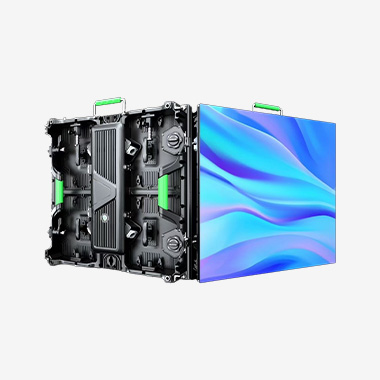
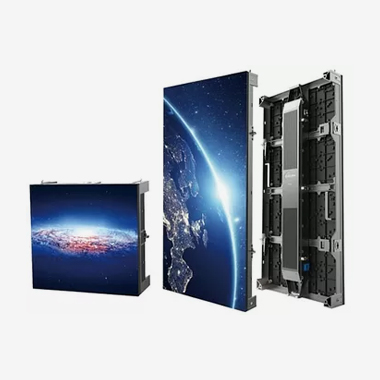
Modularity is another critical feature of LED indoor rental screens for corporate training. Training events can take place in a variety of venues, from small conference rooms and training rooms to large convention centers and auditoriums, and rental screens can be easily assembled and reconfigured to fit any space. For example, a small training session with 10-15 employees could use a compact LED screen (e.g., 3m x 2m) in a conference room, while a large training event with 100+ employees could use a large LED wall (e.g., 8m x 4.5m) in an auditorium. The modular design also allows for multi-screen setups, such as a main screen for presentations and two smaller side screens for additional content (e.g., notes, diagrams, or live feeds), making it easier for employees to follow along. Additionally, the lightweight nature of LED rental panels makes them easy to transport and install, which is critical for businesses that host training events at multiple locations or need to set up and teardown quickly.
Interactive capabilities are a key feature of LED indoor rental screens that set them apart from traditional display solutions. Many modern LED rental screens support touch functionality, allowing trainers and employees to interact directly with the screen—for example, drawing on presentations, navigating through content, or participating in interactive quizzes. This interactivity enhances engagement by making employees active participants in the training process, rather than passive listeners. For example, during a leadership training session, the trainer could use a touch-enabled LED screen to display a scenario-based exercise, where employees can tap on the screen to select different responses and see the consequences of their choices. This hands-on approach makes the training more engaging and memorable, improving knowledge retention.
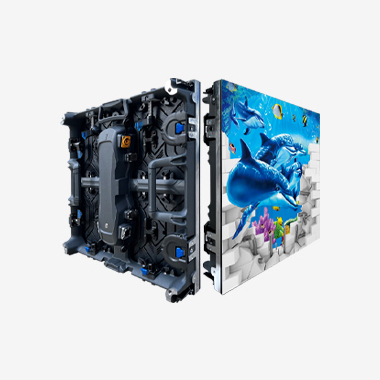
Durability and reliability are also critical for corporate training events, which often run for multiple days or sessions, and cannot afford technical glitches. LED indoor rental screens are designed to withstand frequent use, with robust cabinets made from die-cast aluminum that are resistant to damage from setup, teardown, and daily use. Many rental screens also feature dual power and signal redundancy, ensuring that if one power source or signal fails, the screen will continue to operate without interruption—critical for a training session where a single moment of downtime could disrupt the flow of the training and waste valuable time. Additionally, rental screens are calibrated before delivery to ensure uniform brightness and color across the entire display, eliminating any inconsistencies that could detract from the training experience.
Cost-effectiveness is another key reason why LED indoor rental screens are the preferred choice for corporate training. Many businesses host training events on a temporary or recurring basis, and purchasing a permanent LED screen is a significant investment. Rental screens eliminate the need for upfront investment, maintenance costs, and storage, allowing businesses to allocate their budget to other aspects of the training program, such as trainer fees, materials, and catering. Additionally, rental companies often provide full-service support, including delivery, setup, calibration, and technical assistance during the training event, reducing the burden on HR and training teams and ensuring a smooth, stress-free experience.
To illustrate the impact of LED indoor rental screens on corporate training, consider a real-world example: a large technology company hosting a product training session for 50 sales employees. The company rented a 6m x 3m LED screen with a P2.5 pixel pitch for the training room. The screen displayed a high-resolution presentation about the new product’s features, benefits, and competitive advantages, along with video demonstrations of the product in action. The trainer used the screen’s touch functionality to navigate through the presentation, draw on diagrams to highlight key points, and conduct an interactive quiz at the end of the session. Employees were able to see the product clearly from every corner of the room, and the interactive elements kept them engaged throughout the training. As a result, the sales team was able to quickly grasp the product’s key features and felt more confident in promoting it to customers, leading to an increase in sales in the months following the training.
Another example is a healthcare company hosting a compliance training session for 100+ employees. The company rented an 8m x 4.5m LED screen with a P2.9 pixel pitch in a large auditorium. The screen displayed video examples of compliance violations and correct procedures, along with detailed charts and graphs showing the consequences of non-compliance. The trainer used the screen to display real-time data from past compliance incidents, allowing employees to see the impact of their actions. The screen also featured a live feed of a Q&A session, where employees could submit questions and see the answers displayed on the screen. This dynamic, visual approach made the compliance training more engaging and memorable, reducing the risk of compliance violations and ensuring that employees understood their responsibilities.
When choosing an LED indoor rental screen for corporate training, there are several key factors to consider. First, the pixel pitch: for small training rooms or close viewing distances, a finer pixel pitch (P1.9-P2.6) is ideal to ensure clear visuals. For larger auditoriums with longer viewing distances, a slightly larger pixel pitch (P2.9-P3.9) can be used to balance clarity and cost. Second, screen size: the screen should be large enough to be visible from all corners of the venue, with a width that is at least 1/3 of the room’s width. Third, brightness: indoor LED screens typically have a brightness of 800-1200 nits, which is sufficient for well-lit training rooms. However, if the room has particularly bright lighting (e.g., large windows), a higher brightness (1500 nits or more) may be needed to ensure visibility. Fourth, interactive capabilities: if the training involves interactive elements, choose a touch-enabled LED screen that supports multi-touch functionality. Fifth, content management: ensure that the rental screen comes with user-friendly content management software that allows for easy switching between different content types and real-time adjustments.
In conclusion, LED indoor rental screens have revolutionized corporate training, offering flexibility, interactivity, and high-quality visuals that enhance engagement, retention, and knowledge transfer. They transform ordinary training rooms into immersive, interactive learning spaces that make complex information easier to understand and remember. Their modular design, high resolution, interactive capabilities, and reliability make them the perfect choice for businesses of all sizes, from small startups to large corporations. As corporate training continues to evolve, LED indoor rental screens will remain a key tool in helping businesses train their employees effectively, improve productivity, and achieve their organizational goals.


Copyright © 2026 Shenzhen Cogo Technology Co.,Ltd.
All Rights Reserved

 Previous article