Author: sznbone Release date: Jan 07, 2026
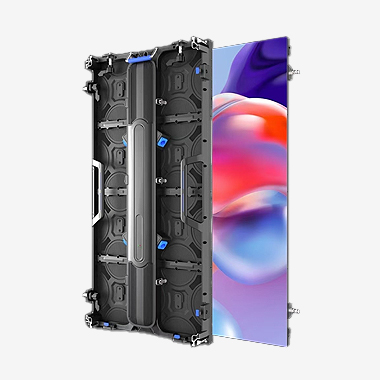
An indoor synchronous control screen refers to an indoor LED display system that realizes real-time synchronous display of content with the input signal source. Unlike asynchronous display screens that store content in local memory and play it back independently, synchronous control screens display content in real time following the signal source (such as a computer, video camera, or live broadcast device), making them particularly suitable for scenarios that require real-time content presentation, such as live events, command and dispatch centers, and classroom teaching. The core advantage of synchronous control screens lies in their low latency and high synchronization accuracy, ensuring that the displayed content is consistent with the source signal without time delay or frame loss.
The working principle of indoor synchronous control screens relies on a high-speed synchronous control system, which usually consists of a synchronous control card, a signal transmission line, and a host computer. The host computer transmits the display signal to the synchronous control card in real time through a high-speed interface (such as HDMI 2.1, DP, or SDI), and the control card converts the signal into a drive signal that matches the LED panel and controls the panel to display the content synchronously. To ensure synchronization accuracy, the system uses precise timing synchronization technologies, such as clock synchronization and frame synchronization, to avoid display asynchrony between different parts of the screen or between multiple screens.
Indoor synchronous control screens have strict requirements on display quality and stability. In terms of display quality, they support high resolution, high refresh rate, and high grayscale, enabling the display of clear, smooth, and color-rich images and videos. For example, in a command center, the synchronous control screen needs to display real-time monitoring images and data charts clearly and stably to ensure that operators can make accurate judgments in a timely manner. In terms of stability, the system is equipped with redundant backup mechanisms, such as dual-machine hot backup and signal backup, to avoid display interruptions caused by hardware failures or signal loss. In addition, modern indoor synchronous control screens also support multi-screen splicing and arbitrary shape combination, allowing users to build large-size or special-shaped display systems according to indoor space requirements, further expanding their application scenarios in indoor environments such as exhibition centers, theaters, and shopping malls.


Copyright © 2026 Shenzhen Cogo Technology Co.,Ltd.
All Rights Reserved

 Previous article