Author: sznbone Release date: Jan 26, 2026
In the modern corporate environment, conference rooms serve as the core hub for decision-making, collaboration, and information dissemination. The quality of audio-visual equipment in these spaces directly impacts meeting efficiency, communication effects, and the overall professional image of the enterprise. Among various display devices, high brightness LED indoor fixed screens have emerged as the preferred choice for high-end conference rooms, thanks to their superior visual performance, stable operation, and flexible adaptation to diverse meeting scenarios. Unlike traditional projectors that are susceptible to ambient light interference or LCD screens with limited brightness and viewing angles, high brightness LED indoor fixed screens deliver consistent, clear, and vivid images even in well-lit conference rooms, ensuring every participant can capture key information without straining their eyes.
The core advantage of high brightness LED indoor fixed screens for conference rooms lies in their adjustable high brightness performance. Generally, such screens offer a brightness range of 500cd/㎡ to 1200cd/㎡, which can be precisely adjusted according to the ambient light conditions of the conference room. During daytime meetings with natural light streaming through windows, the screen can be set to high brightness levels to counteract glare and ensure image clarity; in evening or low-light environments, the brightness can be reduced to avoid eye fatigue, creating a comfortable viewing experience for long-duration meetings. This adaptive brightness feature is supported by advanced LED chip technology and intelligent light-sensing systems, which automatically detect changes in the surrounding light intensity and adjust the screen brightness in real time, eliminating the need for manual operation and enhancing user convenience.
Another critical performance indicator of high brightness LED indoor fixed screens for conference rooms is their color accuracy and contrast ratio. Conferences often involve displaying detailed content such as data charts, design drawings, videos, and presentation slides, which require the screen to reproduce colors truthfully and distinguish subtle differences in image details. High-end models typically adopt SMD (Surface Mount Device) LED chips with a wide color gamut, covering up to 95% or more of the DCI-P3 color space, ensuring that colors are vivid, natural, and consistent with the original content. Meanwhile, a high contrast ratio (usually above 10000:1) enables the screen to present deep blacks and bright whites, making dark details in images clearly visible and enhancing the layering and three-dimensionality of the displayed content. This is particularly important for meetings involving professional fields such as design, architecture, and medical research, where accurate color and detail reproduction are crucial for decision-making.
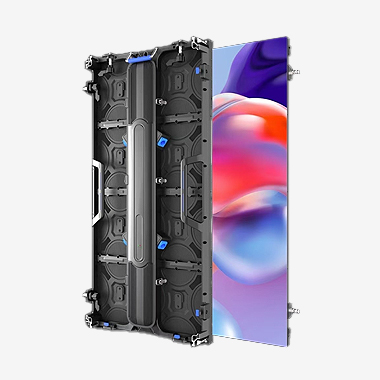
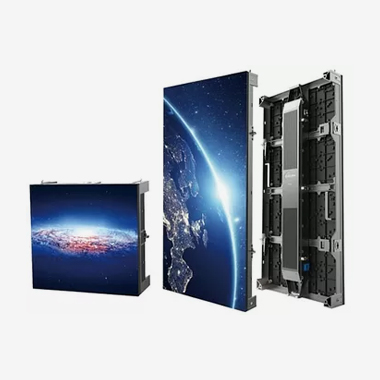
In terms of structure and installation, high brightness LED indoor fixed screens for conference rooms are designed to be lightweight and easy to install, adapting to the limited space of most conference rooms. The modular design allows for flexible splicing, enabling enterprises to customize the screen size and aspect ratio according to the dimensions of their conference room walls. Whether it is a small meeting room requiring a 55-inch single screen or a large conference hall needing a seamless splicing screen of several meters in length, high brightness LED indoor fixed screens can meet the demand. Additionally, the ultra-thin design of the screen body (usually within 10cm) ensures that it does not occupy excessive space and can be mounted flush with the wall, integrating harmoniously with the conference room decor and enhancing the overall aesthetic appeal of the space.
Stability and durability are also key considerations for conference room equipment, as meetings are often time-sensitive and cannot afford interruptions due to equipment failures. High brightness LED indoor fixed screens adopt high-quality LED chips, driving power supplies, and control systems, which have undergone rigorous testing for stability and reliability. The average lifespan of LED chips is more than 100,000 hours, which means the screen can operate continuously for more than 10 years under normal use conditions, reducing the frequency of maintenance and replacement. Moreover, the screen is equipped with multiple protection mechanisms, such as overvoltage protection, overcurrent protection, and overheating protection, which can effectively prevent damage to the screen caused by power fluctuations or prolonged operation, ensuring stable operation even during long meetings or multi-day training sessions.
With the popularization of intelligent office systems, high brightness LED indoor fixed screens for conference rooms are also evolving towards intelligence and connectivity. Modern models support seamless integration with various intelligent devices, such as computers, mobile phones, tablets, video conferencing systems, and wireless projection devices. Through wireless projection, Bluetooth, or Wi-Fi connectivity, meeting participants can easily share content from their personal devices to the screen without the need for cumbersome wired connections, improving meeting efficiency. Additionally, some high-end screens are equipped with touch interaction functions, allowing participants to directly operate the screen, annotate content, and modify slides during the meeting, facilitating real-time interaction and collaboration. The integration with video conferencing systems also enables remote participants to enjoy clear images and smooth communication, breaking the limitations of geographical distance and promoting global collaboration.
In terms of market demand, the demand for high brightness LED indoor fixed screens in conference rooms is growing steadily with the upgrading of corporate office environments and the increasing emphasis on efficient communication. Enterprises of all sizes, from small and medium-sized enterprises to large multinational corporations, are gradually replacing traditional display devices with high brightness LED screens to improve meeting quality and work efficiency. In particular, industries such as finance, technology, design, and government agencies, which have high requirements for audio-visual equipment, are the main driving forces for the demand growth. Furthermore, with the post-pandemic rise of hybrid work models, the need for high-quality display equipment that supports both in-person and remote meetings has become more urgent, further boosting the application of high brightness LED indoor fixed screens in conference rooms.
When selecting a high brightness LED indoor fixed screen for a conference room, several factors need to be considered. First, the brightness level should be selected according to the size of the conference room and the intensity of ambient light. For large conference rooms with large windows and strong natural light, a screen with brightness above 800cd/㎡ is recommended; for small meeting rooms with controlled lighting, a screen with brightness between 500cd/㎡ and 800cd/㎡ is sufficient. Second, the resolution should be matched with the screen size and the content to be displayed. For displaying detailed data and design drawings, a 4K resolution screen is preferred to ensure clarity; for general presentation displays, 1080P resolution can meet the demand. Third, the brand and after-sales service should be taken into account. Choosing a well-known brand with reliable quality and perfect after-sales service can ensure the stability of the equipment and timely maintenance support in case of failures.
In conclusion, high brightness LED indoor fixed screens have become an indispensable part of modern conference rooms, with their superior brightness performance, color accuracy, stability, and intelligent features. They not only improve the quality and efficiency of meetings but also enhance the professional image of enterprises and promote seamless collaboration between participants. As technology continues to advance, high brightness LED indoor fixed screens will further evolve towards higher resolution, smarter interaction, and more energy-efficient performance, bringing more convenient and high-quality audio-visual experiences to conference rooms of all types and sizes.


Copyright © 2026 Shenzhen Cogo Technology Co.,Ltd.
All Rights Reserved

 Previous article