




 Chat Now
The landscape of large-scale events has been fundamentally reshaped by a single technological marvel: the outdoor LED wall display screen. These colossal, vibrant canvases have become the undisputed centerpiece of everything from music festivals and sporting spectacles to political rallies and public installations. They are the technological bridge that connects performers, athletes, and speakers with vast audiences, ensuring that every individual, regardless of their seat, feels immersed in the action. This overview explores the genesis, purpose, and transformative impact of outdoor LED walls on the live event experience.
An outdoor LED wall is a modular, high-brightness display system engineered to withstand the harsh, variable conditions of the external environment while delivering stunning visual performance. Unlike their indoor counterparts, these displays are built to combat direct sunlight, rain, wind, dust, and extreme temperatures. Their primary function is to amplify the live experience, providing close-up views, instant replays, dynamic graphics, and informational content to a massive crowd simultaneously. They have evolved from a novel luxury to an essential production element, as critical to an event's success as the sound system or the stage itself.
The historical precursor to the modern LED wall was the large-scale video projection system. While effective in controlled, dark environments, projections were hopelessly inadequate for daytime outdoor use, their images washed out by the sun. The first large-format LED displays were primitive, low-resolution monochrome boards used in sports stadiums primarily for scoring information and basic animations. The technological leap came with the development of full-color RGB LEDs and, crucially, their ability to achieve极高的亮度(brightness). This allowed them to compete with and ultimately conquer ambient sunlight, making high-fidelity video outdoors a reality.
The adoption of Surface-Mount Device (SMD) technology was another watershed moment. SMDs allowed for tighter pixel pitches, higher resolutions, and more robust modules capable of enduring the physical vibrations and environmental rigors of outdoor use. As technology advanced, the cost began to decrease, and the applications proliferated. What was once exclusive to Super Bowl halftimes and Olympic opening ceremonies became accessible to major music tours, large corporate events, and permanent installations at venues worldwide.
The impact on live events is profound and multifaceted. At a music festival, the LED wall is the main visual conduit between the artist and the audience in the back rows. It transforms a distant figure on stage into an intimate, larger-than-life presence. Directors use multi-camera setups to create a live visual narrative, cutting between wide shots, close-ups, and artistic angles, enhancing the musical performance with a synchronized visual spectacle. Graphics, lyrics, and pre-produced video content are seamlessly integrated, turning a concert into a multi-sensory immersive experience.
In the sporting arena, the LED wall is the heartbeat of the stadium's entertainment package. It serves three core functions: informational (score, clock, statistics, lineups), replay (providing crucial, often controversial, angles for fans and officials), and entertainment (kiss cams, fan interactions, promotional videos, and hype sequences). It is a tool for crowd management, building energy during timeouts, and celebrating pivotal moments. It ensures that the action, even when happening on a distant part of the field, is immediate and visceral for every attendee.
Beyond entertainment, outdoor LED walls serve as powerful tools for public communication and advertising. Times Square's iconic displays are the epitome of brand spectacle, while large-scale walls at rallies and public gatherings ensure that a speaker's message and presence are amplified to every corner of a massive crowd.
In essence, the outdoor LED wall has democratized the live event experience. It has solved the fundamental problem of scale, ensuring that the energy and detail of the action on stage or on the field are not lost on those farthest away. It is a testament to human ingenuity—a complex feat of engineering, logistics, and creative content production that operates flawlessly in the most demanding conditions. It is no longer just a screen; it is an integral, expected character in the story of any major outdoor gathering, a digital titan that makes the massive feel personal.
The creation of an outdoor LED wall is a masterclass in ruggedized engineering. It is a product that must deliver optical brilliance while simultaneously functioning as a piece of heavy-duty outdoor equipment, capable of resisting an relentless assault from nature. Its design and construction are a careful balance of visual performance, structural integrity, and environmental protection, making it vastly different from its indoor sibling.
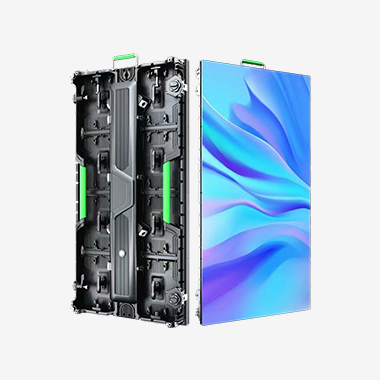
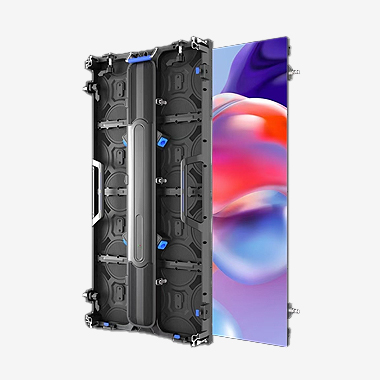
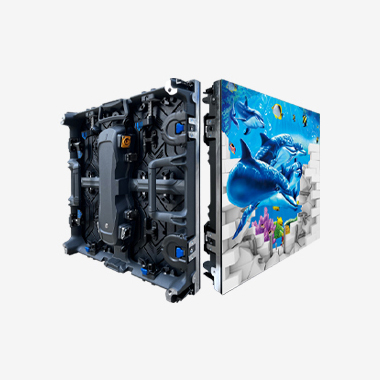
The entire system is built around the concept of modularity. The wall is composed of hundreds or even thousands of individual cabinets (or panels), typically sized around 500x500mm or 1000x1000mm. Each cabinet is a self-contained unit, housing a grid of LED modules, its own power conversion and data distribution systems, and a robust metal frame. This modularity is key for several reasons: it allows for screens to be built to any size or aspect ratio; it simplifies transportation, as cabinets are packed into flight cases; and it enables rapid repair by swapping out a faulty cabinet on-site without taking the entire wall offline.
At the front line of each cabinet is the LED module. For outdoor applications, the pixel pitch—the distance between the centers of two adjacent pixels—is crucial but different from indoor needs. While resolution is important, viewing distance is much greater. Therefore, pixel pitches for outdoor walls are larger, typically ranging from P4 to P10+ (e.g., P6, P8), balancing cost with sufficient resolution for viewers who may be hundreds of feet away. These modules use high-intensity SMD LEDs, specifically designed to pack a powerful luminous output. To protect the delicate LED chips from physical impact, moisture, and UV damage, they are encased in a tough resin or silicone filling. This conformal coating is the first critical layer of defense.
The most defining feature of an outdoor cabinet is its environmental rating, signified by the IP (Ingress Protection) code. A rating of IP65 is the industry standard for outdoor event products. The '6' means it is completely dust-tight, and the '5' means it can withstand low-pressure water jets from any direction, protecting against rain and cleaning. This is achieved through meticulous sealing. Cabinets use high-quality silicone gaskets at every seam, sealed connectors, and waterproof membranes over any vents. Unlike indoor screens that use passive cooling, outdoor screens must actively manage the significant heat generated by the high-brightness LEDs and electronics under the sun.
This leads to the critical system of thermal management. Outdoor cabinets are equipped with IP-rated fans for intake and exhaust, creating a forced airflow that pulls cool air in and expels hot air out. The design of this airflow is precise, often passing directly over extruded aluminum heat sinks that are attached to the driver ICs and other heat-generating components. This active cooling system is vital to prevent thermal throttling (where the screen dims to protect itself) and to ensure long-term reliability of the LEDs and electronics. Some advanced designs use a "front serviceable" design, where all components can be accessed and replaced from the front, eliminating the need for a technician to get behind the wall—a crucial safety and practicality feature for large, heavy structures.
The structural framing is another cornerstone of the design. Individual cabinets lock together into a larger array using robust quick-release latching systems. This entire array is then supported by a heavy-duty truss or goalpost structure made from aluminum or steel. This primary structure is engineered to handle significant dead weight (the screens themselves), live loads (wind), and dynamic loads (vibration from sound systems). Engineers perform detailed calculations to ensure the structure can withstand wind speeds of up to 60-70 mph or more, often requiring guying with steel cables to anchor points. The entire system must be modular, quickly assembled by a skilled crew using cranes and lifts, and utterly reliable once raised.
Finally, the electronics within each cabinet are hardened for the task. They use industrial-grade connectors—like IP65-rated powerCON and dataCON (e.g., Harting) connectors—that are locking, waterproof, and designed for thousands of mating cycles. The power supplies are highly efficient (90%+), reducing heat waste, and are designed to handle fluctuating voltages from generators. The data distribution is redundant and robust, often using ring network topologies so that a single cable break doesn't bring down the entire display.
In summary, the construction of an outdoor LED wall is an exercise in over-engineering for resilience. Every material, from the potted LEDs to the aircraft-grade aluminum frame; every system, from the IP65 sealing to the active cooling and the structural engineering; is chosen and designed for one purpose: to create a visually stunning and utterly reliable display that will perform flawlessly, no matter what the event or the elements throw at it.
The flawless operation of a massive outdoor LED wall, synchronizing millions of individual LEDs across hundreds of separate cabinets to display a single, cohesive image, is a logistical and technical miracle. The working principles involve a sophisticated chain of command that distributes, processes, and executes visual data with precision and redundancy. This process can be broken down into three key stages: Content Source & Control, Data Distribution & Processing, and Pixel Illumination & Calibration.
1. Content Source & Control:
The process begins with the video source. For a live event, this is typically a professional video switcher (e.g., from brands like Blackmagic Design, Ross, or Grass Valley) located in the production truck or control tent. This switcher combines multiple feeds: camera sources, graphics from a character generator (CG), pre-produced video content from playback servers (e.g., Green Hippo, disguise), and live inputs. The video engineer or director cuts between these sources to create the final program feed that the audience sees.
This program feed is output from the switcher as a standard signal (e.g., HD-SDI, 12G-SDI, or sometimes HDMI for smaller setups) and sent to the LED video processor. This processor is the true brain of the LED wall. Its primary function is to map the incoming video signal to the non-standard, often irregular resolution of the LED wall. The wall might be a wide, non-16:9 aspect ratio, or it might be wrapped around a stage, requiring warping and blending. The processor handles this scaling, color space conversion, and any necessary image warping. High-end processors from companies like Novastar, Brompton, or Colorlight also handle critical tasks like image calibration and redundancy management.
2. Data Distribution & Processing:
The processed signal from the video processor is then sent out to the wall itself. This is where the system's modular and distributed nature shines. The signal path is structured in a hierarchical, cascading manner:
The processor sends a primary data output to the first cabinet in a chain or a specific sector of the wall. This is done using high-bandwidth network cables (CAT5e/6 or fiber optic for very long runs).
Each outdoor LED cabinet contains a receiver card (or controller). This card takes the data packet destined for its portion of the screen.
The receiver card then distributes the data to multiple HUB cards or scan cards within the cabinet. These cards are responsible for a specific group of rows and columns on the cabinet's module array.
Finally, the HUB cards communicate with the driver ICs (Integrated Circuits) that are directly soldered onto the LED modules. These driver ICs are the final commanders, responsible for the individual LEDs.
This entire data chain operates on a strict synchronous clock, ensuring that every cabinet, module, and pixel updates at the exact same moment, preventing any tearing or lag in the image.
3. Pixel Illumination & Calibration:
The driver ICs control the brightness of each LED using a technique called Pulse-Width Modulation (PWM). Instead of varying the analog voltage to an LED (which would change its color), the driver IC switches the LED on and off at an incredibly high frequency. The ratio of "on" time to "off" time within each cycle determines the perceived brightness. For example, a 50% duty cycle appears as 50% brightness. This is done independently for the red, green, and blue micro-diodes within each pixel, allowing for the creation of millions of colors. The refresh rate (how many times per second this cycle repeats) is critical; a high refresh rate (1920Hz or higher) ensures a stable, flicker-free image that looks good on camera and is easy on the eyes.
A final, crucial layer is calibration. Not all LEDs are created equal; they have slight variations in brightness and color output due to manufacturing tolerances. If left uncorrected, this would result in visible patches of color and brightness inconsistency across the wall, ruining the image. After the wall is built, a technician uses a specialized camera to measure the output of every single pixel on the screen. This data is fed into the video processor, which creates a unique compensation map for each pixel, subtly adjusting its drive levels to ensure perfect uniformity across the entire massive canvas. This calibration is what gives a high-end LED wall its seamless, television-like quality.
In essence, the working principle is a flawless, high-speed data relay race. It starts with a single video signal, which is intelligently deconstructed by a master processor, distributed across a robust network to a army of subordinate controllers, and finally executed at the pixel level by driver ICs using precise pulse-width modulation, all synchronized to a single clock and perfected through pixel-level calibration. It is a symphony of data and light, conducted on a gargantuan scale.
The decision to deploy an outdoor LED wall for an event is a significant one, involving substantial investment and logistical complexity. Understanding the full spectrum of its advantages and the very real challenges it presents is crucial for event producers, venues, and brands to harness its power effectively.
Advantages:
Unrivaled Audience Engagement and Immersion: This is the paramount advantage. An LED wall transforms a passive viewing experience into an active, immersive one. It ensures that every attendee, regardless of ticket price or seat location, has a "front row" view of the action. The ability to show close-ups, replays, and synchronized graphics pulls the audience deeper into the narrative of the event, dramatically enhancing emotional connection and overall satisfaction.
Superior Brightness and Visibility in Full Sunlight: This is the fundamental technical advantage over any other display technology. High-brightness LEDs (ranging from 5,000 to 10,000+ nits) can overpower direct sunlight, ensuring a vibrant, clear, and colorful image at any time of day. Projection is simply not a viable competitor for daytime or well-lit outdoor events.
Modularity and Scalability: The building-block nature of LED technology allows for screens to be constructed in virtually any size, shape, or aspect ratio. They can be configured as a single massive widescreen, a curved backdrop, a towering column, or even wrapped around structures. This offers unparalleled creative freedom for stage and set designers.
Robustness and Reliability for Event Environments: Designed to IP65 standards, these systems are built for the harsh realities of touring and outdoor use. They are resistant to rain, dust, wind-borne debris, and the physical vibrations of high-volume sound systems. A well-maintained LED wall is a highly reliable piece of equipment.
Dynamic and Real-Time Content Flexibility: The content on the wall can change instantaneously. This allows for live camera feeds, real-time graphics updating with scores or statistics, social media integrations, and last-minute changes to program content. This agility is impossible with static sets or printed backgrounds.
A Significant Revenue Stream: For permanent venue installations, the LED wall itself becomes a prime advertising asset. Digital advertising space can be sold to sponsors and partners, with content rotated throughout the event, creating a powerful and valuable revenue stream that helps offset the capital investment.
Challenges and Considerations:
Extremely High Capital and Operational Cost: This is the most significant barrier. The cost of purchasing or renting the LED walls, the sophisticated video processors, the content playback systems, and the powerful structural truss is substantial. This is compounded by the high costs of transportation (requiring multiple trucks), specialized labor for installation/dismantle, and the significant power consumption (often requiring dedicated generators).
Immense Logistical Complexity: Deploying an LED wall is a major logistical operation. It requires a large, skilled crew of video and rigging technicians, heavy machinery like cranes and lifts, and a detailed plan for load-in, setup, and load-out. There are also serious safety considerations regarding structural engineering and electrical power distribution.
Technical Expertise and Maintenance: Operating a system of this complexity requires highly trained personnel. While reliable, issues can arise: a faulty power supply in a cabinet, a data cable failure, or moisture ingress. On-site technical staff must be able to troubleshoot and perform repairs under pressure to avoid show stoppages.
Power and Infrastructure Demands: A large LED wall can consume a staggering amount of power—easily into the hundreds of kilowatts. This often necessitates bringing in massive generator sets, running thick feeder cables, and managing a complex power distribution system. The thermal output (heat) from the wall and generators also must be considered.
Viewing Distance and Resolution Limitations: The pixel pitch dictates the minimum viewing distance. An attendee sitting too close to a P8 screen will see individual pixels, which can be distracting. Careful planning is required to choose the right pixel pitch for the audience sightlines and to ensure the screen's physical size is appropriate for the venue.
Weather Extremes: While built to withstand rain, extreme conditions can still pose a threat. Very high winds may force a show to be delayed or the screen to be powered down and lowered for safety. Intense heat can push the cooling systems to their limits, potentially leading to overheating.
In conclusion, the advantages of outdoor LED walls in creating unforgettable, engaging, and modern event experiences are undeniable. However, these benefits come with a price tag that extends beyond money, encompassing logistics, manpower, and technical risk. Successfully leveraging this technology is not just about buying the equipment; it's about investing in the entire ecosystem of expertise, planning, and infrastructure required to make the digital colossus come to life safely and spectacularly.
The application of outdoor LED walls has exploded far beyond its origins in sports stadiums. Today, it is the visual backbone of a vast array of event experiences, and its future is pointed towards even greater integration, intelligence, and immersion.
Current Applications:
Music Festivals and Concert Tours: The primary application. Used as the main stage backdrop, providing close-ups of artists, psychedelic visual loops, and thematic graphics that define the show's aesthetic. Also used on side stages and for large-scale audience video screens.
Major Sporting Events: From the Super Bowl to the World Cup, LED walls provide instant replays, statistics, and crowd-hyping animations. They are also increasingly used as perimeter advertising boards, allowing for dynamic, animated, and regionally targeted commercials.
Permanent Venue Installations: Stadiums, racetracks, and amphitheaters install massive, fixed LED scoreboards and video screens as a core part of their fan experience infrastructure.
Corporate Events and Product Launches: Used to create dramatic reveals, display brand messaging, show product demos, and stream remote speakers to large outdoor audiences for company gatherings.
Public Spectacles and Religious Gatherings: Facilitating large-scale ceremonies, celebrations, and religious events where a single speaker or performance needs to be visible to a vast crowd.
Public Advertising and Brand Experiences: Iconic locations like Times Square use giant LED billboards for brand storytelling, while pop-up brand experiences in city centers use mobile LED walls to create immersive marketing activations.
Future Trends:
Higher Resolution with Smaller Pixel Pitches: The drive for finer pitches (e.g., P2.5, P3) for outdoor use will continue. This will allow for larger screens with "retina"-like clarity at closer viewing distances, enabling more creative and detailed content and making the screens more versatile for a wider range of event types and venues.
Transparent and Curved LED Technology: Transparent LED panels (often with a mesh design) will become more robust and brighter for outdoor use. This allows for screens to be placed in front of stages or buildings without completely obscuring the view behind them, creating layered visual effects. Curved and flexible modules will enable more organic, free-form screen shapes beyond flat planes.
Integration with Augmented Reality (AR): This is a game-changer for broadcast. The LED wall can serve as a giant tracking marker for broadcast graphics. A virtual graphic element can be perfectly composited into the live shot of a presenter in front of the screen, appearing to interact with the physical environment. This creates stunning broadcast visuals without requiring the audience on-site to wear any special equipment.
Interactive and Audience-Responsive Displays: Walls will become more interactive. Using RFID, mobile apps, or camera tracking, content on the screen could respond to audience movement or participation. Imagine a crowd's collective roar affecting graphics on the screen or a game controlled by fans' smartphones.
Improved Sustainability: The immense power draw is a major focus. Future trends will include the development of more energy-efficient LED chips and driver technologies, the use of lightweight materials to reduce transportation fuel costs, and the integration of renewable energy sources (like solar canopies) for permanent installations.
Smart Panels and Predictive Maintenance: Cabinets will become "smarter," with embedded sensors to monitor their own health—tracking temperature, humidity, and individual LED performance. This data can be fed to a cloud platform to predict failures before they happen, schedule proactive maintenance, and dramatically improve system reliability.
Volumetric and 3D Displays: The next frontier is moving beyond a 2D plane. Using techniques like parallax barrier lenses or high-refresh-rate sequencing, future LED walls could create genuine 3D effects without glasses, adding a breathtaking new dimension to live visual experiences.
The future of the outdoor LED wall is not just as a bigger, brighter screen, but as an intelligent, connected, and interactive surface. It will evolve from a display into a participatory medium, deeply integrated with broadcast technology and responsive to its environment. It will continue to push the boundaries of what is possible at a live event, making the spectacle more immersive, more personal, and more astonishing than ever before.
Conclusion
The outdoor LED wall display screen has cemented its status as an unignorable pillar of the modern large-scale event experience. It is a technology that has fundamentally redefined the contract between performer and audience, between game and fan, between speaker and congregation. It has solved the ancient problem of scale, ensuring that the energy, nuance, and emotion of a live performance are not diminished by distance.
Our exploration began with an overview of its role as a digital titan, a necessity for amplification and immersion in vast spaces. We delved into its ruggedized design and construction, revealing it as a feat of engineering built to triumph over the elements. The breakdown of its working principles uncovered the astonishingly complex yet precise symphony of data and light that operates behind a seemingly simple video image. A honest appraisal of its advantages and challenges highlighted its transformative power while acknowledging the significant investment and expertise required to wield it effectively.
Finally, we looked at its diverse applications and exciting future, pointing towards a trajectory of even deeper integration with augmented realities, interactive experiences, and sustainable practices. The LED wall is not a static technology; it is a rapidly evolving platform that continues to push the creative and technical boundaries of live production.
In conclusion, the outdoor LED wall is far more than a piece of AV equipment. It is the great democratizer of live events, granting everyone in the crowd a prime view. It is the canvas for a new art form of live visual mixing. It is the storyteller, the hype-man, the informant, and the advertiser. While the challenges of cost and complexity are real, the return on investment in audience satisfaction, brand impact, and revenue generation is undeniable. From the sun-drenched fields of a music festival to the electric atmosphere of a championship stadium, the LED wall has become the beating heart of the spectacle. It is the indispensable tool that allows us to share moments of collective joy, awe, and excitement on a scale previously unimaginable, solidifying its place as the central visual technology of live events for years to come.


Copyright © 2026 Shenzhen Cogo Technology Co.,Ltd.
All Rights Reserved

 Previous article