




 Chat Now
The modern concert is a symphony for the senses, an immersive experience where music is just one part of a much larger artistic statement. In this evolution from mere auditory performance to full-blown visual spectacle, the Outdoor LED Rental Display has emerged as the quintessential tool. It is the dynamic, malleable canvas upon which the visual narrative of a live show is painted, transforming a musical performance into a holistic audio-visual journey that resonates long after the final note has faded.
Unlike their fixed-installation counterparts, rental LED displays are designed for a life in motion. They are temporary, modular systems built to be assembled, disassembled, transported, and reconfigured with relentless speed and reliability. Their primary purpose in a concert setting is multifaceted: to ensure every member of the audience, from the front row to the very back of the festival grounds, has an intimate view of the performance; to create immersive environments that extend the artist's brand and the album's aesthetic; and to deliver supplemental content—lyrics, abstract visuals, live camera feeds—that deepens the emotional connection between performer and audience.
The history of concert visuals is a story of escalating ambition. It began with simple stage backdrops and painted scenery. The introduction of projection was a significant leap, allowing for changing images and basic video. However, projections have inherent limitations: they require a flat, white surface; they are washed out by ambient light, making them ineffective for daytime festival stages; and they require the audience to be positioned within a specific sigh tline to avoid distortion. The adoption of LED technology began with simple, low-resolution tickers and basic video walls, but it has exploded with the advancement of fine-pitch, high-brightness panels.
The breakthrough for concerts came with the development of truly rental-specific LED modules. These panels are lighter, more robust, and feature quick-lock mechanisms that allow vast walls to be built in hours, not days. Advancements in SMD (Surface-Mount Device) LED technology allowed for finer pixel pitches, making the image quality suitable for the close-up shots that are broadcast to the crowd. Furthermore, the development of ultra-high-brightness LEDs (8,000+ nits) finally conquered the sun, enabling vibrant, crystal-clear visuals at outdoor daytime events, something projection could never achieve.
Today, an outdoor LED rental display is the centerpiece of concert stage design. It is no longer just a "screen" at the back of the stage. It is a multi-dimensional environment. It can be a towering, curved backdrop that envelops the band. It can be a series of moving, flying panels that dance through the air, changing shape throughout the show. It can be a transparent mesh draped behind the performers, allowing for stunning reveals and lighting effects. It can even form the stage floor itself, creating a dynamic surface that artists interact with.
For artists and show designers, this technology provides an unprecedented level of creative freedom. A different visual world can be created for each song, perfectly synchronized to the music's tempo, mood, and lyrics. It allows for real-time integration of live camera feeds, giving the massive audience a close-up, personal view they would otherwise never have. It is, in essence, a giant, programmable, and incredibly powerful instrument of light.
In summary, the outdoor LED rental display has fundamentally redefined the concert experience. It has democratized visibility, supercharged artistic expression, and elevated live music into the realm of theatrical production. It is the indispensable engine behind the modern spectacle, a temporary monument to technology and art that is built, experienced, and dismantled in a single night, only to be reborn again in a new city the next day.
The design philosophy behind a rental LED display is the absolute inverse of that for a fixed installation. Where a fixed sign is built for permanence and resilience against the elements, a rental panel is engineered for three core principles: light weight, extreme durability, and rapid deployment. Every single component is scrutinized not just for how it performs, but for how it survives the brutal realities of life on the road—the constant assembly, disassembly, transportation in bumpy trucks, and exposure to varying weather conditions.
A. The Rental-Specific Cabinet:
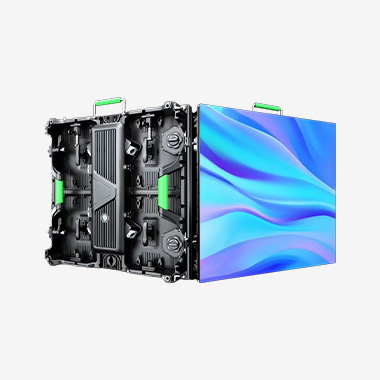
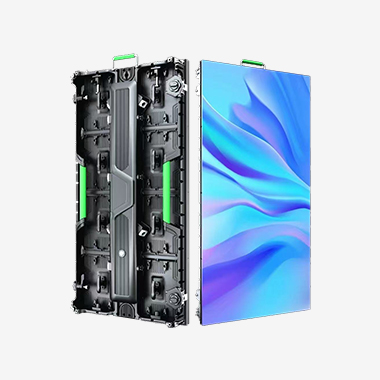
The foundation is the LED cabinet or panel. This is a compact, self-contained unit, typically housing a matrix of LEDs (e.g., 500x500mm or 500x1000mm).
Weight: The mantra is "grams per kilogram matter." Cabinets are constructed from lightweight yet incredibly strong materials. Die-cast magnesium alloy is the premium choice, offering an exceptional strength-to-weight ratio. High-grade aluminum alloys are also common. A standard 500x500mm fine-pitch panel might weigh as little as 8-10 kg, allowing two crew members to handle it easily and safely at height.
Durability: These panels are built to withstand shock, vibration, and occasional mishandling. The LED modules are shock-mounted within the frame to absorb impacts. The front face is often a durable, anti-glare mask that protects the delicate LED surface from direct contact during cleaning or handling.
Quick-Lock System: This is the most critical feature. Rental panels do not bolt together. They use a sophisticated, tool-less quick-lock system. This typically involves levers or cam locks on the rear of the panel that engage with corresponding receivers on adjacent panels. A well-designed system allows a single crew member to lock multiple panels together in seconds with a satisfying "click," ensuring perfect alignment and a seamless image without visible gaps between cabinets. Parabolic locking systems can even allow for the creation of seamless curved walls.
B. Sealing and Weatherproofing:
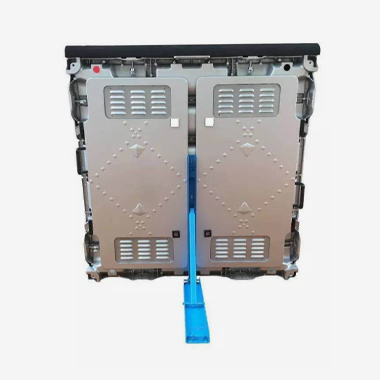
For outdoor concerts, weatherproofing is non-negotiable. A sudden downpour cannot stop the show or destroy hundreds of thousands of dollars worth of equipment. Rental panels are certified to at least IP65 (Ingress Protection). The "6" means it is completely dust-tight. The "5" means it can withstand water jets from a nozzle from any direction. Higher-end panels achieve IP66 (powerful water jets) or even IP67 (immersion up to 1m for 30 minutes). This is achieved through high-quality silicone gaskets at every joint and sealed connectors. Unlike fixed installations, rental walls are not actively cooled with internal fans, as this would break the IP rating. Instead, they rely on passive cooling, using the entire aluminum or magnesium cabinet as a heat sink to dissipate the heat generated by the LEDs and drivers.
C. The Supporting Ecosystem:
The panels are useless without a robust and flexible support structure.
Trussing and Rigging: LED walls are hung from a massive ground-supported or overhead truss system. The panels have integrated rigging points that allow them to be quickly and safely flown using certified shackles and motors. The entire structure must be engineered to handle not just the weight of the wall, but also wind load, which can be immense on a large, flat surface.
Power and Data Distribution: Concerts are a lesson in organized chaos. Power and data must be distributed neatly and efficiently across a vast, temporary structure. Rental systems use cable harnesses or cable management systems that run along the back of the wall, with power and data connectors daisy-chained from one panel to the next. This eliminates a tangled mess of individual cables and drastically speeds up setup and teardown. Systems are often redundant; a "hot backup" data line ensures the show continues even if a primary data cable fails.
Transportation: The entire system is designed to fit into its own tailored road cases. These are not simple boxes; they are reinforced, shock-absorbent, waterproof flight cases with custom foam interiors that cradle each panel securely. The cases are stackable and designed to maximize the use of space in a shipping truck. A well-organized truck pack is a thing of beauty and logistical efficiency for a rental company.
D. Front vs. Rear Service:
This is a key design consideration.
Front-Serviceable: Most modern rental panels are front-serviceable. This means a technician can replace a faulty module, power supply, or receiving card from the front of the panel using a lift, without having to dismantle the entire wall or access the rear. This is a huge advantage for making quick repairs during a tight show schedule.
Weight vs. Durability Trade-off: Engineers constantly battle the trade-off between weight and durability. Making a panel lighter can sometimes make it more vulnerable. The best rental products find the perfect balance, using advanced materials and intelligent design to achieve both goals without compromise.
In essence, the construction of a rental LED display is a masterpiece of industrial design and practical engineering. It is a product born from the demanding needs of the live events industry, where time is money, reliability is everything, and failure is not an option. Every bolt, every connector, and every gram of weight has been optimized for a life of constant motion and high-impact performance.
The operation of a concert LED wall is a real-time, high-stakes ballet of data and light, perfectly synchronized to the live performance on stage. It is a complex, distributed system that must be utterly reliable, flexible enough to handle last-minute changes, and capable of delivering flawless, stunning visuals in sync with the music. Its working principles are built for speed, precision, and redundancy.
The Signal Chain: From Media Server to Pixel
The Creative Hub: Media Server: The brain of the entire visual operation is not a simple video player; it is a powerful, specialized media server. This is a high-performance computer running software (e.g., disguise, Hippotizer, Green Hippo) designed specifically for live visual production. Its functions are critical:
Content Storage and Playback: It stores all the pre-rendered video content (VJ loops, animations, lyrics) for the show.
Real-Time Compositing and Effects: It can layer multiple streams of video, apply effects (zooms, color corrections, warping), and generate real-time graphics.
Pixel Mapping: It takes the output video signal and maps it onto the unique physical configuration of the LED wall, which is rarely a perfect rectangle. It can warp the image to fit curved surfaces, non-rectangular shapes, and even individual moving panels.
Synchronization: This is its most crucial role. The media server receives a timecode signal from the front-of-house audio console or a dedicated show control system. This timecode is the master clock that runs throughout the entire show. It ensures that every video cue, every lighting change, and every pyro explosion happens at the exact millisecond it is supposed to, perfectly synchronized with the music. The operator can trigger cues manually, but timecode allows for a perfectly repeatable, automated show night after night.
Signal Processing and Distribution: The media server outputs a high-resolution video signal (often via DVI or SDI). This signal is sent to a video processor or distribution amplifier. For a large, high-resolution wall, the signal may need to be "multiplied" or sliced into sections to be handled by multiple processors. The processed signal is then fed to sending cards.
The sending cards convert the video data into a format suitable for long-distance transmission to the LED panels themselves. This is done via network cables (CAT5e/6 or fiber optic) using protocols like Art-Net or sACN. Fiber optic is preferred for long runs from the media server (FOH position) to the LED walls on stage, as it is immune to electrical interference from the massive power cables running everywhere.
On-Panel Control: Receiving Cards and Drivers: The network signal is received by a receiving card mounted inside each LED panel. Each receiving card controls a specific section of the panel's LED modules. It takes the data packet meant for its section, processes it, and sends commands to the final link in the chain: the driver ICs.
The driver ICs are the muscle. They control the current to each individual red, green, and blue LED sub-pixel on the module. They use Pulse Width Modulation (PWM) to control brightness. They switch each LED on and off thousands of times per second. The ratio of "on" time to "off" time (duty cycle) within each cycle determines the perceived brightness. A high refresh rate (≥3840Hz) is essential to avoid flickering, especially when the video is being captured by broadcast cameras, which can be sensitive to lower refresh rates.
The Integration with Live Elements:
What makes a concert wall special is its integration with live feeds.
Live Camera Feeds: Video switchers are used to mix feeds from stage cameras and feed them into the media server or directly to the LED processor. This allows for live close-ups of the performer, which are then displayed on the wall behind them, creating an intimate connection with the vast audience.
Real-Time Interaction: Sometimes, visuals are generated or manipulated in real-time based on audio input. The music's amplitude or frequency can be analyzed and used to drive visual parameters, making the visuals "react" to the music live on stage.
Redundancy: The Show Must Go On
Every critical component in this chain is redundant. There is typically a backup media server running in perfect sync with the primary, ready to take over instantly if the main server fails. Critical data lines are run in redundant loops. This obsessive focus on redundancy is what allows these complex systems to perform night after night without a hitch, ensuring that the visual experience for the audience remains seamless and magical.
The use of massive outdoor LED walls in concerts offers transformative benefits that have redefined live music, but these advantages come with a parallel set of significant logistical, technical, and financial challenges that must be expertly managed.
Advantages:
Democratization of the Experience: This is the single greatest advantage. In a vast festival crowd or a large arena, only a fraction of the audience has a clear, close-up view of the performer. The LED wall acts as a giant equalizer, providing every single attendee, regardless of ticket price or location, with an intimate, detailed view of the artist's expressions, movements, and nuances. It brings the front row to the back of the field.
Unprecedented Creative Expression: The LED wall is a dynamic canvas that allows artists and show designers to create immersive visual worlds. It extends the album art, the music video aesthetic, and the artist's brand into the physical space of the concert. A different visual theme can be created for each song, deepening the narrative and emotional impact of the performance. It transforms a concert from a listening event into a full-body, audio-visual immersion.
Enhanced Show Dynamics and Flexibility: The content is not static. It can be changed instantly between tours, between shows, or even in real-time. This allows for last-minute updates, location-specific visuals, or special messages. For touring artists, it means one stage set can host an infinitely variable visual show, keeping the production fresh and engaging.
Integration and Synchronization: LED technology seamlessly integrates with other show elements. Live camera feeds can be composited onto the screen. Lighting cues can be synchronized with the video content to create a unified look. Pyro and other special effects can be triggered in perfect sync with on-screen explosions or events, massively amplifying their impact.
Visibility in All Conditions: Unlike projection, high-brightness LED walls are perfectly visible in broad daylight and under the powerful stage lighting of an evening show. This makes them the only viable solution for delivering high-quality visuals at outdoor daytime festival slots.
Challenges and Considerations:
Immense Cost and Logistics: This is the most formidable barrier. The costs are multifaceted:
Equipment Cost: A high-resolution, fine-pitch LED wall represents a multi-million dollar investment for a rental company.
Transportation Cost: Dozens of heavy, bulky road cases require multiple large trucks, drivers, and fuel.
Labor Cost: A specialized crew of LED/video technicians, riggers, and content operators is required for load-in, setup, operation, and load-out. This crew often works through the night and early morning.
Insurance: Insuring such high-value, fragile equipment on the road is extremely expensive.
Technical Complexity and Reliability: The system is a complex web of technology. A single point of failure—a faulty network switch, a corrupt video file, a broken fiber cable—can bring the entire visual show to a halt. While redundancy mitigates this, the pressure on the technical crew is immense. They must troubleshoot complex problems under extreme time pressure during a live event.
Rigging and Safety Concerns: Flying tons of expensive electronics over the heads of performers and crew is an inherently high-risk activity. It requires certified riggers, engineering sign-off on the structure, and constant vigilance. Safety is the absolute highest priority, and the process is governed by strict protocols and regulations.
Power and Thermal Management: A large LED wall consumes a staggering amount of power, often requiring a dedicated power distribution system separate from the stage lighting and audio. This power consumption also generates significant heat. While panels are passively cooled, a tightly packed wall in direct sun can still heat up, potentially leading to overheating and automatic shutdown if not properly managed.
Content Creation Demands: The hardware is useless without world-class content. Creating a full show's worth of high-resolution, original, and compelling video content is a major creative and financial undertaking. It often requires a team of video artists, animators, and designers working for months, making it a significant line item in a tour's budget.
In conclusion, the advantages of rental LED displays have made them non-negotiable for major concert tours, offering an unparalleled audience experience and creative potential. However, harnessing this potential requires navigating a gauntlet of logistical nightmares, technical pitfalls, and immense costs. Their successful deployment is a testament to the skill and coordination of the entire live events production ecosystem.
The application of rental LED in concerts has exploded far beyond a simple video backdrop. Creative directors and show designers are constantly finding new ways to integrate this flexible technology into the live experience, while technological trends promise even more breathtaking possibilities for the future.
Current Applications in Concerts:
Main Stage Backdrop: The most common use: a massive, often curved, wall behind the performers that serves as the primary visual surface.
Side Screens / IMAG (Image Magnification): Vertical or square screens on the sides of the stage dedicated to live camera feeds (IMAG) of the performers, ensuring sightlines for audiences at sharp angles.
Transparent LED Mesh: Used as a scrim that can be opaque when the LEDs are on but becomes transparent when they are off, allowing for dramatic reveals of the band or hidden stage elements.
Stage Floor / LED Deck: Panels built into the stage floor that the performers walk on. This creates a dynamic surface that can simulate water, fire, or abstract patterns, extending the visual world under the artists' feet.
Moving / Automation-Controlled Panels: Individual LED panels or "ladders" are hung from motorized hoists and can be programmed to move dynamically throughout the show—rising, lowering, tilting, or flying out over the audience to create a constantly evolving stage architecture.
Peripheral Set Design: Using LED to create other stage elements like columns, arches, or even replicas of physical objects (e.g., a giant LED robot), blending video and physical set design seamlessly.
Future Trends:
Higher Resolution and Transparency: The push for finer pixel pitches will continue, enabling massive walls with near-cinematic resolution even for the closest viewer. Transparent LED technology will become more robust and higher resolution, allowing for even more creative layered effects and stage designs that seamlessly blend physical and digital elements.
XR (Extended Reality) and Virtual Production: The technology pioneered in film and TV is coming to live events. By combining a live LED wall background with camera tracking, performers can be placed within virtual environments in real-time, with perfect perspective and lighting. This allows for stunning, impossible worlds to be created live on stage without the need for pre-rendered green screen backgrounds.
Interactivity and Audience Participation: LED walls will become more reactive. Using live data feeds, the visuals could react to the sound of the audience's applause. Through dedicated apps, audiences might vote on visual effects or have their social media posts displayed on the screen, creating a more participatory and connected experience.
Improved Sustainability: The massive power consumption of LED walls is a growing concern. Future trends will focus on:
More Efficient LED Chips and Drivers: Reducing power draw per pixel without sacrificing brightness.
Energy Monitoring and Management: Smart systems that optimize power usage based on content (e.g., dimming slightly during darker scenes).
Lightweighting and Logistics: Developing even lighter panels and more efficient truck packs to reduce the carbon footprint of transportation.
Holographic and 3D Effects: While true holograms don't exist for stage yet, advancements in projection mapping onto layered LED surfaces and content designed with stereoscopic techniques will create increasingly convincing 3D illusions that appear to leap out from the stage, adding a new layer of depth and wonder to the visual show.
The future of concert LED is not just about bigger screens, but about smarter, more integrated, and more sustainable technology. It will become a more intelligent and interactive component of the performance, blurring the lines between the real and the virtual and creating ever more immersive and unforgettable live experiences.
Conclusion
The outdoor LED rental display has cemented its role as an indispensable, transformative instrument in the arsenal of live music production. It is far more than a piece of staging equipment; it is a fundamental pillar of the modern concert experience, having irrevocably shifted the paradigm from a purely auditory event to a holistic, multi-sensory spectacle. Its impact on audience engagement, artistic expression, and the very business of touring is profound and enduring.
The conclusion is inescapable: the advantages offered by this technology are so powerful that they have become effectively mandatory for artists at the highest level. The ability to guarantee a perfect view for every fan, to extend creative vision into a dynamic visual narrative, and to create a unique, immersive world for each performance represents a value that outweighs the immense challenges and costs associated with it. The LED wall is no longer a luxury; it is a key differentiator that defines a major tour.
However, its successful deployment is a testament to the unseen heroes of the live events industry. The magic witnessed by the audience is the direct result of a colossal behind-the-scenes effort—the engineering of rugged yet lightweight panels, the logistical ballet of transportation, the meticulous planning of riggers, and the split-second decisions of video technicians. The technology's reliability is a hard-won achievement, born from relentless innovation focused on durability, weatherproofing, and redundancy.
Looking forward, the trajectory of this technology points towards even greater integration and intelligence. It is evolving from a passive display into an active, responsive component of the performance. The fusion of LED with virtual production, augmented reality, and interactive elements promises to further dissolve the boundary between the stage and the audience, between the real and the imagined.
In essence, the outdoor rental LED display is the ultimate canvas for live storytelling. It amplifies the music, magnifies the artist, and mesmerizes the crowd. It has raised the bar for what a live performance can be, creating shared, awe-inspiring moments that are captured not just on camera phones, but in the memories of everyone present. It is a powerful symbol of how technology, when harnessed with creativity and precision, can elevate art to new heights, ensuring that the live concert remains not just relevant, but more thrilling and impactful than ever before.


Copyright © 2026 Shenzhen Cogo Technology Co.,Ltd.
All Rights Reserved

 Previous article