




 Chat Now
An LED wall display screen represents the pinnacle of large-format visual technology, a dynamic canvas that transforms how information, art, and advertising are presented and consumed. Unlike traditional projection or liquid crystal display (LCD) video walls, an LED wall is a self-emissive system constructed from modular panels, each populated with a dense array of light-emitting diodes (LEDs) that serve as the individual pixels of a massive, seamless image. This technology has revolutionized industries ranging from broadcast media and live events to corporate communications and public art, establishing itself as the gold standard for high-impact, reliable, and scalable visual experiences.
The fundamental appeal of the LED wall lies in its core characteristics: unparalleled brightness, superior contrast ratios, and the innate ability to create a seamless, bezel-free image regardless of size. While a consumer television is a single, fixed-size unit, an LED wall is inherently modular. This means it can be custom-built to virtually any size or aspect ratio, from a small boardroom presentation screen to a breathtaking, curved facade enveloping an entire building. This scalability is its greatest architectural advantage, allowing it to adapt to the specific spatial and aesthetic requirements of any environment.
The evolution of LED technology has been the primary driver behind the proliferation of these displays. The industry has moved from the older, lamp-like Dual In-line Package (DIP) LEDs, which were suitable for large outdoor billboards but had low resolution, to the now-dominant Surface-Mounted Device (SMD) technology. In SMD design, the red, green, and blue LED chips are mounted as a single package onto a substrate, creating a compact, efficient pixel that enables much higher resolution and a wider viewing angle. The latest revolution is underway with Mini-LED and MicroLED technologies, which utilize microscopic LEDs that can be individually addressed and offer even greater density, efficiency, and performance, promising to bridge the gap between massive walls and consumer-sized displays.
The applications of LED walls are as diverse as their forms. In the broadcast and studio environment, they have made the green screen obsolete, allowing news anchors and weather presenters to interact with dynamic, high-resolution graphics in real time, creating a more engaging and believable viewer experience. In live events and concerts, they are the backbone of the spectacle, providing immersive backgrounds, live camera feeds, and synchronized visual effects that amplify the energy of the performance. The corporate world leverages them in lobbies as brand statements, in command centers for data visualization, and in boardrooms for impactful presentations. Retail and hospitality spaces use them to create atmosphere, advertise products, and wow customers. Finally, in the public sphere, they serve as digital landmarks, art installations, and vital information hubs in transportation centers.
However, the journey to deploying an LED wall is a significant undertaking. It is not a simple "plug-and-play" product like a television. It is a complex system integrating hardware, software, and structural engineering. Decision-makers must grapple with key specifications such as pixel pitch—the distance between the centers of two adjacent pixels, measured in millimeters. This single metric dictates the required viewing distance and the resolution achievable for a given size. A smaller pixel pitch (e.g., P1.2) allows for closer viewing and sharper images but comes at a higher cost and greater processing demand. A larger pitch (e.g., P10) is more economical and suitable for viewing from hundreds of feet away, such as on a highway billboard.
In essence, the LED wall is more than just a display; it is a transformative medium. It has redefined the possibilities of visual communication by breaking down the physical limitations of screen size and location. Its ability to deliver vibrant, bright, and seamless imagery anywhere, from sun-drenched outdoor plazas to controlled indoor studios, makes it an indispensable tool for anyone looking to make a powerful visual statement. As the technology continues to advance, becoming more accessible and higher fidelity, its role as the central nervous system of our visual world is only set to expand.
The design and construction of an LED wall display is a sophisticated exercise in electronic, mechanical, and thermal engineering. It is a system built from the ground up with modularity, reliability, and performance as its guiding principles. Unlike monolithic displays, an LED wall is an assemblage of interconnected components, each playing a critical role in the final image quality, durability, and functionality of the whole.
The foundational building block is the LED Module. This is a printed circuit board (PCB) onto which the LEDs, driver integrated circuits (ICs), and necessary connectors are mounted. The design of this module is paramount. Its size, typically ranging from 120x120mm to 500x500mm, is a trade-off between handling weight, cabinet size, and maintenance granularity. The most critical component on the module is the LED pixel itself, almost exclusively using SMD technology. Here, the red, green, and blue micro-chips are encapsulated together in a tiny resin package, which is then soldered directly onto the PCB. The density of these pixels on the module determines the native pixel pitch of the wall. The driver ICs are the unsung heroes; they receive data from the control system and precisely manage the current and switching for a bank of LEDs, often using Pulse-Width Modulation (PWM) to control brightness.
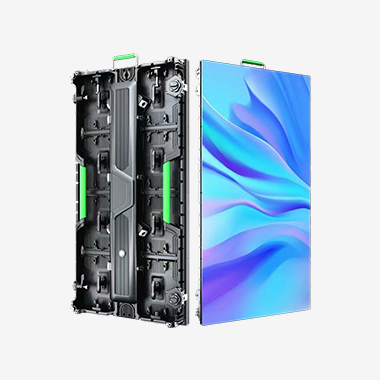
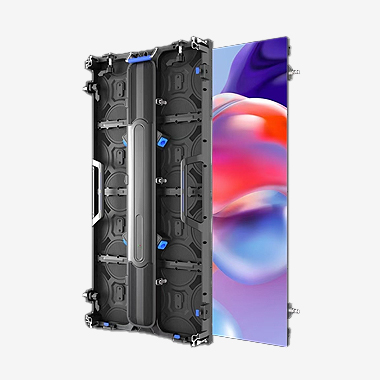
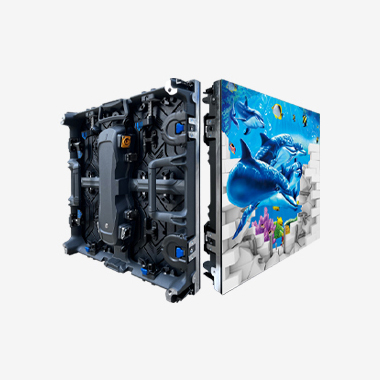
Multiple LED modules are then assembled into a robust structural unit known as a Cabinet (for large walls) or a Panel (for smaller, lighter installations). The cabinet is the workhorse of the LED wall, designed for rigidity, ease of installation, and protection of its delicate internal electronics. Made from die-cast aluminum or high-strength aluminum alloy, it provides excellent heat dissipation and structural integrity. Inside the cabinet, several key subsystems are integrated:
Power Supply Units (PSUs): These convert the incoming AC mains power to the low-voltage DC power required by the LEDs and electronics. Redundancy is crucial; high-end cabinets often feature multiple, hot-swappable PSUs in an N+1 configuration, meaning one extra unit is installed so the wall can continue operating even if one power supply fails.
Receiving Card: This acts as the local brain of the cabinet. It takes the data signal from the master controller, often via a network cable like CAT5e or fiber optics, and distributes the correct image data to the driver ICs on each module within its domain. Advanced receiving cards also handle tasks like brightness adjustment and basic diagnostics.
Cooling System: Heat is the enemy of electronic longevity and LED color consistency. Indoor cabinets may use passive cooling with large heat sinks, while high-brightness outdoor or rental cabinets require active cooling. This can involve strategically placed, quiet fans that draw air through a labyrinth of sealed pathways (to maintain weatherproofing) or, in extreme cases, fully integrated air conditioning units for maximum thermal management.
The complete display is created by mechanically locking these cabinets together into a unified canvas. The precision of the mechanical design is critical to achieving a seamless image. The mating surfaces between cabinets must be machined to micron-level tolerances to prevent any visible misalignment or "tiling" effect. The entire structure must be engineered to support its own weight, often spanning large areas and sometimes needing to withstand environmental factors like wind for outdoor installations.
For the wall to function, it requires a sophisticated Control System that operates in a hierarchical manner:
Video Processor (Sender): This is the central nervous system. It connects to the video source (e.g., a media server, computer, or camera feed). Its primary job is to take the incoming video signal, scale it to the exact native resolution of the LED wall, and perform critical color processing and calibration to ensure uniformity. It then splits the gigantic image data into smaller chunks, each corresponding to a specific cabinet, and transmits this data out over a network.
Synchronization and Calibration: To avoid tearing or lag, every cabinet must display its part of the image at the exact same moment. The processor sends synchronization signals to achieve this. Furthermore, a professional calibration process is undertaken where each individual LED's color and luminance output is measured and adjusted via software. This "dot correction" ensures that every one of the millions of LEDs performs identically, resulting in a perfectly uniform image without dark or discolored spots.
Finally, the entire system is managed by Software. A Content Management System (CMS) allows users to design layouts, schedule content, and control one or multiple walls remotely. Monitoring software provides real-time health data on temperature, power consumption, and individual module status, enabling predictive maintenance and rapid troubleshooting.
The construction is finalized with an Ingress Protection (IP) Rating. An indoor wall might be IP20 (protected from touch but not moisture), while an outdoor wall must be at least IP65 (dust-tight and protected against low-pressure water jets from any direction). Rental-grade cabinets for stage use often feature a lower IP rating but are built with extreme durability and quick, tool-less module replacement in mind.
In summary, the design of an LED wall is a masterclass in systems integration. It balances optical performance with electronic reliability, mechanical strength with thermal efficiency, and all of it is tied together with intelligent software and control. Every design choice, from the pixel pitch to the cooling method, directly impacts the wall's performance, application, and total cost of ownership.
The magic of an LED wall—transforming electrical signals into a breathtaking, seamless moving image—is governed by a complex yet elegant set of working principles. It is a symphony of data management, power delivery, and precision lighting, all orchestrated at incredible speeds. At its heart lies the fundamental process of additive color mixing, digitally controlled through pulse-width modulation.
The entire process begins with a video source—a laptop, media player, or live camera feed—outputting a standard video signal (e.g., HDMI, DisplayPort, or SDI). This signal is fed into the brain of the operation: the video processor (or sender card). The processor's first critical task is scaling. It must convert the input resolution (e.g., 1920x1080) to match the native resolution of the LED wall, which is a product of its physical pixel count. For a wall made of 10x10 cabinets, each with a 64x64 pixel module, the native resolution would be 640x640 pixels. The processor uses sophisticated algorithms to resize the image without introducing distortion or artifacts.
Next, the processor performs color space conversion and gamma correction. Video signals are typically sent in a color space like YCbCr, while LEDs operate in RGB. The processor converts the color data and then applies correction curves to ensure the colors displayed on the LED wall are accurate and consistent, compensating for the non-linear light output characteristics of the LEDs themselves.
The processed frame of video is then partitioned. The processor, which has a map of the entire wall's configuration, breaks down the complete image into smaller data tiles. Each tile corresponds exactly to the portion of the image that a specific cabinet in the wall must display. This partitioned data is then transmitted from the processor to the individual receiving cards located inside each display cabinet. This transmission is handled via high-speed network protocols over CAT5e/6 or fiber optic cables. Fiber is essential for long distances or large walls to prevent signal degradation and ensure data integrity across the entire system.
The receiving card in each cabinet is a dedicated microcontroller. Its job is to take its assigned data packet and distribute the commands to the numerous driver ICs on the LED modules. These driver ICs are the direct interface to the LEDs. Each driver IC can control the output of multiple channels (often 16 or more), with each channel connected to one or more LEDs.
The key to controlling the brightness of each LED is Pulse-Width Modulation (PWM). This is the most important technical concept in an LED wall's operation. Instead of varying the analog voltage to an LED (which is inefficient and leads to color shift), PWM works by rapidly switching the LED on and off at a constant current. The human eye perceives this rapid cycling not as flicker, but as a sustained level of brightness. The ratio of the "on" time to the total time of a single cycle (the duty cycle) determines the perceived intensity. For example:
A 50% duty cycle (on half the time, off half the time) is perceived as 50% brightness.
A 10% duty cycle is perceived as 10% brightness.
A 100% duty cycle is full, constant brightness.
The frequency of this switching, known as the refresh rate (e.g., 3840 Hz), must be very high to avoid visible flicker to the human eye and to prevent strobing effects when the display is recorded by video cameras. The driver ICs are responsible for executing these precise PWM signals for each LED based on the commands from the receiving card.
This entire chain of events—from the processor capturing a frame, to data partitioning, network transmission, receiving card decoding, driver IC execution, and LED illumination—must occur for every single frame of video. For a standard 60 frames per second (fps) video, this process repeats 60 times every second. Any delay or loss of synchronization would result in visible artifacts like screen tearing or lag.
An additional layer of intelligence is provided by ambient light sensors. Often integrated into the wall, these sensors measure the surrounding light levels and feed this data back to the video processor. The processor can then automatically adjust the overall brightness of the entire wall. This is crucial for energy savings (dimming the wall at night) and for maintaining optimal visibility (increasing brightness under direct sunlight), while also addressing community concerns about light pollution.
In essence, the working principle of an LED wall is a masterclass in real-time distributed computing. It transforms a standard video signal into a spatially and temporally precise series of electrical pulses that command a vast army of microscopic light sources. The seamless image we see is the result of perfect synchronization and data management across thousands of individual components working in perfect harmony.
Advantages
High Mobility and Flexibility: The most significant advantage of portable LED poster display screens is their high mobility and flexibility. They can be easily transported and set up at different event locations, allowing event organizers to quickly adapt to changing event requirements. Whether it's moving the screen from one exhibition booth to another or repositioning it within a venue to target a different audience, the portability of these screens offers unparalleled convenience. Additionally, the ability to update the content easily means that event organizers can customize the display to suit different stages of the event or to promote different products or services as needed.
Enhanced Visual Appeal: Portable LED poster display screens offer a much higher visual appeal compared to traditional printed posters. The bright, vivid colors, high - resolution images, and dynamic content capabilities of LED displays make them more eye - catching and engaging. They can effectively capture the attention of event attendees, even in crowded and noisy environments. For example, at a trade show, a portable LED poster screen displaying a high - definition video of a new product can attract more visitors to a booth compared to a static printed poster. The ability to display moving images and animations also adds an extra layer of interactivity and interest, making the content more memorable.
Cost - Effective and Sustainable: While the initial investment in portable LED poster display screens may be higher than that of traditional printed posters, they offer long - term cost savings. These screens can be reused for multiple events, eliminating the need to print new posters for each event. This not only reduces printing costs but also contributes to a more sustainable approach by minimizing paper waste. Additionally, the energy - efficient LED technology used in these screens helps to keep operating costs low, especially in battery - powered models where power consumption is a key consideration.
Efficient Information Dissemination: Portable LED poster display screens are highly effective for disseminating information at events. They can display a wide range of content, including event schedules, speaker bios, product details, and promotional offers, in a clear and concise manner. The ability to update the content in real - time ensures that attendees have access to the most current information. For example, if there is a last - minute change to the event schedule, the information can be quickly updated on the LED poster screen, ensuring that all attendees are informed promptly.
Challenges
Limited Battery Life: One of the major challenges with portable LED poster display screens, especially those with built - in batteries, is limited battery life. Depending on the screen size, resolution, and brightness settings, the battery may only last for a few hours of continuous operation. This can be a significant limitation for events that require the screen to be operational for an extended period, such as all - day conferences or multi - day festivals. Event organizers need to plan carefully and ensure that they have access to power sources for recharging the battery or consider using alternative power solutions, such as portable power banks or generators.
Technical Complexity: Operating and maintaining portable LED poster display screens can be technically challenging, especially for those without a technical background. Setting up the screen, connecting it to power sources or content devices, and troubleshooting any technical issues that may arise require a certain level of technical knowledge. Additionally, the software used for content management may have a learning curve, and event organizers need to ensure that they are proficient in using it to update and manage the displayed content effectively.
Content Creation and Management: Creating high - quality content for portable LED poster display screens can be a time - consuming and resource - intensive task. It requires a combination of creative skills, such as graphic design and video editing, and an understanding of the screen's capabilities and limitations. Event organizers need to ensure that the content is visually appealing, relevant to the event, and optimized for the screen's size and resolution. Managing the content schedule and ensuring that the right content is displayed at the right time also requires careful planning and organization.
Durability in Harsh Environments: While portable LED poster display screens are designed to be durable, they may still face challenges in harsh event environments. Exposure to dust, moisture, extreme temperatures, and physical impacts can potentially damage the screen or affect its performance. Event organizers need to take appropriate precautions, such as using protective covers or enclosures, to ensure that the screen remains in good working condition throughout the event.
The application landscape for LED wall technology is vast and continually expanding, driven by its core strengths of scalability, brightness, and seamless imagery. Simultaneously, the technology itself is in a period of rapid innovation, with several key trends poised to redefine its capabilities and open up new, previously impossible use cases.
Applications:
Broadcast and Virtual Studios: This is one of the most transformative applications. LED walls have replaced green screens in television studios, allowing news broadcasters, weather forecasters, and filmmakers to work within photorealistic or entirely fantastical digital environments in real-time. This creates a more authentic performance from talent and a more compelling viewing experience, as seen in high-profile productions like Disney's The Mandalorian.
Live Events and Entertainment: Concert tours, theater productions, and major award shows rely on LED walls as the central visual element. They create immersive stage backdrops, show live feeds to audiences with poor stage sightlines, display dynamic graphics synchronized with music, and generally elevate the production value to spectacular levels. Their modular nature also makes them ideal for rental and staging companies.
Corporate Environments:
Lobbies and Brand Centers: Large-format LED walls serve as dynamic brand statements, welcoming visitors with company messaging, showcasing products, or displaying stunning artistic content.
Command and Control Centers: In sectors like security, transportation, energy, and finance, LED video walls provide a seamless canvas for visualizing complex data networks, real-time metrics, surveillance feeds, and maps, enabling critical decision-making and situational awareness.
Boardrooms and Collaboration Spaces: Fine-pitch LED walls are replacing traditional projectors and LCD walls in executive boardrooms, providing stunning clarity for presentations and video conferences without disruptive bezels.
Retail and Experience Centers: Retailers use LED walls in store windows to create captivating advertisements that operate 24/7 regardless of ambient light. Inside, they enhance the customer experience, create "endless aisle" digital catalogs, and even enable virtual try-ons for products like clothing and makeup. Automotive showrooms use them as dynamic backdrops for new car reveals.
Public Venues and Digital Signage: Airports, train stations, and shopping malls use LED walls for wayfinding, flight information, advertising, and public service announcements. Their high brightness ensures readability in busy, well-lit environments. Museums and galleries employ them for interactive exhibits and digital art installations.
Architectural Facades and Exteriors: Large-pitch LED panels are designed to be integrated directly into the exterior of buildings, turning architecture into a dynamic, communicative medium. These digital facades can display art, respond to environmental data, or celebrate public events, transforming the night-time identity of a city.
Future Trends:
Mini-LED and MicroLED Adoption: The trend towards smaller LEDs is accelerating. Mini-LED improves current SMD technology with more densely packed and finer-pitch arrays. MicroLED is the next revolution, using microscopic, self-emissive LEDs that are transferred onto a substrate. This technology promises consumer-sized TVs with the brightness, contrast, and longevity of professional LED walls, and will enable even finer pitches for massive walls, further reducing the minimum viewing distance.
Transparent and Flexible Displays: Transparent LED technology allows a significant amount of light to pass through the display. This opens up applications for retail store windows where viewers can see both the product behind the glass and the digital overlay, or for augmented reality-like experiences in museum exhibits. Flexible LED substrates enable curved, cylindrical, and even free-form shapes, moving beyond flat walls to create waves, tunnels, and other organic structures.
Integration with AI and IoT: LED walls will evolve from display-only devices into intelligent sensory platforms. Integration with Artificial Intelligence (AI) and the Internet of Things (IoT) will enable:
Smart Content Optimization: AI algorithms could analyze audience demographics (anonymously via cameras) and change the displayed content in real-time to maximize engagement.
Predictive Maintenance: Sensors will monitor the health of every module, predicting failures before they happen and alerting technicians.
Data Visualization: Walls will automatically pull data from various IoT sensors and visualize it dynamically, creating living data dashboards.
Higher Refresh Rates and Improved HDR: As content evolves, so will display capabilities. We will see higher refresh rates (e.g., 120Hz+) for incredibly smooth motion rendering, especially for sports broadcasting and gaming applications. Advancements in High Dynamic Range (HDR) will provide a greater range of luminosity and color, making the images even more realistic.
Sustainability Focus: There will be a greater emphasis on reducing the carbon footprint of LED walls. This will involve developing more efficient LED chips and driver ICs that provide more light per watt of energy, using recyclable materials in construction, and implementing smarter power management systems that deeply dim the screen during low-ambient-light conditions.
The future of LED walls is one of convergence—with other technologies, with architecture, and with data. They are transitioning from being passive display surfaces to becoming intelligent, interactive, and integrated components of our built environment, reshaping how we work, learn, play, and connect with information.
Conclusion: The Defining Canvas of the Digital Age
The LED wall display screen has firmly established itself as the defining visual canvas of the digital age. It is a technology that has fundamentally broken the constraints of traditional display systems, offering a unique combination of scale, seamlessness, and brilliance that is unmatched by projection or LCD alternatives. Its journey from a niche technology for outdoor advertising to the centerpiece of modern broadcast, live events, and corporate communication is a testament to its transformative power and relentless innovation.
The core value proposition of the LED wall is undeniable. Its bezel-free, scalable nature allows it to become whatever the application demands—a window into a virtual world, a monumental data canvas, or an immersive artistic experience. Its self-emissive technology delivers unparalleled brightness and contrast, ensuring visual dominance in any environment, from the controlled darkness of a studio to the glare of the noonday sun. Its proven reliability and longevity make it a sound long-term investment, capable of delivering consistent performance for years on end.
However, its adoption is not a decision to be taken lightly. The significant initial investment, the technical complexities of installation and calibration, and the critical importance of pixel pitch and viewing distance require careful planning and expertise. It is a system, not just a product, and its success depends on a holistic approach that considers infrastructure, content strategy, and lifecycle management.
Yet, the trajectory of the technology is overwhelmingly positive. The advent of Mini-LED and MicroLED is poised to erase the last remaining drawbacks, pushing resolutions higher, enabling closer viewing distances, and improving efficiency. The trends towards transparency, flexibility, and intelligence are opening up new frontiers, integrating displays into the very fabric of our buildings and infusing them with the ability to react and adapt to their surroundings through AI and IoT.
In conclusion, the LED wall is more than a mere tool for showing videos; it is a platform for experience. It has redefined what is possible in visual storytelling, data communication, and audience engagement. It has become the medium of choice for those who require the highest impact, the greatest flexibility, and the most reliable performance. As the technology continues to evolve, becoming more accessible and capable, its role will only expand further. The LED wall is not just a feature of the modern landscape; it is actively shaping it, providing a dynamic and luminous interface between the digital and physical worlds. It is, without a doubt, the present and future of large-format visual communication.


Copyright © 2026 Shenzhen Cogo Technology Co.,Ltd.
All Rights Reserved

 Previous article