




 Chat Now
The urban landscape is no longer defined solely by architecture of brick and mortar; it is increasingly shaped by architecture of light and motion. At the forefront of this transformation is the large RGB LED display video wall, a technological marvel that has fundamentally redefined the practice of out-of-home (OOH) advertising. These colossal, dynamic canvases have moved far beyond the static billboard, creating a new medium that is immersive, captivating, and unprecedentedly powerful in its ability to command attention and communicate brand messages in the 21st century.
An RGB LED video wall is a large, flat-panel display system composed of modular units, each containing a dense array of light-emitting diodes (LEDs) in the three primary colors—Red, Green, and Blue. By varying the intensity of these colored LEDs, the display can produce millions of hues, creating vibrant, high-resolution images and video. The scale of these installations can range from a multi-story facade on a flagship store in Times Square to a massive freestanding structure along a busy highway, or an elegant, curved wall inside a luxury shopping mall.
The evolution of this technology has been dramatic. Early LED signs, prevalent in the 1990s and early 2000s, were characterized by low resolution, high pixel pitch (the distance between individual LEDs), and limited color fidelity. They were effective for simple text and basic graphics but fell short of delivering true video quality. The past decade, however, has seen a revolution in LED manufacturing, driven by demands for higher quality. The development of Surface-Mount Device (SMD) technology, where red, green, and blue chips are mounted onto a single substrate, allowed for much tighter pixel pitches, higher resolution, better color mixing, and wider viewing angles. This technological leap transformed LED walls from utilitarian information boards into premium advertising platforms capable of displaying stunning, cinematic content.
The core value proposition of a large LED video wall in advertising is its unparalleled ability to command attention. In an era of fragmented media consumption and smartphone distraction, capturing the public's gaze is the ultimate currency. A large-format, brightly lit, moving image has a profound visual hierarchy in any environment. It creates what advertisers call an "unavoidable" impact. The dynamic nature of video—with motion, storytelling, and dramatic visual effects—triggers a neurological response that static images cannot match, making it far more likely to be noticed and remembered.
Furthermore, these displays represent the ultimate fusion of the physical and digital worlds in advertising. They are physical structures rooted in a specific location, yet their content is purely digital, granting them immense flexibility. This digital nature shatters the limitations of traditional print advertising. Where a printed billboard might host a single ad for weeks, a digital LED wall can cycle through dozens of advertisements in a single hour. This capability allows for dayparting (showing coffee ads in the morning and restaurant ads in the evening), real-time updates (promoting a flash sale or reacting to a live event), and hyper-targeted messaging based on weather, traffic flow, or even data from passing vehicles.
The applications are vast and varied. They are the crown jewels of retail advertising, adorning flagship stores and shopping malls to create brand spectacles. They form the backbone of outdoor advertising in high-traffic urban centers and along major transportation corridors. They are essential in corporate settings, installed in lobbies and conference centers to communicate brand prestige and information. They also dominate public spaces like airports and stadiums, capturing the attention of captive, high-value audiences.
In essence, the large RGB LED video wall is more than just a screen; it is a strategic asset. It has elevated outdoor advertising from a passive, broad-reach medium to an active, flexible, and highly engaging communication channel. It offers advertisers the unique opportunity to tell compelling stories in spectacular fashion, turning public spaces into stages for brand experiences and establishing a new, dynamic layer of our visual culture.
The creation of a large-scale LED video wall for advertising is a complex feat of engineering that blends optical science, structural integrity, electrical systems, and software control. It is a process that moves from conceptual design to a physically robust installation capable of operating flawlessly 24/7, often in harsh environmental conditions. The goal is not just to create a beautiful image, but to build a reliable, maintainable, and safe structure that will serve as a long-term asset.
The process begins long before installation, with a critical Site Analysis and Conceptual Design phase. This involves understanding the environment: Is it indoor or outdoor? What are the typical viewing distances? What are the ambient light conditions (crucial for overcoming bright sunlight)? What is the physical structure it will be mounted to—a building facade, a steel framework, or an existing wall? Answers to these questions directly dictate the core technical specifications of the display, primarily the pixel pitch—the distance from the center of one LED pixel to the center of the next, measured in millimeters. A finer pitch (e.g., P2.5, P3.9) means higher resolution and is required for closer viewing distances (e.g., a mall atrium). A larger pitch (e.g., P10, P16) is suitable for longer viewing distances, like a highway billboard, and is more cost-effective.
The fundamental building block of the wall is the LED Module. This is a sealed, often waterproof, printed circuit board (PCB) housing a precise grid of LEDs. Most modern advertising displays use SMD (Surface-Mount Device) technology, where the red, green, and blue diode chips are packaged together and mounted directly onto the PCB's surface. This allows for a much tighter pixel pitch and better color consistency than older technologies. These modules also incorporate driver ICs that control the current to each LED.
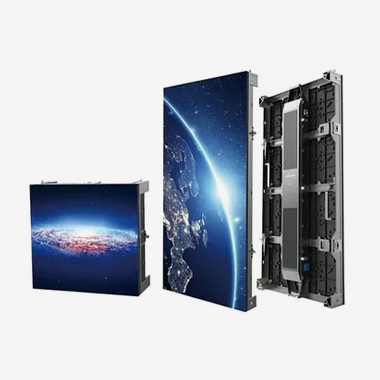
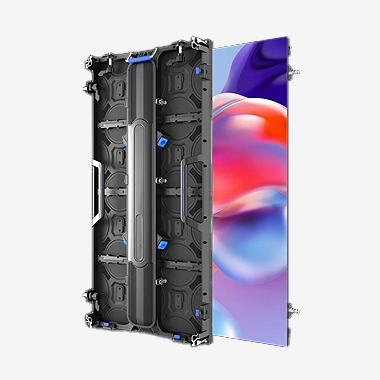
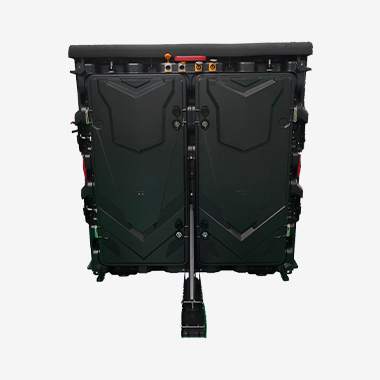
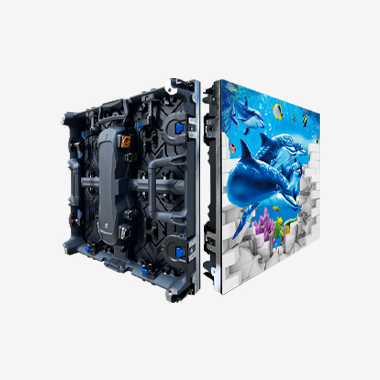
Multiple modules are then secured into a larger LED Cabinet. The cabinet is the structural chassis of the system. It is typically made of die-cast aluminum or heavy-gauge steel for strength and durability, yet designed to be as lightweight as possible. Cabinets are engineered with critical integrated systems:
Power Supply Units (PSUs): Convert incoming AC power to the low-voltage DC power required by the LEDs.
Receiving Cards: Act as the local brain for the cabinet, taking the data signal from the main controller and distributing it to the modules.
Cooling Systems: Essential for longevity. Outdoor cabinets often use IP65-rated fans for active air circulation, while some high-end indoor cabinets may be fanless, relying on passive heat sinks to avoid noise and dust intake.
For outdoor installations, weatherproofing is paramount. Every component, from the cabinet seals to the module masks, must be rated at least IP65 (Ingress Protection), meaning it is fully dust-tight and protected against water jets from any direction. This protects the sensitive electronics from rain, snow, dust, humidity, and corrosive pollutants.
The Structural Support System is a discipline in itself. The combined weight of dozens of cabinets, their support framework, and wind loading can impose massive stresses. For building-mounted displays, a structural engineer must analyze the building's integrity to ensure it can handle the dead and dynamic loads. Often, a custom-built steel truss or subframe is designed to distribute the weight evenly across the building's load-bearing elements. For freestanding "monument" signs, a full foundation and support pylon must be engineered to withstand not just the weight, but also extreme wind, and even seismic activity in some regions. Safety, particularly resistance to collapse, is the absolute priority.
Electrical and Data Infrastructure is another colossal undertaking. These displays are power-hungry. A large wall can require a dedicated high-amperage electrical feed from the grid, often with a backup generator or UPS for critical operation. Data transmission is equally vital. A high-bandwidth fiber optic cable is typically run from the control room to the display, carrying the uncompressed video signal. This signal is processed by a video controller or processor, which maps the content to the unique resolution and shape of the LED wall.
Finally, the entire system is managed by a Content Management System (CMS). This is the software interface that allows advertisers to schedule playlists, manage content (uploading new ads, removing old ones), monitor the display's status (temperature, power usage, faulty modules), and even control brightness levels remotely. The CMS is the command center that brings the digital canvas to life, ensuring the right message is shown at the right time.
The construction phase is a meticulously coordinated effort involving riggers, electricians, and IT specialists. Cabinets are hoisted into place, bolted to the support structure, and connected sequentially to power and data. The final step is calibration, where software is used to ensure color and brightness uniformity across every module, creating a seamless, monolithic image. The result is a resilient, brilliant, and intelligent advertising machine built to perform in the real world.
The operation of a large LED video wall is a complex, real-time symphony of data processing, electrical engineering, and optical physics. It is a process that transforms a digital video file into a physical emission of light across millions of individual diodes, synchronized perfectly to create a cohesive, moving image. Understanding this process reveals the intricate technology behind the dazzling spectacle.
The journey of a single frame of video begins with content creation. An advertisement is designed on a computer, but unlike a TV commercial, it must be crafted for a specific, often non-standard, resolution—the native pixel grid of the LED wall itself. This file, along with others, is uploaded to the Content Management System (CMS) software, which schedules it into a playlist.
When it's time for playback, the CMS sends the scheduled content to the heart of the system: the video processor or controller. This dedicated hardware device is far more powerful than a standard media player. Its critical functions include:
Input Handling: Accepting video signals from various sources (PCs, media players, live feeds via SDI/HDMI).
Scaling and Resolving: Adjusting the incoming source's resolution to match the precise native resolution of the LED wall. A 4K video signal (3840x2160) might need to be scaled to fit a wall that is, for example, 2560 pixels wide by 1440 pixels high.
Color Management & Calibration: Applying a color profile to ensure the output matches the intended creative vision. The processor uses calibration data gathered during installation to correct for minute color variances between different LED modules and cabinets, ensuring perfect uniformity.
Video Mapping: The processor holds a "map" of the entire wall's physical layout. It deconstructs the final image into data packets, each destined for a specific cabinet and module within the array.
This processed data is then transmitted at extremely high speeds. Given the massive bandwidth required—a single frame for a large wall can contain gigabytes of data—the link from the processor to the display is almost always fiber optic. Copper cables cannot support the required data rates over long distances without signal degradation. The fiber optic cable runs to a data distribution switch located near the display.
At the display, the data is fed into the receiving cards housed within each LED cabinet. Each receiving card is responsible for a specific section of the wall (often one or two modules). It takes the stream of data, interprets it, and distributes commands to the driver integrated circuits (ICs) located on the individual LED modules.
The driver ICs are the workhorses that directly control the light. Each IC controls a row or a small block of pixels. It does not control brightness by varying voltage (which would lead to color shifting); instead, it uses a technique called Pulse Width Modulation (PWM). PWM rapidly switches each LED on and off thousands of times per second. The human eye perceives this rapid cycling not as flickering, but as a sustained glow. The ratio of "on" time to "off" time within each cycle determines the perceived brightness. A 10% duty cycle appears dim, while a 90% duty cycle appears very bright. By independently controlling the PWM for each red, green, and blue LED in a pixel, the driver IC can create any color at any brightness level.
This entire chain—from processor to receiver card to driver IC—must operate with near-zero latency to ensure perfect synchronization. If the data was delayed even slightly, you would see visible tearing or lag across the screen. The refresh rate of the display (how many times per second the image is redrawn) is also critical. High refresh rates (≥3840 Hz) are essential for eliminating flicker during video capture (a phenomenon known as the "rolling shutter" effect) and for producing smooth motion, especially for fast-moving content like sports cars or action sequences.
Simultaneously, a separate system manages power delivery. High-current power supplies within the cabinets provide stable, clean DC power to the LEDs. The brightness of the wall is also dynamically managed. An ambient light sensor is often connected to the system, feeding data back to the processor or CMS. This allows the wall to automatically increase its brightness during bright daylight to maintain visibility and, crucially, dim itself at night to reduce energy consumption and light pollution, creating a more community-friendly installation.
In summary, the working principle is a masterclass in coordination. It involves high-level software for management and scheduling, powerful hardware for video processing, robust networking for data transmission, and precision electronics at the pixel level to convert digital commands into physical light, all working in harmony to create the vibrant, dynamic advertisements that define the modern urban visual experience.
The adoption of large LED video walls has propelled the out-of-home (OOH) advertising industry into a new era, offering transformative benefits for advertisers, media owners, and audiences alike. However, this powerful medium also comes with a unique set of significant challenges and costs that must be carefully navigated.
Advantages
Unparalleled Impact and Attention Command: The primary advantage is sheer impact. A large-format, high-brightness, dynamic video display is virtually impossible to ignore. It dominates its visual environment, cutting through the clutter of urban landscapes and the noise of digital advertising on personal devices. Motion and video trigger subconscious neurological responses that static images cannot, leading to significantly higher recall rates and brand recognition.
Unmatched Flexibility and Dynamic Content: This is a revolutionary shift from print. The content on an LED wall is limited only by the creativity of the advertiser and can be changed instantly, remotely, and as often as desired. This enables:
Dayparting: Running breakfast ads in the morning, lunch specials at noon, and entertainment ads in the evening.
Real-Time Marketing: Changing messaging based on live events, weather (e.g., an ad for hot chocolate on a cold day), traffic conditions, or even social media trends.
A/B Testing: Running different versions of an ad to see which performs better.
Multiple Revenue Streams: A single physical structure can host dozens of different advertisers throughout the day, maximizing revenue for the media owner.
Superior Creative Potential: LED walls enable truly cinematic storytelling. Advertisers can use high-resolution video, stunning animation, and dramatic visual effects to create emotional connections with audiences. The scale and brilliance of the medium allow for brand creative that is more immersive and memorable than any other OOH format.
High-Value Audience Targeting: Locations are chosen strategically to capture specific demographics. A wall in a financial district targets professionals, one in an airport targets travelers with high disposable income, and one in a sports arena targets passionate fans. This allows for precise, contextual advertising.
Potential for Measurability and Interaction: While still developing, LED walls are increasingly part of a data-driven ecosystem. Through integration with mobile data, Wi-Fi pings, or camera systems (anonymized and aggregated), advertisers can gain insights into audience size, dwell time, and even demographic breakdown. Some interactive walls use motion sensors or mobile apps to allow the audience to engage with the content directly.
Modern and Prestigious Brand Image: Installing a state-of-the-art LED wall projects an image of innovation, success, and technological sophistication. For a brand advertising on it, it associates them with these qualities. For a building owner, it modernizes the property's facade and creates a significant new revenue stream.
Challenges and Drawbacks
Prohibitively High Capital and Operational Costs: The initial investment is enormous. Costs include the LED modules themselves, the structural support system, power infrastructure, high-end video processors, and installation by specialized crews. This is compounded by high operational costs due to massive electricity consumption and ongoing maintenance contracts.
Technical Complexity and Maintenance Demands: These are complex electronic systems operating in harsh conditions. Components will fail. Individual LEDs can burn out, power supplies can die, and data connections can degrade. Identifying and replacing a single faulty module on a 20-story wall requires specialized equipment and skilled technicians, leading to potential downtime and high maintenance costs. Reliability is a constant concern.
Content Management Burden: The flexibility of the medium requires constant feeding. Advertisers and media owners must invest in a continuous pipeline of high-quality, high-resolution video content tailored to the screen's unique aspect ratio. This requires in-house or agency resources for creative development, a robust CMS, and a dedicated operator to manage the playlist and troubleshoot content issues.
Regulatory and Community Relations Hurdles: Permitting for large LED structures can be a lengthy and difficult process. Many municipalities have strict zoning laws regarding size, location, brightness, and even content (e.g., prohibiting flashing animations). Light pollution is a major concern for residents, necessitating automatic brightness dimming schedules to avoid complaints and legal issues.
Potential for Public Backlash and "Visual Pollution": While captivating to advertisers, some critics and community groups view proliferating LED walls as a form of "visual pollution" or "commercial graffiti" that detracts from the architectural character of a city and contributes to sensory overload. Balancing commercial interests with public aesthetics is an ongoing challenge.
Dependence on Location and Viewing Conditions: The value of the installation is entirely dependent on its location achieving high traffic counts and visibility. A wall with obstructed sightlines or in a declining area will fail. Furthermore, bright sunlight can wash out displays that aren't bright enough, while poorly calibrated displays can look terrible in the dark.
In conclusion, the advantages of LED video walls make them arguably the most powerful tool in modern OOH advertising. However, they represent a high-stakes, capital-intensive venture. Success is not guaranteed by the technology alone; it requires strategic location selection, meticulous engineering, thoughtful operational management, and a deep commitment to creating content worthy of the magnificent canvas.
The application of large RGB LED video walls is vast and extends far beyond the traditional notion of a roadside billboard. They are versatile tools deployed across numerous environments to achieve specific advertising and branding objectives. Simultaneously, emerging technological and creative trends are continuously pushing the boundaries of what these digital canvases can do, promising an even more integrated and interactive future.
Diverse Applications
Urban Advertising & Times Square-style Spectacles: The most iconic application. Large-scale installations on building facades in high-density urban centers create landmark advertising locations. They are designed for maximum impact on pedestrian and vehicular traffic, often becoming tourist attractions in their own right.
Retail & Point-of-Sale Advertising: Shopping malls, flagship brand stores, and auto dealerships use LED walls to create immersive brand experiences. They showcase products in dynamic detail, promote special offers, and enhance the ambient environment of the retail space, directly influencing purchasing decisions at the point of sale.
Transportation Hubs: Airports, major train stations, and subway platforms are prime locations. They capture the attention of a captive, high-value audience with time to spare. Advertising here can be geared towards travel, luxury goods, luxury goods, and destination marketing.
Corporate Architecture & Branding: Modern corporate headquarters use LED walls in their lobbies as dynamic art pieces, company mission statements, or impressive tools for client presentations. They communicate innovation and corporate strength.
Stadiums and Arenas: While used for game action and replays, the fascia and ribbon boards are prime digital real estate for sponsors. They target a passionate, engaged audience with advertising that feels like part of the event itself.
Control Rooms and Broadcast Studios: While not for public advertising, this application highlights the technology's reliability. LED walls are used as backdrops in news studios and in command centers for data visualization, where clarity and reliability are paramount.
Future Trends
Finer Pixel Pitches and Transparent LED: The relentless pursuit of higher resolution will continue. MicroLED technology, which uses microscopic LEDs that are self-emissive, promises finer pitches, higher brightness, better reliability, and lower power consumption. This will enable even larger walls with close-viewing resolution. Furthermore, transparent LED displays will become more common, allowing for advertising on store windows without completely obscuring the interior view, blending digital content with the physical store environment.
Integration with Augmented Reality (AR) and AI: The future lies in blending the physical and digital. AR apps on smartphones could allow users to point their camera at an LED wall and unlock interactive games, additional product information, or exclusive offers, creating a dual-layer experience. Artificial Intelligence (AI) will be used for optimization: analyzing traffic and demographic data in real-time to serve the most relevant ad; using computer vision (anonymously) to gauge audience engagement and adjust content; and predictive maintenance by analyzing operational data to flag components before they fail.
Programmatic Buying and Data Integration: The digital nature of LED walls will integrate with the programmatic advertising ecosystem. This will allow for the automated, real-time buying of ad space on digital billboards based on data triggers. For example, a ride-sharing app could automatically bid to display an ad on a wall in a specific neighborhood the moment a concert ends and it starts raining, targeting attendees seeking a ride home.
3D and Holographic Effects: Advanced content creation techniques, including parallax scrolling and AI-generated 3D models, are being used to create optical illusions of depth on flat LED screens. These "3D without glasses" advertisements are incredibly effective at stopping viewers in their tracks. The next step is true light-field displays that could create genuine holographic imagery, revolutionizing creative possibilities.
Sustainability Focus: Energy consumption is a major concern. Future trends will focus on greater efficiency through:
Improved LED Chip Efficiency: Generating more light per watt of power.
Smart Power Management: More sophisticated ambient light sensors and scheduling to minimize power use during low-traffic hours.
Sustainable Materials: Using recyclable materials in cabinets and reducing the use of rare-earth elements in manufacturing.
Hyper-Contextual and Interactive Content: Walls will become more responsive to their environment. Imagine a display that changes its color scheme to match the car that stops in front of it, or a fashion ad that allows a pedestrian to use a gesture control to change the model's outfit on the screen. This level of interaction transforms advertising from a broadcast into a dialogue.
The LED video wall is evolving from a broadcast medium into an interactive, intelligent, and integrated platform. Its applications will continue to expand as technology makes it more affordable, efficient, and capable. The future of advertising lies not just on these screens, but in how they connect with the world around them and the people who view them.
6. Conclusion: The Defining Medium of Modern Advertising
The large RGB LED display video wall has irrevocably transformed the advertising landscape. It has successfully bridged the gap between the mass-reach, broad-impact nature of traditional out-of-home media and the dynamic, flexible, and measurable nature of digital advertising. In doing so, it has established itself not merely as a tool, but as a defining medium for brand communication in the 21st century, capable of creating moments of awe and engagement that are unmatched in scale and spectacle.
Its ascendancy is built on a foundation of undeniable strengths. The ability to command attention in an increasingly distracted world is its primary currency. The flexibility to change messaging in real-time, to react to context, and to serve multiple advertisers on a single structure has unlocked unprecedented value and relevance for media owners and brands alike. Furthermore, it provides a canvas for creative storytelling that is both monumental and cinematic, allowing brands to forge emotional connections with audiences in public spaces, turning the city itself into a theater for brand experiences.
However, this power comes with significant responsibility and challenge. The high capital and operational investment required makes it a high-stakes venture, accessible only to those with substantial resources. The technical complexity demands rigorous engineering and proactive maintenance to ensure the brilliant spectacle does not succumb to downtime and dead pixels. Perhaps most importantly, the industry must navigate the societal and ethical considerations of its footprint. Issues of light pollution, visual clutter, and data privacy (as interactive features evolve) require thoughtful regulation, self-policing, and a commitment to being a good community stakeholder. The goal must be to enhance the urban experience, not detract from it.
Looking forward, the trajectory of LED video wall technology is one of deeper integration and intelligence. It is evolving from a one-way broadcast channel into an interactive node in a connected ecosystem. Trends like finer pitch MicroLEDs, transparent displays, AI-driven content optimization, and AR integration point towards a future where these displays are more seamless, more responsive, and more personalized. They will not just show ads; they will provide utility, information, and immersive experiences, blurring the lines between advertising, art, and urban infrastructure.
In conclusion, the large RGB LED video wall is far more than a digital billboard. It is a testament to technological innovation, a powerful engine for economic value, and a potent tool for creative expression. It has redefined what is possible in advertising, offering a unique blend of public impact and digital precision. As the technology continues to advance and become more integrated into the fabric of our daily lives, its role will only grow more significant. It has cemented its place as a cornerstone of modern marketing—a brilliant, dynamic, and indispensable medium for any brand that aims to make a truly lasting impression.


Copyright © 2026 Shenzhen Cogo Technology Co.,Ltd.
All Rights Reserved

 Previous article