




 Chat Now
The event industry is a dynamic realm of experience creation, where ambiance, information, and emotion are meticulously curated. At the heart of this modern transformation lies a technological marvel: Indoor LED Stage Lighting Signage. Far more than simple displays or static backdrops, these systems represent a convergence of art and technology, serving as the versatile, dynamic, and immersive digital canvas upon which event narratives are painted. This overview delves into the essence of this technology, its evolution, and its fundamental role in shaping contemporary events.
Indoor LED (Light Emitting Diode) signage for stages is a form of solid-state lighting that utilizes an array of tiny LEDs as pixels to form a large-scale video display. Unlike their outdoor counterparts, which are built for high brightness to combat sunlight, indoor LED displays are engineered for superior color reproduction, higher resolution, and closer viewing distances. Their application has moved from being a novel luxury to an industry standard, integral to the production value of events ranging from corporate conferences and product launches to music concerts, theatrical performances, and award ceremonies.
The historical context of stage design is crucial to appreciating the impact of LED technology. Traditionally, stages relied on physical sets, painted backdrops, projected images, and conventional lighting gels to create atmosphere and setting. While these methods have their charm and are still used, they are inherently static and limited. Changing a physical set is time-consuming and noisy; projections require controlled ambient light and specific screen surfaces; and lighting gels offer a fixed color. LED signage shattered these limitations. It introduced a paradigm of dynamic visuals: a backdrop that can transform from a serene forest to a bustling cityscape in milliseconds, a data wall that can animate complex information in real-time, or a light source that can change its color, intensity, and pattern with software precision.
The core components of an indoor LED stage system include the LED modules (the individual tiles containing the LEDs), the cabinet structure that holds these modules, the power supply units, the receiving cards that process data for each module, and the control system. This control system is the brain, typically consisting of a video processor and specialized software that allows designers to send content—pre-recorded videos, live feeds, graphics, or data visualizations—seamlessly to the display.
The versatility of LED stage signage is its greatest asset. It functions in multiple, overlapping roles:
Visual Backdrop: It is the primary set piece, providing the contextual environment for the event. For a concert, it can amplify the artist's brand with custom visuals; for a play, it can create immersive, moving environments impossible to build physically.
Informational Hub: At corporate events, it is the central tool for communicating key messages, displaying presentations, graphs, quotes, and live social media feeds, ensuring the audience's focus remains on the stage.
Atmospheric Lighting: Modern LED panels are not just for video; they are powerful lighting instruments. They can wash the stage in any color, create intricate patterns of light, and interact with other stage lighting fixtures to create a unified visual experience.
Augmented Reality (AR) Enabler: By serving as a high-resolution, brightness-controlled surface, LED walls are the perfect foundation for AR graphics. Virtual elements can be keyed and composited in real-time onto the screen, appearing to interact with the physical stage and performers, a technique famously used in broadcast shows like The Mandalorian.
The adoption of indoor LED signage has fundamentally altered the workflow of event production. It demands a new breed of creative professionals—video content creators, LED screen programmers, and real-time graphics operators—who work in tandem with lighting designers, set builders, and show directors. The pre-production process now involves extensive content creation, pixel-mapping, and cueing alongside traditional set and lighting design.
In conclusion, indoor LED stage lighting signage is the cornerstone of the modern event landscape. It has evolved from a simple display tool into an integrated, multifunctional system that blends set design, lighting, and video production into one cohesive element. It empowers creators to build deeper, more responsive, and more memorable experiences, breaking down the barriers between the physical and the digital and setting a new standard for what is possible on a stage. As we explore its design, principles, and applications in the following sections, it becomes clear that this technology is not just about showing pictures; it's about crafting worlds.
The seamless, breathtaking visuals witnessed on an indoor LED screen are the result of meticulous engineering and sophisticated design choices. The construction of these systems is a complex interplay of electronics, mechanics, and software, all aimed at achieving reliability, visual fidelity, and versatility. This section deconstructs the anatomy of an indoor LED display, exploring the key components, design considerations, and technical specifications that define its performance.
The Core Building Block: The LED Module
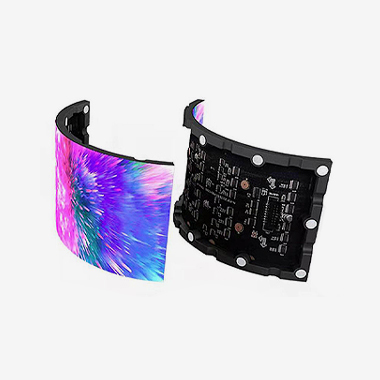
At the heart of any LED display is the module. This is a printed circuit board (PCB) that houses the essential components:
LEDs (Light Emitting Diodes): These are the pixels. Indoor displays primarily use SMD (Surface-Mount Device) technology, where red, green, and blue (RGB) LED chips are mounted directly onto the PCB into a single package. This allows for a tighter pixel pitch and better color mixing. The quality of the LED chips (from brands like Nichia or Epistar) directly impacts brightness, color accuracy, and longevity.
Drive ICs (Integrated Circuits): These chips control the current to each LED, determining their intensity. High-quality drive ICs allow for higher refresh rates (reducing flicker) and better grayscale performance (smoother color transitions).
PCB: The board itself provides the electrical connections between all components. It must be designed for efficient heat dissipation to prevent LED degradation over time.
The Structural Framework: The Cabinet
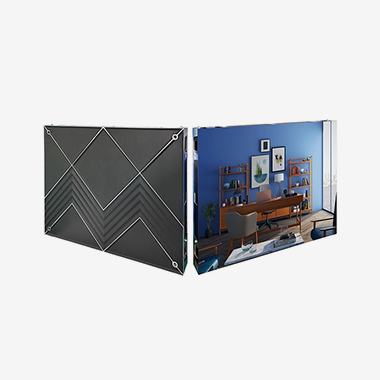
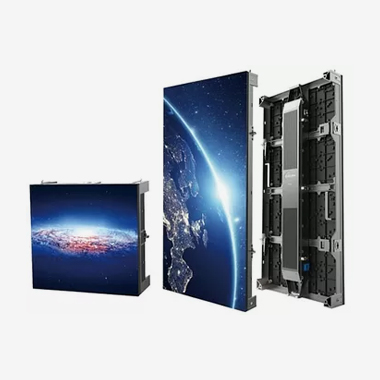
Modules are mounted into a larger structural unit called a cabinet or panel. Cabinets are typically made from die-cast aluminum or magnesium alloy for a perfect balance of strength, lightness, and heat dissipation. Key design features of a cabinet include:
Rigidity and Precision: Cabinets must lock together with sub-millimeter accuracy to avoid visible lines or seams (a phenomenon known as "tiling") that would break the illusion of a single, continuous image.
Cooling System: Indoor cabinets often use passive cooling (heat sinks integrated into the design) as they operate at lower brightness levels than outdoor units. However, high-end, high-density screens may incorporate quiet fans for active cooling.
Quick-Release Mechanisms: For rapid setup and breakdown—a critical factor in the event industry—cabinets feature tool-less locking systems that allow crews to build large walls quickly and safely.
Curvature: Modern cabinets are designed to allow for both flat and curved configurations. Rigid curved cabinets exist for permanent installations, but for rental, cabinets with adjustable curvature (e.g., 0° to 90° bending) are invaluable for creating immersive, wrap-around environments.
The Critical Metric: Pixel Pitch
The single most important design specification for an indoor LED screen is its pixel pitch. This is the distance, in millimeters, from the center of one LED pixel to the center of the adjacent pixel. A smaller pixel pitch means more pixels are packed into a given area, resulting in a higher resolution and a sharper image.
The choice of pixel pitch is a fundamental trade-off between resolution, cost, and viewing distance. The general rule of thumb is:
Close Viewing Distance (e.g., 3-6 meters): Requires a fine pixel pitch (P1.2 to P2.5). Used in broadcast studios, corporate events with front-row seats, and high-end theatrical productions.
Medium Viewing Distance (e.g., 6-15 meters): A pitch of P2.5 to P4.0 is standard for most concerts, conferences, and mid-size venues.
Long Viewing Distance (e.g., 15+ meters): A larger pitch (P4.0 to P6.0) is acceptable, as the human eye cannot discern individual pixels from far away. This is common in large arena shows.
Supporting Systems: Power and Data
Power Supply Units (PSUs): These convert AC mains power to the low-voltage DC power required by the LEDs and electronics. Reliability and efficiency are paramount. Redundant power supplies are often used in critical event applications to prevent single points of failure.
Receiving Cards: Mounted inside each cabinet, these cards receive the video data signal from the control system and distribute it to the individual modules and drive ICs. They are the crucial link between the processor and the LEDs.
Hubbing and Cabling: A robust network of data and power cables connects the cabinets. "Hubbing" is a common technique where multiple cabinets are daisy-chained from a single point, reducing cable clutter and simplifying setup.
The Control Ecosystem: Brain and Nervous System
The hardware is useless without the control system. This consists of:
Video Processor: This is the brain. It takes one or more video input signals (e.g., from a media server, laptop, or camera) and processes them for output to the specific resolution and layout of the LED wall. It handles tasks like scaling, color calibration, image cropping, and redundancy switching. Leading processors from companies like Novastar, Brompton, and Colorlight are industry standards.
Control Software: Software interfaces allow the LED technician or video programmer to configure the wall. This includes mapping the physical cabinet layout within the software, performing color and brightness calibration across all modules (to ensure uniformity), creating preset configurations, and troubleshooting.
Design Considerations for Events: The Rental Market
A significant portion of indoor LED for events is part of the rental and staging market. This imposes unique design requirements:
Weight: Lighter cabinets are easier, faster, and cheaper to transport and hang from trussing.
Durability: They must withstand the rigors of constant transportation, setup, and teardown.
Ease of Use: Quick-setup mechanisms, intuitive software, and comprehensive error reporting (e.g., LEDs that identify faulty sections) are essential for working under tight event timelines.
Versatility: Rental cabinets are designed to be modular and flexible, able to form various shapes and sizes for different clients and events.
In summary, the design and construction of indoor LED stage signage is a feat of modern engineering. Every component, from the microscopic LED chip to the large-scale structural cabinet and the complex software, is optimized to create a reliable, high-resolution, and adaptable visual canvas. Understanding this intricate design is key to appreciating the technology's capabilities and its transformative power in the event space.
The magic of an LED wall—transforming electrical signals into a vibrant, moving image—is not magic at all, but a precise and fascinating scientific process. The working principles of indoor LED stage signage involve a coordinated symphony of physics, electronics, and data management. This section breaks down this process into a clear sequence, from content creation to the emission of light from each individual diode.
Step 1: Content Creation and Input
The journey begins with digital content. This can be:
Pre-rendered Video: Created in software like Adobe After Effects or Cinema4D, these are video files (.mov, .mp4) designed to play back in sync with the event.
Live Feed: Signals from cameras, computers (for PowerPoint or Keynote), or media players.
Real-Time Graphics: Generated on the fly by media servers like disguise, Green Hippo, or Notch. This allows for interactive content that can react to sound, music, or other inputs.
This content is typically output from its source as a standard video signal (e.g., HDMI, SDI, or DisplayPort) at a standard resolution (e.g., 1920x1080p).
Step 2: Signal Processing and Pixel Mapping
The raw video signal is rarely the perfect size or shape for the unique canvas of the LED wall. This is where the video processor becomes indispensable. It performs several critical functions:
Scaling: It takes the input resolution and scales it up or down to match the native resolution of the LED wall. The native resolution is the total number of horizontal and vertical pixels across the entire display. For example, a wall made of 10x5 cabinets, each with a resolution of 128x128 pixels, has a native resolution of 1280x640 pixels.
Cropping and Layout Mapping (Pixel Mapping): This is the most crucial task. The processor must know the exact physical layout of the LED cabinets. Using configuration software, the technician has already created a map that tells the processor: "Cabinet A1 is at the top-left, A2 is to its right, B1 is below A1," and so on. The processor then takes the scaled video image and literally cuts it up, sending the correct portion of the image to each corresponding cabinet. It can also handle non-standard layouts like curves, angles, and even 3D shapes like cubes or pyramids.
Color & Brightness Calibration: To ensure visual uniformity, the processor applies calibration data to each cabinet or even each module. This data, gathered during a prior calibration process, corrects for minute differences in color and brightness between individual LEDs and modules, ensuring a perfectly consistent image across the entire wall.
Image Enhancement: Processors often apply algorithms to improve sharpness, reduce noise, and adjust color curves for optimal viewing on an LED surface.
Step 3: Data Transmission
The processed video data is now ready to be sent to the wall. The processor outputs the signal via specialized ports (often DVI or HDBaseT) using proprietary protocols that carry both video data and control commands. This signal is fed into a series of sending cards (usually located near the processor), which then distribute the data to the receiving cards mounted inside each LED cabinet via CAT5e/CAT6 or fiber optic cables. Fiber optic is preferred for long runs and complex setups as it is immune to electromagnetic interference.
Step 4: On-Board Data Management (The Receiving Card)
The receiving card in each cabinet is a mini-processor. It takes its portion of the overall video signal and further breaks it down for the specific modules in its cabinet. It manages data flow, interprets commands from the main processor, and monitors the status of the cabinet (reporting errors like overheating or faulty LEDs).
Step 5: Driving the LEDs (The Drive IC)
The processed data from the receiving card is sent to the drive ICs on the LED modules. These integrated circuits are the workhorses that control the light output. They use a technique called Pulse-Width Modulation (PWM) to control the brightness of each LED.
How PWM Works: Instead of varying the analog voltage to an LED (which would change its color), the drive IC provides a constant voltage but turns the LED on and off at an extremely high frequency—thousands of times per second.
The duty cycle (the ratio of "on" time to "off" time within each cycle) determines the perceived brightness. A 50% duty cycle means the LED is on half the time and off half the time, which the human eye perceives as 50% brightness. A 10% duty cycle appears as 10% brightness. This on-off switching is far too fast for the human eye to detect, so we see only a steady, dimmable light.
By independently controlling the PWM for the red, green, and blue LEDs in a single pixel, the drive IC can create millions of different color combinations.
Step 6: Light Emission (The Physics of the LED)
Finally, the electrical command from the drive IC reaches the LED chip itself. An LED is a semiconductor diode. When a forward voltage is applied across it, electrons are able to recombine with electron holes within the device, releasing energy in the form of photons (light). This phenomenon is called electroluminescence.
The specific material of the semiconductor determines the color (wavelength) of the light emitted.
Gallium arsenide phosphide (GaAsP) is common for red and yellow LEDs.
Indium gallium nitride (InGaN) is used for green, blue, and white LEDs.
By packing tiny red, green, and blue LEDs very close together, they act as a single pixel. The human eye's limited resolution blends these three primary colors of light (additive color mixing) into a single, perceived color. For instance, activating red and green at full brightness, while blue is off, creates the perception of yellow.
This entire chain of events—from processor to PWM to photon—happens in a fraction of a second, and is repeated for every single frame of video, typically 30, 50, or 60 times per second (the frame rate). The result is the stunning, seamless, and dynamic visual spectacle that defines modern events. It is a breathtakingly complex orchestration of data and light, working in perfect harmony to bring digital dreams to life on stage.
The adoption of indoor LED stage signage has been meteoric, and for good reason. Its advantages over traditional stagecraft methods are profound and numerous. However, like any powerful technology, it is not without its challenges and potential drawbacks. A clear-eyed evaluation of both sides is essential for event producers, designers, and technicians to leverage its strengths and mitigate its weaknesses effectively.
Advantages:
Unparalleled Versatility and Dynamic Visuals: This is the paramount advantage. An LED wall is the ultimate chameleon. It can function as a backdrop, a lighting fixture, an information screen, and a set piece all at once. It can change its appearance completely in an instant, enabling seamless scene transitions and dynamic storytelling that would be impossible, too slow, or prohibitively expensive with physical sets or projections.
Superior Brightness and Contrast in Ambient Light: Unlike projectors, which require a dark environment and a specific projection surface to look good, LED displays are bright, self-emissive light sources. They maintain excellent image quality and color saturation even in well-lit rooms. This is a game-changer for corporate events where house lights need to be on for note-taking or networking. Their high contrast ratios (especially with black levels improving with technologies like COB) produce deeper blacks and more vibrant images.
Creative Freedom and Immersion: LED technology liberates creators from physical constraints. Designers can craft infinite digital worlds, abstract visual landscapes, and data-driven art that responds to the event in real time. When configured in curved or wrap-around shapes, the screens can create deeply immersive environments that envelop the audience, heightening emotional impact.
Reliability and Redundancy: Well-built LED systems are highly reliable. The solid-state nature of LEDs means there are no filaments to break or bulbs to burn out suddenly. Furthermore, a key feature of modern LED systems is redundancy. If an individual LED fails, it is a minor issue, often barely noticeable from a distance. Critical systems like power supplies and data paths can be configured with backups, ensuring the show continues even if a single component fails.
Viewing Angle: High-quality indoor LED panels offer wide viewing angles (often 160° or more), both horizontally and vertically. This ensures that the image remains consistent and clear for audience members sitting at the sides of the venue, a significant limitation of older technologies.
Integration and Synergy: LED walls integrate beautifully with other production elements. They can be synchronized with moving lights via timecode for a perfectly choreographed show. They serve as perfect surfaces for camera keying and augmented reality, blending live action with digital effects seamlessly for both live audiences and broadcast viewers.
Challenges and Considerations:
Cost: This is the most significant barrier to entry. The upfront capital investment for high-quality LED panels, processors, and a skilled crew is substantial. This includes not only the purchase cost but also ongoing expenses for transportation, maintenance, and power consumption. While costs have decreased over time, it remains a premium technology.
Technical Complexity and Skilled Labor: Operating an LED wall is not as simple as plugging in a monitor. It requires a specialized technician (an "LED tech" or "video programmer") who understands signal flow, processor configuration, pixel mapping, and color science. A shortage of skilled operators can be a challenge for some production companies.
Pixel Pitch and Resolution Limitations: The resolution of an LED wall is fixed by its physical pixel pitch and size. There is a constant tension between desired resolution, screen size, and budget. Designers must carefully choose the appropriate pixel pitch for the audience's viewing distance. If the pitch is too large for the distance, the image will appear pixelated and unprofessional.
Weight and Rigging Requirements: Large LED walls are heavy. This imposes significant demands on the venue's infrastructure or the need for substantial, and often expensive, ground-support or overhead trussing systems. Safety is a paramount concern, requiring certified riggers and engineers to calculate load capacities.
Power and Thermal Management: A large, bright LED wall consumes a considerable amount of power, requiring dedicated circuits from the venue. This power is converted into both light and heat. While indoor systems generate less heat than outdoor ones, adequate ventilation is still crucial. Overheating can lead to premature LED failure and color shift.
Content Demands: An LED wall is a hungry beast for content. A massive, high-resolution screen requires high-resolution source material. Low-quality, pixelated content will look worse on a large LED wall than on a small monitor. Furthermore, the canvas size demands a new approach to content creation; graphics must be designed specifically for the wall's unusual dimensions and aspect ratio, which can be more time-consuming and costly than creating standard 16:9 video.
The "Screen-ification" of Stage Design: A potential artistic challenge is the over-reliance on LED technology, leading to stages that can feel cold, digital, and impersonal. The tactile beauty and craftsmanship of physical sets can be lost. The most successful productions are those that skillfully blend LED technology with practical set pieces, lighting, and other physical elements to create a rich, multi-sensory experience.
In conclusion, indoor LED signage is a powerful tool that offers transformative advantages in versatility, impact, and creativity. However, its implementation demands a respectful acknowledgment of its challenges: high costs, technical complexity, and significant logistical demands. A successful event production will leverage the technology's strengths while having the expertise and budget to navigate its complexities, ensuring that the technology serves the creative vision, rather than dictating it.
Indoor LED stage signage has permeated virtually every facet of the live event industry, becoming the visual backbone for a diverse range of applications. Its utility continues to expand as technology evolves and creative minds find new ways to harness its power. Furthermore, several emerging trends are poised to redefine its role in the years to come. This section explores the current applications and gazes into the crystal ball of future trends.
Current Applications:
Live Music Concerts and Tours: This is one of the most iconic applications. LED walls are used to amplify the artist's music and persona with custom visual content, create immersive environments, display live camera feeds for closer audience connection, and provide dynamic lighting effects. From massive arena tours to intimate club shows, LEDs have become a staple of concert production.
Corporate Events and Conferences: Here, the LED wall functions primarily as an information and branding powerhouse. It displays keynote presentations, product demonstration videos, live data visualizations, animated graphics, and live social media feeds. Its ability to maintain clarity in lit rooms is invaluable. It also projects an image of innovation and technological sophistication for the hosting company.
Broadcast Television and Awards Shows: Shows like the Grammys, Oscars, and major sporting event halftime shows rely on massive, intricate LED setups to create a spectacle for both the live audience and the broadcast viewer. They are crucial for integrating augmented reality elements that appear on screen, enhancing the viewing experience at home.
Theatre and Performing Arts: Theatrical productions are increasingly using LED technology to replace or augment traditional painted backdrops and physical sets. They enable magical, instantaneous scene changes—from a castle interior to a starry sky—that would be mechanically impossible otherwise. "Scenic LED" with very fine pitch is used to create convincing digital sets that actors can interact with closely.
Exhibitions and Trade Shows: Brands use LED walls at their booths to attract attention, loop promotional videos, and demonstrate products in high definition. Their brightness and impact make them ideal for cutting through the visual noise of a crowded exhibition hall.
Virtual Production and Filmmaking: This is the most revolutionary recent application, popularized by productions like The Mandalorian. Massive, curved LED walls (often called "Volumes") are used as real-time, dynamic backdrops for filming. The visuals on the wall are rendered in real-time by a game engine (e.g., Unreal Engine), providing realistic lighting, reflections, and parallax for the actors and physical sets within the stage. This eliminates green screen issues and allows directors to see the final composite in-camera.
Future Trends:
Finer Pixel Pitches and MicroLED Technology: The relentless march towards smaller, more efficient pixels will continue. MicroLED technology, which uses microscopic, self-emissive LEDs that can be transferred onto a substrate, promises to be the next leap forward. It offers the perfect combination of OLED-like perfection (true blacks, high contrast, wide viewing angles) with the brightness, longevity, and robustness of traditional LED. This will enable even closer viewing distances and new form factors.
The Rise of the "Cave" and Total Immersion: The trend towards curved screens will evolve into fully immersive environments. Instead of a single wall, stages will be built as complete "caves" or cubes with LED panels on the floor, ceiling, and all walls, completely surrounding performers and audience members for a truly transformative experience.
Enhanced Interactivity and Responsiveness: LED walls will become more intelligent and interactive. Integration with sensors, cameras, and AI will allow the screen to react to the movements of performers or the sounds of the audience in real-time. This creates a dynamic, living canvas where no two performances are exactly alike.
Improved HDR and Color Fidelity: As High Dynamic Range (HDR) standards become more prevalent in broadcast and content creation, LED manufacturers will focus on improving the color volume and peak brightness of their displays to meet these standards. This will result in even more lifelike and visually stunning imagery.
Sustainability Focus: The industry will increasingly focus on reducing the environmental footprint of LED technology. This includes developing more energy-efficient LEDs and drive electronics, using recyclable materials in cabinet construction, and designing products for longer lifespans and easier repair to combat electronic waste.
Convergence with XR (Extended Reality): The line between physical and virtual will blur further. LED volumes will be integrated with AR and VR headsets, allowing for hybrid events where physical and remote virtual participants can interact within the same digital space. The LED wall will act as the gateway between these realities.
Simplification and Democratization: As technology matures, we can expect more user-friendly control systems, automated calibration processes, and "plug-and-play" features that lower the barrier to entry. This will make the technology more accessible to smaller venues and productions with limited technical staff.
The future of indoor LED stage signage is incredibly bright. It is moving from being a display to being an intelligent, immersive environment. It will continue to empower creators to tell stories in ways previously confined to the imagination, dissolving the boundaries between the real and the digital and creating ever more profound and memorable human experiences.
Conclusion
The journey through the world of indoor LED stage lighting signage reveals a technology that is far more than a mere tool; it is a fundamental paradigm shift in how we conceive, design, and experience live events. From its intricate design and precise working principles to its vast applications and exciting future, LED technology has firmly established itself as the indispensable heart of modern stagecraft.
It has successfully transcended its initial role as a simple video screen to become a multifaceted instrument of creativity. It is a dynamic set, a powerful light source, an information hub, and an immersive portal all rolled into one. This convergence of functions has empowered artists, designers, and producers to break free from the physical and temporal constraints that have bounded live performance for centuries. The ability to change entire worlds at the push of a button, to weave data and light into the narrative fabric of an event, and to create shared experiences of unprecedented visual splendor is the direct result of this technology's adoption.
However, as we have seen, this power comes with responsibility and challenge. The significant financial investment, the demand for specialized technical expertise, and the logistical complexities of deploying these systems are substantial hurdles. There is also an artistic caution against allowing the dazzling capabilities of the screen to overshadow the human element of performance, leading to a potential homogenization of stage design. The most successful events will always be those where technology serves the story and the performers, not the other way around.
Looking forward, the trajectory of LED technology is one of continuous refinement and expansion. The advent of MicroLED, the push towards total immersion in LED "caves," and its central role in the revolutionary field of virtual production are not mere incremental updates; they are steps towards a new era of creation. This technology is blurring the lines between film, television, theater, and live events, creating a new hybrid medium with its own rules and possibilities.
In conclusion, indoor LED stage lighting signage is a transformative force that has redefined the aesthetics and economics of the event industry. It has raised the bar for audience expectations and opened up a new frontier of creative expression. While it demands respect for its cost and complexity, its potential to create connection, wonder, and awe is limitless. It is the digital canvas upon which the future of live experience is being painted, and its story is still very much being written. As the pixels get smaller, the colors get richer, and the screens get smarter, one thing remains constant: the human desire to tell stories and share experiences. LED technology, in its current and future forms, promises to be one of the most powerful enablers of that ancient impulse for years to come.


Copyright © 2026 Shenzhen Cogo Technology Co.,Ltd.
All Rights Reserved

 Previous article