




 Chat Now
Indoor LED rental display walls are specialized visual solutions designed for temporary event use—from corporate conferences and trade shows to concerts, weddings, and product launches. Unlike permanent indoor LED installations (e.g., retail store displays or stadium screens), these walls prioritize portability, quick assembly, and flexibility, catering to the dynamic needs of event planners who require high-quality visuals without long-term commitments.
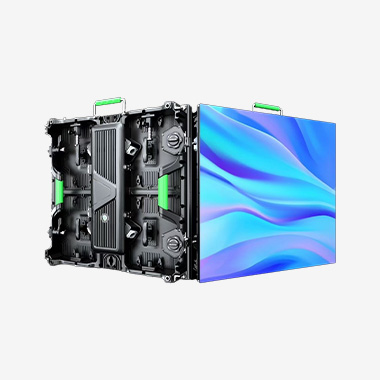
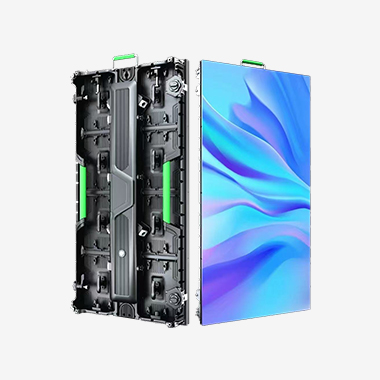
A defining feature is their modular design: individual LED panels (typically 250x250mm, 500x500mm, or 500x1000mm) can be stacked and connected to form custom sizes—from small backdrops (2x3m) for keynote stages to large video walls (10x5m) for concert main stages. This modularity also allows for creative shapes, such as curved arrays or irregular configurations, to match event themes.
Visual performance is tailored to indoor environments: brightness ranges from 800–1500 nits (sufficient for controlled indoor lighting, avoiding glare that plagues outdoor displays) and pixel pitches from P1.2–P4 (higher resolution for close-up viewing, e.g., P1.5 for conference stages where audiences sit 3–5m away). Most models use SMD RGB LEDs, delivering 16.7 million colors for vibrant videos, animations, or live feeds.
Rental-focused features include lightweight panels (2–5kg per panel, easy for 2–3 people to handle), tool-less locking systems (enabling assembly in 30–60 minutes for a medium-sized wall), and universal power/data connectors (compatible with standard event AV equipment). The rental model also includes maintenance and technical support, relieving event planners of upkeep responsibilities.
Demand has surged with the growth of experiential events: 78% of event planners report that high-quality visuals increase attendee engagement, and rental LED walls offer a cost-effective alternative to purchasing (which can cost \(10,000–\)50,000 for a large wall). As hybrid events (in-person + virtual) become common, these walls also integrate with live-streaming setups, ensuring consistent visual quality for both on-site and remote audiences.
The design and construction of indoor LED rental display walls are engineered around three core priorities: portability, rapid deployment, and reliability in transient environments—addressing the unique challenges of event settings (e.g., tight setup windows, varying venue conditions).
Key Design Elements for Rental Use
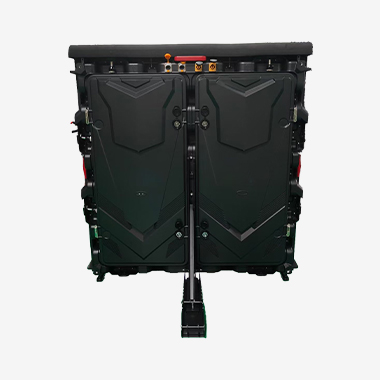
Modular Panel Design: Each panel is a self-contained unit with LEDs, a PCB, power connector, and data port. Panels use lightweight materials: aluminum frames (reducing weight to 2–5kg) and thin PCBs (1–2mm thick) for easy stacking. The front surface is covered with a matte, scratch-resistant acrylic or polycarbonate layer—preventing reflections and damage during transport (critical for rental units that move between venues).
Tool-Less Assembly: Panels feature mechanical locking systems (e.g., quick-release latches or magnetic connectors) that eliminate the need for screws or tools. Horizontal and vertical locks ensure panels align seamlessly, with minimal gaps (<1mm) to avoid disrupting visuals. Some models include alignment pins for precision, even for first-time users.
Power and Data Integration: To simplify setup, panels use “daisy-chain” connectivity—power and data cables link from one panel to the next, reducing cable clutter. Power supplies are either integrated into panels (for smaller models) or external but compact (10–15cm tall, easy to tuck under stages). Most systems use standard Ethernet cables for data, compatible with common AV controllers (e.g., Novastar, Linsn) to lower technical barriers.
Durability and Transport Considerations
Rental walls must withstand frequent transport, so construction includes:
Shock-Resistant Frames: Aluminum frames with reinforced corners absorb impacts during loading/unloading.
Protective Casings: Panels are shipped in foam-lined flight cases (custom-sized for each panel model) that prevent scratches and pressure damage. A single case holds 8–12 panels, optimizing storage and shipping space.
Environmental Adaptability: While indoor, venues vary in temperature (15–30°C) and humidity (30–70%). Panels use moisture-resistant PCBs and components rated for these ranges, avoiding malfunctions from condensation or heat.
Calibration and Uniformity
To ensure consistent visuals across modular panels, manufacturers calibrate each unit before shipping:
Brightness and Color Calibration: Every panel is tested with a spectroradiometer to match brightness (±5%) and color temperature (5000K–6500K), preventing “hot spots” or color shifts in the final wall.
Pixel Repair Features: Some models include “pixel compensation” technology—if a single LED fails, the system adjusts adjacent pixels to mask the defect, critical for rentals where replacing panels mid-event is impractical.
Overall, the design prioritizes “plug-and-play” functionality, enabling event teams (even those with limited AV experience) to set up professional-grade visuals quickly and reliably.
Indoor LED rental display walls operate through four interconnected systems—LED illumination, power distribution, data processing, and control integration—all optimized for quick setup, temporary use, and consistent performance across modular panels.
1. LED Illumination: Delivering Vibrant Indoor Visuals
At the core of each panel are SMD RGB LEDs (Surface-Mount Device Red-Green-Blue LEDs), tiny semiconductor chips (each ~0.5mm in size) mounted directly on the PCB. These LEDs produce light via electroluminescence: when a low-voltage DC current (5V or 12V) passes through the semiconductor material, electrons collide with electron holes, releasing energy as photons.
The RGB configuration enables full-color control: adjusting the current intensity of each red (620–660nm wavelength), green (520–560nm), and blue (440–480nm) LED creates 16.7 million color combinations. For indoor use, brightness is capped at 800–1500 nits—sufficient to stand out against ambient lighting (e.g., conference hall lights) without causing glare for on-site or camera audiences (critical for hybrid events).
Heat management is simplified for indoor use: unlike outdoor displays, indoor walls operate in cooler, controlled temperatures, so passive cooling (aluminum heat sinks on the back of each panel) is sufficient. The heat sinks draw heat away from LEDs, keeping temperatures at 35–45°C—preventing brightness dimming or component damage during 8–12 hour event runs.
2. Power Distribution: Efficient, Simplified Wiring
Power starts with an external AC-to-DC power supply (100–240V AC input, 5V/12V DC output) or integrated panel power supplies. For rental convenience, power is distributed via daisy-chaining: each panel has an “in” and “out” power connector, so a single power cable links the entire wall to a single outlet (for small walls) or multiple outlets (for large walls, split into zones to avoid overloading circuits).
Power management features include:
Overload Protection: Each panel has a built-in fuse or circuit breaker that shuts off power if current exceeds safe levels (e.g., from a short circuit), preventing damage to the entire wall.
Low-Power Standby: When not in use (e.g., between event sessions), the system switches to standby mode (consuming <1W per panel), saving energy and extending component life.
3. Data Processing: Ensuring Seamless Modular Visuals
Data processing converts digital content (videos, images, live feeds) into signals that control individual LEDs. The process starts with a sending card (connected to the AV source, e.g., a laptop or video switcher) that splits the content into segments—one segment per panel. This ensures each panel displays only its portion of the image, creating a unified large screen.
The sending card transmits data to receiving cards (one per panel or per 2–4 panels), which translate the digital signals into analog current adjustments for each LED. Receiving cards also handle calibration: they store brightness/color data for their assigned panels, ensuring uniformity across the wall. For rental flexibility, receiving cards support multiple resolutions (e.g., 1080p, 4K) and refresh rates (60–300Hz), compatible with common event content formats.
4. Control Integration: User-Friendly Operation
Control is managed via software (e.g., Novastar VX100, Linsn LED Studio) installed on a laptop or dedicated controller. Key features include:
Quick Configuration: The software auto-detects connected panels, generating a virtual layout of the wall—users simply drag-and-drop to match the physical setup (e.g., 4x3 panels for a 12-panel wall).
Content Playback: Users upload content (MP4, JPG, live HDMI feeds) and schedule playback (e.g., “play product video at 2 PM, switch to live stream at 3 PM”).
Real-Time Adjustments: During events, users can tweak brightness, contrast, or color balance via the software—critical for adapting to changing venue lighting (e.g., dimming the wall during a speaker’s presentation).
For hybrid events, the system integrates with live-streaming equipment: the wall’s output is routed to a capture card, ensuring remote audiences see the same high-quality visuals as on-site attendees.
Indoor LED rental display walls offer clear benefits for event planners, but they also present unique challenges tied to their temporary, modular nature. Understanding these pros and cons is essential for maximizing value and avoiding event-day issues.
Advantages
Cost-Effectiveness for Temporary Use: Purchasing a large indoor LED wall (e.g., 10x5m) costs \(15,000–\)40,000, while renting the same wall for a 3-day event costs \(500–\)2,000—far more affordable for planners who host events occasionally. Rentals also include maintenance, repairs, and storage (eliminating costs for warehouse space or upkeep between events). For small businesses or nonprofits with limited budgets, this makes professional-grade visuals accessible.
Flexibility and Customization: Modular panels enable unlimited size and shape options—planners can create a 2x2m backdrop for a wedding toast, a 8x4m video wall for a trade show booth, or a curved wall for a concert stage. This flexibility aligns with the trend toward personalized events: 68% of event attendees report that custom visuals make events more memorable. Rental companies also offer a range of pixel pitches (P1.2–P4), allowing planners to choose resolution based on viewing distance (e.g., P1.5 for close-up conference stages, P3 for large concert halls).
Quick Setup and Teardown: Tool-less assembly and daisy-chain connectivity reduce setup time to 30–90 minutes for a medium-sized wall (vs. 4–6 hours for permanent installations). This is critical for events with tight venue access windows (e.g., trade shows where setup is limited to overnight hours). Teardown is equally fast—panels are packed into flight cases and removed within 1–2 hours, minimizing venue rental costs (which are often charged by the hour).
High Engagement and Hybrid Compatibility: LED walls deliver vibrant, dynamic content (videos, live feeds, animations) that boosts attendee engagement—studies show events with LED visuals have 40% higher attendee interaction than those with static backdrops. For hybrid events, the wall integrates seamlessly with live-streaming tools, ensuring remote audiences see crisp, consistent visuals (avoiding the “washed-out” look of projectors in bright rooms). This is increasingly important, as 60% of event planners now host hybrid events regularly.
Technical Support Included: Most rental agreements include on-site or remote technical support. If a panel fails or the system glitches, support teams resolve issues within 15–30 minutes—preventing event delays. This relieves planners of technical stress, allowing them to focus on other aspects of the event (e.g., attendee experience, speaker coordination).
Challenges
Dependence on Rental Availability: Popular pixel pitches (e.g., P1.5) or large wall sizes are often booked months in advance—planners who wait until the last minute may face limited options (e.g., settling for a lower-resolution P3 wall). This requires early planning, which can be difficult for events with uncertain budgets or dates.
Venue Limitations: Rental walls require stable mounting surfaces (e.g., stage floors, trussing) and access to power outlets. Venues with uneven floors or limited power may require additional equipment (e.g., portable trussing, power generators), adding cost (\(200–\)500 per item) and setup time. Some small venues (e.g., intimate wedding halls) may lack space for large walls, restricting design options.
Content Preparation Requirements: LED walls require high-resolution content (e.g., 1080p or 4K) to avoid pixelation—planners who use low-quality images or videos will see poor results. Creating or adapting content for custom wall sizes (e.g., a 5x3m non-standard aspect ratio) may require hiring a graphic designer (\(300–\)800), adding to event costs.
Transport and Handling Risks: While panels are durable, frequent transport increases the risk of damage (e.g., cracked acrylic, loose connectors). Rental companies often charge fees for damaged panels (\(100–\)500 per panel), which can surprise planners if they don’t inspect panels upon delivery or handle them carefully during setup.
Miniaturization and Ultra-Thin Designs: Future rental panels will become even lighter and thinner—weighing <2kg per panel and measuring <30mm thick—making them easier to transport and install in tight spaces (e.g., small meeting rooms or pop-up booths). Ultra-thin panels will also enable more creative installations, such as wall-mounted “floating” displays or curved arrays that hug venue architecture, expanding design possibilities for event planners.
Cloud-Based Control and Remote Management: Control systems will shift to cloud platforms, allowing planners to manage multiple LED walls across different venues from a single dashboard. This is particularly valuable for large-scale events (e.g., multi-city conferences) where a central team needs to oversee visuals remotely. Cloud integration will also enable real-time content updates—for example, a brand can push a new ad to all its trade show booth walls simultaneously, ensuring consistency across locations.
Conclusion
Indoor LED rental display walls have become indispensable tools for modern event planning, addressing the core needs of flexibility, cost-effectiveness, and high-quality visuals that define today’s experiential and hybrid events. From corporate conferences to weddings, their modular design, quick setup, and ability to deliver vibrant, dynamic content have transformed how planners engage audiences—replacing outdated solutions like projectors and static backdrops that fail to meet the demands of interactive, multi-format events.
While challenges like rental availability, venue limitations, and content preparation exist, they are increasingly mitigated by industry innovations: early booking platforms streamline availability checks, adaptable mounting solutions (e.g., portable trussing) overcome venue constraints, and user-friendly content templates reduce the need for professional design support. The inclusion of technical support in rental agreements further lowers barriers, making professional-grade visuals accessible to even small businesses and first-time event planners.
Looking ahead, the future of indoor LED rental display walls is tied to innovation that enhances interactivity, sustainability, and hybrid event integration. As sensors, AI, and cloud technology become more integrated, these walls will evolve from passive visual tools to active engagement hubs—adapting content to attendee behavior, reducing environmental impact, and simplifying the complexity of hybrid event setups. For event planners, this means even greater creative freedom and cost efficiency, while for attendees, it promises more immersive, personalized experiences that blur the line between in-person and virtual participation.
In essence, indoor LED rental display walls are not just a temporary visual solution—they are a driver of the event industry’s evolution toward more dynamic, sustainable, and inclusive experiences. As the industry continues to recover and innovate post-pandemic, their role will only grow, solidifying their place as a cornerstone of successful event design for years to come. Whether for a small wedding or a large-scale trade show, these walls empower planners to turn ordinary spaces into memorable, engaging environments that leave a lasting impression on attendees.


Copyright © 2026 Shenzhen Cogo Technology Co.,Ltd.
All Rights Reserved

 Previous article