




 Chat Now
High resolution LED wall display signage is a cutting-edge digital visual solution defined by its dense pixel arrays, typically with a pixel pitch of P2.5 or smaller (e.g., P1.2, P0.9). This compact pixel spacing delivers exceptional clarity, rivaling HD and 4K standards, making it ideal for scenarios where fine detail matters—from retail product showcases to broadcast studio backdrops.
Built as modular systems, these walls combine individual LED panels to form sizes ranging from 55-inch “micro-walls” to 100+ square meter installations. Key specs include pixel densities from 160,000 (P2.5) to over 1 million (P0.9) pixels per square meter, enabling crisp rendering of videos, small-text graphics, and intricate visuals like medical scans or architectural designs.
Driven by semiconductor miniaturization (e.g., SMD LEDs) and scalable manufacturing, high resolution LED walls have moved beyond niche use cases (luxury retail, studios) to become mainstream in entertainment, healthcare, and corporate spaces. They outperform projectors by maintaining brightness (500–5,000 nits) and color accuracy in variable lighting, while supporting real-time content updates via 4K/8K players or cloud CMS.
Though upfront costs are 2–3x higher than standard LED displays, their 50,000–100,000-hour lifespan and low maintenance make them a long-term investment. With a 20%+ annual market growth, they set a new benchmark for immersive visual communication.
The design of high resolution LED walls prioritizes pixel density, uniformity, and thermal management, with modularity at its core.
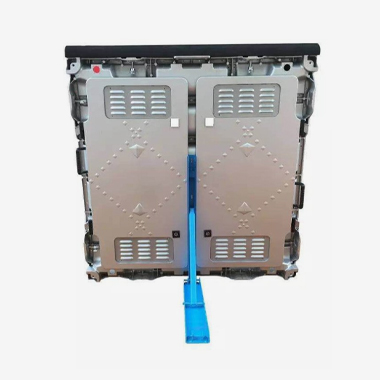
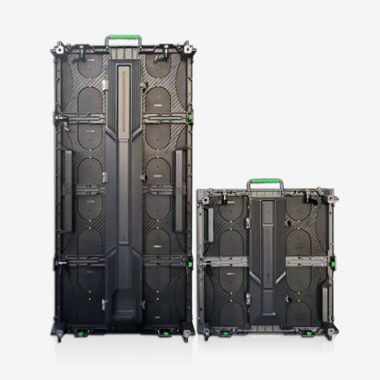
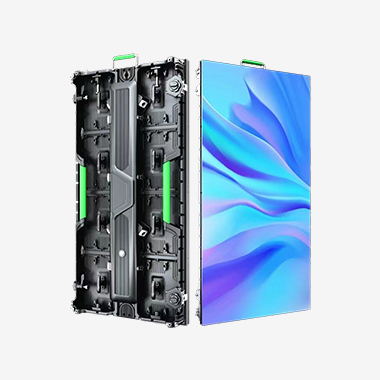
Core Components: SMD LEDs (0.3mm–2.0mm size) are the foundation—packed tightly to minimize pixel pitch. Each SMD package integrates RGB diodes, using GaN (blue/green) and GaAsP (red) for consistent color. Driver PCBs feature 3–5 mil fine traces and high-channel ICs (48+ channels) to control LED current, supporting gamma correction and color calibration. Small, lightweight panels (320x180mm to 600x337.5mm) use aluminum/magnesium housings for heat dissipation and anti-glare tempered glass (optically bonded for P1.2+ models) to reduce reflections.
Structural Design: Precision alignment systems (interlocking edges, micro-adjustment screws) ensure <0.1mm gaps between panels. Support structures include wall-mounted aluminum frames (small walls), freestanding steel trusses (large/temporary setups), or ceiling grids (space-constrained areas like studios). Outdoor models add IP65 enclosures and corrosion-resistant materials.
Thermal & Power Systems: Passive cooling (heat sinks, aluminum PCBs) handles basic heat, while active cooling (low-noise fans, liquid systems for P1.0+) prevents overheating. High-efficiency (85%+) 5V/12V PSUs with redundancy avoid outages.
Calibration: Factory and on-site calibration (via spectroradiometers) ensures uniformity, with software generating pixel-level adjustment maps to correct brightness/color variations.
High resolution LED walls operate through four interconnected stages, optimized for dense pixel arrays and high-fidelity output.
Content Input & Processing: A high-bandwidth video processor (12G-SDI/HDMI 2.1) receives content from 4K/8K players, live cameras, or CMS platforms. It scales, crops, and enhances content—applying edge blending (smoothing panel seams), color space conversion (matching content to LED capabilities), and motion interpolation (reducing blur in fast visuals) to fit the wall’s resolution.
Signal Distribution: Processed data is sent to panels via low-latency (≤10ms) Cat5e/Cat6 cables (wired) or Wi-Fi 6/5G (wireless for small setups). Each panel’s receiving card (1Gbps+ throughput) decodes data and distributes instructions to driver ICs.
LED Activation: Driver ICs use pulse-width modulation (PWM) to control individual RGB LEDs. PWM adjusts the “on/off” cycle of each diode (e.g., 80% on-time for bright red) to create specific colors and brightness levels. For high resolution, PWM frequencies (1,000+ Hz) eliminate flicker, critical for close viewing and photography.
Environmental Adaptation: Embedded thermal sensors monitor panel temperature, triggering fan speed adjustments or temporary dimming if heat exceeds 45–50°C. Ambient light sensors (in smart models) auto-adjust brightness (e.g., dimming in low light) to save energy while maintaining visibility.
This workflow ensures seamless, detailed visuals—even for intricate content like text or medical imaging—across the entire wall surface.
Advantages
Superior Visual Clarity: Dense pixel arrays (P2.5–P0.6) render fine details—small text, product textures, or medical scans—sharply, outperforming standard LEDs and projectors.
Consistent Performance: Maintains brightness (500–5,000 nits) and color accuracy in variable lighting (ambient light, direct sun), with no fading or “hot spots” across large surfaces.
Flexible Scalability: Modular panels allow custom sizes (55-inch to 100+ m²) for any space—from retail showrooms to stadiums—with quick assembly/disassembly for temporary events.
Durability & Low Maintenance: 50,000–100,000-hour lifespan, with no bulbs to replace (unlike projectors). Sealed components reduce dust/damage risks.
Versatile Content Support: Integrates with 4K/8K, live streams, and interactive CMS, enabling real-time updates (e.g., retail promotions, studio virtual sets).
Challenges
High Upfront Cost: 2–3x more expensive than standard LEDs (e.g., \(1,500–\)3,000 per m² for P1.2), a barrier for small businesses.
Heat & Power Demands: Dense pixels generate more heat, requiring active cooling (fans/liquid systems) that adds complexity. Power use (150–300W per m²) is higher than standard LEDs.
Calibration Expertise: On-site calibration needs specialized equipment (spectroradiometers) and trained technicians, increasing installation costs.
Space for Cooling: Active cooling systems require backend space (5–10cm clearance behind panels), limiting use in tight areas.
Content Optimization: Low-resolution content (e.g., 720p videos) may appear pixelated, requiring investment in high-def content creation.
Applications
Entertainment: Concert stages and theaters use large walls (100+ m²) for immersive backdrops, syncing visuals with performances. Broadcast studios replace physical sets with dynamic virtual environments (e.g., news desks with digital backgrounds).
Retail & Hospitality: Luxury stores (jewelry, electronics) showcase product details (diamond facets, device screens) on 55–100-inch micro-walls. Hotels use lobby walls for brand videos or local attraction guides.
Healthcare & Education: Hospitals display high-res MRI/CT scans in conference rooms for case reviews. Classrooms use interactive walls (touch-enabled) to teach complex topics (e.g., 3D anatomy models).
Corporate & Control Rooms: Offices use lobby walls for brand storytelling or event updates. Data centers/security rooms deploy 24/7 walls for real-time analytics dashboards.
Future Trends
Micro-LED Technology: P0.3+ pixel pitches (even smaller diodes) will enable “glass-like” displays, ideal for ultra-close viewing (e.g., retail counters).
AI-Driven Optimization: AI will auto-calibrate brightness/color based on ambient light and content type, while predicting maintenance needs (e.g., flagging failing LEDs).
Sustainability: Energy-efficient LEDs (30% lower power use) and recycled aluminum panels will reduce carbon footprints. Solar-powered options may emerge for semi-outdoor use.
Immersive Interactivity: Touchless gesture control and AR integration (e.g., retail customers “trying” products via the wall) will enhance engagement.
Hybrid Integration: Seamless sync with metaverse platforms for hybrid events (e.g., virtual attendees appearing on the physical wall).
Conclusion
High resolution LED wall display signage has redefined digital visual communication, merging exceptional detail with scalability to meet diverse industry needs—from entertainment to healthcare. Its core strength lies in dense pixel arrays (P2.5–P0.6) that render fine visuals sharply, paired with modular design and durable components (50,000–100,000-hour lifespan) that justify upfront costs over time.
While challenges like high initial investment and heat management exist, they are offset by advantages: consistent brightness, real-time content support, and low maintenance. As micro-LEDs, AI optimization, and sustainability innovations advance, these walls will become more accessible—enabling ultra-close viewing, auto-calibration, and eco-friendly operation.
For organizations prioritizing visual impact and long-term value, high resolution LED walls are not just displays but transformative tools. They turn spaces into immersive hubs, whether captivating concert audiences, educating students, or showcasing retail products. As the technology evolves, it will continue to set the standard for high-fidelity visual experiences, bridging the gap between digital content and physical environments.


Copyright © 2026 Shenzhen Cogo Technology Co.,Ltd.
All Rights Reserved

 Previous article