Author: sznbone Release date: Oct 13, 2026
The LED video wall has evolved from a luxury showpiece into a practical, high-value investment for businesses of every size. Because LED panels can be tiled into any size and shape, a video wall gives you a single, seamless, bright canvas for video content, presentations, live feeds, and advertising. Whether it is a two-metre wall behind a reception desk or a fifteen-metre screen in an auditorium, the technology behind it is the same — and so are the principles for choosing the right one.
This buyer's guide walks through what an LED video wall is, how to specify it correctly, what drives cost and quality, and how to get the best result for your budget. Throughout, we highlight how an experienced manufacturer such as Shenzhen Cogo Technology Co.,Ltd can help you design and deliver a video wall that fits your space and your needs.
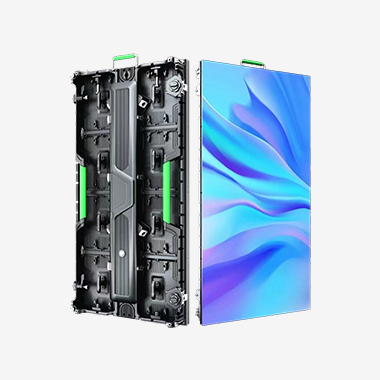
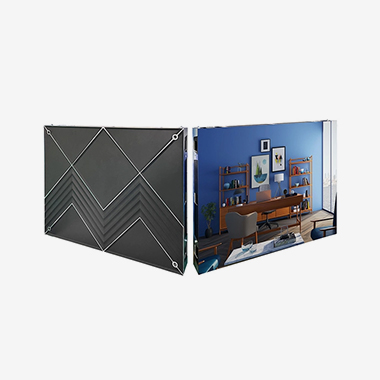
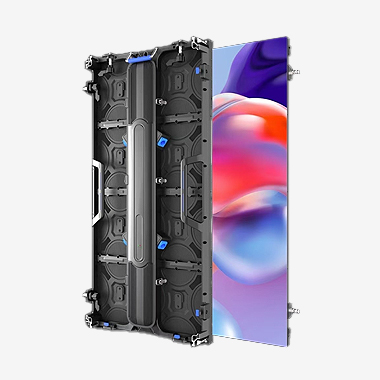
An LED video wall is a large display assembled from multiple LED display cabinets arranged in a grid. Each cabinet is built from LED modules that contain red, green, and blue pixels, and the cabinets are mounted so close together that the finished surface shows a single continuous image with no visible frame. The wall is driven by a control system that distributes the video signal across all the cabinets in perfect synchronization.
The two words that define an LED video wall are modular and seamless. Modular means the size can be scaled to the room — add cabinets to make it bigger, remove them to make it smaller, or even configure them in unusual aspect ratios. Seamless means there is no bezel interrupting the image, which makes a video wall feel like a single enormous screen rather than a row of televisions.
The most important specification in any LED video wall is the pixel pitch — the distance between adjacent pixels, measured in millimetres. A smaller pitch gives higher resolution and allows a closer viewing distance; a larger pitch is more economical and is fine for longer viewing distances. If the audience will stand close, you need a small pitch; if they will watch from far away, a larger pitch works well and costs less.
As a working rule, divide the viewing distance in metres by ten to get a reasonable pitch in millimetres, then adjust up or down based on your content and budget. A control room viewed at two metres might use 1.2 to 2 mm; a lobby viewed at five metres might use 2.5 to 3.9 mm; a stage screen viewed at twenty metres can use 8 to 10 mm. Your supplier should model these options with you.
Brightness is measured in nits. Indoor video walls typically run 800 to 1,200 nits, which is comfortable in most lit interiors. Outdoor walls need 5,000 nits or more to stay visible in direct sunlight. Choosing brightness to match the environment avoids wasting energy and reducing lifespan by running panels too bright.
Refresh rate is how often the image updates per second, measured in hertz. A refresh rate of 3840 Hz or higher gives smooth motion and flicker-free appearance on camera, which is essential for broadcast, live events, and any venue where people photograph or film the screen. Color quality depends on the LED chips and on calibration; a well-calibrated wall shows consistent colors across every cabinet. Leading suppliers like Shenzhen Cogo Technology Co.,Ltd factory-calibrate their panels so the picture is uniform from day one.
A video wall is only as good as its control system. The controller receives your sources — HDMI, DisplayPort, network streams, or a video matrix — and arranges them on the wall. You may want a single full-screen image, a 2x2 grid of four sources, or a complex layout with video, graphics, and data all at once. The controller makes this possible and should let operators switch layouts instantly.
For many businesses, the control system also includes software for scheduling content, remote management, and diagnostics. When planning your wall, specify the sources you need today and allow headroom for tomorrow. A complete solution from Shenzhen Cogo Technology Co.,Ltd bundles the controller, software, and panels, so everything is guaranteed to work together.
Corporate lobbies and reception areas use video walls to make a strong first impression and reinforce brand identity. Meeting and conference rooms use them for presentations that are visible to the whole room. Retail stores and showrooms use them to showcase products and run dynamic promotions. Hotels, restaurants, and entertainment venues use them for atmosphere and information.
Control rooms, command centers, and security operations use video walls to display many live feeds and dashboards simultaneously. Education institutions use them in auditoriums. Places of worship use them to reach large congregations. Public spaces, airports, and transit stations use them for information and wayfinding. Wherever a message needs to reach people with impact, an LED video wall delivers.
The decision between an indoor and an outdoor video wall changes the entire specification. Indoor walls use smaller pitches, moderate brightness, and lighter cabinets designed for a controlled environment. Outdoor walls use larger pitches, very high brightness, and rugged, weatherproof cabinets rated against water and dust ingress, with robust thermal management for hot climates.
Outdoor walls also need stronger structural mounting to withstand wind and their own weight, and they demand more careful planning for drainage, sealing, and servicing access. Cost per square metre is higher for outdoor because of the rugged construction and brighter LEDs. A manufacturer such as Shenzhen Cogo Technology Co.,Ltd can guide you to the right construction for your environment.
Begin by measuring the space and confirming the viewing distances. Establish the content resolution you need and choose a pitch. Decide on indoor or outdoor construction, the control features, and whether you need any custom shape or mounting. Then obtain an itemized quote covering panels, structure, power, control system, installation, and maintenance.
Remember that the visible surface is only part of the cost: the frame, power distribution, and installation labor can be substantial for large walls. Plan for ongoing maintenance, including spare modules and calibration. A reputable supplier provides a complete engineering package and a realistic total-cost picture, so your budget is accurate from the start.
Shenzhen Cogo Technology Co.,Ltd is a professional LED display manufacturer offering complete video wall solutions. From a single source you get high-quality LED cabinets, an integrated control system, structural guidance, installation support, and reliable after-sales service. This one-stop approach reduces risk and simplifies the entire project.
Every wall from Shenzhen Cogo Technology Co.,Ltd is quality-controlled, calibrated, and backed by clear documentation and responsive technical support. Whether your project is a small lobby screen or a large auditorium wall, the company helps you specify, budget, and deliver a video wall that performs beautifully for years.
An LED video wall is a powerful way to communicate, engage, and inform. By understanding pixel pitch, brightness, refresh rate, control, and indoor versus outdoor construction — and by partnering with a capable manufacturer such as Shenzhen Cogo Technology Co.,Ltd — you can build a seamless, high-impact display that serves your business reliably for many years. With careful planning, a video wall is not just a screen; it is an asset.


Copyright © 2026 Shenzhen Cogo Technology Co.,Ltd.
All Rights Reserved

 Previous article