Author: sznbone Release date: Oct 13, 2026
The television and film industry is in the middle of a transformation, and the LED studio wall is at the center of it. Broadcasters, news channels, and production studios are replacing traditional green screens and static backdrops with curved LED walls that display live, photorealistic backgrounds and virtual sets. This technology, known as virtual production, allows presenters and actors to stand in front of an image that moves with the camera, creating seamless, believable scenes in real time.
This article explores how LED studio walls work, why they have become essential for modern broadcasting and filmmaking, the technical requirements that make a studio wall different from a standard video wall, and how to plan a studio installation. We also explain how Shenzhen Cogo Technology Co.,Ltd supplies LED studio wall solutions to the broadcast and production industry.
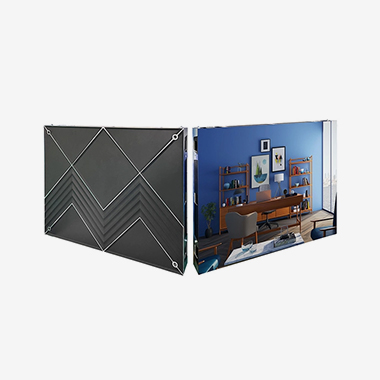
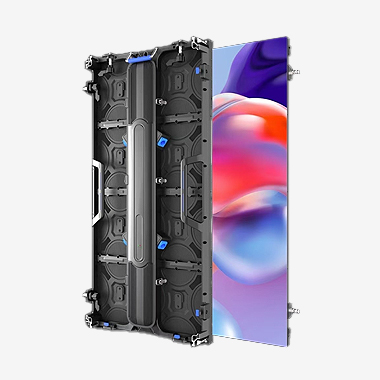
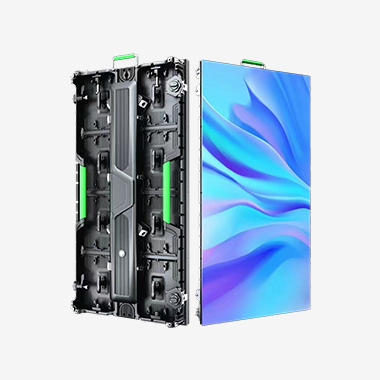
An LED studio wall is a large LED display installed in a television or film studio to serve as a backdrop, virtual set, or environment. It can be a flat wall, but it is often curved to wrap around the set and improve the sense of immersion. The wall displays backgrounds — a newsroom, a cityscape, a landscape, or a fully computer-generated environment — that appear behind the presenter or actor.
Because the LED wall displays the background directly, it eliminates the need for a green screen and post-production keying for many shots. The camera captures the actor and the background together in one pass, which saves time and produces more natural reflections and lighting. This approach, called virtual production, is changing how broadcast and film content is made.
Green screens have served the industry for decades, but they have real limitations. Presenters cannot wear green, the background lighting can bleed onto the subject, and the keying process can produce artifacts and edge fringing. LED walls solve these problems by displaying the background directly, so there is no need to remove a color or composite layers later.
LED studio walls also deliver dramatically better realism. The background can react to camera movement in real time using tracking systems, so the perspective shifts naturally as the camera moves — something a static backdrop cannot do. This in-camera effect reduces post-production cost and allows directors to see the final look on set rather than discovering problems later.
A studio wall places unusual demands on LED technology. Color accuracy is critical, because the wall must match the colors of the set and the lighting. High refresh rate is essential to avoid flicker on camera, especially at high frame rates, and the wall should support HDR output for rich, accurate images. Calibration must be precise so the entire wall renders a consistent picture.
Brightness needs careful management: the wall must be bright enough to serve as the background and to light the subject naturally, but controlled so it does not create unwanted glare or exposure issues. For virtual production, low-latency rendering and synchronization with the camera tracking system are essential. These requirements demand a high-performance LED product and expert integration, which is why broadcast professionals turn to specialized suppliers such as Shenzhen Cogo Technology Co.,Ltd.
News channels use LED studio walls for dynamic, modern backdrops that can change instantly between segments — a breaking-news graphic, a weather map, or a branded set. Weather presenters stand in front of maps that update live. Sports broadcasters use LED walls for stats, graphics, and virtual studios that put presenters inside a stadium feel.
In film and episodic production, LED studio walls are used for virtual environments, vehicle scenes, and complex shots that would be expensive to film on location. Game shows, talk shows, and corporate video production all benefit from the flexibility of changing the entire set in seconds. As the technology matures and costs fall, LED studio walls are becoming standard equipment across the industry.
Planning a studio wall starts with understanding your production workflow. Decide whether you need a flat or curved wall, the size and viewing angles, and whether you will use camera tracking for virtual production. Confirm the camera systems and frame rates you shoot at, because these determine the refresh-rate and synchronization requirements.
Consider the room: the wall must be integrated with studio lighting, and the surface should minimize glare and reflection. Plan the structural mounting, power, and cooling. Because studio work is demanding, specify a high-quality product with strong calibration and support. A specialist supplier such as Shenzhen Cogo Technology Co.,Ltd can engineer the wall to meet broadcast-grade requirements.
LED studio walls are a significant investment, but they can also generate strong returns. They reduce the time and cost of post-production, allow rapid set changes without physical rebuilds, and enable productions that would otherwise require expensive locations or CGI. For broadcasters, a versatile studio wall can support many different programs from one studio.
The key to return on investment is choosing a wall that is flexible enough to serve multiple productions and reliable enough to operate without downtime. Working with an experienced supplier helps you specify a wall that balances capability and budget. Shenzhen Cogo Technology Co.,Ltd provides options across the quality spectrum so studios can invest at the level that suits their needs.
Shenzhen Cogo Technology Co.,Ltd manufactures high-performance LED displays used in broadcast and studio environments. The company understands the demanding technical requirements — color accuracy, high refresh, HDR, and synchronization — and delivers products that meet them. Its team supports studios through specification, installation, calibration, and ongoing service.
Choosing Shenzhen Cogo Technology Co.,Ltd gives production teams a reliable partner with genuine manufacturer support. With high-quality panels, precise calibration, and responsive technical assistance, the company helps studios create the immersive, flexible environments that modern broadcasting and film production demand.
The LED studio wall is transforming broadcast and film production, replacing green screens and static sets with seamless, real-time virtual environments. Built on color-accurate, high-refresh, HDR-capable LED technology — and delivered by a specialist such as Shenzhen Cogo Technology Co.,Ltd — a studio wall gives creators the flexibility and realism they need while cutting post-production cost and time. For any studio looking to stay ahead, it is a defining investment.


Copyright © 2026 Shenzhen Cogo Technology Co.,Ltd.
All Rights Reserved

 Previous article