Author: sznbone Release date: Mar 03, 2026
Gymnasiums, whether they are professional competition venues or amateur fitness venues, have strict requirements for score display equipment. The score display system is not only a tool for displaying real-time scores, time, and game information but also an important part of ensuring the fairness, orderliness, and viewing experience of the game. LED indoor fixed screens have become the first choice for gymnasium score display due to their high brightness, high refresh rate, high stability, and flexible display effects. Compared with traditional scoreboards such as LCD and CRT, LED indoor fixed screens for gymnasium score display have more obvious advantages in adapting to the gymnasium environment, displaying rich content, and integrating with the game system.
The core requirements of gymnasiums for score display screens are real-time performance, visibility, stability, and professionalism. Real-time performance refers to the ability of the screen to display scores, time, fouls, and other game information synchronously with the game progress without delay, which is crucial for ensuring the fairness of the game. Visibility requires that the screen can be clearly seen by athletes, referees, spectators, and camera equipment from any angle in the gymnasium, even under strong indoor lighting. Stability means that the screen can work continuously for a long time without failure, especially during important competitions, to avoid affecting the progress of the game. Professionalism refers to the ability of the screen to display game-specific information according to different sports events, such as basketball, volleyball, badminton, and table tennis, and to be compatible with professional scorekeeping systems.
LED indoor fixed screens for gymnasium score display are designed to meet these core requirements. In terms of real-time performance, the screen is equipped with a high-speed control system and supports real-time data transmission with the professional scorekeeping system. The data transmission delay is usually less than 100ms, ensuring that the score and time displayed on the screen are consistent with the actual game progress. The control system also supports manual and automatic switching. In case of system failure, the referee can manually adjust the score and time through the dedicated controller to ensure the smooth progress of the game. In addition, the screen supports multi-window display, which can display scores, time, fouls, player information, and game highlights at the same time, providing rich information for spectators and staff.
Visibility is another key advantage of LED indoor fixed screens for gymnasium score display. Gymnasiums usually have a large space, and the viewing distance varies from a few meters to tens of meters. Therefore, the screen needs to have appropriate brightness and contrast. The brightness of professional gymnasium LED screens is usually between 800cd/㎡ and 1200cd/㎡, which can resist the interference of indoor strong light and ensure clear visibility. At the same time, the screen adopts a wide viewing angle design, with horizontal and vertical viewing angles of more than 160 degrees, so that spectators in any position can see the display content clearly. In addition, the screen uses high-contrast LED chips and gamma correction technology to make the displayed text and numbers sharp and clear, avoiding blurring and ghosting, which is also important for camera shooting and live broadcasting.
Stability is particularly important for gymnasium score display screens, as games usually last for a long time, and the screen needs to work continuously for several hours or even a whole day. LED indoor fixed screens for gymnasium score display adopt high-quality core components, such as high-reliability LED chips, industrial-grade driving ICs, and stable power supplies. These components have strong anti-interference ability and can work normally in complex electrical environments. The screen also has a perfect heat dissipation system, including heat dissipation fans, heat sinks, and thermal conductive materials, which can quickly dissipate the heat generated during operation, avoid overheating of the equipment, and ensure long-term stable operation. In addition, the screen has a variety of protection functions, such as overvoltage protection, overcurrent protection, short-circuit protection, and waterproof and dustproof protection, which further improves the stability and service life of the equipment.
Professionalism is reflected in the compatibility and functional customization of the LED indoor fixed screen for gymnasium score display. Different sports events have different requirements for score display. For example, basketball games need to display the scores of both teams, game time, quarter, foul times, and player substitutions; volleyball games need to display sets won, points, serve order, and timeouts; badminton and table tennis games need to display small points, game points, and service rights. The LED screen for gymnasium score display can be customized with corresponding display interfaces and functions according to different sports events, and can be compatible with professional scorekeeping software and hardware systems, such as electronic scoreboards, referee consoles, and video replay systems. Some high-end products also support integration with the venue's audio and video system, realizing synchronous playback of score information and live video, enhancing the viewing experience of the game.
In terms of product specifications, the size and pixel pitch of LED indoor fixed screens for gymnasium score display need to be determined according to the size of the gymnasium and the viewing distance. For large professional gymnasiums with a viewing distance of more than 20 meters, a large-sized screen with a pixel pitch of P3-P5 is usually selected, such as a 4m×2m or 5m×3m screen, to ensure that the display content can be clearly seen by all spectators. For small and medium-sized gymnasiums or training venues with a viewing distance of 10-20 meters, a medium-sized screen with a pixel pitch of P2.5-P3 is suitable, such as a 2m×1.2m or 3m×1.8m screen. In addition, some gymnasiums also choose to install multiple small screens in different positions to display score information from different angles, ensuring that athletes and referees can view it conveniently.
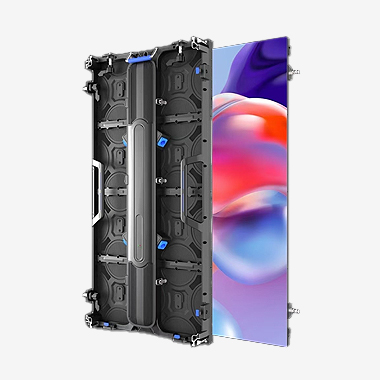
Installation and maintenance are also important considerations for gymnasium LED score display screens. The screen is usually installed in a high position, such as above the competition field or on the side wall, so the installation needs to be firm and reliable to avoid safety hazards. Most products adopt a modular design and lightweight structure, which is convenient for installation and disassembly. In terms of maintenance, the modular design also allows for quick replacement of faulty modules, reducing maintenance time and costs. The control system of the screen is usually equipped with a self-diagnosis function, which can automatically detect faults and send alarms, helping maintenance personnel quickly locate and solve problems. In addition, manufacturers usually provide professional installation, debugging, and after-sales maintenance services to ensure the normal use of the screen.
With the development of sports events and the upgrading of gymnasium facilities, LED indoor fixed screens for gymnasium score display are also constantly upgrading. Modern products not only have basic score display functions but also integrate more intelligent features, such as AI-assisted scorekeeping, real-time data analysis, and interactive functions with spectators. For example, some screens support connecting with mobile apps, allowing spectators to view detailed game data and replay videos through their mobile phones; some screens can use AI technology to automatically identify the game situation and update scores, reducing manual operation errors. These intelligent functions not only improve the professionalism and efficiency of score display but also enhance the interactive experience of the game.
When choosing an LED indoor fixed screen for gymnasium score display, several key factors need to be considered. First, the compatibility with the professional scorekeeping system. It is necessary to ensure that the screen can be seamlessly connected with the existing scorekeeping software and hardware of the gymnasium to avoid data transmission problems. Second, the stability and reliability of the screen. Choose products with high-quality components and perfect protection functions to ensure long-term stable operation during competitions. Third, the visibility and display effect. Test the brightness, contrast, viewing angle, and refresh rate of the screen on-site to ensure that it can meet the needs of the gymnasium environment. Fourth, the after-sales service and technical support of the manufacturer. Professional sports venues have high requirements for equipment, so it is necessary to choose manufacturers with rich experience in gymnasium projects and perfect after-sales service systems to provide timely technical support and maintenance services.
In conclusion, LED indoor fixed screens for gymnasium score display are essential equipment for modern gymnasiums. They meet the professional needs of various sports events with their excellent real-time performance, visibility, stability, and professionalism, ensuring the fairness and orderliness of the game and enhancing the viewing experience. With the continuous advancement of technology, these screens will become more intelligent, integrated, and professional, making greater contributions to the development of the sports industry.


Copyright © 2026 Shenzhen Cogo Technology Co.,Ltd.
All Rights Reserved

 Previous article